Tree Care
Choosing Drought-Tolerant Shade Trees For Your Yard
The Importance of Water-Wise Tree Selection
As global temperatures rise and municipal water restrictions become increasingly common across North America, homeowners are rethinking their landscape strategies. The traditional approach of planting water-thirsty shade trees and relying on heavy irrigation is no longer sustainable in many regions. Selecting the right tree species for your specific climate and soil conditions is the single most important decision you will make for your landscape. According to the UC Davis WUCOLS database (Water Use Classification of Landscape Species), grouping plants by their hydrozones and selecting low-water-use trees can reduce outdoor water consumption by up to 50% without sacrificing aesthetic appeal or shade coverage.
Drought-tolerant shade trees do more than just survive dry spells; they actively mitigate the urban heat island effect, lower your summer cooling costs by shading your home, and provide critical habitat for local wildlife. However, the secret to a thriving, water-wise landscape lies in proper variety and species selection, followed by a rigorous establishment watering schedule.
Understanding Drought Adaptations in Trees
Before selecting a species, it is helpful to understand how certain trees survive arid conditions. Trees adapted to drought typically exhibit one or more of the following evolutionary traits:
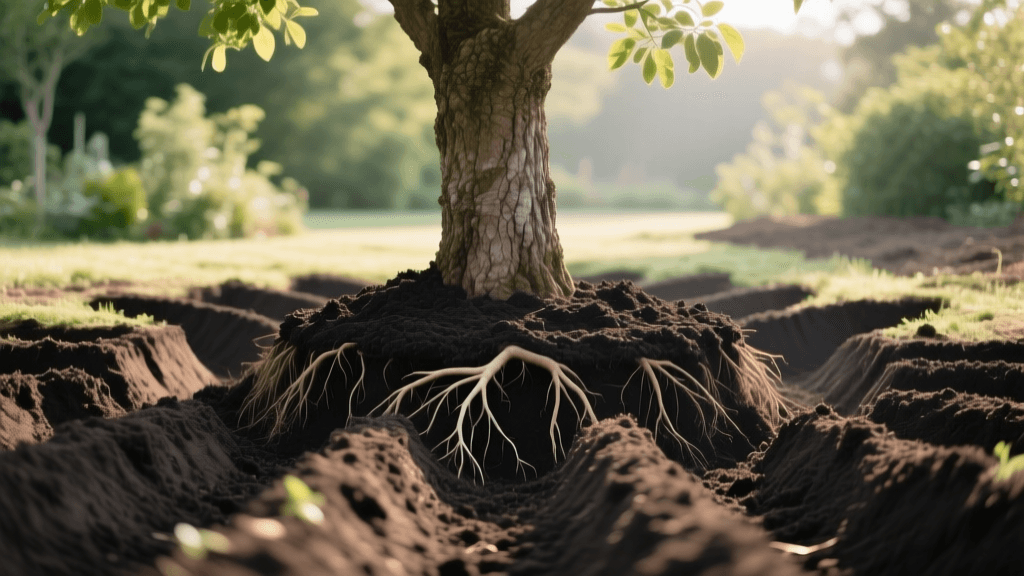
- Deep Taproot Systems: Unlike trees with shallow, fibrous roots that rely on frequent surface watering, drought-tolerant species often develop deep taproots that can access subterranean moisture reserves far below the dry topsoil.
- Foliage Modifications: Many water-wise trees feature small, compound, or highly dissected leaves to reduce the surface area available for transpiration. Others possess waxy leaf cuticles or fine, silvery hairs (trichomes) that reflect harsh sunlight and trap humid air close to the leaf surface.
- Drought Deciduousness: Some species possess the remarkable ability to drop their leaves prematurely during extreme late-summer drought to conserve water, entering a state of dormancy until the autumn rains arrive.
Top Drought-Tolerant Shade Trees: A Comparative Guide
When consulting regional planting guides and experts at the Arbor Day Foundation, several shade tree species consistently rank at the top for their resilience, structural integrity, and low water requirements once established. Below is a comparison chart of four exceptional choices for water-wise landscapes.
| Common Name | Botanical Name | Mature Height / Spread | USDA Zones | Established Water Need |
|---|---|---|---|---|
| Bur Oak | Quercus macrocarpa | 70-80 ft / 70-80 ft | 3-8 | Very Low |
| Chinese Pistache | Pistacia chinensis | 25-35 ft / 25-35 ft | 6-9 | Low |
| Western Hackberry | Celtis occidentalis | 40-60 ft / 40-60 ft | 2-9 | Low |
| Lacebark Elm | Ulmus parvifolia | 40-50 ft / 40-50 ft | 5-9 | Low to Moderate |
1. Bur Oak (Quercus macrocarpa)
The Bur Oak is a majestic, slow-growing giant that is virtually indestructible once established. Native to the North American prairies, it is adapted to periods of severe drought and extreme cold. Its massive, deeply lobed leaves provide dense, cooling shade, and its corky bark protects it from wildfires and harsh winds. While it requires a large yard due to its expansive canopy and deep taproot, it is a generational tree that will anchor your landscape for centuries.
2. Chinese Pistache (Pistacia chinensis)
Ideal for smaller urban lots and patios, the Chinese Pistache is highly regarded for its brilliant, fiery autumn foliage and extreme heat tolerance. It thrives in poor, alkaline soils where other trees would fail. This species is remarkably resistant to pests and diseases, and its moderate size makes it an excellent choice for planting near power lines or single-story homes. Note that female trees produce small, ornamental red berries that attract birds, while male trees are fruitless.
3. Western Hackberry (Celtis occidentalis)
Often confused with the American Elm, the Western Hackberry features a graceful, vase-shaped canopy and distinctive, warty bark. It is incredibly tough, tolerating urban pollution, compacted soils, and prolonged droughts. The tree produces small, sweet, berry-like drupes that are a favorite of local bird populations. It is an excellent, fast-growing shade provider for streetscapes and expansive front yards.
4. Lacebark Elm (Ulmus parvifolia)
Do not confuse this resilient tree with the disease-prone American Elm. The Lacebark Elm is highly resistant to Dutch Elm Disease and features stunning, exfoliating bark that reveals a mosaic of green, gray, orange, and brown patches. It adapts well to a variety of soil types and, while it prefers consistent moisture during its first few years, it becomes highly drought-tolerant once its root system is fully established.
Site Assessment and Soil Preparation
Even the most drought-tolerant species will fail if planted in an unsuitable site. Before purchasing a tree—which typically costs between $80 and $150 for a 15-gallon container, or $150 to $300 for a balled-and-burlapped (B&B) specimen—you must evaluate your soil's drainage capacity.
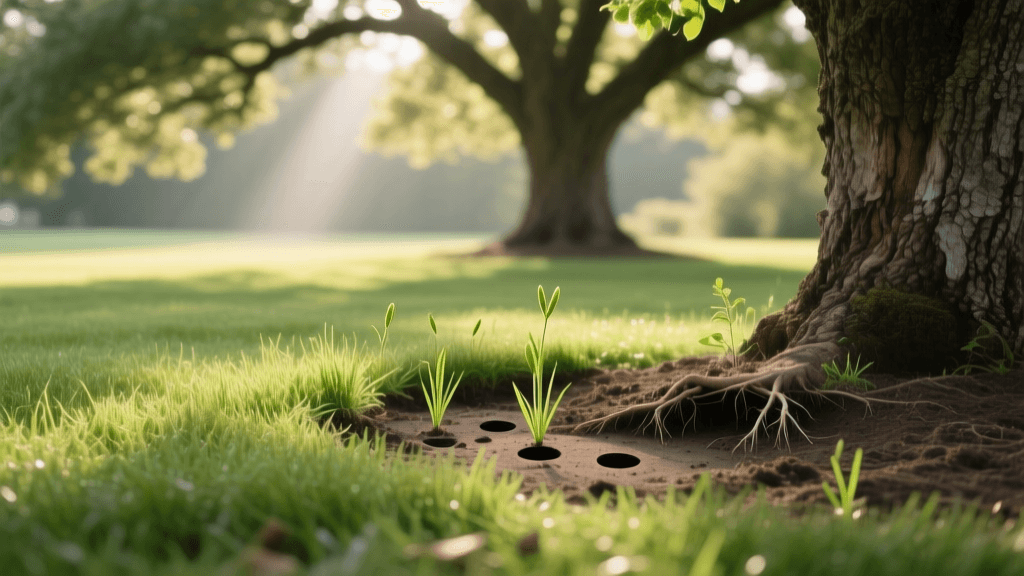
Conduct a Percolation Test: Dig a hole 12 inches deep and 12 inches wide. Fill it with water and let it drain completely. Refill it and measure how long it takes for the water level to drop. If it drops less than 1 inch per hour, you have heavy clay soil that retains water and may suffocate roots. If it drops more than 4 inches per hour, you have sandy soil that drains too quickly.
Amending the Soil: Contrary to popular belief, you should not heavily amend the backfill soil with compost when planting a tree. Creating a "bathtub" of rich, loose soil surrounded by dense native clay encourages roots to circle the planting hole rather than venturing outward. Instead, plant the tree in the native soil and apply organic matter to the surface as mulch.
The Establishment Period: Watering for Long-Term Success
A critical misconception in water-wise landscaping is that "drought-tolerant" means "plant-and-forget." Every tree, regardless of its mature water needs, requires consistent, deep watering during its establishment period to grow the extensive root system necessary for future drought survival. The general rule of thumb is that a tree requires one to two years of establishment care for every inch of trunk caliper measured at chest height.
Pro Tip: Invest in a long-probe soil moisture meter. Insert it 6 to 8 inches into the soil near the root ball. Water only when the top few inches of soil feel dry to the touch, preventing both underwatering and fatal root rot.
Recommended Establishment Watering Schedule
- Weeks 1-2: Water daily or every other day. Apply 2 to 3 gallons of water per inch of trunk caliper directly over the root ball.
- Weeks 3-12: Water every 2 to 3 days. Gradually expand your watering zone outward from the root ball to encourage lateral root growth.
- Months 4-12: Water weekly. Apply 10 to 15 gallons per inch of trunk caliper. Use a slow-drip soaker hose or a TreeGator bag to ensure water penetrates deeply rather than running off the surface.
- Year 2 and Beyond: Transition to deep, infrequent watering (once every two to four weeks during the dry season). This trains the roots to seek out deep subterranean moisture.
Proper Mulching Techniques for Moisture Retention
Organic mulch is the cornerstone of drought-tolerant tree care. It lowers soil temperatures, suppresses water-stealing weeds, and drastically reduces surface evaporation. However, improper mulching can invite disease and rodent damage. Always follow the 3-3-3 Rule:
- 3 Inches Deep: Apply a layer of organic wood chips or shredded bark no deeper than 3 inches to allow oxygen to reach the soil.
- 3-Foot Radius: Extend the mulch ring at least 3 feet outward from the trunk in all directions. As the tree grows, expand this ring to match the tree's drip line.
- 3 Inches Away: Keep the mulch at least 3 inches away from the actual trunk of the tree. Piling mulch against the bark (often called "volcano mulching") traps moisture against the trunk, leading to fatal fungal cankers and inviting boring insects.
Conclusion
Selecting the right drought-tolerant shade tree is an investment in the long-term resilience and beauty of your property. By matching the tree's genetic adaptations to your local climate and soil conditions, you can create a lush, cooling canopy that thrives with minimal supplemental irrigation. For more localized advice and regional watering guides, always consult resources like Water - Use It Wisely to ensure your landscape remains sustainable, vibrant, and compliant with local conservation efforts for decades to come.