Tree Care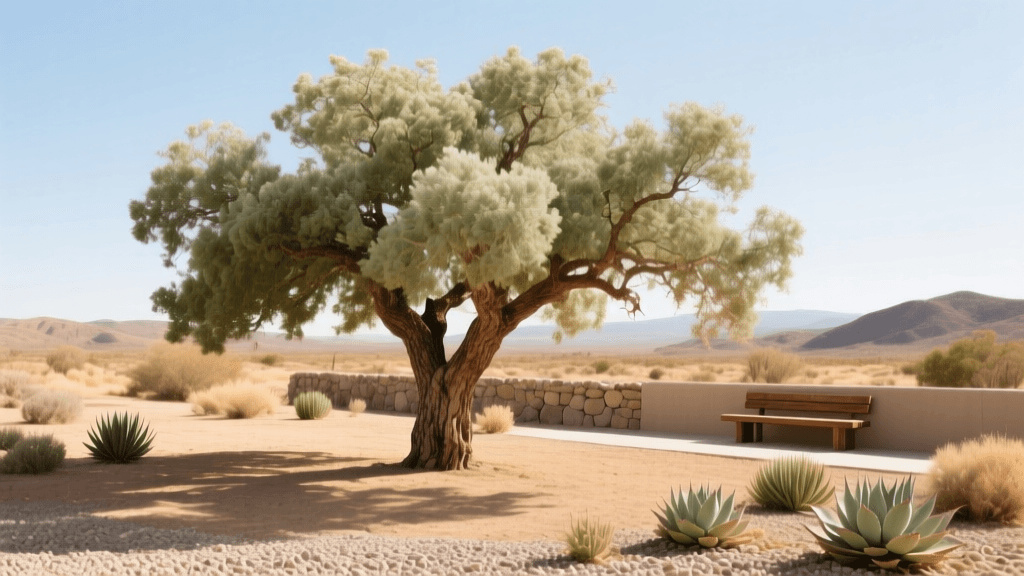
Best Drought-Tolerant Shade Trees for Water-Wise Yards
Introduction to Water-Wise Landscaping
Water-wise landscaping is no longer just a trend for arid regions; it is a vital practice for homeowners worldwide facing shifting climate patterns, municipal water restrictions, and rising utility costs. When designing a resilient landscape, selecting the right tree species is the most impactful decision you can make. Trees provide essential cooling shade, reduce soil erosion, and increase property values. However, traditional shade trees often demand thousands of gallons of supplemental water annually to survive prolonged dry spells. By pivoting to drought-tolerant shade trees, you can maintain a lush, cool canopy while drastically reducing your outdoor water footprint. This comprehensive guide explores the best low-water shade trees, how to prepare your soil, and the exact watering schedules required to ensure your new trees thrive from planting to maturity.
Why Choose Drought-Tolerant Shade Trees?
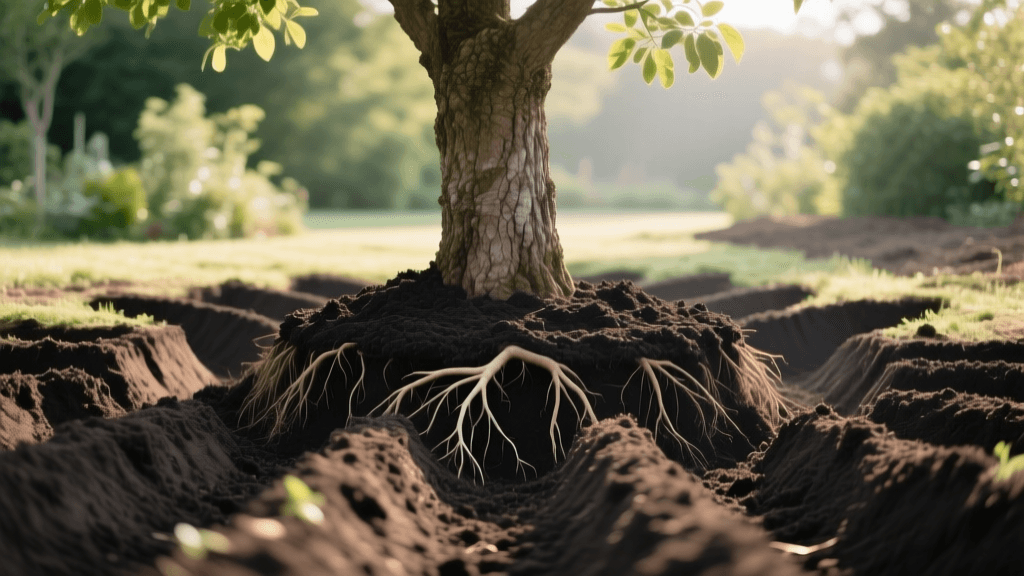
The concept of xeriscaping or water-wise landscaping centers on working with your local environment rather than fighting it. Planting drought-adapted species offers a multitude of benefits beyond simply lowering your water bill. First, these trees develop deep, expansive root systems that anchor the soil and improve stormwater infiltration. Second, they are generally more resistant to local pests and fungal diseases that thrive in over-irrigated soils. Finally, a mature shade tree can lower the ambient temperature of your yard by up to 10 degrees Fahrenheit, reducing your home's summer cooling costs. According to the Arbor Day Foundation, strategically placed shade trees can reduce air conditioning needs by up to 30 percent, making them a dual-threat for energy and water conservation.
Top 5 Drought-Tolerant Shade Trees
When selecting species, consulting resources like the University of California's WUCOLS database can help you verify the exact water requirements of specific cultivars in your region. Below are five outstanding, low-water shade trees that perform beautifully in residential landscapes.
1. Bur Oak (Quercus macrocarpa)
The Bur Oak is a majestic, long-lived native tree renowned for its massive canopy and incredible drought tolerance once established. It features deeply lobed leaves and produces large acorns with fringed caps. This oak thrives in a variety of soil types, including heavy clays, and can withstand extreme temperature fluctuations. Its deep taproot makes it highly resilient to dry spells, though it requires ample space to reach its mature width of 60 to 80 feet.
2. Shumard Oak (Quercus shumardii)
For homeowners seeking brilliant fall color in a drought-tolerant package, the Shumard Oak is an exceptional choice. Native to the central and southern United States, it adapts well to urban environments, tolerating both alkaline soils and air pollution. It grows at a moderate rate of 1 to 2 feet per year, eventually forming a broad, rounded canopy that provides dense summer shade and striking crimson-red autumn foliage.
3. Chinese Pistache (Pistacia chinensis)
The Chinese Pistache is a medium-sized shade tree celebrated for its toughness and spectacular fall display. It is highly resistant to pests, diseases, and poor soil conditions. Its pinnately compound leaves turn fiery shades of orange and red in late autumn. Because it typically reaches a manageable height of 25 to 35 feet, it is perfect for smaller urban yards or for planting under power lines where taller oaks would be problematic.
4. Lacebark Elm (Ulmus parvifolia)
Unlike the American Elm, which is susceptible to Dutch Elm Disease, the Lacebark Elm is highly disease-resistant and incredibly tough. It is prized for its exfoliating bark, which reveals a beautiful mottled pattern of gray, green, and orange. This fast-growing tree provides excellent, dappled shade and tolerates both drought and poor drainage, making it one of the most versatile urban street and yard trees available.
5. Western Sycamore (Platanus racemosa)
Native to California and Mexico, the Western Sycamore is a sprawling, majestic tree that thrives in hot, dry climates. It features massive, maple-like leaves and distinctive white, puzzle-like bark. While it naturally grows near waterways, mature specimens exhibit profound drought tolerance. It requires significant space and is best suited for large properties or parks where its sprawling, architectural branch structure can be fully appreciated.
Species Comparison Chart
| Tree Species | Mature Height | Growth Rate | USDA Hardiness Zones | Drought Tolerance |
|---|---|---|---|---|
| Bur Oak | 70-80 ft | Slow to Medium | 3-8 | Excellent |
| Shumard Oak | 40-60 ft | Medium | 5-9 | High |
| Chinese Pistache | 25-35 ft | Medium to Fast | 6-9 | Excellent |
| Lacebark Elm | 40-50 ft | Fast | 5-9 | High |
| Western Sycamore | 40-80 ft | Fast | 7-10 | High (Once Established) |
Crucial Step: Site Assessment and Soil Prep
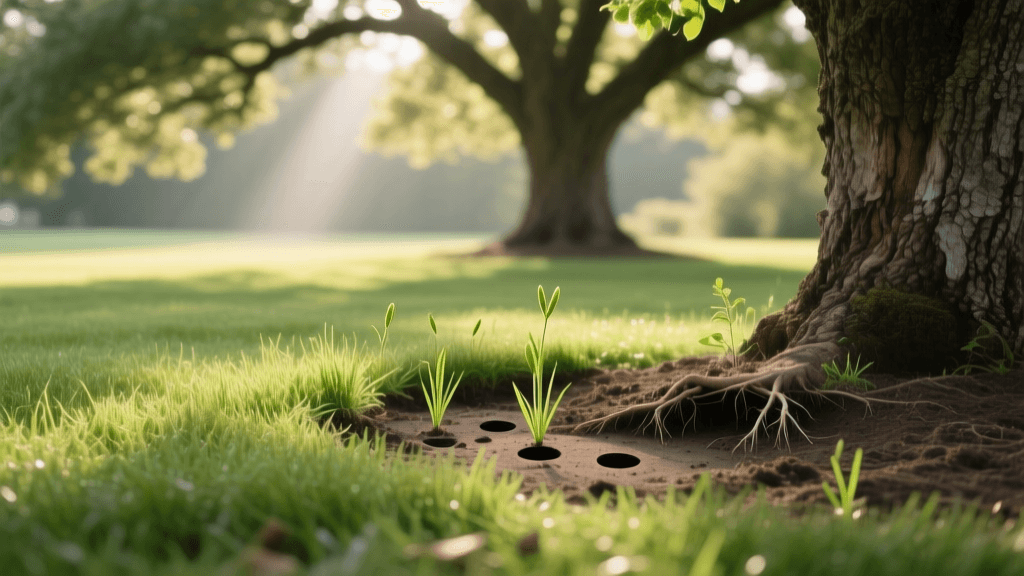
Even the most drought-tolerant tree will fail if planted incorrectly. Before digging, always call your local utility locating service to ensure you are not digging into underground lines. Next, assess your soil drainage by conducting a simple percolation test: dig a hole 12 inches deep and wide, fill it with water, and let it drain. Refill it and measure how long it takes to drain. Ideal drainage is 1 to 2 inches per hour.
When preparing the planting hole, dig it two to three times as wide as the root ball, but no deeper than the root ball itself. The root flare—the point where the trunk widens at the base—must sit slightly above the surrounding grade. As noted by the Colorado State University Extension, over-amending the backfill soil with heavy compost can create a 'bathtub effect' in clay soils, trapping water and rotting the roots. Instead, use the native soil you just dug out to backfill the hole, breaking up any large clods to encourage lateral root expansion.
Establishment Watering: The First 24 Months
A common misconception is that 'drought-tolerant' means 'no water required.' While mature specimens can survive on rainfall alone, newly planted trees require consistent supplemental irrigation to establish their root systems. The general rule of thumb is to provide 10 gallons of water per inch of trunk caliper (measured at knee height) per watering session.
Pro Tip: Use a slow-release watering bag or a soaker hose coiled around the root zone to deliver water deeply, encouraging roots to grow downward rather than staying near the surface.
- Weeks 1-2: Water daily or every other day to keep the root ball evenly moist but not waterlogged.
- Months 1-3: Reduce watering to twice a week, applying water to the drip line (the outer edge of the canopy).
- Months 4-12: Water deeply once a week during the growing season. During hot, dry spells, increase to twice a week.
- Year 2 and Beyond: Transition to deep, infrequent watering every 10 to 14 days. By the third year, your tree should be fully established and capable of thriving on natural precipitation with only occasional deep watering during severe droughts.
Proper Mulching for Moisture Retention
Mulch is a drought-tolerant tree's best friend. It regulates soil temperature, suppresses water-stealing weeds, and drastically reduces evaporation. Apply a 3 to 4-inch layer of organic mulch, such as shredded hardwood or wood chips, in a wide ring extending to the tree's drip line. Crucially, you must practice 'donut mulching' rather than 'volcano mulching.' Keep the mulch at least 3 to 4 inches away from the actual trunk of the tree. Piling mulch against the bark traps moisture, invites fungal pathogens, and encourages secondary roots to girdle the trunk, which can eventually strangle and kill the tree.
Conclusion
Transitioning to a water-wise landscape does not mean sacrificing the beauty, scale, and cooling benefits of a lush canopy. By selecting proven drought-tolerant species like the Bur Oak, Chinese Pistache, or Lacebark Elm, and pairing them with proper planting depths, strategic establishment watering, and correct mulching techniques, you can cultivate a stunning, resilient yard. Not only will you reduce your environmental footprint and lower your utility bills, but you will also be planting a living legacy that will provide shade and shelter for generations to come.