Tree Care
Top Drought-Tolerant Shade Trees for Residential Lawns
The Importance of Drought-Resilient Landscaping
As climate patterns shift and municipal water restrictions become more frequent across the country, homeowners are rethinking their landscape strategies. Traditional turf-heavy yards and water-dependent ornamental trees are increasingly difficult to maintain during prolonged summer dry spells. Transitioning to drought-tolerant shade trees not only conserves thousands of gallons of water annually but also reduces the urban heat island effect, lowers cooling costs, and provides vital habitat for local wildlife.
According to the United States Environmental Protection Agency (EPA), strategic tree planting can reduce ambient air temperatures by up to 6°F and lower peak electricity demand for air conditioning by 15% to 35%. However, selecting the right species is critical. A tree that is poorly adapted to your local soil and precipitation patterns will struggle, succumb to pests, and ultimately require removal. This guide explores the best drought-tolerant shade trees for residential lawns, complete with actionable planting and maintenance specifications.
Top 5 Drought-Tolerant Shade Trees for Lawns
When selecting a tree for long-term resilience, it is essential to look beyond the first year of establishment. The following species are renowned for their deep root systems, disease resistance, and ability to thrive with minimal supplemental irrigation once mature.
1. Bur Oak (Quercus macrocarpa)
The Bur Oak is a majestic, long-lived native species that develops a massive, deep taproot, making it exceptionally drought-tolerant once established. It features deeply lobed leaves and produces large acorns that are a favorite among wildlife. Bur Oaks are highly adaptable to various soil types, including heavy clay and alkaline soils, which makes them an excellent choice for challenging urban lawns.
2. Shumard Oak (Quercus shumardii)
For homeowners seeking brilliant fall color without the high water demands of a Maple, the Shumard Oak is a premier choice. It tolerates urban pollution, compacted soils, and moderate drought. Its upright, oval canopy provides excellent shade for patios and south-facing windows, while its vibrant red-orange autumn foliage adds stunning seasonal interest.
3. Japanese Zelkova (Zelkova serrata)
Often planted as a replacement for the American Elm, the Japanese Zelkova features a distinctive vase-shaped canopy that provides sweeping, high shade. This architecture is perfect for residential lawns, as it allows enough dappled sunlight to reach the grass below while providing ample clearance for pedestrians and vehicles. It is highly resistant to Dutch Elm Disease and exhibits strong drought tolerance.
4. Lacebark Elm (Ulmus parvifolia)
The Lacebark Elm is a tough, fast-growing shade tree celebrated for its exfoliating bark, which reveals a mottled pattern of gray, green, and orange. It is highly resistant to elm leaf beetle and Dutch Elm Disease. Once its root system is established, it requires very little supplemental water and thrives in poor, compacted urban soils.
5. Western Hackberry (Celtis occidentalis)
A rugged native tree, the Western Hackberry is virtually indestructible. It withstands high winds, extreme temperature fluctuations, and prolonged drought. While its leaves are relatively simple, it produces small, berry-like drupes that are a critical food source for migrating birds. It is an ideal, low-maintenance shade tree for large, open lawns.
Species Comparison Chart
Use the table below to compare the growth habits and hardiness zones of these resilient species. Data compiled from the University of Florida IFAS Woody Plant Database and regional extension reports.
| Species | Mature Height | Canopy Spread | USDA Zones | Drought Tolerance |
|---|---|---|---|---|
| Bur Oak | 70-80 ft | 80 ft | 3-9 | Exceptional |
| Shumard Oak | 60-80 ft | 50-60 ft | 5-9 | High |
| Japanese Zelkova | 50-80 ft | 50-75 ft | 5-8 | Moderate-High |
| Lacebark Elm | 40-50 ft | 35-45 ft | 5-9 | High |
| Western Hackberry | 40-60 ft | 40-50 ft | 2-9 | Exceptional |
Site Assessment and Soil Preparation
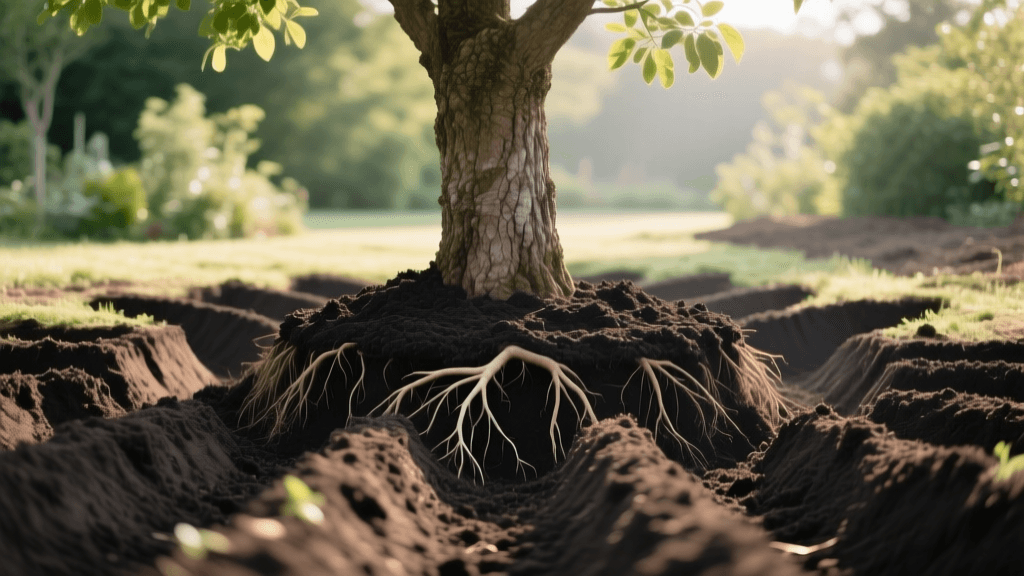
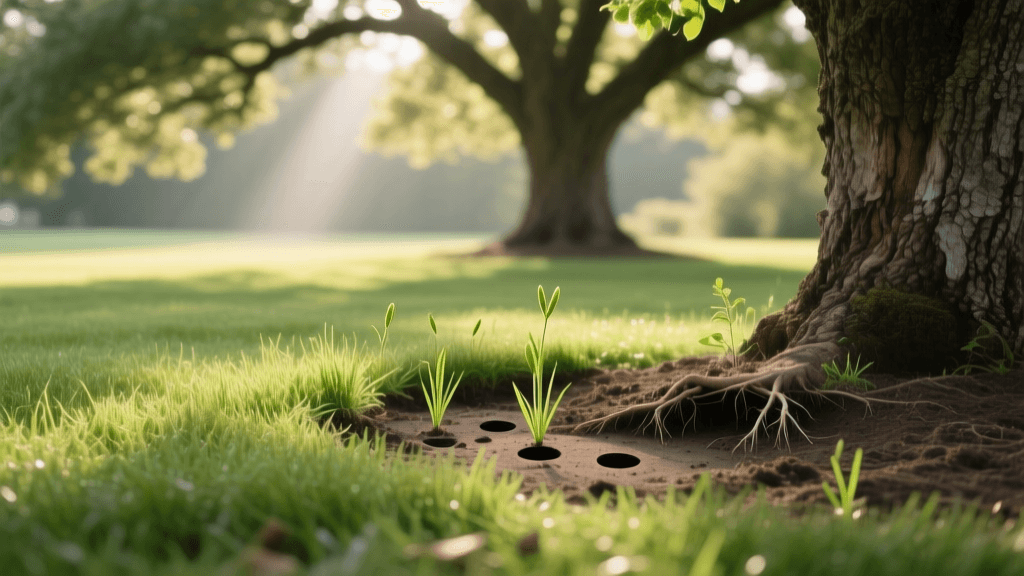
Even the most drought-tolerant tree will fail if planted in improperly prepared soil. Before purchasing your tree, conduct a simple percolation test to assess drainage. Dig a hole 12 inches wide and 12 inches deep in your intended planting area. Fill it with water and let it drain completely. Refill it and measure how long it takes for the water level to drop one inch. An ideal drain rate is between 1 and 6 inches per hour. If water drains slower than 1 inch per hour, you have heavy clay that will require broad-scale soil aeration or the selection of a clay-tolerant species like the Bur Oak.
Additionally, test your soil pH. Most shade trees prefer a slightly acidic to neutral pH (6.0 to 7.0). If your soil is highly alkaline (above 7.5), nutrients like iron become locked up, leading to chlorosis (yellowing leaves). In alkaline regions, the Lacebark Elm and Zelkova are superior choices over Oaks, which are more prone to iron deficiency in high-pH soils.
Purchasing and Planting Specifications
When buying shade trees, you will typically choose between container-grown and balled-and-burlapped (B&B) specimens. For immediate lawn impact, a B&B tree with a 2-inch to 2.5-inch caliper (trunk diameter measured 6 inches above the ground) is ideal. Expect to invest between $150 and $350 per tree, plus delivery fees. Container trees are lighter and easier to plant but may have circling roots that must be aggressively shaved off with a sterilized pruning saw before planting.
The most critical planting metric is depth. According to The Morton Arboretum, planting a tree too deep is the number one cause of premature tree death. Locate the root flare—the point where the trunk widens and transitions into the structural roots. This flare must be fully exposed and sit 1 to 2 inches above the surrounding grade to account for soil settling. Never bury the root flare, as this leads to stem girdling roots and trunk rot.
The 3-Year Establishment Watering Schedule
It is a common misconception that 'drought-tolerant' means 'no-water.' All trees require consistent moisture to establish their root systems. Drought tolerance only applies to mature trees. Follow this precise watering schedule for the first three years:
- Year 1: Apply 1.5 gallons of water per inch of trunk caliper, two to three times a week. For a 2-inch caliper tree, this means 3 gallons per watering session. Use a slow-drip soaker hose or a tree watering bag to ensure deep soil penetration.
- Year 2: Reduce frequency to once a week, but increase the volume to 2 gallons per inch of caliper to encourage deep root growth. Always check soil moisture 4 inches down before watering; if it is damp, delay watering by 24 hours.
- Year 3: Transition to relying on natural rainfall. Provide deep, supplemental watering (10-15 gallons) only during periods where less than 1 inch of rain has fallen over a 14-day span during the growing season.
Proper Mulching Techniques for Moisture Retention
Mulch is the ultimate tool for drought-proofing your lawn's shade trees. It regulates soil temperature, suppresses water-stealing weeds, and retains soil moisture. However, improper mulching can kill a tree just as fast as a drought. Follow the '3-3-3 Rule' for optimal tree health:
- 3 Inches Deep: Apply a layer of organic mulch (shredded hardwood or pine bark) no deeper than 3 inches. Excessive mulch blocks oxygen from reaching the fine feeder roots.
- 3 Feet Wide: Create a mulch ring that extends at least 3 feet from the trunk in all directions. As the tree matures, expand this ring to the edge of the tree's drip line to reduce competition from turfgrass.
- 3 Inches Away: Keep the mulch at least 3 inches away from the actual trunk of the tree. Piling mulch against the bark (often called 'volcano mulching') traps moisture against the cambium layer, inviting fungal pathogens, rodent damage, and secondary root growth that will eventually strangle the tree.
Pro Tip: Never use landscape fabric or plastic weed barriers under your mulch ring. These materials prevent water infiltration, restrict gas exchange, and ultimately degrade into microplastics that harm soil biology. Rely on a thick layer of organic wood chips to naturally suppress weeds.
By carefully selecting drought-tolerant species, preparing the soil correctly, and adhering to a strict establishment watering protocol, you can cultivate a lush, shaded, and resilient landscape that will thrive for decades, even in the face of challenging summer conditions.