Lawn Care
Top Drought-Tolerant Grasses for Southern Lawns Compared
Choosing the Right Warm-Season Grass for Drought Conditions
For homeowners in the southern and transitional zones of the United States, summer brings intense heat, high humidity, and frequently, severe water restrictions. Selecting the correct turfgrass species is not just a matter of aesthetic preference; it is a critical decision that impacts your water bill, weekend maintenance hours, and the overall ecological footprint of your landscape. When evaluating variety and species selection for warm-season lawns, drought tolerance is paramount. However, drought tolerance encompasses two distinct traits: the ability to survive extended dry periods by going dormant, and the ability to maintain green color and growth with minimal supplemental irrigation.
According to the NC State Extension's Carolina Lawns guide, understanding the microclimate of your yard—including soil type, sun exposure, and foot traffic—is essential before purchasing seed or sod. Below, we break down the top three drought-tolerant warm-season grass species: Bermuda, Zoysia, and Centipede, providing actionable data to help you make an informed selection.
Bermuda Grass: The High-Traffic Survivor
Bermuda grass (Cynodon dactylon) is arguably the most widely planted warm-season turf in the southern United States. Its aggressive growth habit and deep root system—which can reach depths of up to 6 feet in well-draining soils—make it exceptionally resilient against prolonged drought. When water becomes scarce, Bermuda grass will quickly enter a protective dormant state, turning brown but preserving its crown. Once rainfall or irrigation resumes, it recovers and greens up faster than almost any other warm-season species.
For homeowners seeking improved drought resistance without sacrificing aesthetic quality, modern hybrid cultivars are the way to go. Varieties such as 'TifTuf' and 'Celebration' have been specifically bred for superior water-use efficiency. 'TifTuf', in particular, has been shown to use up to 38% less water than other Bermuda varieties while maintaining excellent turf quality. Bermuda thrives in full sun and requires a soil pH between 6.0 and 7.0. It is highly salt-tolerant, making it an excellent choice for coastal southern lawns.
Planting and Maintenance Specifics
Bermuda can be established via seed, sod, or sprigs. If seeding, use hulled Bermuda seed at a rate of 1 to 2 pounds per 1,000 square feet. Seed costs average $15 to $25 per pound, while sod installation typically ranges from $0.45 to $0.85 per square foot. During the peak growing season, apply 1 pound of nitrogen per 1,000 square feet every 4 to 6 weeks. To maximize drought resistance, train your Bermuda grass roots to grow deep by watering deeply but infrequently—applying about 0.75 to 1 inch of water only when the grass shows signs of wilting (a bluish-gray tint and folded leaf blades).
Zoysia Grass: The Dense, Shade-Tolerant Option
If your southern lawn features mature trees or partial shade, Bermuda grass will struggle, but Zoysia grass (Zoysia spp.) will thrive. Zoysia is renowned for its dense, carpet-like growth, which naturally chokes out most broadleaf weeds and crabgrass. Its drought tolerance is exceptional; while it may require slightly more water than Bermuda to stay actively green during a drought, its deep roots and slow growth rate mean it requires significantly less water than cool-season grasses or St. Augustine.
Zoysia's leaf blades are stiff and high in silica, giving the lawn a unique, prickly texture but granting it outstanding wear tolerance. The most popular cultivar for residential lawns is 'Meyer' (Zoysia japonica), which offers a good balance of cold and drought tolerance. For a finer texture and improved shade tolerance, 'Zeon' or 'Prizm' (Zoysia matrella) are premium choices, though they come at a higher price point and establish much slower.
Planting and Maintenance Specifics
Because Zoysia is notoriously slow to establish from seed, it is almost exclusively planted via sod or plugs. Expect to pay a premium for Zoysia sod, typically ranging from $0.65 to $1.10 per square foot depending on the cultivar. The ideal planting window is late spring to early summer when soil temperatures consistently exceed 65°F. Zoysia requires less nitrogen than Bermuda—usually 1 to 2 pounds per 1,000 square feet annually. However, its dense growth can lead to severe thatch buildup, requiring annual core aeration and dethatching to ensure water can penetrate the soil profile rather than running off the thatch layer.
Centipede Grass: The Low-Maintenance Choice
Often referred to as the "lazy man's grass," Centipede grass (Eremochloa ophiuroides) is a slow-growing, apple-green turf that is highly adapted to the sandy, acidic soils of the southeastern United States. While it does not possess the deep root system of Bermuda or the wear tolerance of Zoysia, Centipede is remarkably drought-tolerant in its own right. It survives dry spells by going dormant and recovers well once moisture returns, provided it has not been subjected to heavy foot traffic during the drought.
Centipede grass thrives in poor soils where other grasses fail, requiring very little fertilization. In fact, over-fertilizing Centipede with nitrogen or applying high-phosphorus fertilizers can lead to a physiological disease known as "centipede decline." It prefers a highly acidic soil pH between 5.0 and 6.0. If your soil is too alkaline, the grass will suffer from severe iron chlorosis, turning yellow and thinning out.
Planting and Maintenance Specifics
Centipede can be seeded or sodded. Seeding is highly cost-effective, requiring only 0.25 to 0.5 pounds of seed per 1,000 square feet, with seed costing around $30 to $40 per pound. Sod costs average $0.45 to $0.70 per square foot. The premier drought-tolerant cultivar is 'TifBlair', which boasts a deeper root system and better cold tolerance than common Centipede. Maintenance is minimal: apply just 1 pound of nitrogen per 1,000 square feet per year in early summer, and mow at a height of 1.5 to 2 inches. Never apply lime to a Centipede lawn unless a soil test explicitly dictates it.
Species Comparison Chart
| Species | Drought Tolerance | Traffic Tolerance | Shade Tolerance | Ideal Soil pH | Est. Sod Cost (per sq. ft.) |
|---|---|---|---|---|---|
| Bermuda (Hybrid) | Excellent | Excellent | Poor | 6.0 - 7.0 | $0.45 - $0.85 |
| Zoysia (Japonica) | Very Good | Good | Moderate | 6.0 - 6.5 | $0.65 - $1.10 |
| Centipede ('TifBlair') | Good | Poor | Moderate | 5.0 - 6.0 | $0.45 - $0.70 |
Step-by-Step Selection and Establishment Guide
Selecting the right species is only half the battle; proper establishment ensures your lawn develops the deep root system necessary to survive future droughts. The Clemson University Extension emphasizes that soil preparation is the most critical step in turfgrass establishment. Follow these actionable steps to ensure success:
1. Conduct a Comprehensive Soil Test
Before purchasing any seed or sod, collect soil samples from various parts of your yard and send them to your local university cooperative extension office. This $15 to $20 investment will tell you exactly what amendments are needed. If you are planting Centipede and your pH is 6.5, you may need to apply elemental sulfur to lower it. If planting Bermuda and your pH is 5.2, you will need pelletized lime to raise it.
2. Prepare the Seedbed
Drought tolerance relies entirely on root depth, and roots cannot penetrate compacted soil. Use a rear-tine tiller to loosen the top 4 to 6 inches of soil. Remove all rocks, debris, and existing weeds. If your soil is heavy clay, incorporate 2 to 3 cubic yards of organic compost per 1,000 square feet to improve drainage and moisture retention. Grade the lawn to ensure a 1% to 2% slope away from your home's foundation to prevent water pooling.
3. Time Your Planting Perfectly
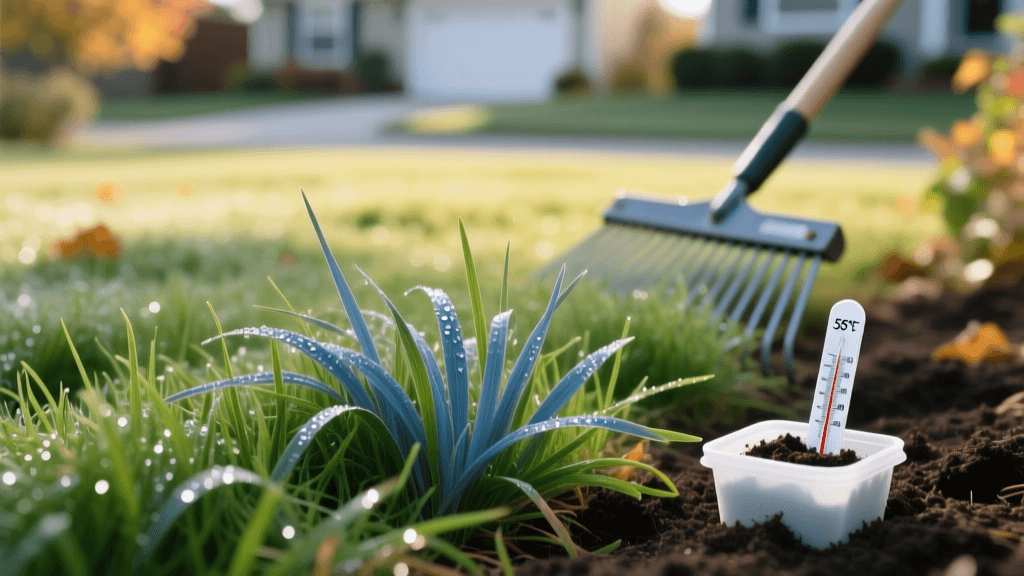
Warm-season grasses must be planted when soil temperatures at a 2-inch depth are consistently above 65°F. In most southern states, this window falls between mid-May and late June. Planting too early risks seed rot and frost damage, while planting too late (in August) will not give the root system enough time to establish before autumn dormancy, leaving the young grass highly vulnerable to winter kill and spring drought.
4. Implement Deep, Infrequent Irrigation
During the first 3 to 4 weeks of establishment, water lightly and frequently to keep the top inch of soil moist. However, once the grass is established, you must transition to a drought-training irrigation schedule. According to turfgrass research highlighted by the Texas A&M AgriLife Extension, watering deeply (applying 0.5 to 0.75 inches in a single session) but infrequently forces roots to chase moisture deeper into the soil profile. Shallow, daily watering creates a weak, shallow root system that will perish at the first sign of a summer heatwave.
Conclusion
When selecting a grass species for a southern lawn plagued by heat and water restrictions, there is no single "perfect" grass, but there is a perfect grass for your specific site conditions. Choose hybrid Bermuda for full-sun, high-traffic areas where maximum drought survival is required. Opt for Zoysia if you need a balance of drought tolerance, weed resistance, and moderate shade tolerance, and are willing to invest in higher upfront sod costs. Finally, select Centipede if you have acidic, low-fertility soil and desire a low-input, low-maintenance lawn that survives dry spells through dormancy. By matching the species to your microclimate and following rigorous soil preparation protocols, you can cultivate a resilient, beautiful lawn that thrives even in the harshest southern summers.