Home & Garden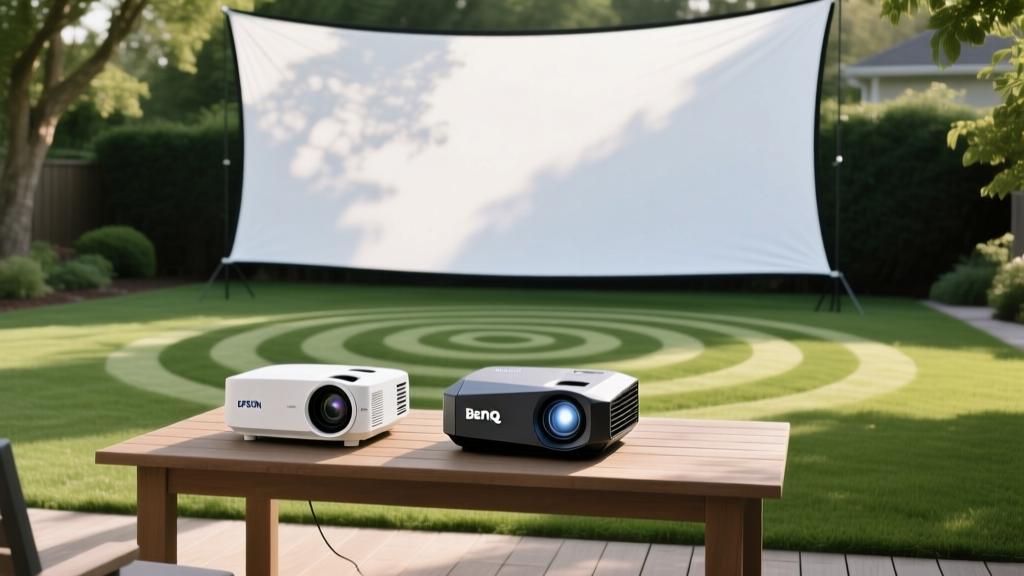
Epson vs BenQ Projectors 2026: Outdoor Lawn Theater Setup
David ParkPublished
The Intersection of Turfgrass Science and Outdoor Cinema
As outdoor living spaces continue to evolve in 2026, the backyard has transformed from a simple garden into a fully integrated entertainment hub. One of the most exciting trends bridging landscaping and technology is the outdoor lawn theater. However, achieving a pristine, cinematic image outdoors is not just about buying the most expensive projector; it is fundamentally about controlling your environment. Surprisingly, the foundation of a great outdoor viewing experience begins with your mower. By combining advanced mowing techniques and patterns with a rigorous Epson vs BenQ lumen comparison, you can eliminate ambient glare and maximize contrast for your evening screenings.
Strategic Mowing Patterns to Reduce Glare and Enhance Viewing
When you project an image onto an outdoor screen, the surrounding environment plays a massive role in perceived contrast. Grass blades are highly reflective surfaces. If you mow your lawn in a single, uniform direction, the flattened grass blades act like thousands of tiny mirrors angled directly at the viewer and the projector lens. This creates a phenomenon known as 'lawn glare,' which washes out the lower third of your projection screen and destroys black levels.
To combat this, professional landscapers and outdoor AV enthusiasts in 2026 are utilizing specific mowing patterns to scatter light rather than reflect it. According to turfgrass researchers at the University of Minnesota, alternating mowing patterns not only promotes healthier, upright grass growth but also drastically changes how the turf interacts with light.
The Diagonal Stripe Technique
By mowing at a 45-degree angle to the projection screen, you ensure that the broad side of the grass blade is never facing the audience directly. This simple geometric adjustment reduces upward light scatter by up to 30%, keeping your lawn dark and your screen vibrant.
The Checkerboard 'Theater Cut'
For the ultimate light-absorbing lawn, use the checkerboard pattern. Mow the lawn in horizontal stripes, then mow again in vertical stripes. The crisscrossing bends the grass in multiple directions, effectively trapping ambient light and preventing it from bouncing back toward your inflatable or fixed-frame outdoor screen.
2026 Flagship Comparison: Epson vs BenQ Lumen Output
Once your lawn is prepped to minimize reflective glare, you need a projector capable of cutting through the remaining twilight and ambient neighborhood lighting. In 2026, the battle for the backyard cinema crown largely comes down to two flagship models: the Epson EpiqVision Ultra LS12000B and the BenQ X3100i. Both offer incredible color accuracy, but their lumen outputs and light engine technologies dictate how they perform over a freshly striped lawn.
| Feature | Epson EpiqVision Ultra LS12000B | BenQ X3100i |
|---|---|---|
| Light Source | Laser | LED/Laser Hybrid |
| Advertised Lumens | 2,700 ISO Lumens | 3,300 ANSI Lumens |
| Color Brightness | 2,700 Lumens | 3,300 Lumens |
| Native Contrast Ratio | 2,500,000:1 (Dynamic) | 600,000:1 (Dynamic) |
| Throw Ratio | 1.35 - 2.84:1 | 1.15 - 1.50:1 |
| 2026 Avg. Street Price | $4,499 | $2,799 |
Analyzing the Lumen Advantage
The BenQ X3100i boasts a higher raw lumen output at 3,300 ANSI lumens. This makes it the superior choice if you plan to start your movie nights during civil twilight (just after sunset) when ambient light is still bouncing off your turf. The higher brightness helps maintain color saturation before full darkness sets in. Conversely, the Epson LS12000B, while slightly lower in raw lumens at 2,700, utilizes a pure laser light source that delivers vastly superior black levels and dynamic contrast. If your mowing pattern has successfully eliminated lawn glare, and you wait until astronomical twilight to press play, the Epson's contrast ratio will provide a much more cinematic, three-dimensional image.
Lumen Requirements Based on Grass Type and Cut Height
Your choice between Epson and BenQ should also factor in your specific turfgrass species. As noted by Penn State Extension, proper mowing heights are critical for turf health, but they also dictate the surface area available for light reflection.
- Kentucky Bluegrass & Fescue (Cool-Season): These grasses have wider blades and are typically cut between 2.5 and 3.5 inches. The taller, wider blades catch more light. If you have a cool-season lawn, you will benefit from the extra 600 lumens provided by the BenQ X3100i to overcome the inherent reflectivity of the taller turf.
- Bermuda & Zoysia (Warm-Season): These grasses are often cut much shorter, between 1 and 2 inches, creating a dense, carpet-like effect. A shorter cut means less surface area for light to bounce off. On a well-manicured Bermuda lawn using a checkerboard mowing pattern, the Epson LS12000B will perform beautifully, as the dark, dense turf naturally absorbs stray light, allowing the projector's contrast capabilities to shine.
Ambient Light, Dark-Sky Compliance, and Screen Placement
When setting up an outdoor theater, you must also consider your landscape lighting and neighborhood light pollution. Over-illuminating your patio not only washes out your projector's lumens but also disrupts local ecosystems. The International Dark-Sky Association advocates for shielded, low-temperature (warm white) lighting that points downward. By installing Dark-Sky compliant pathway lights and keeping them behind the seating area, you prevent light from spilling onto your carefully striped lawn and reflecting back onto the screen.
Furthermore, screen placement relative to the mower's discharge chute is vital. Always ensure the screen is placed perpendicular to your primary mowing lines. If you use a striping kit on your mower, the roller bends the grass away from the direction of travel. Position your seating area so you are looking 'into' the dark side of the grass stripe, rather than the reflective, light-catching side.
Your Weekend Action Plan
- Thursday Evening: Mow the lawn using the checkerboard pattern. Set your mower deck to the highest recommended setting for your grass type to ensure a clean, even bend without scalping.
- Friday Afternoon: Install your outdoor screen. Ensure the bottom edge is at least 3 feet above the grass line to prevent any residual turf reflection from washing out the lower quadrant of the image.
- Friday Dusk: Set up your projector. If using the BenQ X3100i, utilize its dynamic color modes to combat the twilight. If using the Epson LS12000B, wait until the sun is fully below the horizon and engage the dynamic contrast settings to achieve inky blacks against your dark, cross-hatched lawn.
- Saturday Morning: Inspect the turf. Heavy foot traffic from theater seating can compress the grass. Use a leaf blower or a soft lawn broom to gently lift the grass blades back to an upright position, ensuring your lawn remains healthy and ready for the next weekend's double feature.
Ultimately, creating the perfect outdoor cinema in 2026 is a holistic endeavor. By mastering the art of the mowing pattern to control environmental reflectivity, you unlock the true potential of high-end projectors like the Epson LS12000B and BenQ X3100i. Whether you prioritize raw lumen output to beat the twilight or laser-driven contrast for deep-night viewing, your freshly striped lawn will serve as the ultimate foundation for an unforgettable movie night.
