Home & Garden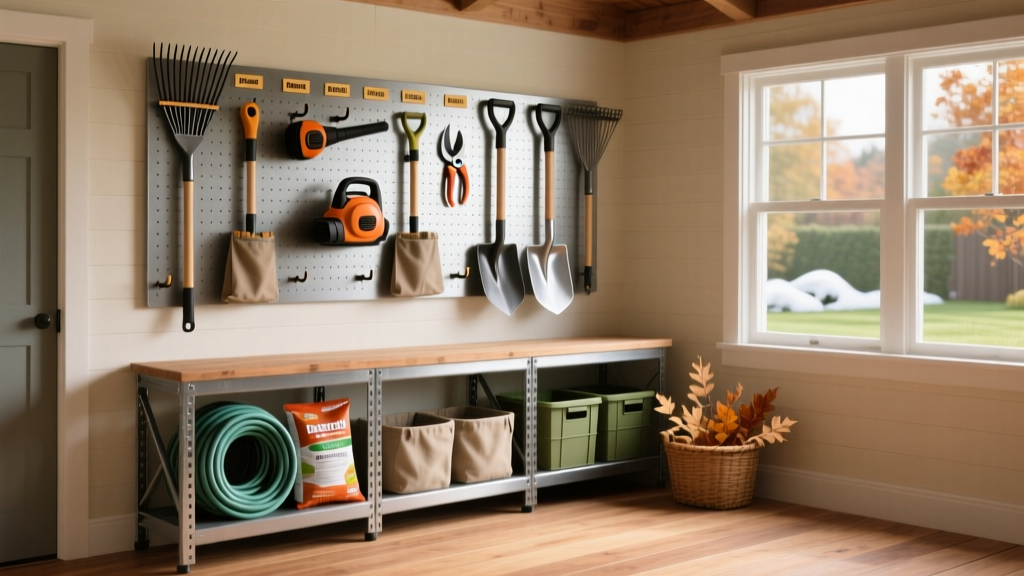
Fall 2026 Garden Shed Organization: Pegboards & Shelving
Anna KowalskiPublished
Preparing Your Shed for the 2026 Fall Lawn Care Season
As the air turns crisp and the leaves begin to drop, the transition from summer mowing to intensive fall lawn care is officially underway. Fall is arguably the most critical season for turf health, demanding a specific arsenal of tools ranging from core aerators and overseeding spreaders to heavy-duty leaf rakes and high-capacity battery-powered blowers. However, none of these tasks can be executed efficiently if your garden shed is a chaotic jumble of tangled cords, misplaced hand tools, and disorganized bags of seed. Upgrading your shed with a modern metal pegboard wall and heavy-duty shelving system in 2026 is the ultimate way to streamline your autumn landscaping workflow and prepare your equipment for the harsh winter months ahead.
The Critical Role of Fall Lawn Care Tool Organization
According to turf experts at the University of Minnesota Extension, fall is the most important time for lawn maintenance, encompassing vital tasks like aeration, overseeding, and final winterizing fertilization. These processes require specialized equipment that is often bulky, heavy, and easily damaged if left exposed to the elements or tossed haphazardly onto a dirt floor. By implementing a structured pegboard and shelving system, you not only protect your investment in premium 2026 landscaping tools but also save hours of frustration. A well-organized shed allows you to quickly grab your broadcast spreader, apply your autumn weed-and-feed, and return the tool to its designated hook without navigating an obstacle course of summer patio furniture and deflated pool toys.
Upgrading to Metal Pegboards for 2026
If your shed still features a traditional brown masonite pegboard, it is time for an upgrade. Masonite absorbs ambient moisture, leading to sagging, warping, and eventually, holes that become too stripped to hold heavy hooks. In 2026, galvanized steel and powder-coated metal pegboards are the industry standard for outdoor storage buildings. Brands like Wall Control and Gladiator GearWall offer modular metal panels that can support up to 100 pounds per square foot when properly anchored to wall studs.
Metal pegboards also feature a standardized 1/8-inch hole pattern that accommodates both traditional bent-wire hooks and modern, proprietary locking attachments. This is especially crucial for securing heavy, top-heavy 2026 lithium-ion battery platforms (such as 80V leaf blowers and string trimmers) without the risk of them vibrating off the wall when the shed door slams. Expect to invest approximately $180 to $250 for a comprehensive 4x8-foot metal pegboard starter kit, a worthwhile expense that will outlast the shed itself.
Heavy-Duty Shelving for Bulky Fall Equipment
While pegboards are perfect for hand tools and long-handled implements, fall lawn care also involves heavy, bulky items like bags of topsoil, pallets of sod, core aerators, and commercial-grade leaf vacuums. To handle these loads, you must install heavy-duty shelving adjacent to your pegboard wall.
For 2026 shed setups, industrial wire shelving units are vastly superior to solid resin or particleboard shelves. Wire racks allow for maximum airflow, which is essential when storing damp fall rakes, wet tarps, or freshly washed lawn mower decks. A standard 48-inch wide, 5-tier wire shelving unit rated for 800 pounds per shelf will cost around $120 to $160. Ensure the bottom shelf is elevated at least six inches off the ground to protect bagged grass seed and fertilizers from potential shed leaks or ground moisture.
Step-by-Step Pegboard and Shelving Installation
Installing your new organization system requires basic DIY skills and a few standard tools. Follow these steps to ensure a secure, level, and long-lasting setup:
- Locate and Mark Studs: Use a reliable magnetic or electronic stud finder to locate the wooden or metal studs in your shed wall. Mark the center of each stud with a pencil. Do not rely solely on drywall anchors for heavy tool storage.
- Install the French Cleat or Mounting Rail: Most premium metal pegboard systems utilize a top mounting rail. Level this rail using a 4-foot spirit level and secure it directly into the studs using 2.5-inch structural wood screws.
- Hang the Panels: Slot the metal pegboard panels onto the rail. Use the provided bottom screws to secure the lower half of the panels, preventing them from lifting when heavy tools are removed.
- Assemble and Anchor Shelving: Build your wire shelving units on a flat surface. Once positioned against the wall, use anti-tip wall brackets to secure the top tier of the shelving to the wall studs. This prevents catastrophic tipping if a heavy core aerator is pulled from a top shelf.
Strategic Zoning for Fall Tools
Do not place tools randomly. Organize your pegboard into distinct 'zones' based on the workflow of fall lawn care. Create a 'Leaf Management Zone' near the shed door for quick access to rakes, tarps, and blower wands. Dedicate a central 'Soil and Seed Zone' for aerator tines, spreader parts, and hand trowels. Keep a 'Maintenance Zone' near your workbench for wire brushes, sharpening stones, and linseed oil to prep tools before winter storage.
Fall Tool Storage Matrix
| Fall Lawn Care Tool | Storage Method | Recommended Hardware |
|---|---|---|
| 80V Cordless Leaf Blower | Pegboard (Lower Tier) | Heavy-duty cradle hook with safety strap |
| Poly Leaf Rakes | Pegboard (Upper Tier) | Angled long-handled tool grippers |
| Broadcast Spreader | Shelving (Bottom Tier) | Wire shelf with zip-tie wheel chocks |
| Core Aerator | Shelving (Floor Level) | Heavy-duty pallet base or low wire rack |
| Pruning Shears & Saws | Pegboard (Workbench Zone) | Magnetic tool bar or small bin hooks |
Safe Storage for Fall Fertilizers and Smart Batteries
Fall lawn care relies heavily on chemical amendments, including winterizer fertilizers and broadleaf weed control products. Safe storage of these materials is non-negotiable. The Environmental Protection Agency (EPA) strongly recommends storing all pesticides and fertilizers in their original containers, away from extreme temperature fluctuations, and securely out of reach of children and pets. Never store bagged or liquid fertilizers directly on the shed floor where they can absorb moisture or freeze. Utilize the middle tiers of your wire shelving for these chemicals, ensuring they remain dry and stable.
Additionally, the 2026 landscaping market is dominated by high-voltage lithium-ion outdoor power equipment. These expensive batteries degrade rapidly if left in freezing temperatures over the winter. Dedicate a specific, insulated bin on your indoor-facing shed wall or bring the batteries into your climate-controlled garage. Consider integrating a smart shed temperature sensor, such as those offered by Aqara or Ring, to receive mobile alerts if your shed's internal temperature drops below 40 degrees Fahrenheit, reminding you to rescue your sensitive batteries and liquid lawn amendments before they are ruined by the cold.
Tool Maintenance Before Winter Storage
Before hanging up your tools for the winter, take the time to clean and maintain them. Use a stiff wire brush to remove compacted clay and soil from aerator tines and shovel blades. Wipe down metal surfaces with a light coating of WD-40 or camellia oil to prevent rust during the humid winter months. For wooden handles on rakes and pitchforks, sand away any splinters and apply a generous coat of boiled linseed oil to prevent the wood from drying out and cracking. By combining this essential maintenance routine with your newly installed metal pegboard and heavy-duty shelving, you guarantee that your 2026 fall lawn care season will be efficient, safe, and highly productive, setting the stage for a lush, vibrant lawn next spring.
