Lawn Care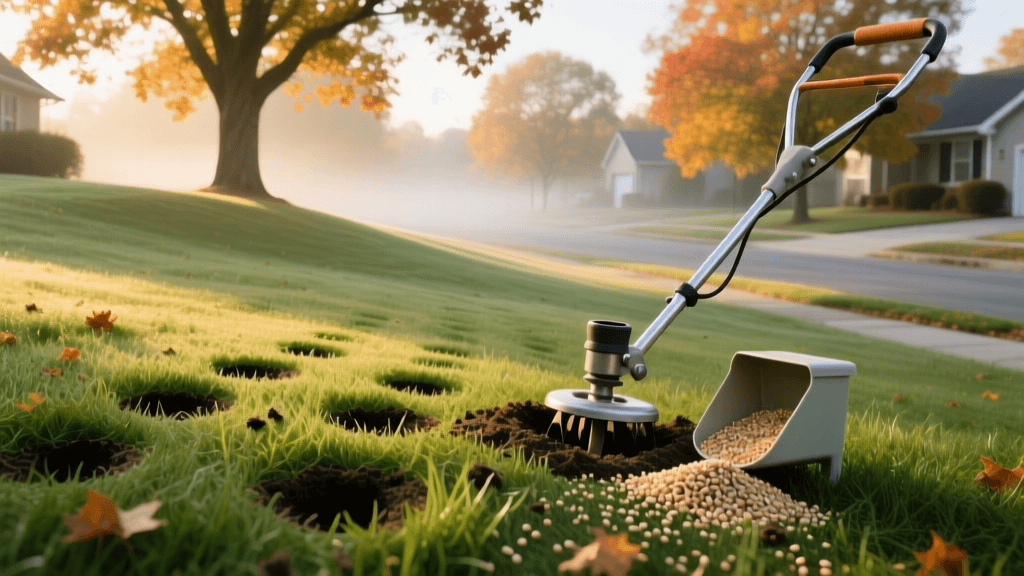
Fall Lawn Care Calendar: Timing Aeration and Overseeding
The Critical Importance of Fall Timing for Cool-Season Grasses
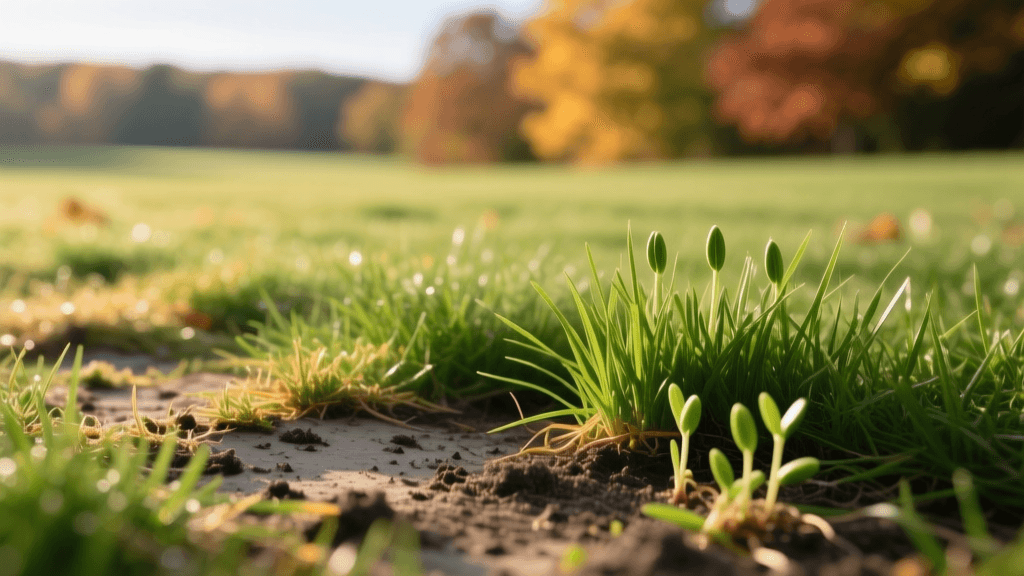
For homeowners cultivating cool-season grasses like Tall Fescue, Kentucky Bluegrass, and Perennial Ryegrass, autumn is not the time to wind down lawn care; it is the most vital season of the year. While spring planting is a common misconception driven by garden center displays, fall offers the optimal biological window for seed germination, root establishment, and nutrient storage. During autumn, air temperatures cool down, reducing heat stress and weed competition, while the soil retains the warmth accumulated over the summer months. This unique combination creates the perfect incubator for cool-season turfgrass.
According to turfgrass researchers at the University of Wisconsin-Madison Extension, late summer to mid-fall establishment allows grass roots to develop deeply before the following summer's drought and heat stress. To achieve a thick, resilient, and weed-resistant lawn, you must follow a precise seasonal timing and planting schedule. This comprehensive calendar breaks down the exact phases of fall lawn renovation, from soil preparation to winterizer fertilization.
Understanding Soil Temperature vs. Air Temperature
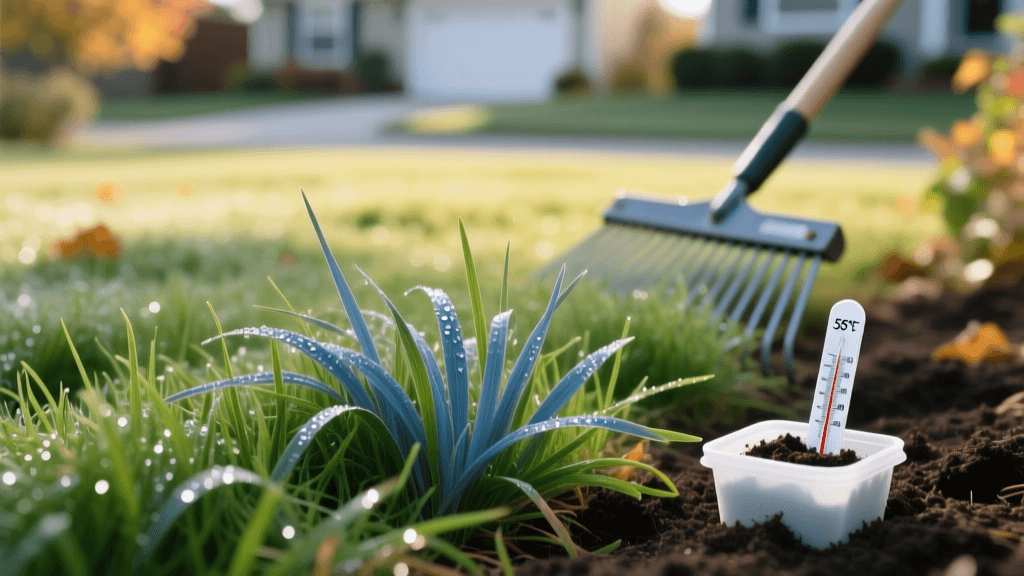
The biggest mistake DIY lawn care enthusiasts make is relying on the calendar or air temperature to dictate their planting schedule. Grass seed germination is dictated by soil temperature, not air temperature. For cool-season grasses, the ideal soil temperature range for germination is between 50°F and 65°F (10°C to 18°C).
In most northern and transitional zones, this soil temperature window typically aligns with late August through mid-October. If you plant too early when soil temperatures exceed 70°F, you risk seedling diseases like damping-off and severe competition from summer annual weeds like crabgrass. If you plant too late in November, the seed may germinate but the fragile seedlings will be killed by the first hard frost before they can establish a viable root system. Invest in a simple soil thermometer and check the temperature at a depth of two inches to ensure your timing is biologically accurate.
Phase 1: Late Summer Preparation (Late August to Early September)
Before a single seed touches the soil, the foundation must be prepared. This phase focuses on eliminating competition and understanding your soil's chemical makeup.
1. Soil Testing
Order a soil test from your local university extension office. A standard test costs between $15 and $30 and takes about two weeks to process. The results will dictate your exact pH and phosphorus needs. Cool-season grasses thrive in a pH range of 6.0 to 7.0. If your soil is too acidic, apply pelletized limestone now, as it takes months to alter soil pH.
2. Weed Eradication
If your lawn is heavily infested with broadleaf weeds or crabgrass, early September is the time to apply a selective herbicide containing 2,4-D or Dicamba. Crucial Timing Note: Most post-emergent herbicides require a waiting period of 3 to 4 weeks before you can safely overseed. Always read the product label to ensure your chemical application timeline aligns with your mid-September seeding date.
Phase 2: Core Aeration and Overseeding (Mid-September to Mid-October)
This is the peak action window for fall lawn care. Core aeration alleviates soil compaction, breaks down thatch, and creates direct seed-to-soil contact, which is mandatory for germination.
Executing Core Aeration
Rent a walk-behind core aerator (typically $70 to $100 per day from a local equipment rental yard). Ensure the machine pulls actual soil plugs that are 2 to 3 inches deep and spaced 2 to 3 inches apart. Make two passes over the lawn in perpendicular directions for maximum soil fracturing. Leave the soil plugs on the lawn; they will break down and return beneficial microbes to the surface within a few weeks.
Overseeding Rates and Timing
Immediately after aeration, while the soil cores are still moist and the holes are open, broadcast your grass seed. According to guidelines published by University of Minnesota Extension, selecting the right seed variety and applying it at the correct rate prevents overcrowding and fungal diseases. Avoid cheap contractor-grade seed mixes; look for bags labeled with 0% weed seed and 0% crop seed, featuring NTEP (National Turfgrass Evaluation Program) tested cultivars.
| Grass Type | New Lawn Seeding Rate | Overseeding Rate | Ideal Soil Temp |
|---|---|---|---|
| Tall Fescue | 6-8 lbs / 1,000 sq ft | 3-4 lbs / 1,000 sq ft | 50°F - 65°F |
| Kentucky Bluegrass | 2-3 lbs / 1,000 sq ft | 1-1.5 lbs / 1,000 sq ft | 50°F - 60°F |
| Perennial Ryegrass | 5-7 lbs / 1,000 sq ft | 2.5-3.5 lbs / 1,000 sq ft | 50°F - 65°F |
Note: Kentucky Bluegrass is often mixed with Perennial Ryegrass or Tall Fescue to combine the rhizomatous spreading habit of Bluegrass with the rapid germination of Ryegrass.
Phase 3: Starter Fertilizer and Watering Schedules
Once the seed is down, it requires immediate nutritional support and precise moisture management.
Applying Starter Fertilizer
New grass seedlings lack the root mass to forage for nutrients. Apply a high-quality starter fertilizer immediately after overseeding. Look for an N-P-K ratio where the middle number (Phosphorus) is elevated, such as 18-24-12 or 16-20-10. Phosphorus is critical for early root development. Apply at a rate that delivers roughly 1.0 lb of actual nitrogen per 1,000 square feet. (Note: Some states restrict phosphorus applications unless a soil test explicitly indicates a deficiency or you are establishing a new lawn/overseeding).
The Germination Watering Protocol
Grass seed must remain consistently moist, but not waterlogged, until it germinates. This requires a shift from deep, infrequent watering to light, frequent watering.
- Weeks 1-2 (Germination): Water 2 to 3 times per day for 5 to 10 minutes per zone. The goal is to keep the top 1 inch of soil damp.
- Weeks 3-4 (Seedling Establishment): Reduce frequency to once per day, but increase the duration to 15-20 minutes to encourage roots to chase the moisture deeper into the soil profile.
- Week 5 and Beyond: Transition back to standard deep and infrequent watering (1 to 1.5 inches of water per week, applied in 1 or 2 sessions).
Phase 4: Late Fall 'Winterizer' Fertilization (Late October to November)
The final step in the fall lawn care calendar is the application of a late-fall winterizer fertilizer. This application is arguably the most important feeding of the entire year for cool-season turf.
Timing the Winterizer
The ideal time to apply a winterizer is after the grass has stopped growing vertically (meaning you have put the mower away for the season), but while the grass is still green and actively photosynthesizing. This usually falls between late October and late November, depending on your hardiness zone.
Selecting the Right Nutrients
According to turfgrass fertility experts at Penn State Extension, late-fall fertilization should utilize a fast-release nitrogen source, such as Urea or Ammonium Sulfate. Because the soil is cooling down, microbial activity slows, meaning slow-release organic fertilizers will not break down in time to be absorbed by the roots. The grass absorbs this quick-release nitrogen and converts it into carbohydrates, storing it in the root system to survive the winter and fuel an explosive, early-spring green-up. Apply at a rate of 0.5 to 1.0 lbs of actual nitrogen per 1,000 square feet.
Estimated Costs for a 5,000 Square Foot Lawn Renovation
Budgeting for a DIY fall lawn renovation is highly cost-effective compared to hiring professional landscaping crews. Here is a breakdown of expected costs for a standard 5,000 sq ft cool-season lawn:
- Soil Test: $20
- Core Aerator Rental (1 Day + Gas): $90
- Premium Tall Fescue Seed (20 lbs): $110
- Starter Fertilizer (Bag covering 5k sq ft): $35
- Winterizer Fertilizer (Bag covering 5k sq ft): $30
- Total Estimated DIY Cost: $285 (Compared to $600+ for professional aeration and seeding services)
Conclusion
Mastering the seasonal timing of fall lawn care transforms a thin, weed-prone yard into a dense, carpet-like turf. By aligning your aeration, overseeding, and fertilization schedules with natural soil temperature drops, you work with nature rather than against it. Stick to this calendar, monitor your soil temperatures, maintain rigorous watering schedules during germination, and your cool-season lawn will reward you with vibrant, resilient growth for years to come.