Lawn Care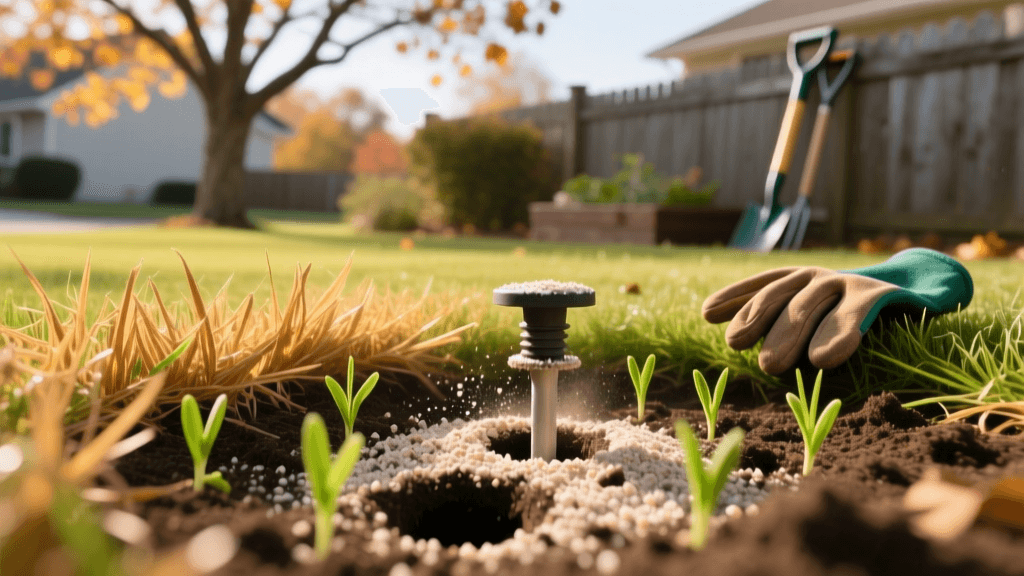
Fall Lawn Renovation: Aeration and Overseeding Guide
Why Fall is the Ultimate Time for Lawn Renovation
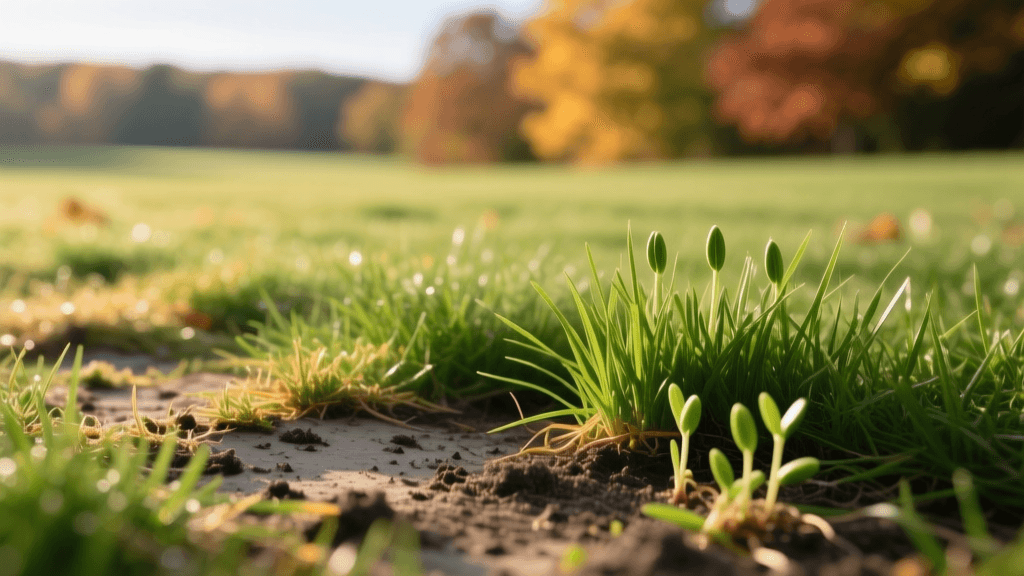
When it comes to lawn renovation and recovery for cool-season grasses, timing is everything. While spring might seem like the natural time to plant, early fall is universally recognized by turfgrass experts as the superior window for lawn recovery. During late August through October, soil temperatures remain warm enough to encourage rapid seed germination, while cooler air temperatures reduce heat stress on young seedlings. Furthermore, fall renovation significantly reduces competition from aggressive summer weeds like crabgrass, giving your new turf the best possible chance to establish a deep, resilient root system before the following summer.
According to the University of Minnesota Extension, early fall provides the ideal balance of warm soil and cool air, allowing cool-season grasses such as Tall Fescue, Kentucky Bluegrass, and Perennial Ryegrass to thrive and establish before winter dormancy.
Assessing Your Lawn: When to Renovate vs. Maintain
Before purchasing seed and renting equipment, evaluate your lawn's current condition using the '60% Rule'. If your lawn consists of 60% or more desirable turfgrass, you can successfully recover it through core aeration, overseeding, and targeted fertilization. However, if your lawn is less than 60% healthy grass and is heavily dominated by weeds, bare patches, or thatch, a complete renovation—killing the existing vegetation with a non-selective herbicide or solarization and starting from scratch—may be the more practical and cost-effective route.
Step-by-Step Fall Renovation Process
1. Mow Low and Remove Debris
Begin your renovation by lowering your mower deck to a height of 1.5 to 2 inches. This 'scalping' process allows sunlight to reach the soil surface and ensures that new seed makes direct contact with the earth rather than getting trapped in the thatch layer. Always bag your clippings during this initial mow to remove excess organic debris. If your thatch layer exceeds half an inch, consider renting a dethatcher or power rake to aggressively pull up the dead organic matter before proceeding.
2. Core Aeration (The Foundation of Recovery)
Core aeration is non-negotiable for a successful lawn renovation. This process involves pulling 2 to 3-inch plugs of soil and thatch from the ground, which alleviates soil compaction, improves water infiltration, and creates perfect micro-environments for seed germination.
- Equipment: Rent a walk-behind core aerator from a local hardware store. Avoid liquid aeration products or spike aerators for renovation, as they do not physically remove soil cores and can worsen compaction.
- Technique: Make at least two passes over your lawn in perpendicular directions (e.g., north-south, then east-west) to ensure maximum hole density.
- Cost: Renting a core aerator typically costs between $70 and $100 for a half-day, or you can hire a professional lawn care service for $15 to $25 per 1,000 square feet.
3. Overseeding (Choosing the Right Seed and Rates)
Investing in high-quality seed is critical. Avoid cheap, generic seed mixes from big-box stores, which often contain high percentages of inert matter, weed seeds, and annual ryegrass. Look for seeds certified by the National Turfgrass Evaluation Program (NTEP). Premium brands like Jonathan Green Black Beauty or Pennington Smart Seed offer superior drought tolerance and disease resistance.
Use a broadcast spreader for even application, or rent a slit-seeder (also known as a slice-seeder) which cuts grooves into the soil and drops the seed directly into the dirt, drastically improving seed-to-soil contact and germination rates.
4. Applying Starter Fertilizer
New grass seedlings require a specific nutrient profile to develop strong roots. As noted by Penn State Extension, applying a starter fertilizer is critical for newly seeded lawns because it provides a readily available source of phosphorus, which is essential for early root development. Look for a fertilizer with a high middle number (Phosphorus), such as a 10-18-10 or 18-24-12 NPK ratio. Apply the starter fertilizer on the same day you overseed, following the manufacturer's application rates strictly to avoid burning the delicate new shoots.
5. Topdressing for Moisture Retention
For bare or extremely thin areas, apply a thin layer (about 1/4 inch) of organic compost or peat moss over the seeded areas. This topdressing acts as a mulch, retaining crucial moisture around the seed, protecting it from birds, and providing a slow-release source of organic nutrients. Ensure you do not apply the compost too thickly, as smothering the seed will prevent germination.
6. Watering and Post-Germination Care
Watering is the most labor-intensive part of lawn renovation. For the first 14 to 21 days, the seed bed must remain consistently moist but not waterlogged. Set your irrigation system to water lightly 2 to 3 times a day for 10 to 15 minutes per zone. Once the seeds have germinated and the new grass reaches about 1 inch in height, gradually reduce the frequency of watering while increasing the duration. This encourages the young roots to grow deeper into the soil profile in search of moisture, building long-term drought tolerance.
Cool-Season Grass Overseeding Rates and Timelines
Use the chart below to determine the correct seed volume and expected germination windows for the most common cool-season turfgrasses used in lawn renovation projects.
| Grass Type | Overseeding Rate (lbs / 1,000 sq ft) | Germination Time (Days) | Ideal Fall Planting Window |
|---|---|---|---|
| Tall Fescue | 8 - 10 lbs | 7 - 14 days | late Aug - mid Oct |
| Kentucky Bluegrass | 2 - 3 lbs | 14 - 28 days | late Aug - mid Sep |
| Perennial Ryegrass | 5 - 7 lbs | 5 - 10 days | late Aug - mid Oct |
| Fine Fescue | 4 - 5 lbs | 7 - 14 days | late Aug - mid Sep |
Common Renovation Mistakes to Avoid
- Applying Pre-Emergent Herbicides: Pre-emergents like prodiamine or dithiopyr prevent seeds from germinating. Do not apply any pre-emergent herbicides in the spring or summer if you plan to overseed in the fall. If you must control weeds, use targeted post-emergent spot treatments at least 4 weeks prior to seeding.
- Mowing Too Early: Wait until the new grass has reached at least 3 to 3.5 inches in height before making your first mow. Ensure your mower blade is freshly sharpened; a dull blade will tear young, tender grass leaves, leaving them vulnerable to fungal diseases like brown patch.
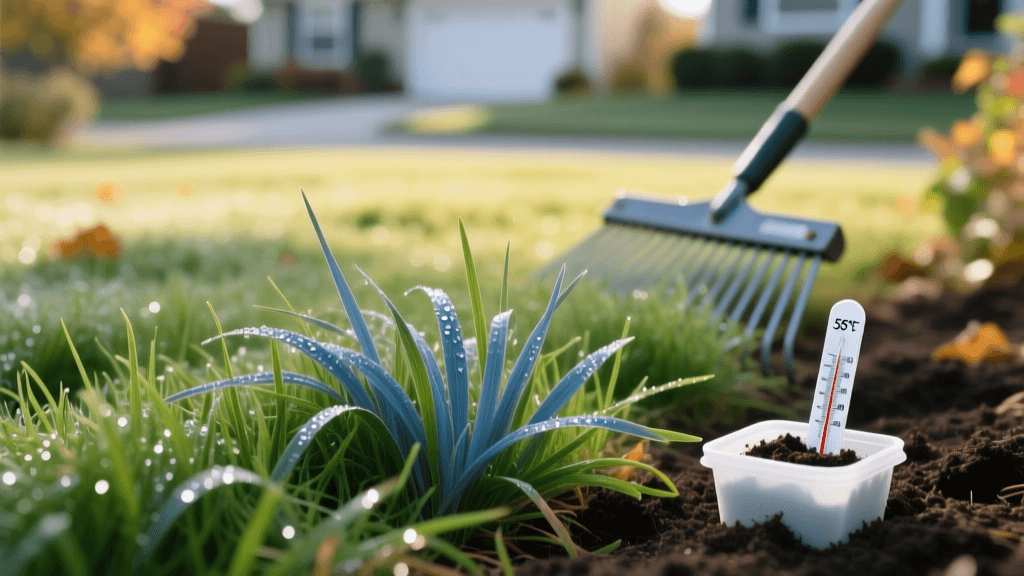
- Ignoring Soil pH: Grass struggles to absorb nutrients if the soil pH is too acidic or too alkaline. Before starting your renovation, invest $20 to $30 in a professional soil test through your local university extension office. If your pH is below 6.0, apply pelletized lime to raise it to the optimal 6.2 to 6.8 range.
- Neglecting the Leaves: Falling autumn leaves can quickly smother newly germinated seedlings. Gently remove leaves using a leaf blower on a low setting or a lightweight rake. Avoid heavy raking over newly seeded areas, as this will uproot the fragile new grass.
Conclusion
Successful lawn renovation requires patience, proper equipment, and strict adherence to seasonal timing. By combining core aeration with high-quality seed, starter fertilizer, and a meticulous watering schedule, you can transform a thin, weed-ridden yard into a thick, vibrant, and resilient turf. The effort and investment you put into your lawn this fall will pay massive dividends when your neighbors are dealing with summer stress and weed invasions next year.