Lawn Care
Fall Overseeding and Aeration Timing for Cool-Season Lawns
Why Fall is the Prime Time for Cool-Season Lawns
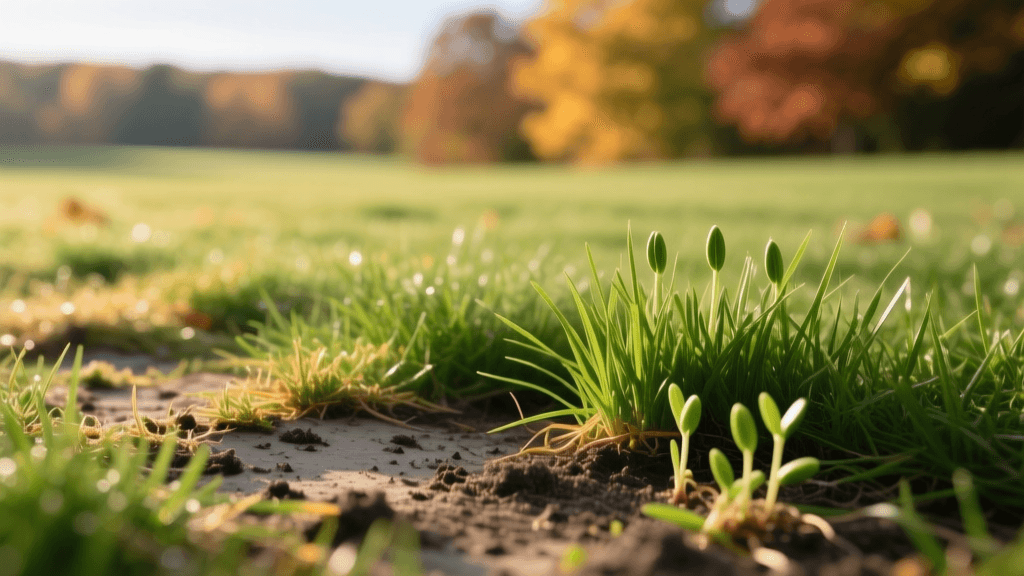
For homeowners cultivating cool-season grasses like Kentucky Bluegrass, Tall Fescue, Perennial Ryegrass, and Fine Fescue, autumn is not the end of the growing season; it is the beginning. While spring planting is a common misconception driven by garden center displays, fall overseeding and aeration timing is the true secret to a thick, resilient, and weed-free lawn. During the summer months, cool-season grasses endure immense heat stress, drought, and foot traffic, often leading to thinning turf and soil compaction. As autumn approaches, the biological priorities of these grasses shift from top-growth to aggressive root development.
By targeting the early fall window, you capitalize on warm soil that promotes rapid seed germination, combined with cooler air temperatures that reduce heat stress on tender seedlings. Furthermore, fall planting gives your new grass two full growing seasons (fall and spring) to establish deep root systems before facing the brutal summer heat. According to the University of Minnesota Extension, late summer to early fall is universally recognized by turfgrass scientists as the optimal window for seeding and renovating cool-season lawns, primarily because weed competition is significantly lower than in the spring.
The Golden Rule: Soil Temperature Over Air Temperature
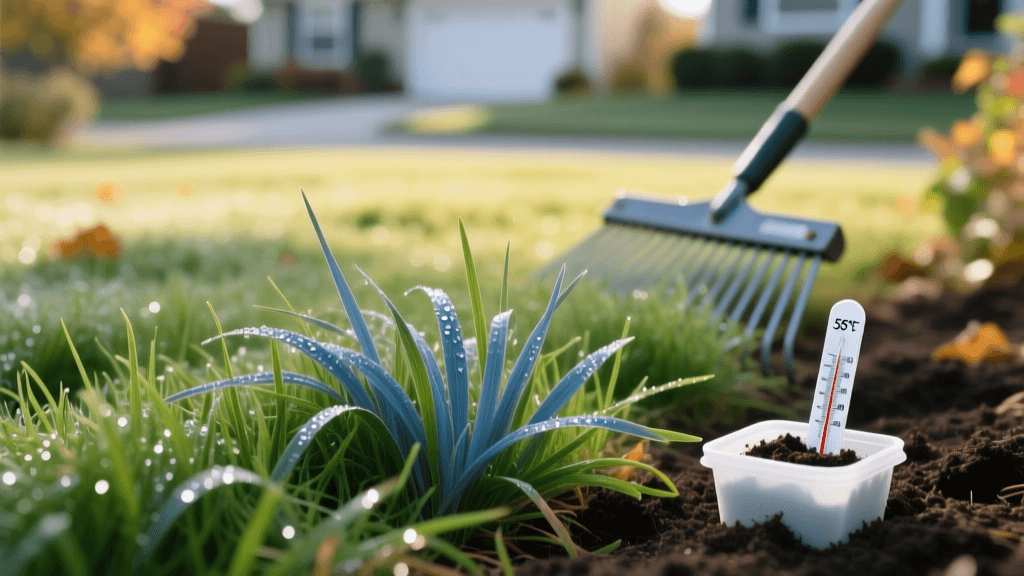
One of the most critical mistakes homeowners make is relying on the calendar or daily air temperature to dictate their planting schedule. The true trigger for fall overseeding and aeration is soil temperature. Cool-season grass seeds require a soil temperature between 50°F and 65°F (10°C to 18°C) at a depth of two inches to break dormancy and germinate effectively.
To measure this accurately, invest in a standard soil probe thermometer. Insert the probe two inches into the soil in a shaded area of your lawn in the late morning. When the soil consistently reads between 50°F and 65°F for three consecutive days, your planting window is officially open. In most northern and transition zones, this correlates with late August through mid-September. If you seed too early while the soil is still above 70°F, you risk fungal diseases like damping-off. If you seed too late when soil drops below 45°F, germination will stall, leaving seed vulnerable to winter kill.
Cool-Season Grass Planting Schedule and Seed Rates
Selecting the right seed and applying it at the correct density is vital for avoiding both sparse coverage and resource-wasting overcrowding. Below is a comprehensive timing and application chart for the most common cool-season grasses.
| Grass Type | Ideal Seed Rate (lbs / 1,000 sq ft) | Optimal Soil Temp | Days to Germinate | First Mow Timing |
|---|---|---|---|---|
| Tall Fescue | 6.0 - 8.0 | 50°F - 65°F | 7 - 12 days | 3 - 4 weeks |
| Kentucky Bluegrass | 2.0 - 3.0 | 50°F - 60°F | 14 - 30 days | 4 - 6 weeks |
| Perennial Ryegrass | 5.0 - 7.0 | 50°F - 65°F | 5 - 10 days | 2 - 3 weeks |
| Fine Fescue | 4.0 - 5.0 | 50°F - 60°F | 7 - 14 days | 3 - 4 weeks |
Note: When overseeding an existing thin lawn rather than establishing a brand new one, you can reduce these seed rates by approximately 30% to 50%.
Step-by-Step Fall Aeration and Overseeding Guide
Phase 1: Preparation and Core Aeration (Late August to Early September)
Before a single seed touches the soil, you must address soil compaction. Core aeration involves using a machine to pull 2-to-3-inch plugs of soil and thatch from the ground, creating pathways for oxygen, water, and nutrients to reach the root zone. The University of Minnesota Extension emphasizes that core aeration is vastly superior to spike aeration, which merely punches holes and can actually increase compaction along the hole walls.
Action Steps:
- Mow Low: Mow your existing lawn to a height of 1.5 to 2 inches and bag the clippings. This ensures the seed will reach the soil surface rather than getting trapped in the thatch layer.
- Water Deeply: Water the lawn thoroughly 24 hours before aerating. Moist soil allows the aerator tines to penetrate deeply and pull clean, intact cores.
- Aerate: Rent a walk-behind core aerator (typically $80 to $100 per day from local hardware stores). Make two passes over the lawn in perpendicular directions to ensure maximum soil disruption. Leave the extracted soil plugs on the lawn; they will break down naturally and return beneficial microbes to the surface.
Phase 2: Seeding and Starter Fertilizer (Early to Mid-September)
Immediately following aeration is the perfect time to overseed. The aeration holes provide an ideal, protected micro-environment for seeds to settle, retain moisture, and establish root contact.
Action Steps:
- Apply Seed: Use a broadcast spreader for even distribution. Walk in a grid pattern (north-south, then east-west) to prevent striping. Pay special attention to bare spots, lightly raking topsoil or compost over them before seeding.
- Apply Starter Fertilizer: New grass seedlings require high levels of phosphorus for root development. Avoid standard 'weed and feed' products, as the herbicides will kill your new grass. Instead, use a dedicated starter fertilizer with an N-P-K ratio similar to 10-18-10 or 18-24-12 (such as Scotts Turf Builder Starter Food or Lesco Professional Starter Fertilizer). Apply at the rate specified on the bag, usually around 3 to 4 lbs per 1,000 square feet.
Phase 3: The Critical Watering Schedule (Weeks 1 through 4)
Watering is the single most important factor in the success of your fall overseeding schedule. Grass seed must remain consistently moist until it germinates and establishes a rudimentary root system. Letting the seed dry out even once during the germination phase can kill the embryo.
The 4-Week Watering Protocol:
- Weeks 1-2 (Germination): Water lightly 2 to 3 times per day for 5 to 10 minutes per zone. The goal is to keep the top half-inch of soil damp, not soaking wet. If the weather is exceptionally windy or sunny, you may need to water a third time in the early afternoon.
- Week 3 (Establishment): As seedlings reach 1 inch in height, reduce watering frequency to once a day, but increase the duration to 15-20 minutes to encourage roots to grow deeper into the aeration holes.
- Week 4 and Beyond (Maturation): Transition to a standard deep-and-infrequent watering schedule. Water 2 to 3 times a week, applying about 1 inch of water per week to promote drought tolerance.
Budgeting for Your Fall Lawn Renovation
Understanding the costs associated with proper seasonal timing helps homeowners budget effectively for a professional-grade result. Here is a typical cost breakdown for a standard 5,000 square foot lawn:
- High-Quality Seed: $35 - $60 (Avoid cheap 'contractor' mixes that contain high percentages of annual ryegrass or weed seeds).
- Starter Fertilizer: $25 - $40 per bag (covers 5,000 sq ft).
- Core Aerator Rental: $85 - $110 for a half-day or full-day rental.
- Topdressing Compost (Optional but recommended for bare spots): $30 - $50 per cubic yard.
Total estimated DIY cost ranges from $175 to $260, which is a fraction of the $800 to $1,500 a professional landscaping service would charge for the same aeration and overseeding treatment.
Common Timing Mistakes to Avoid
Even with the best products, poor timing can ruin your efforts. Avoid these frequent pitfalls:
- Applying Pre-Emergent Herbicides: If you plan to overseed in the fall, do not apply a pre-emergent crabgrass preventer in the late summer. Pre-emergents do not distinguish between crabgrass and your expensive turf seed; they will halt the germination of both.
- Waiting Until October: While October air temperatures feel pleasant, the soil is cooling rapidly. Penn State Extension warns that seeding too late in the fall results in weak seedlings that lack the root mass to survive winter frost heave and spring desiccation.
- Mowing Too Early: Do not mow the new seedlings until they have reached at least 3 to 3.5 inches in height. When you do mow, ensure your mower blade is razor-sharp to prevent tearing the tender, young grass blades out of the soil.
'The success of a cool-season lawn is dictated in the fall. A homeowner who masters soil temperature monitoring and core aeration timing in September will spend half the time and money on lawn care the following summer compared to one who relies on spring planting.' — Turfgrass Management Best Practices
By adhering to this seasonal timing and planting schedule, you align your lawn care efforts with the natural biological rhythms of cool-season grasses. The result is a denser, greener, and more disease-resistant lawn that will be the envy of the neighborhood from early spring straight through to the first snowfall.