Lawn Care
The Ultimate Fall Overseeding Schedule for Cool-Season Lawns
Why Fall is the Prime Season for Cool-Season Lawns
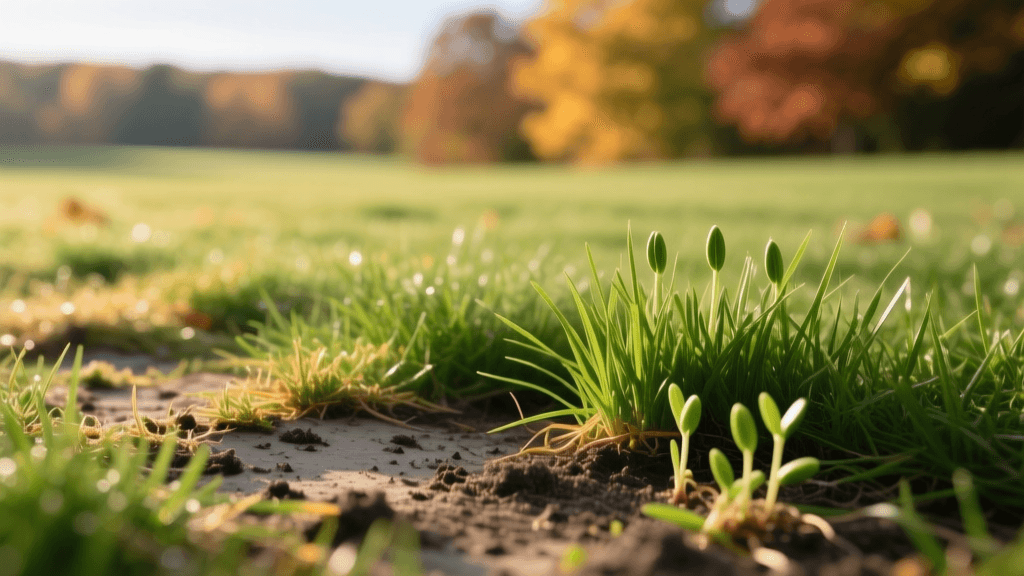
When it comes to rejuvenating a thinning, damaged, or weed-infested lawn, timing is everything. For homeowners cultivating cool-season grasses—such as Kentucky Bluegrass, Tall Fescue, and Perennial Ryegrass—late summer and early autumn present the absolute best window for overseeding. While spring planting might seem intuitive, fall overseeding provides a distinct biological advantage. During the autumn months, soil remains warm from the summer sun, which accelerates seed germination, while the cooling air temperatures reduce heat stress on tender new seedlings.
Furthermore, fall planting drastically reduces weed competition. Most aggressive summer annual weeds, like crabgrass, begin to die off as daylight hours shorten and temperatures drop. According to the University of Minnesota Extension, late summer to early fall is the optimal window for seeding because it allows grass seedlings to establish deep root systems before the ground freezes, giving them a massive head start for the following spring.
The Science of Timing: Soil Temperature vs. Air Temperature
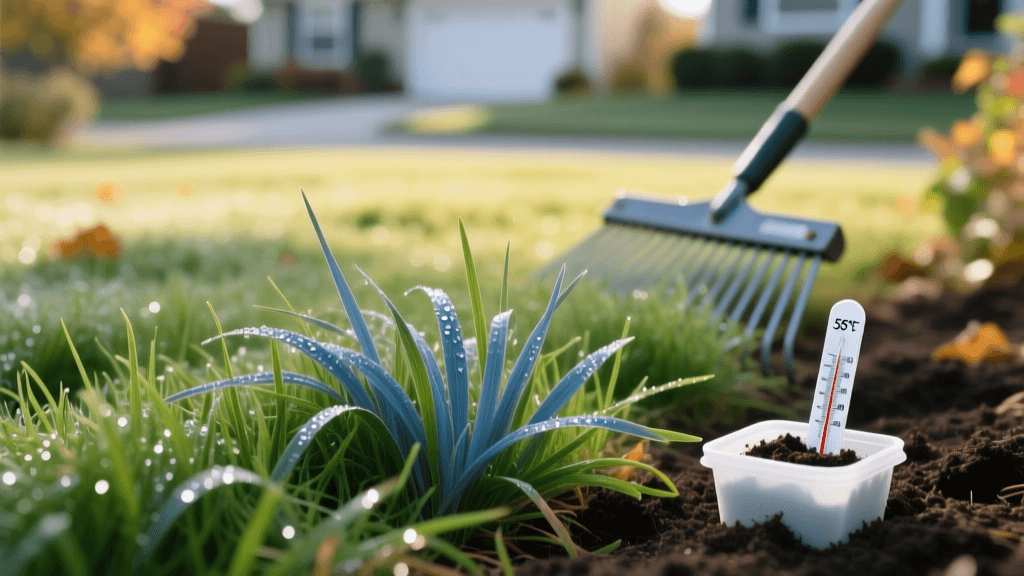
Many novice gardeners make the mistake of watching the weather app's air temperature to decide when to plant. However, grass seed responds primarily to soil temperature. The ideal soil temperature for cool-season grass germination ranges between 50°F and 65°F (10°C to 18°C). This soil temperature range typically corresponds to daytime air temperatures of 60°F to 75°F.
If you seed too early in August when soil temperatures exceed 75°F, you risk fungal diseases like damping-off and severe heat stress. If you seed too late in October when soil temperatures drop below 50°F, germination will stall, leaving seeds vulnerable to frost heave and winter desiccation. Aim to overseed roughly 45 to 60 days before your region's average first hard frost date.
The 8-Week Fall Overseeding Schedule
Success in lawn care relies on methodical execution. Below is a structured, week-by-week timeline to guide your fall overseeding project from initial soil preparation to the first winter mow.
| Timeline | Action Phase | Key Tasks & Product Recommendations |
|---|---|---|
| Week 1 | Site Preparation | Conduct a soil test. Mow lawn to 1.5 inches. Perform core aeration to relieve compaction and create seed-to-soil contact channels. |
| Week 2 | Seeding & Feeding | Spread seed at recommended rates. Apply a high-phosphorus starter fertilizer (e.g., 18-24-12) to promote rapid root development. |
| Weeks 3-5 | Germination & Moisture | Water lightly 2 to 3 times daily for 5-10 minutes. Keep the top 1 inch of soil consistently moist but not waterlogged. |
| Week 6 | First Mowing | When new grass reaches 3.5 inches, mow down to 2.5 inches using a sharp mower blade to avoid uprooting seedlings. |
| Weeks 7-8 | Root Establishment | Transition to deep, infrequent watering (1 inch per week). Apply a winterizer fertilizer in late fall if soil tests indicate a need. |
Step-by-Step Execution Guide
1. Core Aeration and Dethatching
Seed-to-soil contact is the single most critical factor in overseeding success. Seeds that land on top of a thick thatch layer will germinate, but their roots will dry out before reaching the soil. Penn State Extension emphasizes that removing thatch and performing core aeration are vital steps for integrating new seed into an existing turf canopy. Rent a walk-behind core aerator or hire a local landscaping service to pull 2-to-3-inch soil plugs across the entire lawn. Leave the plugs on the lawn; they will break down and return valuable microbes to the surface.
2. Seed Selection and Application Rates
Choosing the right seed variety and applying it at the correct rate prevents overcrowding and disease. For overseeding, you use roughly half the rate required for establishing a brand-new lawn from bare dirt.
| Grass Type | Overseeding Rate (per 1,000 sq. ft.) | Germination Time | Best Use Case |
|---|---|---|---|
| Tall Fescue | 6 - 8 lbs | 7 - 14 days | High traffic areas, drought-prone zones, transition zones. |
| Kentucky Bluegrass | 1 - 2 lbs | 14 - 28 days | Northern climates, high aesthetic appeal, rhizomatous spreading. |
| Perennial Ryegrass | 3 - 5 lbs | 5 - 10 days | Quick erosion control, nursing slower-germinating bluegrass. |
For a resilient lawn, consider a mix of 80% Tall Fescue and 20% Kentucky Bluegrass. The fescue provides deep drought tolerance, while the bluegrass rhizomes help the lawn recover from physical damage and fill in bare patches laterally.
3. The Watering Protocol
Watering newly overseeded lawns requires a shift in mindset. Instead of the deep, infrequent watering used for established lawns, germinating seeds require shallow, frequent moisture. The University of Maryland Extension notes that keeping the top inch of soil consistently moist is mandatory until seedlings reach a height of two inches. Set your sprinkler timers to run for 5 to 10 minutes in the early morning, mid-day, and early afternoon. As the grass matures into weeks 4 and 5, gradually reduce the frequency while increasing the duration to encourage roots to chase water deeper into the soil profile.
Soil Testing and Fertilization Specifics
Before dropping a single seed, a comprehensive soil test is highly recommended. Cool-season grasses thrive in soil with a pH between 6.0 and 7.0. If your soil test reveals a pH below 6.0, apply pelletized limestone at the rates specified by your lab results to raise the pH. Conversely, if your soil is overly alkaline, elemental sulfur may be required.
When it comes to fertilization during overseeding, starter fertilizers are non-negotiable. Unlike standard maintenance fertilizers that are high in nitrogen, starter fertilizers contain a significant amount of phosphorus (the middle number in the N-P-K ratio). Phosphorus is the primary driver of early root development. A product with an N-P-K ratio of 18-24-12 or 10-18-10 is ideal. Apply the starter fertilizer on the exact same day you spread your grass seed to ensure the emerging radicle (the first root) has immediate access to the nutrients required to anchor into the soil.
Crucial Herbicide Warnings
One of the most devastating mistakes a homeowner can make during fall overseeding is the improper use of pre-emergent herbicides. Standard pre-emergents, such as those containing prodiamine or dithiopyr, create a chemical barrier in the soil that prevents cell division in germinating seeds. This barrier does not discriminate between crabgrass seeds and your expensive turfgrass seed.
If you must control weeds during the overseeding window, you must wait until the new grass has been mowed at least three times before applying broadleaf post-emergent herbicides. Alternatively, if you need pre-emergent protection against fall weeds like Poa annua, you can use a product containing Mesotrione (commonly known by the brand name Tenacity). Mesotrione is unique because it is safe to use at the time of seeding for most cool-season grasses and will bleach emerging weeds white without harming your new turf.
Final Thoughts on Fall Lawn Care
Overseeding is an investment of time, labor, and money. By strictly adhering to a seasonal planting schedule dictated by soil temperatures rather than calendar dates, you give your cool-season lawn the best possible chance to thrive. Ensure your mower blades are sharpened before that first mow, keep foot traffic off the tender seedlings, and trust the biological processes that make autumn the ultimate season for turfgrass renewal.