
Landscaping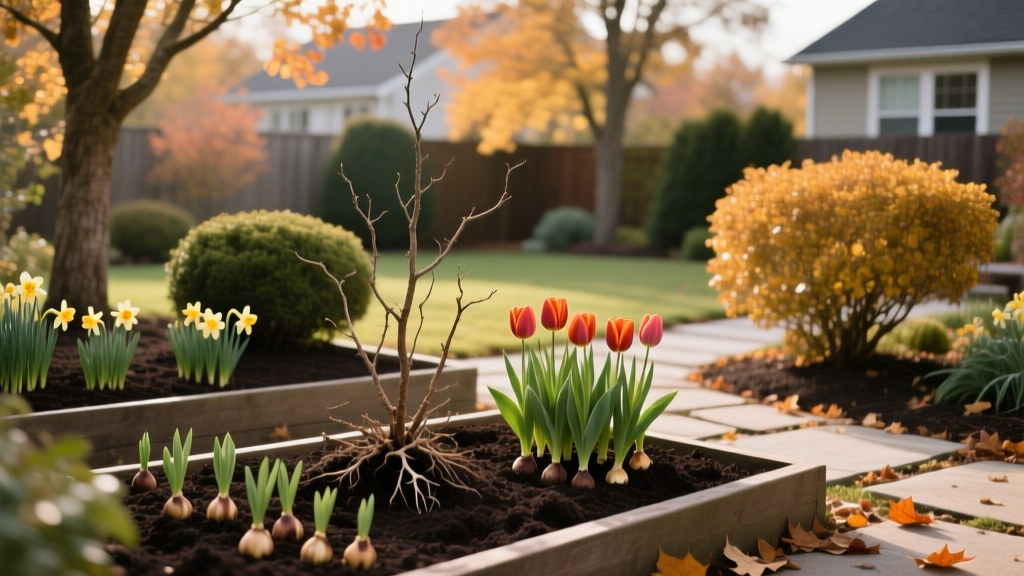
Fall Planting Schedule for Trees, Shrubs, and Bulbs
James MillerPublished
Why Fall is the Premier Season for Landscaping
Many homeowners associate spring with landscaping and planting, but professional landscape architects and horticulturists know a secret: fall is actually the premier season for establishing new plants, trees, and shrubs. When you plant in the spring, the soil is often cold and muddy, and the young plants are immediately subjected to the stress of summer heat and drought. In contrast, fall planting offers a unique combination of warm soil and cool air. This environmental dynamic encourages vigorous root growth while minimizing the transpiration and stress on the top growth. By the time spring arrives, your fall-planted landscape will have a robust, well-established root system capable of supporting explosive new growth and surviving the rigors of summer. Understanding the precise seasonal timing and planting schedules is critical to maximizing this advantage. This guide will walk you through the exact timelines, soil temperature metrics, and actionable steps required to execute a flawless fall landscaping installation.
Soil Temperature: The Hidden Metric for Planting Success
While the calendar provides a general framework, professional landscapers rely on soil temperature to dictate their planting schedules. Air temperature can fluctuate wildly in early autumn, but soil retains summer heat well into October and even November, depending on your hardiness zone. The ideal soil temperature for root establishment ranges between 55°F and 65°F. At these temperatures, roots actively grow and absorb nutrients, even if the air temperature has dropped into the 40s. To measure this accurately, invest in a digital soil probe thermometer. Insert the probe 4 to 6 inches into the ground in the morning for the most consistent reading. If your soil is above 70°F, it may still be too warm for certain spring-blooming bulbs, which require a chilling period. If it drops below 45°F, root growth slows dramatically, and you are approaching the cutoff for planting evergreen shrubs. Monitoring this hidden metric ensures you are working with nature, not against it.
Timing Your Tree and Shrub Plantings
Trees and shrubs form the structural backbone of any landscape design, and timing their installation correctly is paramount. The window for planting largely depends on whether you are installing deciduous or evergreen species. Deciduous trees and shrubs, which drop their leaves in autumn, can be planted later in the season. Because they enter dormancy above ground, their energy is entirely focused on subterranean root expansion. You can safely plant deciduous species up until the ground freezes solid. Evergreens, however, require a much earlier planting schedule. Because they retain their needles or leaves throughout the winter, they continue to lose moisture to the wind and sun. If planted too late in the fall, their root systems will not be established enough to draw water from the frozen soil, leading to severe winter desiccation and browning. According to the University of Minnesota Extension, evergreens should ideally be planted in early September to mid-October, giving them at least six to eight weeks of active root growth before the first hard freeze. When digging the planting hole, always excavate two to three times wider than the root ball, but no deeper. Planting too deep is a leading cause of tree mortality, as it suffocates the root flare. Backfill with native soil mixed with 10% to 20% organic compost to encourage roots to expand outward rather than staying confined in a pocket of rich, loose soil.
Scheduling Spring-Flowering Bulbs
No spring landscape is complete without the vibrant colors of tulips, daffodils, alliums, and crocuses. These geophytes require a prolonged period of cold stratification to trigger their internal blooming mechanisms. The golden rule for scheduling bulb plantings is to place them in the ground when the soil temperature has consistently dropped below 60°F, which is typically six to eight weeks before the ground is expected to freeze solid. In northern climates (Zones 3-5), this scheduling usually falls between late September and mid-October. In milder climates (Zones 6-8), you can delay planting until November or even early December. The Iowa State University Extension emphasizes that proper planting depth is just as crucial as timing. A general rule of thumb is to plant bulbs at a depth equal to three times their greatest diameter. For example, a two-inch tulip bulb should be planted six inches deep, measured from the base of the bulb. To streamline your planting schedule, group bulbs by their required depth. Dig a single, wide trench rather than individual holes, amend the base with a slow-release bulb fertilizer or bone meal, place the bulbs at their respective depths, and backfill. This mass-planting technique, often called drift planting, creates a much more natural and visually impactful landscape design than rigid, evenly spaced rows.
The Ultimate Fall Landscaping Schedule
To keep your landscaping projects on track, refer to this structured month-by-month planting and preparation schedule. Adjust the exact weeks based on your specific USDA Hardiness Zone and local frost dates.
| Timeframe | Target Soil Temp | Primary Landscaping Tasks | Ideal Plant Types |
|---|---|---|---|
| Early Fall (Late Aug - Mid Sept) | 65°F - 70°F | Hardscaping, bed prep, dividing perennials | Evergreen trees/shrubs, early spring bulbs (Crocus) |
| Mid Fall (Late Sept - Mid Oct) | 55°F - 65°F | Tree planting, shrub installation, lawn overseeding | Deciduous trees, Hydrangeas, Tulips, Daffodils |
| Late Fall (Late Oct - Mid Nov) | 45°F - 55°F | Bulb planting, sheet mulching, winterizing irrigation | Alliums, Garlic, bare-root shrubs, cover crops |
| Winter Cusp (Late Nov - Freeze) | Below 45°F | Heavy mulching, wrapping tender bark, tool maintenance | Dormant bare-root trees (if ground is workable) |
Garden Bed Preparation and Hardscaping Timing
Fall is not just about putting plants in the ground; it is the optimal time to prepare the canvas for next year's landscape. Hardscaping projects, such as installing retaining walls, laying flagstone patios, or building raised cedar beds, should be completed in early to mid-fall. Doing so allows you to beat the winter frost heave, which can shift and crack improperly cured concrete or unsettled gravel bases. Once the hardscaping is complete, shift your focus to garden bed preparation. Late fall is the perfect time to employ a technique known as sheet mulching or lasagna gardening. By layering cardboard, grass clippings, fall leaves, and compost directly over existing turf or weedy areas, you allow the winter moisture and freeze-thaw cycles to break down the organic matter. By spring, the underlying grass will be smothered and decomposed, leaving you with a rich, weed-free, and highly aerated planting bed that requires zero tilling.
Essential Aftercare and Winterization
The planting schedule does not end when the backfill is tamped down. Fall-planted landscapes require specific aftercare to survive their first winter. The most common mistake homeowners make is assuming that autumn rains are sufficient to water new plantings. In reality, the root balls of nursery-grown trees and shrubs dry out much faster than the surrounding native soil. You must continue to water your fall plantings deeply once a week until the ground freezes completely. A good metric is to provide 10 gallons of water per week for every inch of trunk caliper. Once the ground begins to freeze and the plants are fully dormant, apply a 2-to-3-inch layer of organic mulch, such as shredded hardwood bark or pine needles, over the root zone. The Arbor Day Foundation advises keeping the mulch a few inches away from the trunk to prevent rot and deter rodents from nesting against the bark during the winter. Finally, protect the tender bark of young deciduous trees from sunscald and frost cracks by wrapping the trunks with commercial tree wrap or white plastic guards from Thanksgiving until early spring. By adhering to this precise seasonal timing and planting schedule, your landscape will not only survive the winter but will emerge in the spring with a resilient, deeply rooted vitality that spring-planted landscapes simply cannot match.
Pro Landscaper Tip: Always map out your bulb locations with small, discreet garden markers or take GPS-tagged photos on your phone. This prevents accidental damage to dormant bulbs when you begin planting annuals or dividing perennials the following spring.

