Gardening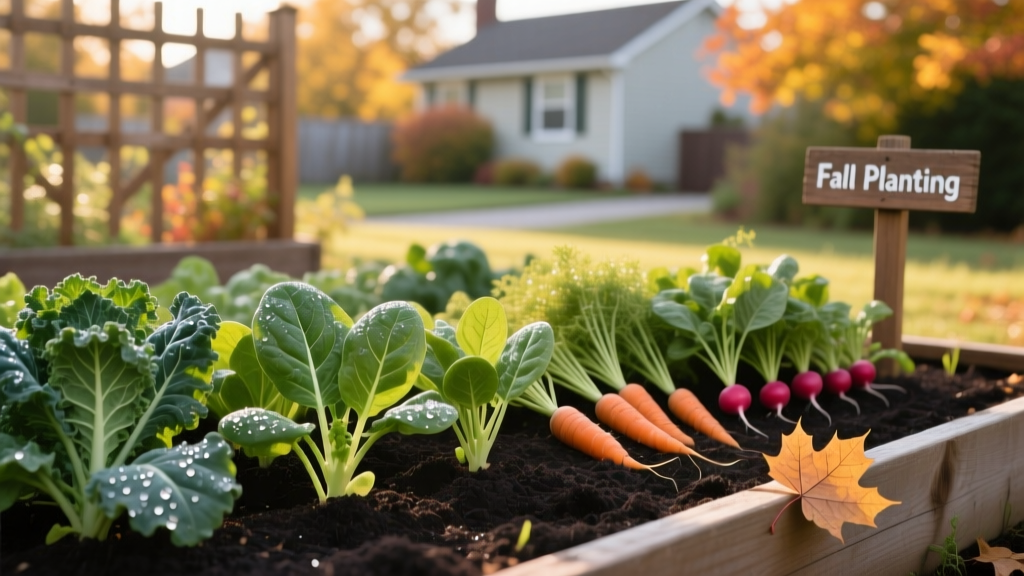
Fall Vegetable Garden Planting Schedule & Timing Guide
Lisa ThompsonPublished
The Magic of the Fall Vegetable Garden
Many gardeners mistakenly believe that the gardening season ends when summer fades and the first cool breezes of autumn arrive. In reality, late summer and early fall offer some of the most productive, rewarding, and pest-free growing conditions of the entire year. A well-timed fall vegetable garden yields sweeter root crops, tender leafy greens, and a harvest that can extend well past the first light frost, sometimes even into the dead of winter.
Unlike the spring rush, where gardeners race against unpredictable weather and warming soils, fall gardening is a strategic game of counting backward. The air is cooler, which drastically reduces plant transpiration and means you spend less time watering. Furthermore, the life cycles of many common garden pests, such as flea beetles, squash vine borers, and cabbage loopers, naturally wind down by late August. By mastering your seasonal timing and planting schedules, you can transform your autumn garden into a prolific source of fresh, cold-hardy produce.
Understanding Your First Frost Date
The foundational metric for any fall planting schedule is your average first fall frost date. This is not a hard deadline, but rather a statistical average based on historical climate data. To find your specific date, you can utilize the Old Farmer's Almanac Frost Dates tool, which allows you to input your zip code for localized historical averages.
It is also highly recommended to cross-reference your local microclimate with the USDA Plant Hardiness Zone Map. While the USDA map primarily focuses on extreme winter minimums to determine perennial viability, it provides excellent context for your broader regional climate patterns. Keep in mind that urban areas, low-lying valleys, or gardens near large bodies of water may experience frost a week or two later than the regional average due to heat islands or thermal mass.
The "Fall Factor": Calculating Days to Maturity
The most common mistake fall gardeners make is simply looking at the "Days to Maturity" on a seed packet and counting backward from the first frost date. This method will almost always result in underdeveloped crops. Why? Because seed packet maturity rates are calculated based on the long, warm, and sunny days of late spring and summer.
As autumn approaches, daylight hours shorten and temperatures drop, significantly slowing down photosynthesis and plant growth. To accurately schedule your fall plantings, you must apply the "Fall Factor." Here is the golden formula for calculating your exact planting window:
- Base Days to Maturity: The number listed on the seed packet.
- Plus 14 Days (The Fall Factor):strong> Accounts for the slowing growth rate due to shorter, cooler days.
- Plus 14 Days (The Harvest Window):strong> Gives you a two-week buffer to harvest the crop at its peak before a hard freeze.
For example, if you want to grow a variety of spinach that matures in 40 days, your calculation is: 40 + 14 + 14 = 68 days. You must plant that spinach seed 68 days before your average first fall frost date.
Comprehensive Fall Planting Schedule
The following table provides a structured planting guide for the most reliable cold-hardy crops. The "Weeks Before Frost" metric is based on the Fall Factor calculation and serves as a general guideline for direct sowing or transplanting.
| Crop | Sow Method | Days to Maturity | Planting Window (Weeks Before Frost) | Frost Tolerance |
|---|---|---|---|---|
| Kale (e.g., Winterbor) | Transplant / Direct | 50-65 | 10-12 weeks | Hardy (Survives hard freezes) |
| Spinach (e.g., Bloomsdale) | Direct Sow | 35-45 | 8-10 weeks | Hardy (Sweetens after frost) |
| Carrots (e.g., Napoli) | Direct Sow | 60-70 | 12-14 weeks | Semi-Hardy (Protect roots with mulch) |
| Radishes (e.g., Cherry Belle) | Direct Sow | 25-30 | 5-6 weeks | Semi-Hardy (Bolts in hard freeze) |
| Broccoli (e.g., Waltham) | Transplant | 60-80 | 14-16 weeks | Semi-Hardy (Tolerates light frost) |
| Swiss Chard (e.g., Fordhook) | Direct / Transplant | 50-60 | 10-12 weeks | Semi-Hardy (Tolerates light frost) |
| Garlic (Hardneck) | Clove (Direct) | Overwinter | 2-4 weeks (Before ground freezes) | Extremely Hardy (Requires winter chill) |
| Turnips (e.g., Hakurei) | Direct Sow | 35-50 | 8-10 weeks | Hardy (Roots survive freezing soil) |
Top Cold-Hardy Crops for Fall Harvests
Brassicas: Kale, Broccoli, and Brussels Sprouts
Brassicas are the undisputed champions of the autumn garden. Not only do they thrive in cool weather, but a light frost actually triggers a physiological response that converts starches in the leaves into sugars, acting as a natural antifreeze and dramatically improving their flavor. For the best results, start broccoli and Brussels sprouts indoors 12 weeks before your first frost, and transplant them into the garden when they have 3-4 true leaves. Kale can be direct-sown or transplanted and will often survive the entire winter in zones 6 and warmer, especially if protected by a cold frame.
Root Vegetables: Carrots, Turnips, and Beets
Root crops act as natural storage vessels, holding their energy underground where the soil temperature remains relatively stable even after the air turns frigid. Carrots planted in mid-to-late summer will be exceptionally sweet by November. The key to fall root crops is maintaining consistent moisture during the late-summer germination phase, which can be challenging. Sow seeds slightly deeper than you would in spring, and cover the seedbed with a lightweight burlap sack or a layer of floating row cover to retain soil moisture until the seedlings emerge.
Overwintering Alliums: Garlic and Onions
Garlic is planted in the fall not for an immediate harvest, but to establish a robust root system over the winter for a harvest the following July. According to guidelines highlighted by the University of Minnesota Extension Vegetable Garden guide, garlic should be planted 2 to 4 weeks before the ground freezes solid. This timing allows the cloves to develop roots but prevents the green shoots from emerging above the soil before winter sets in. Plant hardneck garlic cloves 2 inches deep and 6 inches apart, then mulch heavily with 4-6 inches of seed-free straw after the ground has chilled.
Soil Preparation for Late-Season Success
Your soil has likely been depleted by heavy-feeding summer crops like tomatoes, corn, and squash. Before sowing fall seeds, it is critical to replenish the soil's organic matter and nutrient profile. Remove all spent summer crop debris to eliminate overwintering sites for pests and fungal spores.
Apply a 2 to 3-inch layer of high-quality, finished compost over your garden beds and gently work it into the top 6 inches of soil. Because fall crops are predominantly leafy greens and root vegetables, they require ample nitrogen and potassium, but less phosphorus than fruiting crops. A balanced organic fertilizer (such as a 5-5-5 or 4-4-4 blend) applied at a rate of 1 cup per 10 square feet will provide a steady, slow-release nutrient supply that won't burn tender fall seedlings.
Season Extension Techniques
With the right infrastructure, your fall planting schedule can easily transition into a winter harvest. Season extension is all about modifying the microclimate around your plants to trap heat and block freezing winds.
- Floating Row Covers: Lightweight spunbonded polypropylene fabrics (like Agribon-19 or Agribon-30) can be draped directly over crops like spinach and kale. These covers trap radiant heat from the soil, raising the ambient temperature around the plants by 2 to 4 degrees Fahrenheit, while still allowing sunlight and rain to penetrate.
- Low Tunnels and Cold Frames: For severe cold, construct low tunnels using PVC pipes and heavy-weight row cover (Agribon-50) or greenhouse plastic. Cold frames made from upcycled windows or polycarbonate lids act as mini-greenhouses, allowing you to harvest hardy greens like mache and claytonia even when snow is on the ground.
- Deep Mulching: For root crops that remain in the ground, a thick 6-inch layer of straw or shredded leaves acts as an insulating blanket. This prevents the soil from freezing solid, allowing you to pull fresh carrots, parsnips, and leeks straight from the earth throughout the winter months.
Conclusion
Transitioning from a summer to a fall vegetable garden requires a shift in mindset. By respecting the math of the Fall Factor, meticulously preparing your soil, and utilizing simple season extension tools, you can keep your garden productive long after your neighbors have put their hoses away. Use this planting schedule as your roadmap, and you will be rewarded with the sweetest, most resilient harvests your garden has ever produced.
