Tree Care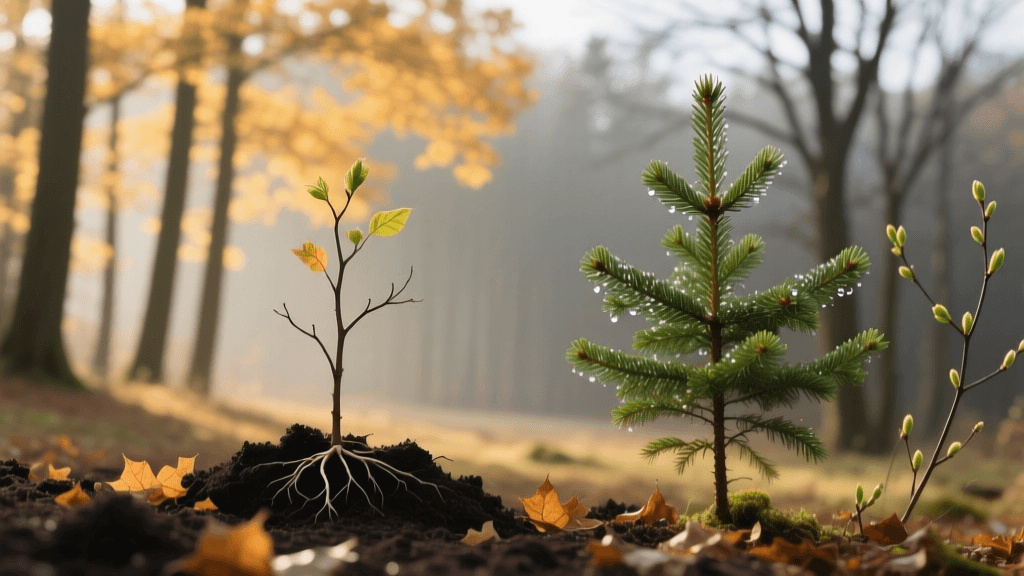
Fall vs Spring Tree Planting: The Ultimate Seasonal Guide
The Biological Clock: Why Timing Dictates Tree Survival
Planting a tree is one of the most impactful long-term investments you can make in your landscape. However, simply digging a hole and dropping in a sapling is not enough to guarantee survival. Trees operate on strict biological clocks driven by photoperiodism, air temperature, and soil moisture. The seasonal timing of your planting schedule dictates how effectively a tree can establish its root system before facing environmental stressors like summer drought or winter freezes.
According to the University of Minnesota Extension, planting at the correct time of year allows the tree to focus its energy on root development rather than top growth. When the timing aligns with the tree's natural dormancy cycles, transplant shock is minimized, and the survival rate increases dramatically. In this comprehensive guide, we will break down the science of seasonal tree planting, compare fall and spring schedules, and provide actionable protocols to ensure your trees thrive for decades.
Fall Planting Schedule: The Deciduous Advantage
For the majority of deciduous trees—such as maples, oaks, elms, and birches—fall is widely considered the gold standard for planting. The ideal window begins shortly after leaf drop in autumn and extends until the ground freezes solid. During this period, the air temperature is cool, which significantly reduces transpiration (water loss through leaves) and prevents heat stress on the newly planted tree.
More importantly, while the air is cooling down, the soil retains the warmth accumulated over the summer months. Root growth continues actively as long as soil temperatures remain above 45°F (7°C). This means a fall-planted deciduous tree will spend the autumn and early winter months aggressively building a robust root network. By the time spring arrives, the tree is already anchored and hydrated, ready to push out vigorous new foliage without the stress of simultaneously trying to establish roots.
Pros and Cons of Fall Planting
- Pros: Less watering required due to autumn rains; cooler air prevents transplant shock; excellent root establishment before summer heat; nurseries often discount inventory in late fall.
- Cons: Risk of winter frost heave if not mulched properly; vulnerable to rodent damage (voles and mice) during winter; not suitable for certain thin-barked or evergreen species in harsh climates.
Spring Planting Schedule: Evergreens and Bare-Root Stock
While fall is excellent for many species, spring is the undisputed champion for planting evergreens (pines, spruces, firs) and bare-root trees. Evergreens retain their needles year-round and continue to lose moisture through transpiration even in cold weather. If planted in the fall, their root systems may not be established enough to draw water from frozen soil, leading to severe winter desiccation and 'browning out' by early spring.
Spring planting should commence as soon as the ground thaws and is workable, but before the buds begin to break and push new growth. This typically falls between late March and early May, depending on your USDA Hardiness Zone. The Arbor Day Foundation heavily promotes spring planting for bare-root stock, as these trees are harvested while dormant in late fall, stored in temperature-controlled facilities over winter, and shipped in early spring to coincide with the natural waking of the plant.
Pros and Cons of Spring Planting
- Pros: Ideal for evergreens and bare-root specimens; avoids the risks of winter frost heave; massive selection of nursery stock available; soil is naturally moist from spring thaws and rains.
- Cons: Requires diligent, frequent watering as summer heat approaches; trees must simultaneously establish roots and produce new canopy growth, increasing stress; spring mud can make heavy equipment access difficult.
Seasonal Planting Comparison Matrix
Use the following comparison chart to determine the optimal planting season based on the specific type of tree stock you are installing.
| Tree Type / Stock | Optimal Season | Secondary Season | Key Risk Factor |
|---|---|---|---|
| Deciduous (Balled & Burlap) | Early to Mid-Fall | Early Spring | Summer drought stress if spring-planted |
| Deciduous (Container-Grown) | Fall or Spring | Late Summer (with heavy irrigation) | Root-bound circling roots choking the tree |
| Deciduous (Bare-Root) | Early Spring | Late Fall (post-dormancy) | Drying out roots before planting |
| Evergreen (Coniferous) | Early Spring | Late Summer (Zones 7+) | Winter desiccation if fall-planted in cold zones |
| Thin-Barked Trees (e.g., Maple) | Spring | Early Fall | Southwest winter injury (sunscald) |
Regional Timing Schedules by USDA Hardiness Zone
Seasonal timing is not a one-size-fits-all concept. Your geographic location dictates the exact weeks you should be putting shovels in the dirt. The USDA Forest Service emphasizes that aligning planting schedules with local climatological data is vital for large-scale and residential success alike.
Zones 3 to 5 (Northern Climates)
In regions with harsh, long winters and short growing seasons, spring is generally the safest bet for almost all tree types. The ground thaws in April or May, giving trees the entire summer to establish before the deep freeze. If you must plant in the fall, do so only in early September for deciduous species, and ensure heavy mulching to prevent frost heave.
Zones 6 to 8 (Central Climates)
This is the sweet spot for fall planting. The soil stays warm well into November, and autumn rains provide natural irrigation. Plant deciduous trees from late September through November. Spring planting should be executed in March and April before the intense heat of July arrives.
Zones 9 to 11 (Southern and Tropical Climates)
In the deep south, summer heat is the primary enemy. Avoid planting entirely between June and August. The optimal planting window is late fall through winter (November to February). Planting during the cooler winter months allows roots to establish in the mild 60°F soil before the brutal 90°F+ summer sun demands heavy canopy transpiration.
Actionable Planting Protocol for Any Season
Regardless of whether you are planting in the crisp air of October or the muddy thaw of April, the physical planting mechanics remain identical. Follow this step-by-step protocol to ensure structural integrity and long-term health.
1. Call Before You Dig
Always dial 811 (in the US) at least three days before digging to have underground utility lines marked. This is a non-negotiable safety and legal requirement.
2. Dig Wide, Not Deep
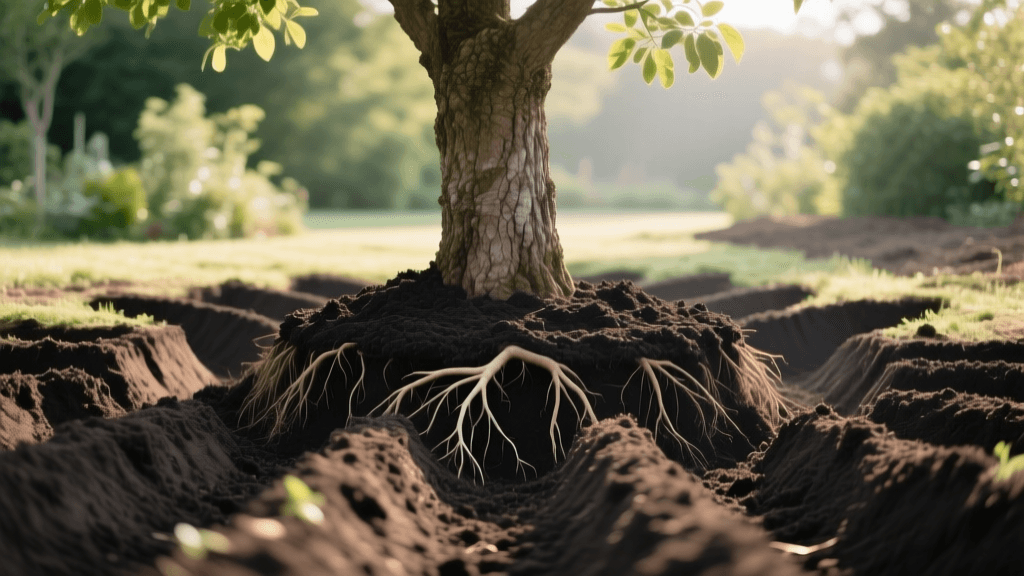
The most common mistake homeowners make is digging a hole that is too deep and too narrow. Dig a hole that is 2 to 3 times the width of the root ball, but no deeper than the root ball itself. The crucial 'root flare' (where the trunk widens and transitions into roots) must be slightly above or perfectly level with the surrounding grade. Planting too deep suffocates the root system and invites fatal trunk rot.
3. Inspect and Tease the Roots
For container-grown trees, you will often find circling roots. Use a sterilized pruning saw or hand pruners to shave off the outer 1/2 inch of the root ball on all sides. This severs the circling pattern and stimulates outward radial growth. For bare-root trees, soak the roots in a bucket of water mixed with a mycorrhizal root dip for 4 to 6 hours before planting to inoculate the roots with beneficial fungi.
4. Backfill with Native Soil
Do not amend the backfill soil with heavy compost or potting mix. Creating a 'bathtub effect' of rich, loose soil surrounded by dense native clay will cause water to pool in the planting hole, drowning the tree. Backfill with the exact native soil you dug out, tamping it down gently with your hands to remove massive air pockets.
5. Hydrate and Mulch (The 3x3x3 Rule)
Water the tree deeply immediately after planting to settle the soil. Apply organic wood chip mulch following the 3x3x3 rule: 3 inches deep, in a 3-foot radius around the tree, but kept 3 inches away from the trunk itself. Never 'volcano mulch' (pile mulch against the trunk), as this traps moisture and breeds disease.
Post-Planting Seasonal Care and Irrigation
The first 24 months after planting are the critical establishment period. During this time, the tree lacks the extensive root network required to scavenge for water during dry spells. Implement a strict irrigation schedule using a slow-release drip irrigation bag (such as a Treegator or generic equivalent). These bags hold 15 to 20 gallons of water and release it slowly over 5 to 9 hours, ensuring deep soil penetration rather than surface runoff.
During the spring and summer, check the soil moisture weekly by inserting a screwdriver into the ground near the root ball; if it cannot easily penetrate 6 inches, it is time to water. For fall-planted trees, continue watering deeply once a week until the ground freezes solid. Winter desiccation kills more newly planted trees than the cold itself, as frozen ground prevents roots from replacing the moisture lost to dry winter winds. By mastering the seasonal timing of your planting schedule and adhering to rigorous aftercare protocols, your trees will transition from vulnerable saplings into permanent, thriving anchors of your landscape.