
Landscaping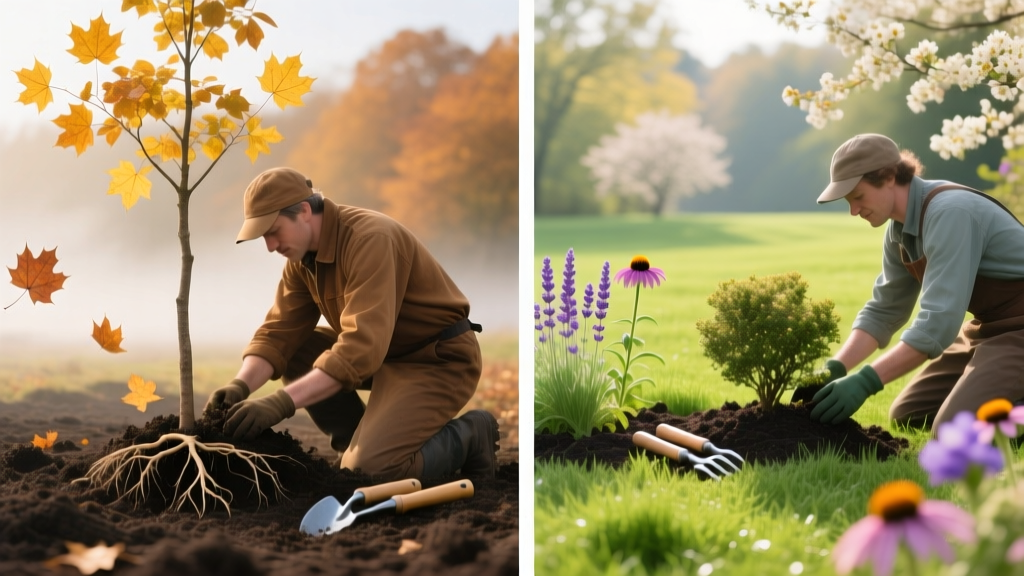
Fall vs Spring Planting: Best Time for Trees & Shrubs
Robert HayesPublished
The Science of Seasonal Root Establishment
When designing a landscape, homeowners often focus heavily on plant selection, spatial arrangement, and hardscaping elements. However, the single most critical factor determining the long-term survival and vigor of your trees, shrubs, and perennials is seasonal timing. Planting a $150 Japanese Maple or a $60 boxwood hedge at the wrong time of year can result in severe transplant shock, stunted growth, or total plant failure. Conversely, aligning your planting schedule with natural soil temperature cycles ensures rapid root establishment and long-term resilience.
The primary goal of any planting schedule is to maximize root growth before the plant is subjected to environmental stressors like summer drought or winter freeze. According to the Arbor Day Foundation, proper planting depth and seasonal timing are the foundational pillars of tree health. Roots require specific soil temperatures to grow, and understanding these thresholds is the key to mastering landscape installation.
Roots continue to grow in the autumn as long as the soil temperature remains above 45 degrees Fahrenheit, giving your landscape a massive head start before the spring canopy flush.
Fall Planting: The Landscaper's Secret Weapon
For the majority of deciduous trees, shrubs, and hardy perennials, early fall is the undisputed champion of planting seasons. The window for fall planting generally spans from late August through late October in USDA Hardiness Zones 3 through 6, and extends well into November or December in Zones 7 through 9.
Why Fall Works
- Optimal Soil Temperatures: While autumn air temperatures drop, the soil retains the heat absorbed throughout the summer. Warm soil combined with cool air creates the perfect environment for root growth without the stress of supporting a full canopy of leaves.
- Reduced Transpiration: As deciduous plants drop their leaves, their water requirements plummet. This drastically reduces the risk of transplant shock and minimizes the need for intensive daily watering.
- Increased Moisture: Fall typically brings more consistent rainfall and slower evaporation rates, keeping the root ball naturally hydrated.
- Weed Suppression: Cooler temperatures slow the growth of competitive landscape weeds, allowing your new plant to claim soil nutrients unchallenged.
Spring Planting: Beating the Heat Clock
Spring planting is the traditional choice for many homeowners, largely because garden centers are fully stocked and the weather is pleasant. The spring planting window opens as soon as the soil thaws and becomes workable—typically April to early June in northern climates, and February to March in southern regions.
The Challenges of Spring
While spring is necessary for certain plant types, it comes with a ticking clock. Research from Penn State Extension emphasizes that spring-planted trees must establish a sufficient root system before the onset of brutal summer heat. When summer arrives, the plant must simultaneously push out new top growth, support a full canopy of leaves, and survive high evaporation rates, all while relying on an underdeveloped root system. This requires rigorous, often daily, watering schedules and leaves the plant highly vulnerable to July and August droughts.
Fall vs. Spring Planting Comparison Chart
Use the following data table to determine which season aligns best with your specific landscaping goals and plant choices.
| Factor | Fall Planting (Late Aug - Nov) | Spring Planting (April - June) |
|---|---|---|
| Root Growth Focus | High (Energy directed entirely to roots) | Moderate (Energy split between roots and leaves) |
| Watering Requirements | Low to Moderate (1 inch per week) | High (Frequent deep watering required) |
| Plant Selection | Good (Nurseries clearing stock) | Excellent (Maximum inventory available) |
| Weed Competition | Low (Weeds going dormant) | High (Weeds actively germinating) |
| Frost Heave Risk | Moderate (Requires proper mulching) | None |
| Best Plant Types | Deciduous trees, shrubs, perennials, bulbs | Evergreens, tender perennials, bare-root stock |
Species-Specific Planting Schedules
Not all plants follow the same calendar. To ensure a thriving landscape, you must tailor your planting schedule to the biological needs of specific plant categories.
Deciduous Trees and Shrubs
Plants like maples, oaks, dogwoods, hydrangeas, and viburnums thrive when planted in the early to mid-fall. Wait until the plant has entered dormancy (indicated by leaf drop and hardened bark) before transplanting. This allows the root system to expand into the surrounding native soil for several months before the energy demands of spring leaf-out begin.
Evergreens and Conifers
Unlike deciduous plants, evergreens (pines, spruces, arborvitae, and boxwoods) retain their foliage year-round and continue to lose moisture through their needles during winter. Therefore, they are highly susceptible to winter desiccation if planted too late in the fall. The University of Minnesota Extension recommends planting evergreens in early fall (late August to September) or early spring (April to May). This ensures they have at least six to eight weeks of active root growth to anchor themselves and absorb moisture before winter winds arrive.
Spring-Blooming Shrubs
Shrubs that bloom on old wood, such as lilacs, forsythia, and azaleas, set their flower buds in the late summer. Planting them in the fall ensures they experience the necessary winter chill hours (vernalization) and will reward you with a full, spectacular bloom the very next spring. Spring planting often results in a skipped blooming year as the plant recovers from transplant shock.
Perennials and Bulbs
Herbaceous perennials (hostas, daylilies, coneflowers) are highly adaptable and can be planted in early fall or early spring. However, spring-blooming bulbs (tulips, daffodils, alliums) have a strict fall-only schedule. They must be planted when soil temperatures drop below 60°F, usually between October and November, to trigger the internal biological clock required for spring flowering.
Actionable Planting Steps, Measurements, and Costs
Timing is only half the battle; execution dictates survival. Follow these precise measurements and budget estimates for your seasonal planting projects.
1. Excavation and Soil Preparation
- Hole Width: Dig the hole 2 to 3 times wider than the root ball. This breaks up compacted soil and allows lateral roots to spread easily.
- Hole Depth: Dig only as deep as the root ball itself. The root flare (where the trunk widens at the base) must sit 1 to 2 inches above the surrounding soil grade to prevent root rot.
- Soil Amendment: Avoid the temptation to fill the hole with pure compost. Backfill with 80% native soil and 20% organic compost. A drastic change in soil texture creates a 'bathtub effect,' trapping water and drowning the roots.
2. Mulching for Seasonal Protection
Mulch is non-negotiable for both fall and spring plantings, but its application varies slightly by season. In the fall, mulch acts as an insulator to keep the soil warm longer, extending the root-growing season. In the spring, it retains moisture and suppresses weeds.
- Measurement: Apply a uniform 3-inch layer of shredded hardwood bark over the entire root zone.
- The 'Donut' Rule: Keep the mulch at least 3 inches away from the trunk of the tree or shrub. Piling mulch against the bark (volcano mulching) invites fungal diseases and rodent damage.
- Cost Estimate: Premium hardwood mulch costs approximately $35 to $50 per cubic yard delivered. A single cubic yard will cover roughly 100 square feet at a 3-inch depth.
3. Strategic Watering Schedules
Even in the fall, newly installed plants require supplemental water until the ground freezes solid.
- Volume: Apply 10 gallons of water per week for every 1 inch of trunk caliper (measured 6 inches above the soil line).
- Method: Use a slow-drip soaker hose or a 5-gallon bucket with a small hole drilled in the bottom. Slow, deep watering encourages roots to grow downward rather than lingering near the surface.
- Anti-Desiccant Spray: For fall-planted evergreens, apply an anti-desiccant spray (like Wilt Stop) in late November. This coats the needles in a protective polymer, reducing winter moisture loss. Expect to spend about $25 to $40 for a ready-to-use hose-end sprayer.
Conclusion
Mastering seasonal timing transforms landscaping from a gamble into a calculated science. By prioritizing fall planting for deciduous trees and shrubs, you leverage natural soil temperatures to build a robust, drought-tolerant root system. Reserve your spring planting schedule for evergreens, bare-root stock, and tender perennials, and be prepared to commit to a rigorous summer watering regimen. When you align your landscape installation with the biological rhythms of the plants, you secure a vibrant, thriving outdoor space that matures beautifully year after year.

