
Landscaping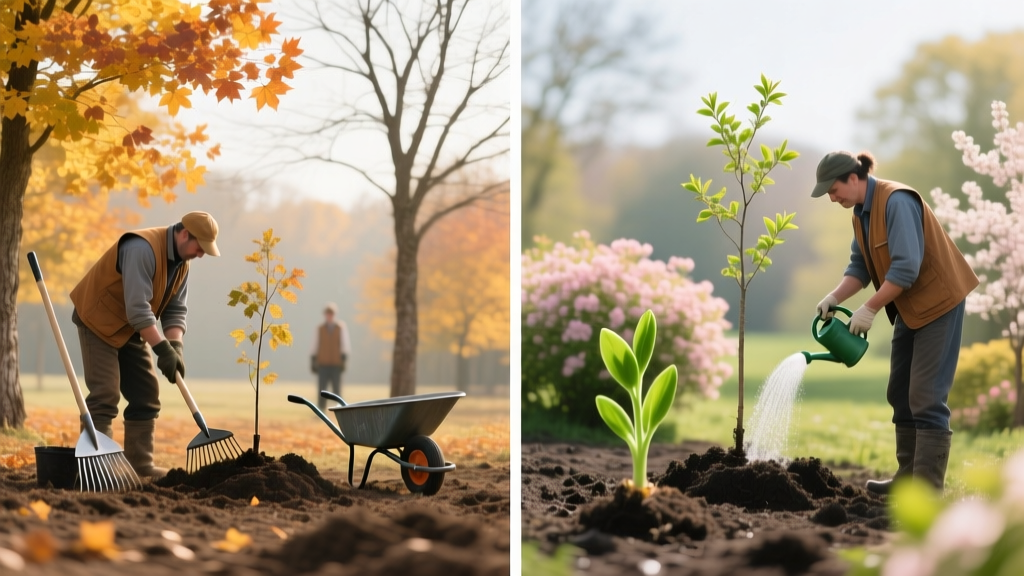
Fall vs Spring Tree Planting: The Ultimate Seasonal Guide
Emily WatsonPublished
Introduction to Seasonal Landscaping Timing
When it comes to professional landscaping and garden bed planning, the question of when to plant is just as critical as what to plant. Installing trees and shrubs is a significant financial and temporal investment. A 2-inch caliper balled-and-burlapped (B&B) shade tree can cost anywhere from $250 to $450, not including labor, soil amendments, and delivery fees. To protect this investment, understanding the biological rhythms of plant establishment and the seasonal timing of root growth is paramount. This guide breaks down the science, scheduling, and step-by-step protocols for planting trees and shrubs, comparing the merits of autumn versus spring installation.
The Science of Seasonal Root Establishment
Unlike the visible canopy of a tree, which relies on warm air temperatures and long daylight hours to push new foliage, the root system operates on a completely different environmental trigger: soil temperature. According to the University of Minnesota Extension, woody plant roots continue to grow and establish themselves as long as the soil temperature at a 6-inch depth remains above 55°F (12.7°C).
During the peak of summer, a newly planted tree must divide its limited water and energy resources between maintaining its existing leaf canopy (which loses massive amounts of water through transpiration) and trying to push new roots into the surrounding native soil. This competition often leads to transplant shock, leaf scorch, and stunted growth. By shifting the planting schedule to seasons where the canopy is dormant but the soil remains workable, you allow the plant to dedicate 100% of its energy to root establishment.
Fall Planting: The Landscaper's Secret Weapon
For the majority of temperate climate zones, fall is universally recognized by landscape architects as the optimal planting window. As autumn progresses, air temperatures drop, signaling the tree to enter dormancy and drop its leaves. However, the soil, which has been warming all summer, retains its heat well into late autumn and early winter.
Key Benefits of Fall Planting:
- Reduced Water Stress: Without leaves to support, the tree's transpiration rate drops to near zero, drastically reducing the need for daily irrigation.
- Head Start on Spring: A tree planted in October will spend November and early December quietly establishing a robust root network. When spring arrives, this tree is already anchored and primed to push vigorous top growth.
- Fewer Pests and Diseases: Many foliar diseases and wood-boring insects are inactive during the cooler autumn months, giving the vulnerable transplant a safe window to heal from any handling wounds.
The ideal fall planting window begins roughly six weeks before the ground is expected to freeze solid. You can track this by monitoring soil temperatures rather than relying solely on the calendar.
Spring Planting: Navigating the Thaw
While fall is ideal, spring planting is sometimes unavoidable due to nursery stock availability, construction timelines, or the specific species being planted. Certain trees, particularly those that are slow to establish or prone to winter injury in their northernmost hardiness ranges (such as Magnolias, Ginkgos, and some Oak species), actually prefer spring planting.
The primary risk of spring planting is the rapidly approaching summer heat. A tree planted in May has only a few weeks to establish a functional root system before the intense heat and potential droughts of July and August set in. To mitigate this, spring plantings require a rigorous, non-negotiable watering schedule and the application of anti-transpirant sprays to reduce moisture loss.
Seasonal Planting Schedule by Hardiness Zone
Timing varies drastically depending on your geographic location. The USDA Plant Hardiness Zone Map is the standard by which landscapers determine regional climate constraints. Below is a structured planting schedule tailored to major regional zones.
| USDA Hardiness Zone | Optimal Fall Window | Optimal Spring Window | Recommended Species & Notes |
|---|---|---|---|
| Zones 3-4 (Northern) | Early Sept - Mid Oct | Late April - Early June | Spruce, Birch, Maple. Avoid fall planting slow-rooting oaks here. |
| Zones 5-7 (Mid-Atlantic) | Mid Sept - Late Nov | Mid March - Mid May | Oak, Dogwood, Redbud. Fall is highly preferred for most species. |
| Zones 8-10 (Southern) | Nov - Feb | Feb - Early March | Crape Myrtle, Magnolia, Citrus. Winter planting is the absolute best time. |
Step-by-Step Planting Protocol & Measurements
Whether you are planting in the fall or the spring, the physical installation technique remains the same. The Arbor Day Foundation emphasizes that improper planting depth is the number one cause of premature tree death. Follow these exact measurements and product recommendations for a successful installation.
Step 1: Utility Location and Site Prep
Always call 811 before digging to locate underground utilities. Once cleared, measure the root ball of your tree. For a standard 2-inch caliper B&B tree, the root ball will be approximately 24 inches in diameter and 16 inches deep.
Step 2: Excavation
Dig a hole that is 2 to 3 times wider than the root ball, but no deeper than the root ball itself. The goal is to provide loose soil for lateral root expansion while ensuring the tree rests on undisturbed, solid subsoil at the bottom of the hole. If you dig too deep and backfill with loose soil, the tree will sink over time, burying the root flare and causing stem girdling roots.
Step 3: Finding the Root Flare
Before placing the tree in the hole, brush away the top layer of soil from the root ball until you find the trunk flare (the point where the trunk widens into the roots). This flare must sit 1 to 2 inches above the final grade level.
Step 4: Soil Amendments and Mycorrhizae
Do not heavily amend the backfill soil with rich compost or peat moss, as this creates a 'pot effect' where roots refuse to leave the nutrient-rich hole. Instead, mix native soil with a slow-release organic fertilizer like Espoma Bio-Tone Starter Plus (apply at a rate of 3 cups per inch of trunk caliper). Additionally, drench the root ball with a liquid mycorrhizal fungi inoculant (such as RootBoost) to immediately establish symbiotic root networks that increase water uptake by up to 400%.
Step 5: Backfilling and Mulching
Backfill the hole in 4-inch lifts, tamping down lightly with your boot to eliminate large air pockets. Once filled, build a mulch ring. Use premium hardwood bark mulch, applying it in a 'donut' shape that is 3 to 4 inches deep and extends 3 feet out from the trunk. Crucial: Keep the mulch at least 3 inches away from the trunk bark to prevent rot and rodent damage.
Cost Breakdown: B&B vs. Container Trees
Understanding the financial implications of your planting schedule helps in budgeting your landscape design. Container-grown trees are generally cheaper and lighter, making them ideal for DIY spring plantings. B&B trees offer larger, more mature specimens but require heavy machinery or professional labor.
- 15-Gallon Container Tree (1.5-inch caliper): $80 - $140. Easier to handle, but root systems can be circling and require aggressive shaving before planting.
- B&B Tree (2.5-inch caliper): $250 - $450. Requires a bobcat or 3-person crew to move. Offers instant curb appeal and higher survival rates if planted in the fall.
- Professional Installation Labor: $150 - $300 per tree, depending on access and soil conditions (e.g., rocky clay requires jackhammering, increasing costs).
- Soil Amendments & Mulch: $30 - $50 per tree.
Post-Planting Maintenance Schedule
Seasonal timing doesn't end once the tree is in the ground. A fall-planted tree still requires deep watering once a week until the ground freezes solid. In the spring, apply a 2-inch layer of fresh compost over the root zone (avoiding the trunk) to provide a gentle nutrient release. By aligning your landscaping efforts with the natural seasonal rhythms of plant biology, you ensure a vibrant, resilient, and structurally sound landscape that will thrive for decades.

