
Landscaping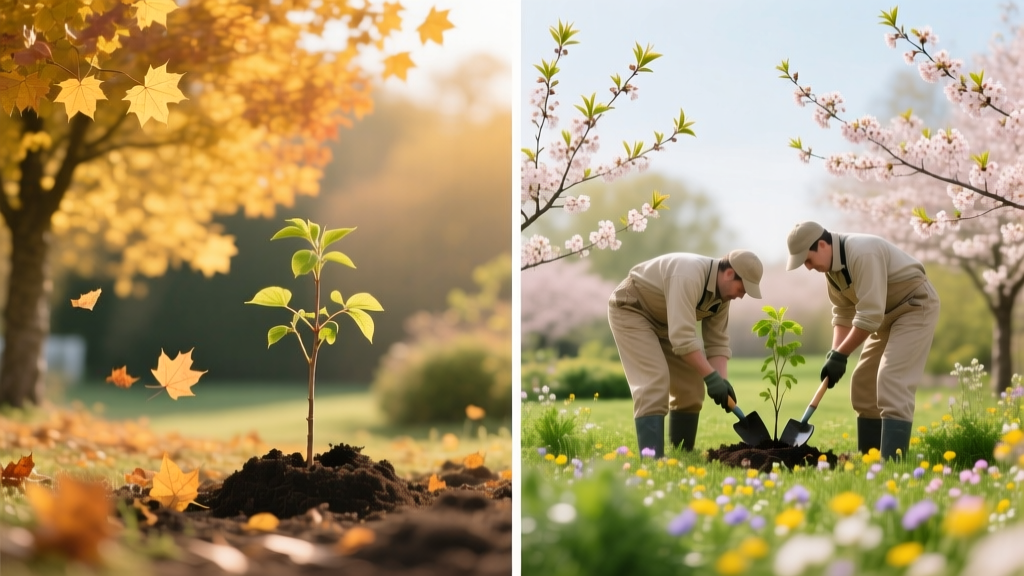
Fall vs Spring Planting: Best Schedule for Trees and Shrubs
Mike RodriguezPublished
The Great Landscaping Debate: Fall vs. Spring Planting
When it comes to landscape design and installing new woody plants, timing is just as critical as species selection. Homeowners and landscape architects frequently debate the optimal season for installing trees and shrubs. While spring feels like the natural time for garden renewal due to blooming nursery stock and warming air temperatures, horticultural science heavily favors autumn for most temperate climate plantings. Understanding the seasonal timing and planting schedules for your specific USDA Hardiness Zone can mean the difference between a thriving, drought-resistant landscape and a yard full of struggling, stunted specimens.
The core of this debate revolves around root-to-shoot growth ratios and soil thermodynamics. When you plant a tree or shrub, its primary goal is to establish a robust root system capable of supporting the canopy. The season in which you plant dictates whether the plant allocates energy toward root expansion or top-growth, fundamentally altering its long-term survival rate and establishment speed.
Why Fall is the Premier Season for Root Establishment
For the vast majority of deciduous trees and hardy shrubs, fall is the undisputed champion of planting seasons. As autumn approaches, air temperatures drop, signaling the plant to enter dormancy and halt top-growth. However, the soil retains the summer's warmth well into the autumn months. Roots continue to grow and expand as long as the soil temperature remains above 55 degrees Fahrenheit.
By planting in the fall, you provide the tree with several months of exclusive root-building time without the stress of supporting leaves or producing flowers. Furthermore, autumn typically brings increased rainfall and lower evaporation rates, reducing the need for supplemental irrigation. By the time the following summer's heat and drought arrive, a fall-planted tree has a deeply established root system capable of accessing subterranean moisture.
Regional Fall Planting Schedules
- USDA Zones 3-5 (Northern Climates): Late August through early October. You must plant early enough to allow roots to establish before the ground freezes solid.
- USDA Zones 6-7 (Transitional Climates): Mid-September through November. The extended autumn allows for deep root penetration.
- USDA Zones 8-9 (Southern Climates): October through December. In warmer regions, winter is the ideal planting window to avoid extreme summer heat stress.
When Spring Planting Makes the Most Sense
While fall is superior for root establishment, spring planting is sometimes necessary or advantageous. Nurseries receive their largest and most diverse inventory shipments in early spring, giving homeowners access to a wider variety of cultivars and mature specimen trees. Additionally, certain plant categories actively perform better when planted in the spring.
Exceptions to the Fall Rule
Marginally hardy shrubs, broadleaf evergreens (like rhododendrons, azaleas, and camellias), and bare-root plants are often better suited for spring planting. Broadleaf evergreens continue to lose moisture through their leaves during winter winds. If planted in the fall, their root systems may not be established enough to replace this lost moisture, leading to severe winter desiccation and dieback. Spring planting allows these sensitive plants to establish roots concurrently with their top-growth during the mild, moist weeks of early spring.
Seasonal Planting Schedule and Comparison Chart
To help you plan your landscape installation budget and timeline, review the comparison chart below detailing the operational differences between fall and spring planting schedules.
| Feature | Fall Planting | Spring Planting |
|---|---|---|
| Root Establishment | Excellent; energy focused entirely on roots | Moderate; energy split between roots and leaves |
| Watering Needs | Low; natural rainfall and cool air reduce evaporation | High; requires strict irrigation schedule as summer approaches |
| Nursery Selection | Limited; often clearance stock or leftover inventory | Extensive; fresh shipments and peak variety availability |
| Winter Damage Risk | High for evergreens and marginally hardy species | Low; plants are fully established before winter |
| Ideal Plant Types | Deciduous trees, hardy shrubs, perennials, bulbs | Evergreens, bare-root trees, tender shrubs, annuals |
Actionable Planting Steps: Measurements, Timing, and Costs
Regardless of the season you choose, proper installation techniques are non-negotiable. Poor planting depth is the number one cause of tree mortality in residential landscapes. Follow these precise measurements and budget estimates for your next hardscaping or garden bed project.
Digging the Hole and Soil Amendment
The width of your planting hole should be 2 to 3 times the diameter of the root ball. This loosens the surrounding soil, allowing tender new roots to expand horizontally. However, the depth of the hole is critical: it must be exactly the height of the root ball, or even slightly shallower. The root flare—the point where the trunk widens and transitions into roots—must sit 1 to 2 inches above the surrounding grade. Burying the root flare leads to stem girdling roots and trunk rot.
Cost Breakdown for Soil Prep:
- Soil Test Kit: $15 - $30. Always test pH before planting. Acid-loving shrubs like azaleas require a pH of 4.5 to 6.0.
- Elemental Sulfur (to lower pH): $12 per 5lb bag.
- Organic Compost: $5 per 2-cubic-foot bag. Mix native soil with compost at a ratio of 3:1. Avoid heavy peat moss, which can create a 'bathtub' effect in clay soils.
- Mycorrhizal Fungi Inoculant: $20 - $35. Dusting the root ball with beneficial fungi accelerates root branching and nutrient uptake.
Mulching and Winter Protection
Apply a 2 to 3-inch layer of shredded hardwood mulch in a wide ring around the base of the tree, extending out to the drip line if possible. Crucially, keep the mulch at least 3 inches away from the trunk itself to prevent vole damage and fungal diseases. The total cost for premium hardwood mulch is approximately $4 to $6 per 2-cubic-foot bag. For fall-planted evergreens, consider applying an anti-desiccant spray like Wilt Pruf ($15 per quart) in late November to seal the foliage against harsh winter winds.
Post-Planting Care and Watering Schedules
Establishing a strict watering schedule is vital during the first two growing seasons. The amount of water required is directly tied to the trunk caliper (the diameter of the trunk measured 6 inches above the ground).
- 1-inch caliper tree: Requires 10 gallons of water per week.
- 2-inch caliper tree: Requires 20 gallons of water per week.
- 3-inch caliper tree: Requires 30 gallons of water per week.
During the spring and summer, divide this weekly volume into two deep watering sessions. Use a slow-trickle hose or a 15-gallon tree watering bag (costing around $25 each) to ensure the water penetrates deeply into the root zone rather than running off the surface. For fall-planted trees, continue this watering schedule until the ground freezes solid, ensuring the roots enter winter fully hydrated.
Expert Sources and Further Reading
Proper seasonal timing and planting techniques are backed by decades of horticultural research. To further refine your landscape installation plans, consult the following authoritative resources:
- For comprehensive guidelines on planting depth, root flare identification, and mulching techniques, refer to the University of Minnesota Extension.
- For detailed watering schedules, species selection, and long-term tree care, visit the Arbor Day Foundation planting resource center.
By aligning your planting schedule with the natural rhythms of your local climate and adhering to precise installation measurements, you will cultivate a resilient, vibrant landscape that enhances your property's curb appeal and ecological value for decades to come.

