
Landscaping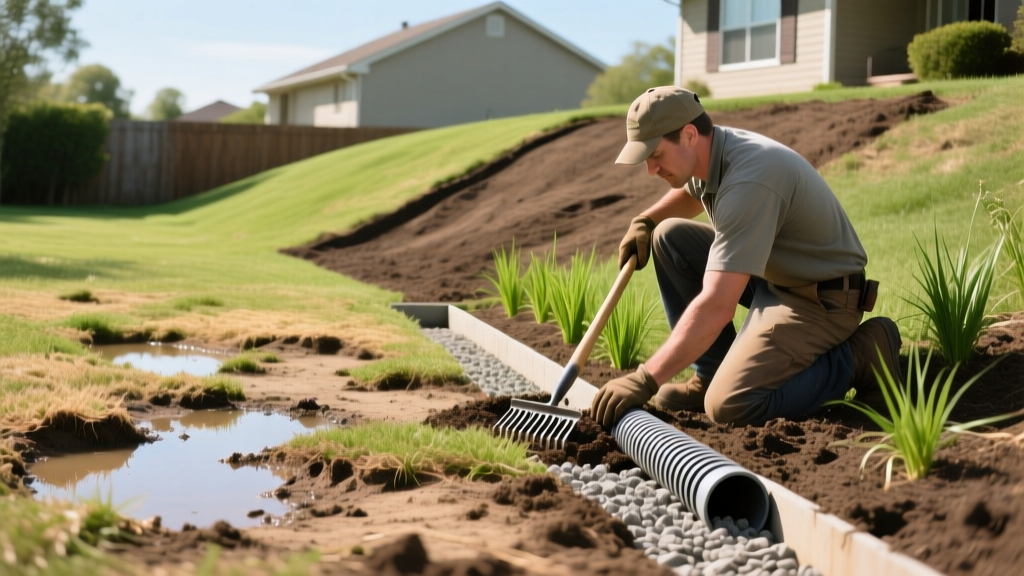
Fixing Landscape Grading and Drainage for Lawn Recovery
Emily WatsonPublished
When your landscape design ignores the fundamental principles of hydrology, your lawn inevitably pays the price. Turfgrass requires a delicate balance of moisture and oxygen at the root zone. When poor landscape grading and inadequate drainage systems cause water to pool, soil pores become entirely saturated, suffocating the roots and leading to widespread turf decline, fungal diseases, and moss infestations. Recovering a dying, waterlogged lawn requires more than just throwing down new grass seed; it demands a comprehensive landscaping approach that addresses the underlying hydrological failures. In this guide, we will explore how to diagnose drainage issues, implement hardscaping and grading solutions, and select the right turf to fully renovate and recover your landscape.
Diagnosing Landscape Drainage and Grading Failures
Before purchasing topsoil or renting a core aerator, you must identify how water is moving—or failing to move—through your property. Poor grading often directs water toward the home’s foundation or traps it in low-lying landscape beds and turf zones.
The Percolation (Perc) Test
To determine if your soil suffers from severe compaction or poor drainage, perform a simple perc test. Dig a hole approximately 12 inches deep and 6 inches wide in the affected lawn area. Fill the hole with water and let it drain completely to saturate the surrounding soil. Refill it to the top and measure how long it takes for the water level to drop. If the water drops less than 1 inch per hour, your soil is heavily compacted or composed of dense clay, requiring significant landscaping intervention before any lawn recovery can occur.
Hardscaping and Grading Solutions for Water Management
True lawn renovation in wet areas begins with earthmoving and hardscaping. You must establish a proper slope to encourage surface runoff.
Regrading the Landscape
The gold standard for landscape grading is a minimum slope of 2 percent, which translates to a 1/4-inch drop per linear foot away from structures and hardscapes. For a severely uneven yard, professional regrading typically costs between $1,000 and $3,000, depending on the equipment required (such as skid steers or mini-excavators) and the volume of fill dirt needed. If you are tackling a small, localized low spot, you can top-dress the area with a 50/50 mix of coarse sand and compost, applying no more than 1/2 inch at a time so you do not smother the existing turf crown.
Installing French Drains and Dry Wells
When surface grading is not enough to handle the volume of water, subsurface hardscaping is required. A French drain is a highly effective landscaping feature for intercepting groundwater.
- Trenching: Dig a trench 18 inches deep and 6 to 8 inches wide, ensuring a 1 percent slope toward your discharge point.
- Materials: Line the trench with heavy-duty woven landscape fabric (not cheap plastic sheeting, which clogs). Place a 2-inch base of washed 3/4-inch drainage gravel.
- Piping: Lay a 4-inch NDS corrugated perforated pipe with the holes facing down. This prevents sediment from easily entering the pipe.
- Backfilling: Cover the pipe with more washed gravel, fold the fabric over the top to create a gravel burrito, and cover with 2 inches of topsoil and sod.
A professionally installed French drain costs roughly $20 to $30 per linear foot, but it is a permanent landscaping investment that saves your lawn and foundation.
Soil Amendment and Core Aeration
Once water is properly diverted, you must repair the damaged soil structure. The USDA Natural Resources Conservation Service (NRCS) emphasizes that soil compaction destroys the pore space necessary for water infiltration and root respiration. To recover the soil biology and structure:
- Core Aeration: Rent a walk-behind core aerator (approx. $80-$100 per day). Pull 3-inch deep plugs on a grid pattern, making two passes in perpendicular directions.
- Gypsum Application: Apply pelletized gypsum (calcium sulfate) at a rate of 40 pounds per 1,000 square feet. Gypsum helps flocculate clay particles, improving drainage without altering soil pH.
- Organic Matter: Top-dress the aerated lawn with 1/4 inch of finely screened organic compost to introduce beneficial microbes and improve moisture retention balance.
Integrating Rain Gardens and Bioswales into the Landscape
Sometimes, traditional hardscaping like PVC piping and gravel trenches does not fit the aesthetic or ecological goals of a modern landscape. In these cases, designing a rain garden or a bioswale is an elegant landscaping solution for lawn recovery. According to the Environmental Protection Agency (EPA), incorporating green infrastructure like rain gardens into your landscape design not only recovers dying turf but also reduces stormwater runoff by allowing water to infiltrate naturally into deep-rooted native plant zones.
To build a rain garden in a persistently wet area of your yard:
- Location: Position the garden at least 10 feet away from your home’s foundation and avoid placing it over septic drain fields.
- Excavation: Dig a saucer-shaped depression 4 to 8 inches deep. Use the excavated soil to build a berm on the downhill side to retain water.
- Soil Mix: Replace the heavy clay with an engineered bioretention mix consisting of 60 percent coarse sand, 20 percent topsoil, and 20 percent leaf compost. This ensures rapid infiltration while filtering pollutants.
- Plant Selection: Choose native, deep-rooted plants that can tolerate both temporary flooding and summer droughts. Excellent choices include Swamp Milkweed (Asclepias incarnata), Blue Flag Iris (Iris versicolor), and Cardinal Flower (Lobelia cardinalis).
Selecting the Right Turf and Groundcovers for Wet Zones
If certain areas of your landscape remain inherently moist despite your best grading efforts, stop fighting nature and adapt your planting strategy. Attempting to grow Kentucky Bluegrass in a perpetually wet, shaded swale will only lead to continuous renovation cycles.
| Plant Type | Moisture Tolerance | Recovery Speed | Best Landscape Application |
|---|---|---|---|
| Rough Bluegrass (Poa trivialis) | High | Fast | Shaded, consistently wet lawn patches |
| Tall Fescue (Festuca arundinacea) | Moderate-High | Moderate | Transitional zones, clay soils, heavy traffic |
| Creeping Jenny (Lysimachia nummularia) | Very High | Fast | Non-traffic rain gardens and swale edges |
| Mondo Grass (Ophiopogon japonicus) | Moderate | Slow | Shaded borders, erosion control on slopes |
Step-by-Step Lawn Recovery Timeline
To successfully execute this landscaping renovation, follow this 6-week timeline:
- Week 1: Conduct perc tests, mark utility lines (call 811), and excavate trenches for French drains or dry wells.
- Week 2: Install subsurface drainage pipes, backfill with gravel, and regrade the topsoil to achieve a 2 percent slope.
- Week 3: Perform heavy core aeration on the compacted, recovering turf zones. Apply gypsum and compost top-dressing.
- Week 4: Overseed with moisture-tolerant grass blends (e.g., Jonathan Green Black Beauty Ultra). Apply a starter fertilizer high in phosphorus (e.g., Scotts Turf Builder Starter Food 24-25-4) to promote rapid root development.
- Week 5: Keep the top 1 inch of soil consistently moist. Water lightly 2-3 times daily. Install rain garden plants in designated bioswale zones.
- Week 6: Reduce watering frequency to encourage deep root growth. Mow the new turf only when it reaches 3.5 inches, cutting no more than 1/3 of the blade.
Conclusion
Lawn renovation in poorly drained landscapes is fundamentally a hardscaping and grading challenge. By diagnosing the hydrological failures, installing proper subsurface drainage, amending compacted clay soils, and selecting moisture-tolerant plant materials, you can transform a soggy, dead yard into a thriving, resilient outdoor living space. Investing in these structural landscaping improvements ensures that your turf recovery efforts are permanent, protecting both your home's foundation and your landscape's long-term curb appeal.

