
Landscaping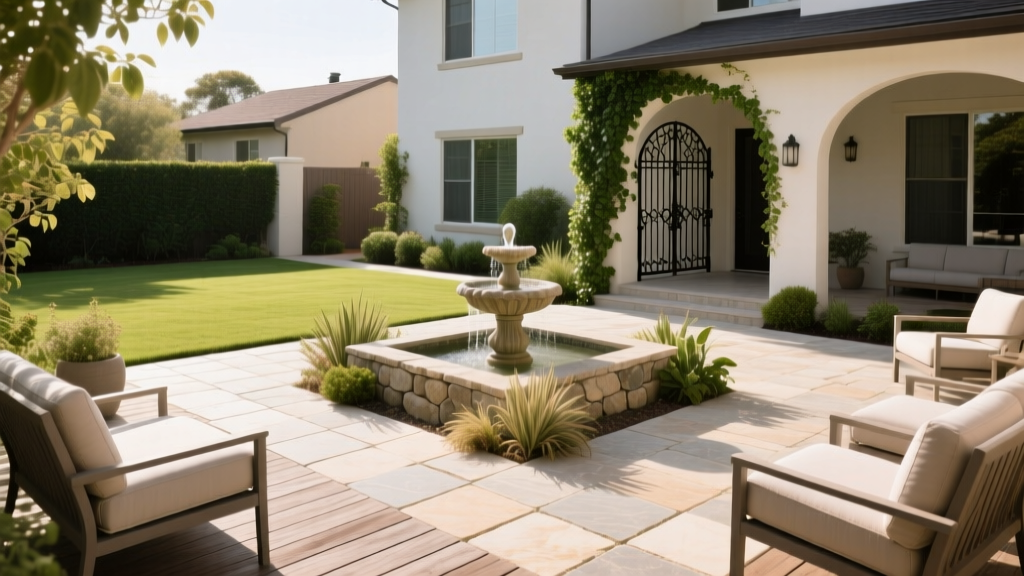
Front Courtyard Patio Design for Curb Appeal & Entertaining
Emily WatsonPublished
Reimagining the Front Yard: The Courtyard Patio
For decades, the American front yard has been treated as a purely visual space—a static carpet of grass meant to be admired from the street but rarely enjoyed. Meanwhile, the backyard has shouldered the entire burden of outdoor entertaining, often leaving front-facing living rooms disconnected from the neighborhood. However, a growing trend in residential landscape architecture is changing this dynamic: the front courtyard patio. By integrating hardscaping, privacy screens, and functional design into the front yard, homeowners can dramatically boost their curb appeal while creating a unique, welcoming space for outdoor entertaining.
Designing a front courtyard patio requires a delicate balance. It must be inviting enough to encourage conversation and relaxation, yet structured enough to maintain the architectural dignity of your home's facade. According to the American Society of Landscape Architects (ASLA), integrating functional outdoor living spaces into front yards is a top residential design trend, driven by a desire for stronger community connections and more usable square footage on smaller urban and suburban lots.
Spatial Planning: The 60/40 Rule and Sightlines
When designing a front courtyard, scale and proportion are your most critical tools. A common mistake is overwhelming the home's facade with an oversized concrete slab. To maintain aesthetic harmony, landscape designers often employ the 60/40 rule: no more than 40% of the visible front yard should be dedicated to hardscaping, while the remaining 60% should consist of softscaping (lawn, garden beds, and trees).
Establishing the Boundaries
A courtyard implies enclosure. Without physical boundaries, a front patio is just a front porch. To create the 'courtyard' effect, consider installing low seating walls (18 to 24 inches high) or decorative privacy screens. These structures define the space, provide built-in seating for guests, and subtly signal to passersby that the area is a semi-private retreat rather than a public thoroughfare.
- Seating Walls: Use segmental retaining wall blocks capped with natural stone. A 20-inch height is ideal for casual seating, and adding a 12-inch stone cap provides a polished finish.
- Privacy Screens: Cedar lattice panels, horizontal slat fencing, or corten steel screens can block sightlines from the street without creating a fortress-like appearance.
- Transitions: Connect the driveway or main sidewalk to the patio using stepping stones bordered by creeping thyme or Irish moss to soften the hardscape edges.
Hardscape Material Comparison
The material you choose for your patio surface will dictate the tone of your courtyard, your budget, and your long-term maintenance requirements. Below is a comparison of the most popular materials used in front-yard hardscaping.
| Material | Avg. Cost (Installed) | Durability | Maintenance | Curb Appeal Factor |
|---|---|---|---|---|
| Natural Flagstone | $25 - $45 / sq ft | Very High | Low | Exceptional (Organic, premium look) |
| Concrete Pavers | $15 - $25 / sq ft | High | Medium (Weed control in joints) | High (Versatile colors/patterns) |
| Stamped Concrete | $12 - $20 / sq ft | Medium | High (Requires sealing) | Medium (Can crack over time) |
| Decomposed Granite | $5 - $10 / sq ft | Low | High (Raking, topping up) | Medium (Rustic, informal) |
For a front courtyard, interlocking concrete pavers or natural flagstone are highly recommended. They offer superior aesthetic appeal, which is vital for curb-facing projects, and individual stones can be easily replaced if tree roots or soil settling cause shifting.
Base Preparation: The Foundation of Durability
The most beautiful patio will fail if the base is improperly constructed. The Interlocking Concrete Pavement Institute (ICPI) emphasizes that proper base preparation is the single most important factor in the longevity of a paver installation. A front yard patio must withstand not only foot traffic but also the weight of built-in fire features and heavy planters.
Step-by-Step Base Construction
- Excavation: Dig down 7 to 9 inches below the desired finished grade. Ensure the soil is compacted using a mechanical plate compactor.
- Geotextile Fabric: Lay down a permeable landscape fabric to separate the native soil from the aggregate base, preventing the gravel from sinking into the mud over time.
- Aggregate Base: Spread a 4-to-6-inch layer of crushed angular gravel (often called 3/4-inch minus or crusher run). Compact this layer in 2-inch lifts until it is rock solid.
- Bedding Sand: Add a 1-inch layer of coarse, concrete sand. Use screed rails to ensure a perfectly level surface before laying your pavers or flagstone.
Perimeter Landscaping and Privacy Screens
To entertain comfortably in the front yard, you need to mitigate the feeling of being 'on display.' Strategic planting creates a psychological and physical barrier between your guests and the street. Layering your softscape is key to maintaining curb appeal while achieving privacy.
The Three-Tier Planting Strategy
- Background (The Screen): Plant evergreen shrubs or small ornamental trees to block the street view. 'Emerald Green' Arborvitae or 'Nellie R. Stevens' Holly are excellent choices because they remain dense year-round and can be pruned to maintain a narrow, columnar profile that won't overwhelm the yard.
- Midground (The Color): Use deciduous shrubs that offer seasonal interest. Hydrangeas, 'Knock Out' roses, or dwarf lilacs provide vibrant blooms that draw the eye and soften the hard edges of your patio walls.
- Foreground (The Edge): Line the patio edges and walkways with low-growing perennials or ornamental grasses. 'Karl Foerster' Feather Reed Grass or creeping phlox adds texture and movement without obstructing sightlines.
Sustainable Drainage Solutions
Front yards often act as the primary drainage zone for a property, sloping away from the home's foundation and toward the street. Introducing a large, impermeable hardscape surface can disrupt this flow, leading to pooled water, flooded garden beds, or worse, water intrusion into your home. The Environmental Protection Agency (EPA) strongly advocates for green infrastructure and permeable surfaces in residential landscaping to manage stormwater runoff and reduce the burden on municipal sewer systems.
Managing Water in the Courtyard
Consider using permeable pavers for your courtyard design. Unlike traditional pavers, permeable systems are installed with wider joints filled with crushed stone rather than polymeric sand. This allows rainwater to infiltrate through the surface and into a specialized, open-graded stone reservoir base below, naturally filtering the water back into the groundwater table. If permeable pavers are outside your budget, ensure your patio is graded with a minimum 1% slope (a 1-inch drop for every 8 feet of length) directing water toward a designated rain garden or a hidden French drain system disguised beneath river rock.
Lighting and Fire Features for Evening Entertaining
A front courtyard truly comes alive at dusk. Proper lighting ensures safety while creating an ambiance that rivals high-end resort spaces. Avoid harsh, glare-inducing floodlights. Instead, opt for low-voltage LED landscape lighting that highlights architectural features and guides the eye.
- Path Lights: Install shielded path lights along the walkway leading to the courtyard to define the route without spilling light into the street.
- Uplighting: Place warm-white LED well lights at the base of your privacy trees or architectural columns to create dramatic shadows and depth.
- Hardscape Lighting: Hide LED strip lights beneath the stone cap of your seating walls. This provides a soft, ambient glow that illuminates the seating area and defines the patio's perimeter.
The Focal Point: Fire Features
Nothing draws people together quite like a fire feature. For a front courtyard, a built-in gas fire pit is generally preferred over wood-burning models. Gas fire pits eliminate smoke (which can blow toward the street or neighboring porches), require no wood storage, and can be turned on and off instantly. A 36-inch round or 48-inch rectangular fire pit clad in matching stone veneer serves as the ultimate anchor for your outdoor seating arrangement, extending your entertaining season well into the crisp autumn evenings.
'The front yard should not just be a picture window for the neighborhood; it should be an invitation. A well-designed courtyard patio transforms passive curb appeal into active community engagement.'
Conclusion
Designing a front courtyard patio is a bold landscaping move that pays dividends in both property value and lifestyle enhancement. By carefully selecting permeable and durable materials, engineering a robust base, and wrapping the space in layered, strategic plantings, you can create an outdoor living room that celebrates your home's architecture. Whether you are hosting a neighborhood wine tasting or simply enjoying a quiet morning coffee, a front courtyard patio proves that the best entertaining spaces are sometimes the ones that welcome the world right to your doorstep.

