
Landscaping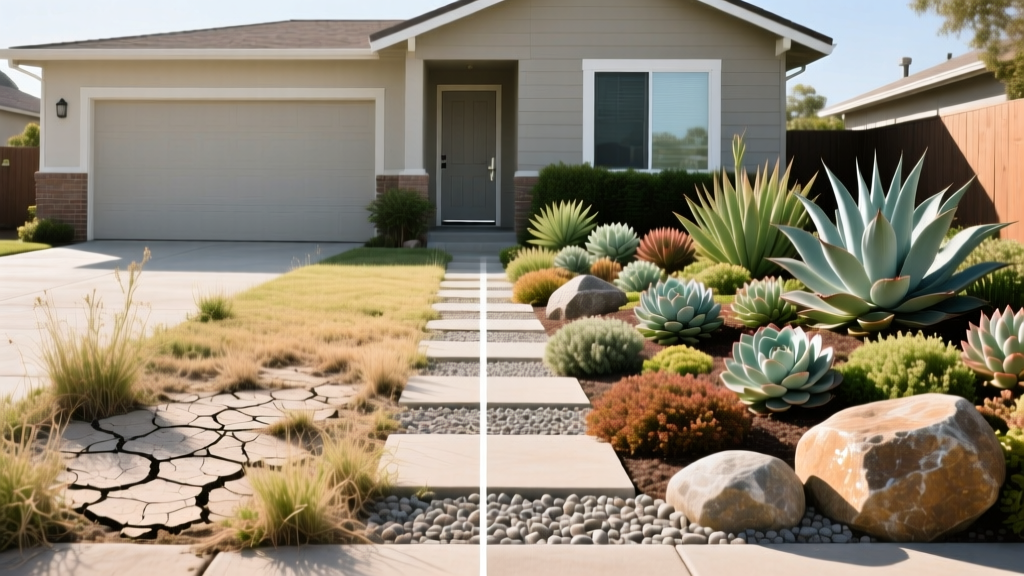
Before & After: Front Yard Xeriscape Curb Appeal Makeover
Emily WatsonPublished
The Vision: Rethinking the American Front Lawn
For decades, the sprawling, emerald-green front lawn has been the default standard for suburban curb appeal. However, as water restrictions tighten and maintenance costs soar, homeowners are increasingly looking toward sustainable alternatives. A well-executed xeriscape transformation does not mean settling for a barren, rocky desert landscape. Instead, it offers an opportunity to create a vibrant, textural, and ecologically beneficial outdoor space that thrives with minimal intervention. In this before and after case study, we walk through the complete transformation of a tired, water-thirsty 1,000-square-foot front yard into a stunning, drought-tolerant showcase that boosts property value and slashes utility bills.
The Before State: A Struggling Turf Nightmare
The project site featured a standard 1,000-square-foot patch of tall fescue grass situated in full, unrelenting sun. Despite weekly watering, the turf was plagued by brown spots, invasive crabgrass, and compacted clay soil. The homeowners were spending upwards of $150 a month on summer water bills just to keep the grass marginally alive. Furthermore, the lawn offered zero habitat value for local pollinators and required constant mowing, edging, and chemical fertilization. The goal was clear: remove the turf, improve the soil ecology, install a low-water drip irrigation system, and introduce a curated palette of drought-tolerant plants and architectural hardscaping.
Phase 1: Demolition and Soil Preparation
The transformation began with turf removal. While some opt for chemical herbicides or solarization (cooking the grass under clear plastic for six weeks), we chose physical removal to expedite the timeline. Using a motorized sod cutter, the top two inches of turf and thatch were stripped away, exposing the heavily compacted clay subsoil beneath.
Because clay soil drains poorly and suffocates the roots of many drought-tolerant plants, soil amendment was critical. We tilled the top six inches of the native soil and incorporated three cubic yards of coarse compost and expanded shale. This combination improves both moisture retention and drainage, creating a loamy environment where new roots can easily establish. According to the EPA WaterSense program, the average American family uses 320 gallons of water per day at home, with nearly 30% dedicated to outdoor uses. By eliminating the turf, we immediately targeted the largest source of outdoor water waste on the property.
Phase 2: Hardscaping with Decomposed Granite and Boulders
To break up the visual monotony of the old lawn and provide functional access to the front porch, we designed a sweeping, curved pathway using stabilized decomposed granite (DG). Unlike loose gravel, stabilized DG is mixed with a natural binder that hardens when compacted, creating a firm, permeable surface that resists erosion and weed growth.
- Base Layer: We excavated the path to a depth of four inches and laid down a heavy-duty, permeable geotextile weed barrier.
- Aggregate Base: Two inches of crushed gravel (3/4-inch minus) was added and compacted with a mechanical plate compactor to ensure a stable foundation.
- Surface Layer: Two inches of stabilized DG was spread, lightly watered, and compacted to create a smooth, natural-looking walkway.
To anchor the planting beds and provide year-round structural interest, we placed five large, moss-covered granite boulders (weighing between 300 and 500 pounds each) at key visual intersections. These boulders act as thermal masses, absorbing heat during the day and radiating it at night, which helps protect nearby tender plants during unexpected cold snaps.
Phase 3: Plant Selection and Installation
Plant selection was guided by the principles of hydrozoning—grouping plants with similar water and sunlight requirements together. To ensure we selected the most appropriate species for our climate zone, we consulted the WUCOLS database (Water Use Classification of Landscape Species) developed by the University of California. This authoritative tool rates plants on their actual water needs, allowing us to choose species that thrive on minimal supplemental irrigation once established.
The Curated Plant Palette
- Agave parryi (Parry's Agave): Placed near the large boulders, these architectural succulents provide striking, symmetrical rosettes of blue-gray foliage. They require virtually no water once established and serve as the primary focal points of the landscape.
- Salvia greggii (Autumn Sage): Planted in sweeping drifts along the pathway, this woody perennial produces vibrant red and magenta blooms from late spring through fall. It is a magnet for hummingbirds and requires only deep, infrequent watering.
- Muhlenbergia capillaris (Pink Muhly Grass): Used as a backdrop near the property line, this native ornamental grass grows to three feet tall and produces a breathtaking, cloud-like display of pink seed heads in the autumn. It adds vital movement and softness to the hardscape.
- Lantana camara (Trailing Lantana): Utilized as a groundcover in the hottest, most exposed areas near the sidewalk. It spills over the edges, suppressing weeds and providing a continuous carpet of yellow and orange flowers.
- Aloe striata (Coral Aloe): Positioned near the front door for winter interest. Unlike many aloes, this species is spineless, features broad, silvery-blue leaves, and produces brilliant coral-red flower spikes in late winter when little else is blooming.
Proper spacing was crucial. We planted according to the mature width of each species, resisting the urge to overcrowd the beds for instant gratification. This ensures adequate air circulation, reducing the risk of fungal diseases and minimizing the need for future pruning.
Phase 4: Smart Irrigation and Mulching
Xeriscaping does not mean zero water; it means efficient water use. We completely abandoned the old spray-head sprinkler system, which loses massive amounts of water to wind drift and evaporation. Instead, we installed a point-source drip irrigation system.
We ran 1/2-inch blank poly tubing through the beds, snaking it behind the plants. From the mainline, we used 1/4-inch micro-tubing to deliver water directly to the root zone of each plant. We utilized pressure-compensating emitters rated at 2.0 GPH (gallons per hour) for the shrubs and grasses, and 1.0 GPH emitters for the succulents. The entire system is controlled by a weather-based smart controller that automatically adjusts watering schedules based on local evapotranspiration rates and rainfall data.
Finally, we applied a three-inch layer of shredded cedar mulch over all exposed soil. Mulch is the unsung hero of the xeriscape. It suppresses weed seeds, prevents soil erosion, and drastically reduces surface evaporation. Furthermore, strategic landscaping can reduce home cooling costs. The U.S. Department of Energy notes that carefully positioned trees, shrubs, and groundcovers can modify local microclimates, saving up to 25% of a household's energy consumption for heating and cooling by shading hardscapes and reducing ambient air temperatures.
The After Reveal: A Triumph of Form and Function
Six months after installation, the transformation is nothing short of spectacular. The once-boring, flat square of yellowing grass has been replaced by a multi-dimensional landscape that changes with the seasons. The sweeping DG path invites visitors to the front door, flanked by the soft, swaying textures of Pink Muhly Grass and the bold, structural statements of the Agaves. The curb appeal is undeniable, drawing compliments from neighbors and passing pedestrians alike.
More importantly, the environmental and financial impacts are immediate. The homeowners report a 65% reduction in their summer outdoor water usage. The weekly chore of mowing has been replaced by a mere 15 minutes of monthly maintenance—mostly pulling the occasional weed and deadheading the Salvias.
Project Cost Breakdown
Investing in a xeriscape transformation requires upfront capital, but the return on investment is realized through drastically reduced utility bills, eliminated landscaping service fees, and increased property value. Below is the detailed cost breakdown for this 1,000-square-foot front yard makeover.
| Project Phase / Item | Quantity | Unit Cost | Total Cost |
|---|---|---|---|
| Turf Removal & Disposal | 1,000 sq ft | $1.50 / sq ft | $1,500.00 |
| Soil Tilling & Amendment (Compost/Shale) | 3 cubic yards | $65.00 / yard | $195.00 |
| Weed Barrier & Pathway Base Gravel | Lump Sum | $350.00 | $350.00 |
| Stabilized Decomposed Granite | 2 tons | $95.00 / ton | $190.00 |
| Accent Boulders (Moss Rock Granite) | 1 ton | $280.00 / ton | $280.00 |
| Plants (15-gallon & 5-gallon sizes) | 22 plants | $55.00 avg | $1,210.00 |
| Drip Irrigation Components & Smart Controller | 1 Full System | $485.00 | $485.00 |
| Shredded Cedar Mulch | 5 cubic yards | $60.00 / yard | $300.00 |
| Estimated Total Materials & Equipment | $4,510.00 |
Pro Tip for Homeowners: Many local municipalities and water districts offer aggressive turf-replacement rebates. Before you begin your demolition, check with your local water provider. In some regions, rebates can cover up to $2.00 per square foot of removed grass, potentially offsetting a significant portion of your material costs and reducing your payback period to less than two years.
Final Thoughts on Sustainable Curb Appeal
This before and after transformation proves that drought-tolerant landscaping is not a compromise on beauty; it is an elevation of it. By thoughtfully combining permeable hardscaping, hydrozoned plant selections, and smart irrigation technology, you can create a front yard that stands out in the neighborhood while respecting local water resources. Whether you are looking to sell your home or simply want to reclaim your weekends from the lawnmower, a xeriscape makeover is one of the most rewarding landscaping investments you can make.

