Pest Control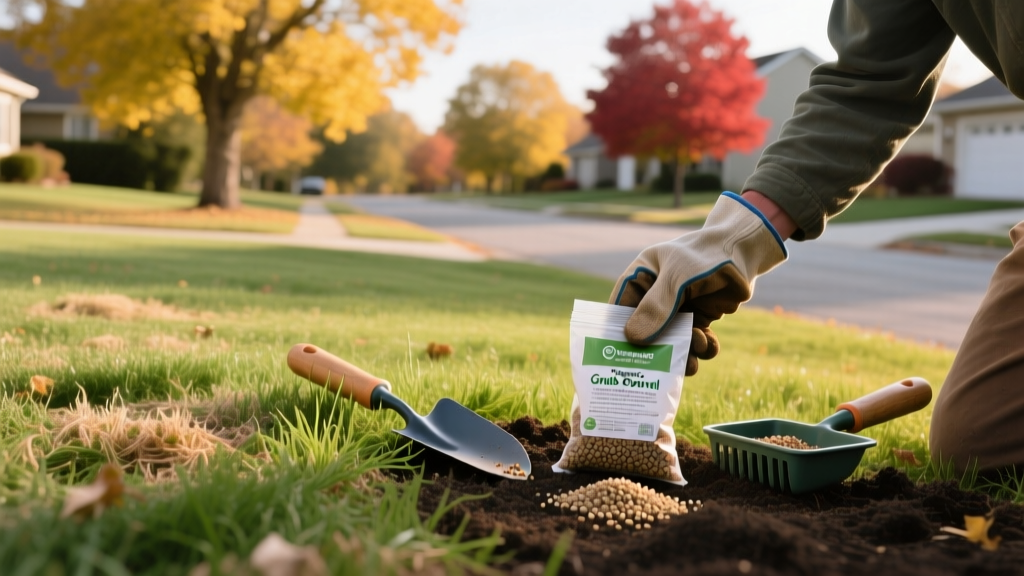
Seasonal Timing for Grub Control and Fall Overseeding
Robert HayesPublished
The Conflict: Pest Control vs. Planting Schedules
Fall is universally recognized as the most critical season for cool-season lawn care. It is the ideal window for overseeding, core aeration, and establishing deep root systems before the harsh winter months. However, late summer and early fall also represent the peak feeding period for one of the most destructive lawn pests: the white grub. Homeowners frequently face a frustrating scheduling conflict. How do you apply potent grub control treatments without disrupting the delicate germination process of new grass seed? The answer lies in understanding Integrated Pest Management (IPM) principles, soil temperature thresholds, and precise seasonal timing.
Identifying Grub Damage vs. Drought Stress
Before scheduling any treatment, you must confirm the presence of the pest. Drought stress, fungal diseases, and grub damage often look identical from a distance, presenting as irregular, brown patches of turf. To confirm a grub infestation, perform the "tug test." Grab a handful of brown grass at the edge of a damaged patch and pull gently. If the turf rolls back like a loose carpet with zero root resistance, grubs have severed the root system. Furthermore, use a spade to dig up a one-square-foot section of turf about two to three inches deep. According to turfgrass entomologists, finding more than 5 to 10 grubs per square foot warrants immediate curative action to save the lawn.
Understanding the White Grub Life Cycle
White grubs are the larval stage of various scarab beetles, including Japanese beetles, June bugs, and European chafers. According to Penn State Extension, these larvae hatch in mid-to-late summer and immediately begin feeding on grass roots just below the soil surface. This aggressive root pruning causes the turf to detach from the soil, leading to the aforementioned brown patches. Because the grubs are actively feeding and growing in August and September, this window perfectly overlaps with the prime overseeding schedule for cool-season grasses like Kentucky bluegrass, tall fescue, and perennial ryegrass.
Choosing Your Pest Control Strategy
Chemical Curative Treatments
Preventative chemicals like imidacloprid (commonly found in Scotts GrubEx) are applied in late spring to target newly hatched, microscopic larvae. If you missed this spring window, applying a preventative in the fall will not cure an active infestation of mature grubs. Instead, you must use a curative chemical treatment. Products containing trichlorfon (such as BioAdvanced 24-Hour Grub Killer) or carbaryl (Sevin) act quickly to eliminate mature grubs. Fortunately, trichlorfon does not possess pre-emergent herbicidal properties that would inhibit grass seed germination. You can safely apply trichlorfon and overseed in the same week, provided you follow proper watering protocols. However, be mindful of environmental precautions; avoid applying these chemicals near storm drains or waterways to protect aquatic ecosystems.
Biological Controls: Beneficial Nematodes and Milky Spore
For those committed to organic lawn care and IPM, beneficial nematodes are the gold standard. Specifically, the Heterorhabditis bacteriophora (Hb) species actively seeks out and parasitizes white grubs. The University of California IPM Program notes that nematodes require specific environmental conditions to thrive. They must be applied when soil temperatures remain consistently above 60°F (15°C) and the soil must be kept moist. This moisture requirement aligns perfectly with the frequent, light waterings needed to keep new grass seed damp during germination.
Alternatively, Milky Spore (Paenibacillus popilliae) is a long-term biological investment that specifically targets Japanese beetle grubs. It causes a fatal bacterial infection that turns the grub milky white, releasing billions of new spores into the soil as it decays. However, Milky Spore can take 2 to 5 years to reach peak efficacy and will not solve an acute, severe infestation in the current season. It is best used as a supplementary, long-term defense rather than an immediate curative measure during your fall planting schedule.
Soil Preparation: The Role of Core Aeration
Core aeration is a non-negotiable step in the fall planting schedule. By pulling 2-to-3-inch soil plugs, you alleviate compaction and allow oxygen to reach the root zone. From an IPM perspective, aeration physically disrupts the shallow soil layer where young grubs feed, exposing them to predatory birds and ground beetles. More importantly, the holes left behind serve as perfect receptacles for grass seed, ensuring the vital seed-to-soil contact necessary for high germination rates. Always aerate before applying curative grub treatments and seed, as the open soil channels will help draw the pest control products directly into the root zone.
The Master Schedule: Timing Treatments and Seeding
| Timeframe | Soil Temp | Pest Control Action | Planting Schedule Action |
|---|---|---|---|
| Mid-August | > 75°F | Apply curative trichlorfon or Hb nematodes at dusk. | Mow low, bag clippings, and perform core aeration. |
| Late August | 70°F - 75°F | Water in treatments deeply. Monitor for grub die-off. | Sow grass seed at 5-8 lbs per 1,000 sq ft. Apply starter fertilizer. |
| Early Sept | 65°F - 70°F | No further chemical applications needed. | Water 2-3 times daily for 10 mins to keep seed moist. |
| Mid-Sept | 60°F - 65°F | Grubs move deeper into soil profile as temps drop. | Reduce watering frequency, increase duration as seedlings establish. |
Watering Synergies: Satisfying Both Seed and Pest Control
Both grass seed and pest control treatments demand rigorous watering schedules, which can be leveraged to your advantage. Trichlorfon requires about 0.5 inches of water immediately after application to move the active ingredient into the thatch and root zone where grubs feed. Similarly, beneficial nematodes are highly susceptible to UV radiation and desiccation; they must be watered in immediately to wash them off the grass blades and into the dark, moist soil. Grass seed requires the top inch of soil to remain consistently moist to trigger germination. By applying your grub treatment in the early morning or at dusk, watering it in heavily, and then following up with light daily irrigation for your seeds, you satisfy the requirements for both pest eradication and seed germination simultaneously without wasting a drop of water.
Cost Breakdown and Product Recommendations
Estimated Costs for a 5,000 Sq Ft Lawn
- Curative Chemical (Trichlorfon): $15 - $25. Fast-acting, highly effective, but harmful to earthworms and beneficial soil biology.
- Beneficial Nematodes (Hb strain): $35 - $50. Organic, safe for pets and earthworms, but requires careful handling, refrigeration, and strict temperature adherence.
- Premium Tall Fescue Seed: $40 - $70. Essential for thickening the turf to naturally resist future pest damage and drought.
- Starter Fertilizer (High Phosphorus): $20 - $30. Crucial for rapid root development of new seedlings before the first frost.
Post-Germination Monitoring and Maintenance
Once the new grass reaches 3 inches, it is time for the first mow. Ensure your mower blades are razor-sharp to prevent tearing the delicate seedlings, which can invite fungal pathogens. During this vulnerable stage, continue to monitor for secondary fall pests like armyworms or sod webworms, which can decimate a newly seeded lawn overnight. If these surface-feeding caterpillars are spotted, a targeted application of Bacillus thuringiensis (Bt) or spinosad can be used safely. These biological insecticides target caterpillars specifically without harming the new turf, the earthworms, or the delicate soil biology you worked hard to establish during the overseeding process.
Pro Tip: Never apply pre-emergent crabgrass preventers (like prodiamine or dithiopyr) in the late summer or fall if you plan to overseed. These chemicals create a chemical barrier in the soil that will stop grass seed from germinating just as effectively as they stop crabgrass. Stick strictly to curative grub treatments or biological controls during your fall planting schedule.
Final Thoughts on Seasonal IPM
Timing is everything in lawn care. By aligning your pest control strategy with your planting schedule, you eliminate root-destroying grubs while simultaneously establishing a dense, vigorous turf. Whether you opt for the rapid knockdown power of trichlorfon or the ecological balance of beneficial nematodes, respecting the seasonal life cycles of both pests and plants will yield a lush, resilient lawn. A thick, deeply rooted lawn is the ultimate defense against future pest invasions, proving that strategic planting schedules are, in themselves, a powerful form of long-term pest control.