Pest Control
Recovering From Grub Damage: The Ultimate Lawn Renovation Guide
Introduction to Grub Damage and Lawn Recovery
Discovering large, irregular brown patches in your lawn during late summer or early fall is a frustrating experience for any homeowner. While drought stress and fungal diseases are common culprits, one of the most destructive threats to your turfgrass lies just beneath the soil surface: white grubs. Grubs are the larval stage of various scarab beetles, including Japanese beetles, June bugs, and European chafers. They feed voraciously on the root systems of your grass, severing the plant's ability to absorb water and nutrients.
When a grub infestation reaches critical levels, the damage is often too severe for the grass to simply bounce back with a good watering. The turf dies, leaving behind bare soil that is highly susceptible to weed invasion and erosion. Recovering from this devastation requires a dual-pronged approach: first, eradicating the active pest population using targeted pest control methods, and second, executing a comprehensive lawn renovation protocol to re-establish a healthy, resilient turf. This guide will walk you through the exact steps to reclaim your yard from grubs and restore its former glory.
Identifying Grub Damage vs. Drought Stress
Before investing time and money into pest control and renovation, you must confirm that grubs are the actual cause of your lawn's decline. Grub damage is frequently misdiagnosed as drought stress because the above-ground symptoms are remarkably similar: wilting, browning, and thinning grass. However, there are distinct indicators that point to a subterranean pest problem.
According to turfgrass experts at Penn State Extension, white grubs cause the turf to feel spongy underfoot because the roots have been chewed away, causing the sod to detach from the soil. Additionally, you may notice increased animal activity. Skunks, raccoons, and birds will actively tear up your lawn to feast on the protein-rich grubs hiding just below the surface. If you see loose flaps of dead turf that can be rolled back like a carpet, you are almost certainly dealing with a severe grub infestation.
The Tug Test and Grub Thresholds
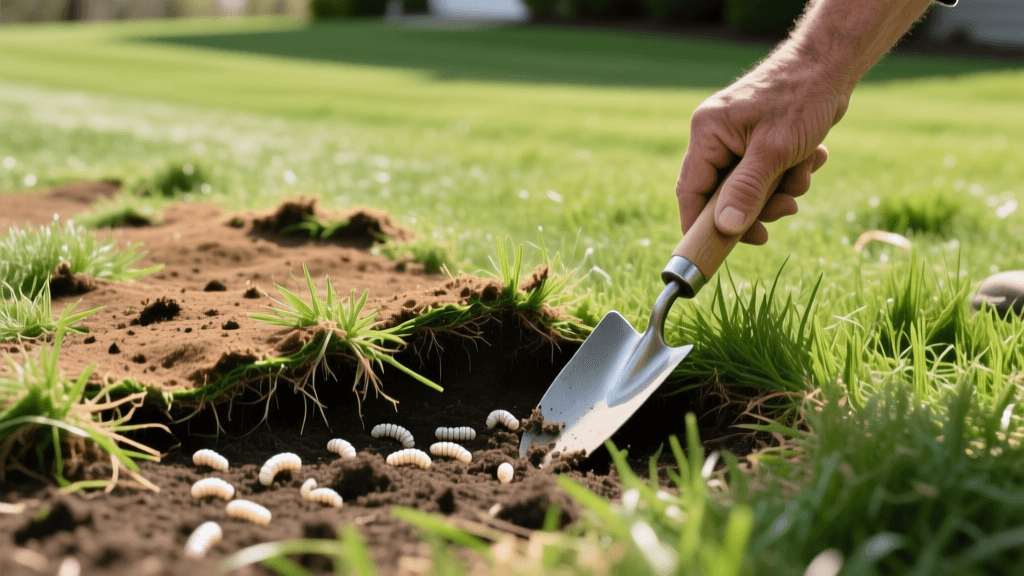
To confirm the presence of grubs, perform the 'tug test.' Grab a handful of the affected grass and pull gently. If the grass lifts away from the soil with little to no resistance and you see severed, ragged roots, grubs are to blame. Next, use a flat-edged shovel to cut a one-square-foot section of turf about two inches deep and peel it back. Count the number of C-shaped, white grubs in the soil.
- 0-5 Grubs per sq. ft.: Generally tolerable for a healthy, well-established lawn. No immediate curative action is required.
- 6-10 Grubs per sq. ft.: Borderline. Treatment is recommended if the lawn is already stressed by drought or heat.
- 10+ Grubs per sq. ft.: Severe infestation. Immediate curative pest control and subsequent lawn renovation are mandatory to save the turf.
Step 1: Eradicating the Active Infestation
You cannot successfully renovate a lawn if the pests are still actively feeding in the soil. If you are dealing with an active outbreak in late summer or early fall, preventative products will no longer work. You must use a fast-acting curative insecticide.
Curative Treatment Options
The most effective active ingredient for curative grub control is Trichlorfon (commonly sold under the brand name Dylox). Trichlorfon works quickly, killing active grubs within 24 to 48 hours of application. Apply the granular product at a rate of 3 to 4 pounds per 1,000 square feet, depending on the specific manufacturer's label instructions.
Crucially, Trichlorfon must be watered in immediately after application to activate the chemical and move it into the root zone where the grubs are feeding. Apply at least 0.5 inches of water via irrigation or rely on a heavy rainfall event. Without adequate water, the product will remain on the surface, degrade in the sunlight, and fail to control the pest population.
As noted by Michigan State University Extension, timing is everything when dealing with grub control products. Curative treatments like Trichlorfon are necessary when damage is already visible, whereas preventative treatments containing Imidacloprid or Chlorantraniliprole must be applied much earlier in the season (June or July) to stop grubs before they cause harm.
Step 2: Lawn Renovation and Recovery Protocol
Once the active grub population has been eliminated, the real work of lawn renovation begins. Dead grass will not turn green again; it must be removed and replaced. Follow this step-by-step renovation protocol for the best results.
1. Remove Dead Turf and Debris
Use a heavy-duty thatch rake or a mechanical dethatcher to aggressively remove the dead, detached grass and debris. This process, known as scarification, opens up the soil surface, ensuring that new grass seed will make direct contact with the dirt. Seed that lands on top of dead thatch will germinate but quickly die because its roots cannot reach the soil.
2. Core Aeration and Topdressing
Grub damage often coincides with compacted soil, which weakens turf and makes it more vulnerable to pests. Rent a core aerator and make two passes over the affected areas in perpendicular directions. This pulls small plugs of soil from the ground, relieving compaction and creating ideal pockets for new seed. Follow aeration with a light topdressing of compost or high-quality topsoil (about 1/4 inch thick) to improve soil biology and moisture retention.
3. Overseeding and Starter Fertilizer
Select a high-quality, turf-type tall fescue or Kentucky bluegrass blend that is resistant to local pests and diseases. For bare spots, apply seed at a rate of 5 to 8 pounds per 1,000 square feet. Use a broadcast spreader for even coverage, and lightly drag the area with a piece of chain-link fence or a leaf rake to ensure the seed is covered by no more than 1/8 inch of soil.
Immediately after seeding, apply a high-phosphorus starter fertilizer (e.g., a 10-18-10 NPK ratio) to promote rapid root development. Phosphorus is critical for the establishment of new turfgrass, but always check your local and state regulations, as some areas restrict phosphorus use unless you are actively establishing a new lawn or repairing bare spots.
4. The Renovation Watering Schedule
New grass seed requires constant moisture to germinate. Water the renovated areas lightly two to three times a day for the first 14 to 21 days. The goal is to keep the top inch of soil consistently damp without creating puddles. Once the seedlings reach a height of two inches, gradually reduce the frequency of watering but increase the duration to encourage deep, drought-resistant root growth.
Grub Control Product Comparison Chart
Choosing the right product depends on the time of year and the current state of your lawn. Use the table below to compare common grub control strategies for your integrated pest management (IPM) plan.
| Product Type | Active Ingredient | Application Timing | Target Stage | Est. Cost per 1,000 sq. ft. |
|---|---|---|---|---|
| Curative Insecticide | Trichlorfon (Dylox) | Late Summer / Early Fall | Active, mature grubs | $15 - $25 |
| Preventative Insecticide | Imidacloprid | Early Summer (June) | Young, newly hatched grubs | $10 - $18 |
| Long-Residual Preventative | Chlorantraniliprole | Spring (April - May) | Eggs and early instars | $20 - $30 |
| Biological Control | Beneficial Nematodes (Hb) | Late Summer (when soil is moist) | Active grubs in soil | $30 - $45 |
Long-Term Prevention and IPM Strategies
Renovating your lawn is a significant investment of time, labor, and money (often costing between $150 and $300 per 1,000 square feet when factoring in seed, soil, and treatments). To protect your newly renovated turf, implement an Integrated Pest Management (IPM) strategy focused on cultural and biological controls.
Biological Controls: Beneficial Nematodes
For homeowners seeking organic pest control methods, beneficial nematodes (specifically the Heterorhabditis bacteriophora species) are highly effective. These microscopic worms naturally occur in soil and actively hunt down white grubs, entering their bodies and releasing bacteria that kill the pest within 48 hours. Nematodes must be applied via a hose-end sprayer in the late summer when grubs are small and soil temperatures are above 60°F. Because they are living organisms, they must be kept refrigerated before use and applied during overcast conditions or in the evening to avoid UV degradation.
Cultural Practices for Turf Resilience
Grubs thrive in lawns with shallow root systems, which are often the result of frequent, shallow watering. Transition your lawn to a deep and infrequent watering schedule—aiming for 1 to 1.5 inches of water per week, applied in one or two sessions. This forces grass roots to grow deeper into the soil profile, making them far more resilient to minor grub feeding. Additionally, maintain a mowing height of 3 to 4 inches. Taller grass shades the soil, discouraging adult beetles from laying their eggs, as they prefer warm, exposed soil for oviposition.
According to the University of Massachusetts Amherst Extension, maintaining a vigorous, deeply rooted turf through proper fertilization and mowing is the single best defense against white grubs. A thick, healthy lawn can tolerate a low-to-moderate grub population without showing any visible surface damage, eliminating the need for harsh chemical interventions.
Conclusion
Recovering from grub damage requires patience, precise pest control, and a commitment to proper lawn renovation techniques. By accurately diagnosing the problem, applying the correct curative treatment, and following a rigorous overseeding and soil preparation protocol, you can transform a devastated, patchy yard back into a lush, green landscape. Pair your renovation efforts with long-term IPM strategies, and your newly restored lawn will be equipped to resist future infestations for years to come.