Pest Control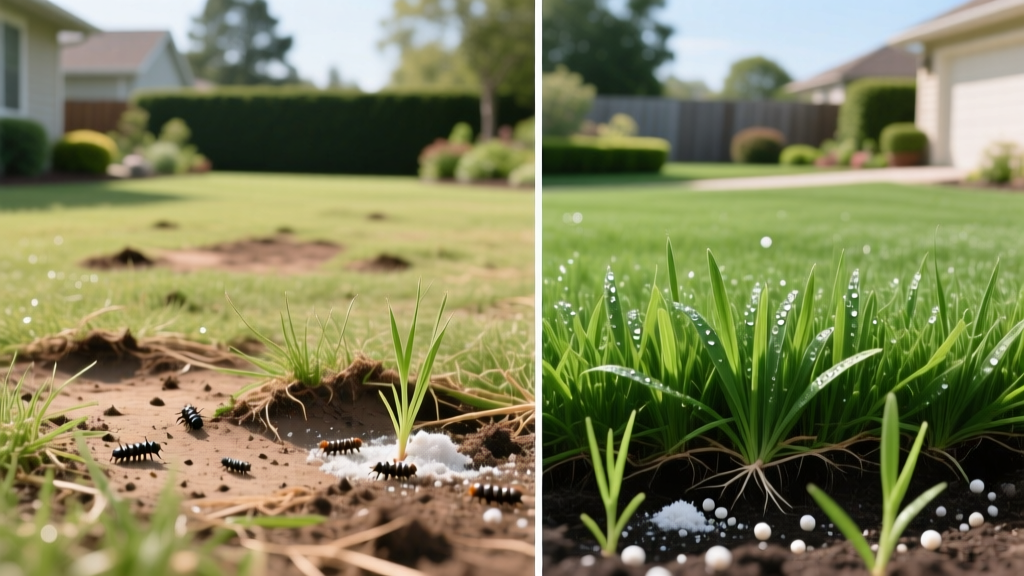
Grub Worm Lawn Transformation: Before and After Recovery Guide
James MillerPublished
The 'Before' State: Recognizing a Grub-Devastated Lawn
There are few sights more disheartening to a dedicated homeowner than stepping out onto a once-lush lawn only to find it transformed into a patchy, brown, and spongy wasteland. White grubs—the larval stage of various scarab beetles, including Japanese beetles, June bugs, and European chafers—are notorious for severing grass roots just below the soil surface. The 'before' picture of a severe grub infestation is characterized by irregular brown patches that feel spongy underfoot. In advanced stages, the turf loses its anchor to the soil, allowing you to roll it back like a freshly laid carpet. Furthermore, secondary damage often compounds the problem; foraging animals like skunks, raccoons, and crows will tear up the weakened turf to feast on the protein-rich grubs beneath, leaving behind deep craters and shredded grass blades.
The Assessment: Confirming the Infestation Threshold
Before initiating any transformation, you must confirm that grubs are the actual culprit and determine the severity of the infestation. According to turfgrass experts at Ohio State University Extension, not every grub presence warrants chemical intervention. A healthy lawn can tolerate a low population of grubs without showing visible stress.
To assess your lawn, perform the 'Square Foot Dig Test' in late summer or early fall when grubs are actively feeding near the surface. Using a flat spade, cut a one-foot by one-foot square of turf, about two to three inches deep, and peel it back. Count the C-shaped, creamy-white larvae. If you find fewer than five grubs per square foot, your lawn can likely recover with basic cultural care. However, if you count ten or more grubs per square foot, you have crossed the damage threshold, and an aggressive Integrated Pest Management (IPM) eradication and recovery plan is required to save your turf.
The Eradication Phase: Curative and Biological Controls
Transforming your lawn requires a two-pronged approach: stopping the immediate damage and establishing long-term biological defenses. Relying solely on harsh chemicals disrupts the soil microbiome, which is why modern IPM strategies blend targeted curative treatments with sustainable biological controls.
Step 1: Immediate Curative Treatment (For Active Damage)
If your lawn is currently being destroyed and you need rapid results, a fast-acting curative insecticide is necessary. Trichlorfon (commonly sold under the brand name Dylox) is the industry standard for rapid grub knockdown. Unlike preventative chemicals that take weeks to move through the soil profile, Trichlorfon degrades quickly but kills active grubs within 24 to 48 hours.
- Application Rate: Apply 1.5 pounds of granular Trichlorfon per 1,000 square feet.
- Timing: Apply in late summer or early fall when grubs are young and near the surface.
- Crucial Step: You must water the lawn immediately after application with at least 0.5 inches of water to activate the chemical and move it into the root zone where the grubs are feeding.
- Cost: Approximately $25 to $35 for a 10-pound bag, which covers roughly 6,500 square feet.
Note: Trichlorfon is highly toxic to earthworms and aquatic life. Use it only as a rescue treatment, not as a routine preventative measure.
Step 2: Long-Term Biological IPM Strategy
Once the immediate crisis is averted, the 'after' phase of your lawn's health relies on building a resilient soil ecosystem. University of Kentucky Entomology strongly advocates for the use of biological controls to manage grub populations sustainably over time.
Beneficial Nematodes: The most effective biological weapon against white grubs is the entomopathogenic nematode Heterorhabditis bacteriophora (Hb). These microscopic worms actively seek out grubs in the soil, enter their bodies, and release bacteria that kill the host within 48 hours. The nematodes then reproduce inside the dead grub and release thousands of new offspring to hunt for more pests.
- Application Rate: Apply at a rate of 25,000 to 50,000 nematodes per square foot (roughly 1 billion per acre).
- Timing: Apply in late August or early September when soil temperatures are between 60°F and 85°F.
- Crucial Step: Nematodes are living organisms sensitive to UV light and desiccation. Apply them in the late afternoon or on a cloudy day, and water the lawn immediately to wash them into the soil.
- Cost: Expect to pay $40 to $60 for a commercial-grade application covering 5,000 square feet.
Milky Spore Disease: For long-term suppression of Japanese beetle grubs specifically, Paenibacillus popilliae (Milky Spore) is a legendary biological control. Applied in a grid pattern across the lawn, it takes two to three years to fully establish in the soil, but once established, it can provide grub suppression for 10 to 15 years without reapplication.
The 'After' State: Lawn Recovery and Overseeding
Eradicating the grubs is only half the transformation. The 'after' picture of a pristine lawn requires aggressive turf recovery. The severed roots and animal digging damage will not heal on their own; they require mechanical intervention and new seed.
- Core Aeration: Rent a core aerator and pass over the damaged areas twice in perpendicular directions. This relieves soil compaction caused by animal traffic and creates ideal seed-to-soil contact.
- Topdressing: Apply a 1/4-inch layer of high-quality, screened compost over the aerated areas. This introduces beneficial microbes and retains moisture for germinating seeds.
- Overseeding: Select a drought-tolerant, deep-rooting grass species like Turf-Type Tall Fescue or a modern Kentucky Bluegrass blend. Apply seed at a rate of 6 to 8 pounds per 1,000 square feet for heavy renovation.
- Watering Schedule: Keep the top inch of soil consistently moist. Water lightly two to three times a day for the first 14 days until germination occurs, then transition to deep, infrequent watering (1 inch per week) to encourage deep root growth.
Treatment and Transformation Comparison Chart
Choosing the right product for your specific timeline and IPM goals is critical. Below is a comparison of the most common grub control methods used in lawn transformations.
| Product / Method | Type | Best Timing | Speed of Results | Est. Cost per 1,000 sq ft |
|---|---|---|---|---|
| Trichlorfon (Dylox) | Curative Chemical | Late Summer / Early Fall | 24 - 48 Hours | $0.05 - $0.08 |
| Imidacloprid (GrubEx) | Preventative Chemical | Late Spring / Early Summer | 2 - 3 Months (Preventative) | $0.10 - $0.15 |
| Hb Nematodes | Biological Control | Late Summer / Early Fall | 3 - 7 Days | $0.08 - $0.12 |
| Milky Spore | Biological Control | Spring or Fall | 1 - 3 Years to Establish | $0.15 - $0.25 |
Preventative Maintenance: Keeping the Lawn Lush
The ultimate goal of the before and after transformation is to ensure the 'after' state is permanent. Grubs are naturally attracted to lawns with shallow root systems, excessive thatch, and frequent, shallow watering. To maintain your newly transformed lawn, adopt deep and infrequent watering practices. Watering deeply once or twice a week encourages grass roots to grow six inches or deeper into the soil profile, moving them out of the primary feeding zone of surface-dwelling grubs.
Furthermore, maintain your mowing height at 3 to 4 inches. Taller grass shades the soil, making it less hospitable for adult beetles looking to lay eggs in the warm, bare dirt. Finally, perform annual dethatching if your thatch layer exceeds half an inch, as thick thatch provides a perfect incubator for beetle eggs and prevents biological controls like nematodes from reaching the soil. By combining immediate curative actions with long-term biological defenses and rigorous cultural practices, your lawn will not only recover from a devastating grub infestation but will emerge thicker, greener, and vastly more resilient than it was before.
For more localized advice on turfgrass pests and IPM strategies, consult resources from Penn State Extension, which provides excellent regional guidelines for managing turfgrass pests sustainably.