Pest Control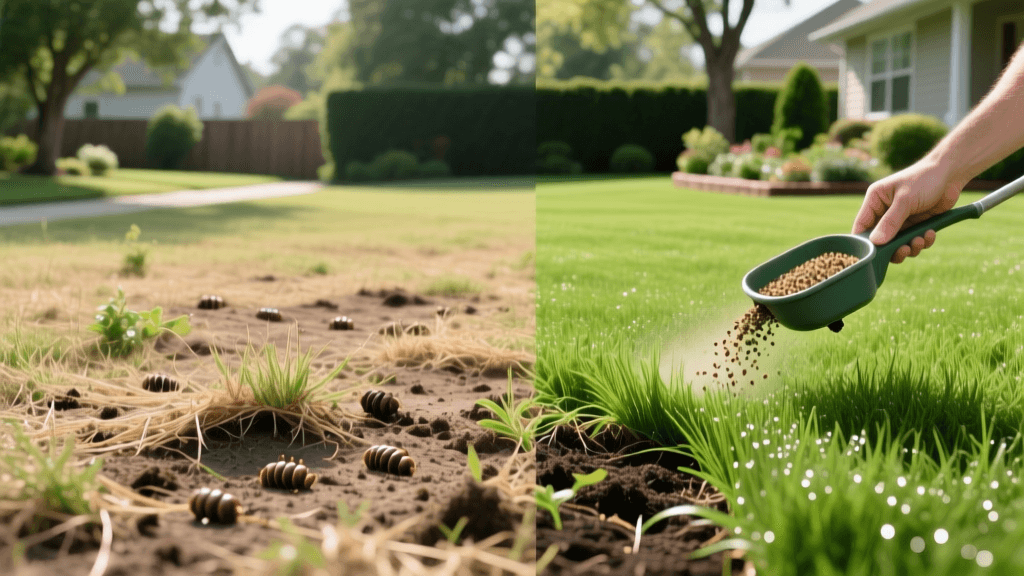
Grub Infestation Recovery: Before and After Guide
The Before State: Recognizing a Grub-Devastated Lawn
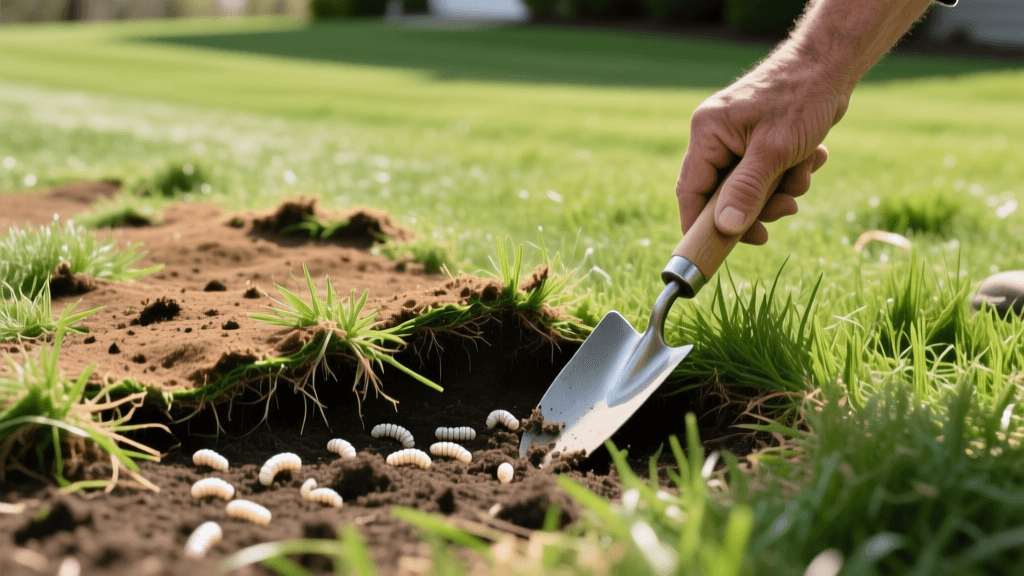
Every homeowner dreads the morning they walk onto their lawn and feel the sickening, spongy give of dead turf beneath their boots. The visual and structural damage caused by white grubs is one of the most severe transformations a lawn can undergo. In late summer or early fall, once-pristine grass turns into irregular, yellowing, and eventually brown patches. The turf feels loose and unanchored. In severe cases, you can literally grab the dead grass and roll it back like a carpet because the root system has been completely severed.
White grubs are the C-shaped larval stage of scarab beetles, including Japanese beetles, June bugs, and European chafers. They live just beneath the soil surface, feasting voraciously on grassroots. To make matters worse, the before state of your lawn often includes secondary damage from foraging wildlife. Skunks, raccoons, and crows will aggressively tear up the already dying turf to feast on the protein-rich grubs beneath, leaving behind cratered, ruined soil. According to turfgrass experts at Penn State Extension, a healthy lawn can tolerate a few grubs, but an infestation exceeding 10 to 15 grubs per square foot will cause catastrophic root pruning and inevitable turf death.
The Turning Point: Immediate Curative Treatments
To transform this wasteland back into a lush landscape, you must first eliminate the active grubs. Preventative products will not work at this stage; you need a fast-acting curative treatment to stop the bleeding and protect any remaining roots.
The Chemical Route: Trichlorfon
The most effective curative chemical for active grub infestations is Trichlorfon, commonly sold under the brand name Dylox (such as Bayer Advanced 24-Hour Grub Killer).
- Timing: Late summer to early fall (August to September) when grubs are young, near the surface, and actively feeding.
- Application Rate: Apply 3 pounds per 1,000 square feet using a broadcast spreader.
- Cost: Approximately $35 to $45 for a bag covering 5,000 square feet.
- Crucial Step: Trichlorfon degrades rapidly in sunlight and thick thatch. You must water it in immediately with at least 1/4 inch of irrigation to wash the active ingredient into the root zone where the grubs are feeding. Expect a 24 to 48-hour kill rate.
The Organic Route: Beneficial Nematodes
For those committed to organic lawn care and integrated pest management, beneficial nematodes (specifically Heterorhabditis bacteriophora or Hb) are microscopic worms that hunt and infect grubs. The University of Kentucky Entomology department notes that nematodes can be highly effective when applied correctly, acting as a biological control agent that leaves no chemical residue in the soil (University of Kentucky Entomology).
- Timing: Late summer, when soil temperatures are consistently above 60 degrees Fahrenheit.
- Application Rate: 1 billion nematodes per 2,500 square feet. Mix with water and apply using a hose-end sprayer with the filter removed.
- Cost: $30 to $50 per 1-billion count package (requires refrigeration before use).
- Crucial Step: Nematodes are living organisms and are highly susceptible to UV light and desiccation. Apply in the late evening and keep the soil consistently moist for 10 to 14 days post-application to ensure they survive and hunt the grubs.
Curative Grub Control Comparison Chart
| Method | Active Agent | Application Rate | Cost per 5k sq ft | Speed of Kill | Environmental Impact |
|---|---|---|---|---|---|
| Chemical Curative | Trichlorfon (Dylox) | 3 lbs / 1,000 sq ft | $35 - $45 | 24 - 48 Hours | Moderate; toxic to aquatic life |
| Organic Biological | Hb Nematodes | 1 Billion / 2,500 sq ft | $60 - $100 | 3 - 7 Days | Zero; beneficial to soil ecology |
| Milky Spore (Note) | Paenibacillus popilliae | 1 tsp per 4 sq ft | $50 - $70 | 1 - 3 Years | Zero; ONLY works on Japanese Beetles |
Note: Milky Spore is often mistakenly used as a curative treatment. It is a long-term biological preventative that only targets Japanese beetle grubs and takes years to establish in the soil. It will not save a lawn currently under active siege by European chafers or June bugs.
The Transformation: Soil Prep and Reseeding
Once the grubs are eradicated, the physical transformation of the lawn begins. You cannot simply throw seed on dead, rolled-back turf and expect a lush lawn. The soil must be prepped to welcome new roots.
- Remove the Dead Carpet: Use a heavy-duty thatch rake or a motorized dethatcher to pull up the dead, unanchored grass. Compost it or bag it, but ensure you expose the bare soil beneath.
- Core Aeration: Rent a core aerator to pull 2-to-3-inch soil plugs across the damaged areas. This relieves the compaction caused by animal digging, heavy foot traffic during the grub crisis, and summer heat.
- Topdressing: Spread a 1/4-inch layer of organic compost over the bare areas. This provides a nutrient-rich, moisture-retaining seedbed that mimics a natural forest floor.
- Overseeding: Choose a resilient grass blend. Turf-type Tall Fescue is highly recommended for grub-prone areas because its deep, extensive root system can tolerate minor root pruning far better than shallow-rooted grasses like Kentucky Bluegrass. Apply seed at a rate of 6 to 8 pounds per 1,000 square feet for bare patches, or 3 to 4 pounds for thinning areas.
- Starter Fertilizer: Apply a high-phosphorus starter fertilizer (e.g., 10-18-10 NPK ratio) to encourage rapid, aggressive root development.
- Moisture Management: Water lightly 2 to 3 times a day for the first 14 days. The top inch of soil must remain consistently moist until germination occurs. Once the grass reaches 2 inches, reduce watering frequency but increase the duration to encourage deep root growth.
The After State: A Resilient, Recovered Lawn
Six to eight weeks after treatment and reseeding, the after transformation is striking. The brown, spongy, cratered patches are replaced by vibrant, green shoots. Because you utilized core aeration and compost topdressing during the recovery phase, the new grass develops a deep, anchoring root system. The soil structure is vastly improved, and the turf is firmly rooted—you can no longer roll it back like a carpet.
Furthermore, the secondary pest damage from skunks and raccoons ceases entirely. With the food source eliminated and the soil no longer teeming with larvae, wildlife will move on to other hunting grounds. The visual contrast between the devastated before state and the lush, uniform after state is one of the most rewarding experiences in lawn care.
Long-Term Prevention: Maintaining the After State
The ultimate goal of Integrated Pest Management (IPM) is to prevent the before state from ever returning. The Environmental Protection Agency (EPA) emphasizes that IPM focuses on long-term prevention through a combination of biological, cultural, and targeted chemical controls.
- Cultural Controls (Mowing High): Set your mower deck to 3.5 or 4 inches. Taller grass shades the soil, making it cooler and less attractive to egg-laying female beetles in mid-summer. It also promotes deeper grassroots that can withstand minor grub feeding without showing surface damage.
- Preventative Chemicals: In early summer (June to early July), apply a preventative grub control containing Chlorantraniliprole (e.g., Scotts GrubEx1 or professional-grade Acelepryn). This product has a very low environmental impact, is safe for pollinators once watered in, and provides season-long control by targeting grubs when they are newly hatched and most vulnerable.
- Proper Irrigation: Avoid frequent, shallow watering in July and August. Allowing the top layer of soil to dry out slightly between deep waterings can naturally desiccate newly laid beetle eggs before they hatch, reducing the grub population without a single drop of pesticide.
By understanding the life cycle of the pest, executing a rapid curative response, and following through with rigorous soil preparation and reseeding, you can successfully guide your lawn through its darkest hour and emerge with a thicker, healthier, and more resilient turf.