Pest Control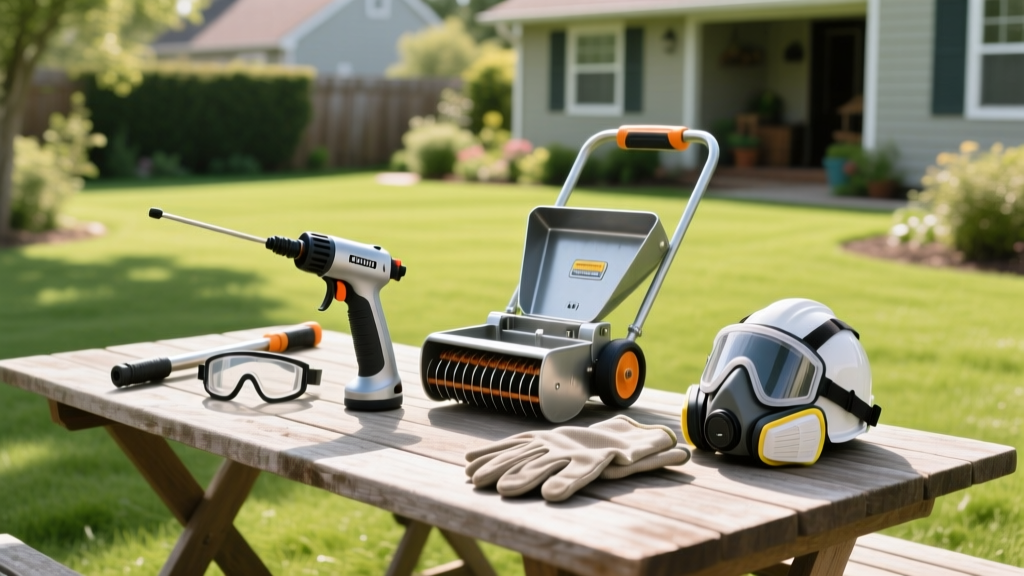
Essential Home Lawn Sprayers and Pest Control Tools
Emily WatsonPublished
The Foundation of Effective Pest Management: Choosing the Right Tools
When it comes to maintaining a pristine, healthy lawn and garden, dealing with pests is an inevitable part of the journey. Whether you are battling destructive grubs beneath the soil surface, fending off mosquito swarms, or managing fungal diseases on your prized ornamental shrubs, the effectiveness of your treatment is heavily dependent on the equipment you use. Integrated Pest Management (IPM) is a science-based approach that emphasizes targeted, environmentally sensitive pest control. According to the Environmental Protection Agency (EPA), IPM relies on comprehensive knowledge of pest life cycles and their interaction with the environment, which necessitates precise application tools to minimize chemical drift and maximize efficacy.
Using the wrong equipment can lead to under-application, which fails to control the pest and accelerates chemical resistance, or over-application, which wastes money and poses severe risks to the environment, beneficial insects, and your family. This comprehensive tools and equipment guide will walk you through the essential gear required for safe, efficient, and professional-grade home pest control, including detailed comparisons, calibration techniques, and safety protocols.
Lawn and Garden Sprayers: Your Primary Line of Defense
Liquid pesticides, herbicides, and fungicides are staples in lawn care. The vehicle for these treatments—the sprayer—must be chosen based on the size of your property, the type of chemical being applied, and the target pest. For instance, treating a localized ant mound requires a vastly different tool than applying a broad-spectrum mosquito barrier across a half-acre lot.
Types of Sprayers for Homeowners
1. Handheld Pump Sprayers (1 to 3 Gallons): These are the workhorses for small garden beds, spot treatments, and indoor baseboard applications. They require manual pumping to build pressure, typically maxing out around 30 to 40 PSI. While inexpensive, they can cause user fatigue on larger properties.
2. Backpack Sprayers (4 to 5 Gallons): For lawns exceeding 2,000 square feet, a backpack sprayer is essential. The weight is distributed across your shoulders, and the wand allows for consistent sweeping motions. High-quality models feature adjustable brass nozzles that can switch from a pin-point stream to a wide fan pattern, crucial for uniform foliar coverage.
3. Battery-Powered Sprayers (2 to 4 Gallons): Eliminating the need for manual pumping, battery-operated sprayers provide a consistent, uninterrupted stream of pressure. They are ideal for users with limited grip strength or those treating large, multi-tiered landscapes where constant pressure is required for reaching high tree canopies.
4. Hose-End Sprayers: These attach directly to your garden hose and use water pressure to siphon concentrated chemicals from a reservoir tank. They are best suited for soil drenches, systemic tree injections, and watering-in granular treatments, but they lack the precision required for delicate foliar applications.
| Sprayer Type | Capacity | Pressure (PSI) | Best Application | Average Cost |
|---|---|---|---|---|
| Handheld Pump | 1 - 3 Gallons | 15 - 40 PSI | Spot treatment, garden beds | $15 - $40 |
| Backpack Pump | 4 - 5 Gallons | 30 - 60 PSI | Full lawn coverage, tall weeds | $40 - $120 |
| Battery-Powered | 2 - 4 Gallons | 40 - 70 PSI | Large areas, reduced fatigue | $80 - $200 |
| Hose-End | 1 - 2 Quarts (Tank) | Water Pressure | Soil drenches, tree/shrub care | $10 - $25 |
Granular Spreaders: Delivering Solid Treatments
Not all pest control products are liquid. Granular pesticides, such as bifenthrin for tick and flea perimeter control, or systemic grub preventatives, require a mechanical spreader for even distribution. Applying granules by hand often results in clumping, which can burn your lawn and leave untreated gaps where pests will thrive.
Broadcast (Rotary) Spreaders: These feature a spinning disc that flings granules in a wide, circular pattern. They are excellent for large, open lawns and allow for faster coverage. However, they require careful edging to avoid throwing toxic granules into flower beds, vegetable gardens, or neighboring properties.
Drop Spreaders: Drop spreaders release granules directly beneath the hopper in a precise, defined swath. While they take longer to use and require overlapping passes to avoid striping, they offer unparalleled precision. Use a drop spreader when applying bait near sensitive areas, water features, or property lines.
Dusters and Bait Stations: Targeted Crevice Control
Many lawn and garden pests, including wasps, carpenter ants, and termites, nest in hidden voids, cracks, and crevices where liquid sprays cannot reach. A bulb duster or a bellows hand duster is a critical tool for applying insecticidal dusts like diatomaceous earth or cypermethrin. These tools inject a fine, penetrative cloud of dust deep into wall voids, ant mounds, and eaves. For ongoing monitoring and control of rodents and roaches, reusable tamper-resistant bait stations protect the active ingredient from weather degradation and prevent non-target wildlife from accessing the poison.
The Critical Step: Equipment Calibration
Owning the right equipment is only half the battle; calibrating it ensures you are applying the exact rate specified on the product label. The University of California Statewide Integrated Pest Management Program emphasizes that improper calibration is the leading cause of pesticide failure and environmental contamination. To calibrate a backpack sprayer, use the simple area method: measure a 1,000 square foot test zone (e.g., 20x50 feet). Fill your sprayer with a known volume of clean water, spray the test zone at your normal walking pace, and then measure how much water was used to refill the tank back to the starting line. If you used 1.5 gallons to cover 1,000 square feet, you will mix your chemical concentrate based on that 1.5-gallon carrier rate per 1,000 square feet. For more advanced calibration techniques, refer to the UC IPM guidelines on safe pesticide use and equipment handling.
Personal Protective Equipment (PPE): Non-Negotiable Safety
When handling concentrated pest control products, your health must be the top priority. The product label is a legal document that explicitly dictates the required PPE. Ignoring these requirements can lead to acute chemical burns, respiratory distress, or long-term systemic health issues.
- Chemical-Resistant Gloves: Never use cotton, leather, or latex gloves, as they absorb chemicals and hold them against your skin. Always use unlined, chemical-resistant nitrile or neoprene gloves that extend past the wrist.
- Eye Protection: Safety glasses with side shields or full chemical splash goggles are mandatory when mixing concentrates to prevent accidental splashes into the mucous membranes.
- Respiratory Protection: When applying fine dusts, aerosols, or spraying in enclosed spaces like greenhouses or sheds, a NIOSH-approved half-face respirator with organic vapor cartridges and P100 particulate pre-filters is essential.
- Coveralls and Footwear: Wear long sleeves, long pants, and chemical-resistant boots. Avoid wearing leather boots, which can absorb spills and become permanently contaminated.
Equipment Maintenance and Winterization
Pest control tools are an investment that should last for years if properly maintained. After every use, perform a triple-rinse of your sprayer tank and flush the wand and nozzle with clean water. Never store a sprayer with mixed chemicals inside, as the active ingredients and surfactants can degrade the rubber O-rings and plastic seals over time. Before winter, run a mixture of water and a few drops of RV antifreeze or pump oil through the system to lubricate the internal seals and prevent freezing damage. Store all equipment in a cool, dry, UV-protected environment, safely locked away from children and pets.
Conclusion
Mastering home pest control requires more than just selecting the right chemical; it demands the right mechanical delivery systems. By investing in high-quality sprayers, precise spreaders, and proper safety gear, and by taking the time to calibrate and maintain your equipment, you ensure a safer environment and a significantly healthier, pest-free landscape.