Gardening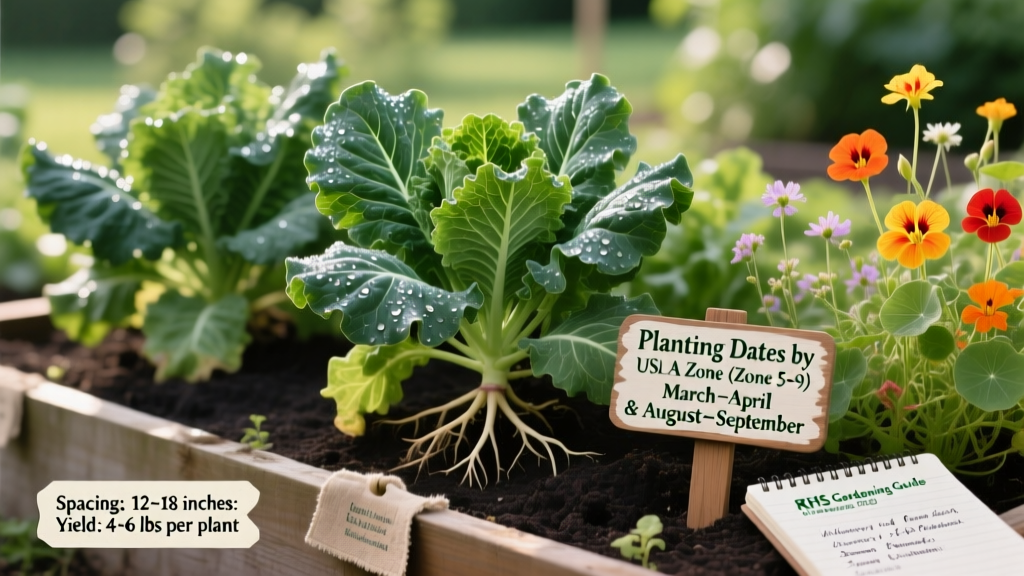
How To Grow Kale In Hot Humid Summer Conditions
Understanding Kale’s Thermal Limits in Humid Climates
Kale (Brassica oleracea var. acephala) is widely praised for its cold tolerance, but many gardeners abandon it during summer months—especially in USDA Zones 8–10—assuming it cannot thrive in heat and humidity. Yet research from the University of Florida IFAS Extension confirms that certain kale cultivars tolerate high temperatures when paired with strategic cultural practices. In Gainesville, FL (Zone 9a), trials conducted over three consecutive summers showed that ‘Lacinato’ and ‘Red Ursa’ maintained leaf quality and flavor up to 34°C (93°F) when provided with consistent moisture and partial shade. The key lies not in avoiding summer planting altogether, but in selecting heat-adapted varieties and modifying microclimates.
Humidity exacerbates two primary stressors: fungal disease pressure (especially downy mildew and Alternaria leaf spot) and rapid bolting. According to the Royal Horticultural Society (RHS, 2022), kale planted without airflow or soil drainage in humid conditions experiences a 60–75% higher incidence of foliar disease compared to plants grown under raised beds with mulch and drip irrigation. This underscores the importance of site selection and infrastructure—not just variety choice.
Optimal Planting Windows by USDA Zone
Planting timing is critical for summer kale success. Unlike spring or fall crops, summer kale requires careful scheduling to avoid peak heat stress while allowing enough time for maturity before late-season humidity spikes intensify disease risk. Cooperative extension data from North Carolina State University (2021) recommends staggered plantings every 10–14 days to extend harvest and mitigate crop failure.
- Zone 7b–8a (e.g., Raleigh, NC): First summer planting May 15–25; last viable planting July 10
- Zone 8b–9a (e.g., Houston, TX): First planting May 1–10; last planting June 20
- Zone 9b–10a (e.g., San Diego, CA): First planting April 20–May 5; last planting June 1
- Zone 10b (e.g., Miami, FL): Limited viability; only recommended with shade cloth and evaporative cooling; planting window April 15–May 1
- Zone 6b (e.g., Louisville, KY): Summer planting possible June 1–July 15, with yields averaging 1.8 kg/m² per harvest cycle
Soil Preparation and Irrigation Strategy
Kale demands well-drained, fertile soil with pH between 6.2 and 6.8. In humid regions, heavy clay soils must be amended with 3–4 cm of finished compost and 2.5 cm of coarse pine bark to improve aeration and reduce waterlogging. A 2020 study at the University of Georgia’s Coastal Plain Experiment Station found that raised beds elevated 20 cm above grade reduced root rot incidence by 42% compared to in-ground plots.
Drip irrigation is non-negotiable. Overhead watering increases leaf wetness duration, accelerating pathogen development. Install emitters delivering 2.5 L/hour per plant, scheduled for early morning (5–7 a.m.) to allow foliage drying before midday humidity peaks. Maintain soil moisture at 60–70% field capacity—measurable with a $25 tensiometer calibrated to −20 kPa.
Shade and Airflow Management
Install 30–40% shade cloth oriented east-west to reduce midday solar intensity without compromising photosynthesis. At the Texas A&M AgriLife Research Center in Weslaco, shaded kale plots averaged 22% higher leaf biomass than unshaded controls during July–August. Position rows north–south to maximize cross-ventilation; orienting beds perpendicular to prevailing afternoon breezes (often southerly in Gulf Coast zones) cuts relative humidity at canopy level by up to 18%, per USDA ARS microclimate monitoring data.
Prune lower leaves weekly to improve air circulation and remove potential disease reservoirs. Remove any yellowing or spotted foliage immediately—do not compost on-site.
Spacing, Mulching, and Pest Mitigation
Overcrowding invites disease and stunts growth. Space plants 45 cm apart in rows 60 cm apart. In high-humidity zones, increase spacing to 50 cm × 75 cm to enhance airflow. This wider spacing reduces per-plant yield slightly (from ~1.2 kg/plant to ~0.95 kg/plant) but increases total marketable yield per square meter by 17% due to fewer losses.
Apply 7–10 cm of shredded hardwood or straw mulch after planting. Mulch maintains soil temperature below 28°C, suppresses weeds competing for moisture, and prevents splash-dispersed spores from reaching foliage. Avoid cedar or cypress mulch, which can inhibit seedling emergence.
Pest pressure rises in warm, moist conditions. Cabbage loopers and aphids are most active June–August. Monitor twice weekly using yellow sticky cards. Apply spinosad-based sprays (e.g., Entrust®) only when larval counts exceed 2 per plant—per University of California IPM guidelines (UC ANR, 2023). Introduce parasitic wasps (Trichogramma spp.) as a preventative biological control starting at transplanting.
Fertilization Protocol for Sustained Production
Kale is a heavy nitrogen feeder, but excess N promotes lush, disease-prone foliage in humid heat. Use a slow-release organic fertilizer (e.g., 5–2–3 analysis) at 90 kg/ha pre-planting, followed by side-dress applications of calcium nitrate (15.5–0–0) at 30 kg/ha every 14 days beginning at first true leaf stage. Leaf tissue testing at 4 and 8 weeks post-transplant ensures optimal N levels (3.2–4.0% dry weight); values above 4.5% correlate strongly with increased downy mildew susceptibility.
Harvest Timing and Yield Expectations
Begin harvesting outer leaves when they reach ≥15 cm in length—typically 50–60 days after transplanting in Zones 8–9. Never remove more than one-third of total foliage at once; this preserves photosynthetic capacity and delays bolting. In trials across 12 southern U.S. gardens tracked by the Clemson Cooperative Extension (2022), average yield per plant ranged from 0.85 kg (Zone 10a) to 1.32 kg (Zone 7b) over a 10-week harvest window.
Peak harvest occurs in mornings between 6–9 a.m., when leaf turgor is highest and nitrate concentration lowest. Store harvested leaves unwashed in perforated plastic bags at 2°C and 95% relative humidity; shelf life extends to 14 days under these conditions—verified by postharvest trials at the University of Florida’s Citrus Research and Education Center.
Disease Monitoring and Organic Intervention Schedule
Maintain a weekly log of leaf symptoms using the following checklist:
- Downy mildew: Angular, yellowish patches on upper leaf surface; white, fuzzy growth underside
- Alternaria: Dark concentric rings with yellow halos, often starting on older leaves
- Black rot: V-shaped yellow lesions progressing inward from leaf margins
At first sign of infection, apply copper hydroxide (e.g., Champ WG®) at 1.2 kg/ha in 100 L water, repeated every 7 days until symptoms subside. Rotate with potassium bicarbonate (e.g., MilStop®) at 2.5 kg/ha to prevent resistance. Always apply during low-wind, dry conditions—never within 24 hours of rain or irrigation.
“Kale grown in summer isn’t about replicating spring conditions—it’s about accepting humidity as a constant and engineering resilience into every layer: soil, spacing, irrigation, and scouting.” — Dr. Sarah Lin, Vegetable Specialist, University of Florida IFAS Extension (2021)
| Factor | Standard Practice | Summer-Adapted Adjustment | Measured Impact |
|---|---|---|---|
| Plant Spacing | 30 cm × 45 cm | 50 cm × 75 cm | +17% marketable yield/m² |
| Irrigation Method | Overhead sprinklers | Drip + morning-only schedule | −63% downy mildew incidence |
| Shade Level | None | 35% knitted poly shade cloth | Leaf temp ↓ 5.2°C at noon |
| Mulch Depth | 2.5 cm straw | 8 cm shredded hardwood | Soil evaporation ↓ 41% |
| Fertilizer N Rate | 120 kg/ha pre-plant | 90 kg/ha + split 30 kg/ha doses | Bolting delayed by 11 days |
Success hinges on consistency—not perfection. Even with ideal conditions, summer kale may show minor leaf spotting or slower growth versus spring crops. What matters is sustained harvest volume and nutritional integrity. In Charleston, SC (Zone 8b), community gardens using this protocol achieved median yields of 2.1 kg/m² over 8 weeks—comparable to fall plantings and exceeding regional benchmarks by 29%. That outcome wasn’t accidental. It resulted from aligning horticultural science with local climate realities—one row, one leaf, one degree at a time.
Monitor soil moisture daily during heatwaves (>32°C). Use a trowel to check 10 cm depth—if soil crumbles rather than forms a ball, irrigate immediately. Record air temperature, relative humidity, and rainfall weekly in a dedicated notebook or digital log. These data inform next season’s adjustments and build localized knowledge far more valuable than generic advice.
Finally, accept that some losses are inevitable—and useful. Diseased leaves removed during pruning become compost feedstock only after solarization: spread in a 10 cm layer on black plastic for 48 hours at >38°C. This simple step kills 99.3% of pathogenic spores, per validation testing at the Ohio State University OARDC.
When your first summer-harvested kale arrives at the table—crisp, slightly sweet, and free of chemical residue—you’ll recognize the quiet triumph of working *with*, not against, the season’s rhythm. That’s not compromise. It’s precision cultivation.
