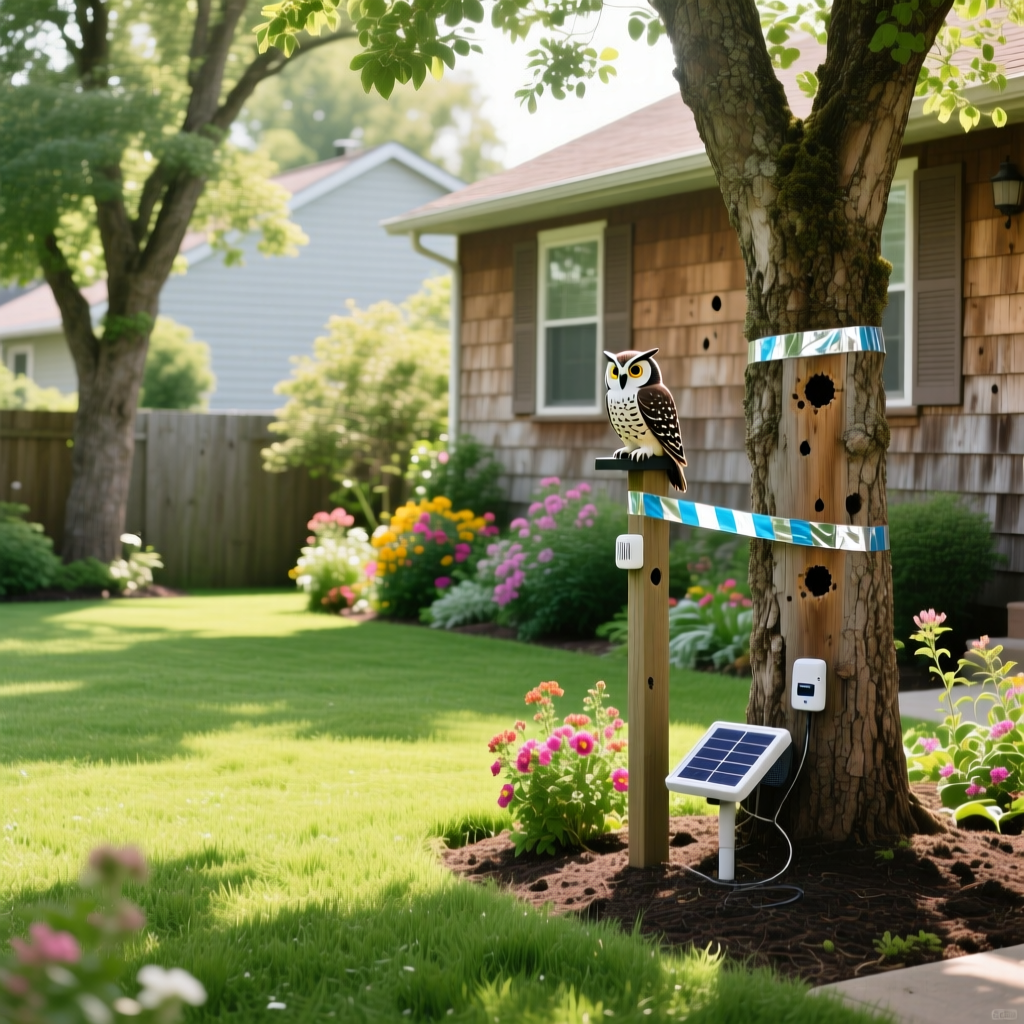
Woodpeckers are undeniably fascinating and ecologically vital birds. In a natural setting, they play a crucial role in controlling insect populations and creating nesting cavities that other wildlife species rely on. However, when these persistent birds decide that your home’s wooden siding, trim, or prized landscape trees are the perfect spot for foraging, drumming, or nesting, they can quickly transition from a backyard delight to a frustrating pest. The rhythmic hammering can be deafening, and the physical damage to your property can be costly to repair.
Because woodpeckers are protected under federal law in many regions, lethal control methods are not only illegal but also ecologically irresponsible. Fortunately, there are numerous humane, highly effective strategies to discourage these birds from targeting your property. By understanding their behavior and implementing a combination of visual, auditory, and physical deterrents, you can protect your siding and trees while allowing these beneficial birds to thrive elsewhere. This comprehensive guide will walk you through identifying woodpecker damage, understanding their motivations, and deploying humane solutions to keep them at bay.
Identifying Woodpecker Damage on Siding & Trees
Before you can effectively deter woodpeckers, you must confirm that they are indeed the culprits behind the damage to your property. Woodpecker damage has distinct characteristics that differentiate it from the work of other wood-destroying pests like carpenter bees, termites, or wood-boring beetles.
Recognizing Siding Damage
When woodpeckers target homes, they typically leave behind specific types of damage. If you notice perfectly round, small holes clustered together, the bird is likely foraging for insects living beneath the wood. If you see larger, rectangular or oval-shaped excavations, the woodpecker is likely attempting to create a nesting cavity. You may also notice superficial gouges or chipped paint along the edges of your siding or trim, which is a result of their persistent chiseling. Additionally, the sound is a major giveaway: a rapid, loud, and repetitive drumming noise, especially in the early morning, is a classic sign of woodpecker activity.
Differentiating from Other Pests
It is easy to confuse woodpecker holes with the damage caused by other pests. For instance, carpenter bees also drill perfectly round holes into wood, but their holes are typically about half an inch in diameter and are accompanied by small piles of sawdust (frass) directly beneath the entry point. Wood-boring beetles leave much smaller, irregular exit holes and create winding tunnels beneath the bark or wood surface. If you suspect an insect infestation is attracting the woodpeckers, it is vital to address the underlying pest issue alongside deterring the birds.
Identifying Tree Damage
In the landscape, woodpeckers often target trees that are already stressed, dying, or infested with borers. A specific type of woodpecker, the Yellow-bellied Sapsucker, will drill neat, horizontal rows of small, shallow holes into the bark of trees to access the sap flowing beneath. While a few holes will not harm a healthy tree, extensive sapsucker damage can girdle the tree, cutting off its nutrient supply and leaving it vulnerable to disease and secondary insect infestations. For more information on keeping your landscape healthy, consult our guide on maintaining tree health.
Why Woodpeckers Target Your Property
To effectively deter woodpeckers, you must understand why they are drawn to your home or trees in the first place. Woodpecker behavior generally falls into three distinct categories: foraging, drumming, and nesting.
Foraging for Insects
Woodpeckers are primarily insectivores. If a woodpecker is repeatedly pecking at your wooden siding, fascia boards, or window frames, it is highly likely that your home has an underlying insect problem. Carpenter ants, termites, wood-boring beetles, and wasps often nest inside the walls or beneath the siding of homes. The woodpecker is simply following its food source. Similarly, if they are tearing up your lawn or targeting specific trees, they may be hunting for grubs or bark beetles. Implementing a robust grub control and pest management routine is often the first step in solving a woodpecker foraging problem.
Drumming for Communication
Drumming is a behavioral trait used primarily for communication, not foraging. Woodpeckers use their beaks to hammer on resonant surfaces to establish territory, attract a mate, or communicate with their flock. While they naturally drum on hollow, dead trees in the wild, they have eagerly adapted to human-made structures. Metal gutters, aluminum flashing, chimneys, and wooden siding all produce loud, echoing sounds that a woodpecker finds highly satisfying. Drumming causes minimal structural damage compared to excavation, but the noise can be incredibly disruptive to homeowners.
Nesting and Roosting
Woodpeckers are cavity nesters, meaning they excavate their own nesting holes rather than building open nests in the branches of trees. They prefer soft, decaying wood for nesting, which is why older homes with cedar or redwood siding, or properties with dead trees, are prime real estate. Once a woodpecker begins excavating a nesting cavity, it can be incredibly difficult to deter them, as their drive to reproduce is a powerful biological imperative. This is why early intervention and preventative measures are so critical.
Humane DIY Solutions to Deter Woodpeckers
When dealing with woodpeckers, a multi-sensory approach is almost always required. Birds are highly adaptable and will quickly realize that a single stationary deterrent poses no real threat. By combining visual, auditory, and physical barriers, you can create an environment that woodpeckers find deeply unappealing.
Visual Deterrents
Woodpeckers have excellent eyesight and are naturally wary of predators and sudden movements. Visual deterrents aim to exploit these instincts.
- Reflective Tape and Flash Tape: Hanging strips of iridescent, reflective tape near the damaged areas is one of the most effective and affordable DIY solutions. As the wind blows, the tape flashes brightly and creates a crinkling sound that startles the birds. Attach the tape to eaves, gutters, or nearby tree branches so it moves freely.
- Scare Eye Balloons: These large, inflatable balls feature predator eye patterns and bright colors that mimic the eyes of hawks or owls. When suspended from the eaves, they sway in the breeze, creating the illusion of a hovering predator.
- Predator Decoys: Plastic owls, hawks, or snakes can be effective, but only if you move them frequently. If a plastic owl sits on the same fence post for three days, the woodpeckers will realize it is fake and ignore it. Move your decoys daily to maintain the illusion of a live threat.
Auditory Deterrents
Since woodpeckers rely heavily on sound, introducing disruptive noises can encourage them to relocate.
- Wind Chimes and Aluminum Pans: Hanging metallic wind chimes or stringing together old aluminum pie pans near the affected siding creates unpredictable, clanging noises that woodpeckers dislike.
- Ultrasonic Devices: These electronic devices emit high-frequency sounds that are irritating to birds but generally inaudible to humans. While results can vary depending on the species and the layout of your property, they offer a silent, humane option for residential areas.
- Distress Calls: Motion-activated speakers that play woodpecker distress calls or predator sounds can be highly effective, though they may also disturb your neighbors if used in densely populated areas.
Physical Barriers
If visual and auditory methods fail, physical barriers provide a definitive roadblock between the bird and your property.
- Bird Netting: Installing bird netting is the most foolproof method for protecting siding and trees. For homes, attach the netting to the eaves and angle it down to the siding, ensuring there is a gap of at least three inches between the net and the wall so birds cannot get trapped behind it. For trees, wrap the trunk securely with netting to prevent sapsuckers from drilling into the bark.
- Burlap Wrapping: Wrapping the trunks of vulnerable trees or the damaged sections of your siding with burlap removes the tactile feedback woodpeckers enjoy. They dislike the rough, fibrous texture and will usually move on to a more suitable surface.
- Hardware Cloth: For small, specific areas like fascia boards or window trim, attaching metal hardware cloth or chicken wire can prevent the bird’s beak from reaching the wood.
Preventative Lawn & Tree Care Strategies
Deterrents are only half the battle. To truly protect your property, you must address the environmental factors that make your home attractive to woodpeckers in the first place. A well-maintained lawn and healthy landscape are your best defenses against wood-boring pests and, by extension, the woodpeckers that hunt them.
Eradicating Underlying Insect Infestations
As mentioned earlier, if woodpeckers are foraging on your home, you likely have an insect problem. Inspect your siding, soffits, and trim for signs of carpenter ants, termites, or wood-boring beetles. Treat these infestations promptly using targeted, environmentally responsible pest control methods. In the lawn, a severe grub infestation will draw flickers and other ground-foraging woodpeckers who will tear up your turf to reach the larvae. Regular application of lawn grub management treatments will keep the soil pest-free and the birds away.
Maintaining Tree Health and Vigor
Woodpeckers are nature’s opportunists; they target weak, dying, or dead trees because the wood is softer and the insect populations are higher. Regular tree care is essential. Prune away dead or diseased limbs, as these are prime targets for nesting and foraging. Proper mulching, watering, and fertilization will keep your trees vigorous and less susceptible to the borers that attract woodpeckers. For comprehensive seasonal tips, review our seasonal yard cleanup guide to ensure dead wood is removed from your property promptly.
Providing Alternative Food Sources
Sometimes, the best way to protect your siding is to offer the woodpeckers a better dining option. Suet feeders are highly attractive to woodpeckers, especially in the colder months when natural insect populations dwindle. By placing a suet feeder filled with high-quality animal fat, peanuts, and seeds on the opposite side of your property, away from your home, you can lure the birds away from your siding. Once they discover the easy meal, they are less likely to expend energy excavating your trim.
Repairing Existing Damage
Woodpeckers are drawn to existing holes and damaged wood, as it signals an easy entry point for nesting or a pre-existing insect colony. Promptly repair any damage to your siding. Fill small holes with high-quality, exterior-grade wood filler or caulk, and paint over it to match the surrounding surface. For larger excavations, you may need to replace the damaged board entirely. Leaving holes open is an invitation for the woodpecker to return and finish the job.
When to Call Pest Control & Wildlife Professionals
While many woodpecker issues can be resolved with diligent DIY efforts and proper property maintenance, there are situations where professional intervention is necessary.
Understanding Legal Protections
In the United States and many other countries, woodpeckers are protected under the Migratory Bird Treaty Act (MBTA). This federal law makes it strictly illegal to hunt, trap, poison, or kill woodpeckers. Furthermore, it is illegal to destroy an active nest or harm their eggs. If a woodpecker has already established a nest and laid eggs inside your siding, you cannot legally remove them or block the hole until the nesting season is over and the young have fledged. A wildlife professional can help you navigate these legalities and provide guidance on how to safely exclude the birds once the nest is empty.
Severe Structural Damage
If the woodpecker damage has compromised the structural integrity of your home, or if water is entering the excavated cavities and causing interior rot, it is time to call in the experts. A licensed contractor will need to repair the wood, while a pest control specialist can ensure that the insect infestation that attracted the birds is fully eradicated.
Persistent Infestations
If you have exhausted all humane DIY deterrents, repaired the siding, treated for insects, and the woodpeckers continue to return season after season, a professional wildlife control service can help. They have access to commercial-grade exclusion netting, specialized architectural modifications, and advanced deterrent systems that are not available to the general public.
Frequently Asked Questions
Are woodpeckers protected by law?
Yes, in the United States, all native woodpecker species are protected under the Migratory Bird Treaty Act. It is a federal offense to harm, trap, or kill them, or to disturb an active nest containing eggs or chicks. You must rely entirely on humane deterrents and exclusion methods to manage woodpecker conflicts.
What smells do woodpeckers hate?
Woodpeckers have a keen sense of smell and are repelled by strong, pungent odors. Spraying a mixture of garlic oil, peppermint oil, or citrus extracts on the affected areas of your siding or tree trunks can act as a mild, natural deterrent. However, scent repellents must be reapplied frequently, especially after rainfall, and are generally less effective than physical barriers or visual deterrents.
Will bird feeders attract woodpeckers to my siding?
They can, if placed incorrectly. Hanging a bird feeder directly on or immediately adjacent to your wooden siding will draw woodpeckers right to your home. To prevent this, place suet feeders and seed stations on freestanding poles or in trees at least 30 feet away from your house. This provides the birds with food while keeping their activity safely away from your vulnerable trim and siding.
How do I repair woodpecker holes in my trees?
Unlike your home, you should not seal tree holes with wood filler or paint, as this can trap moisture and accelerate internal decay. Instead, clean the area gently and allow the tree to heal naturally. If the damage is severe and you need to prevent further pecking, wrap the affected section of the trunk with burlap or hardware cloth during the peak woodpecker season. Ensuring the tree is properly fertilized and watered will also help it compartmentalize the wounds and recover faster.
Why do woodpeckers peck at metal gutters?
When a woodpecker hammers on a metal gutter, chimney cap, or aluminum flashing, it is not looking for food. This behavior is called drumming. The bird is using the highly resonant metal surface to amplify its call, either to attract a mate or to warn rival woodpeckers to stay out of its territory. Because they are not trying to excavate the metal, drumming rarely causes structural damage, but the noise can be a nuisance. Hanging wind chimes or reflective tape near the gutter can disrupt the behavior.
Can I use fake predators to scare woodpeckers away permanently?
Fake predators, such as plastic owls or rubber snakes, can work as a short-term deterrent, but they are not a permanent solution. Woodpeckers are highly intelligent and will quickly observe that the plastic owl never moves, never blinks, and never attacks. Once they realize the decoy is harmless, they will ignore it. If you choose to use decoys, you must move them to a new location every single day to maintain the illusion of a live, active predator.