Tree Care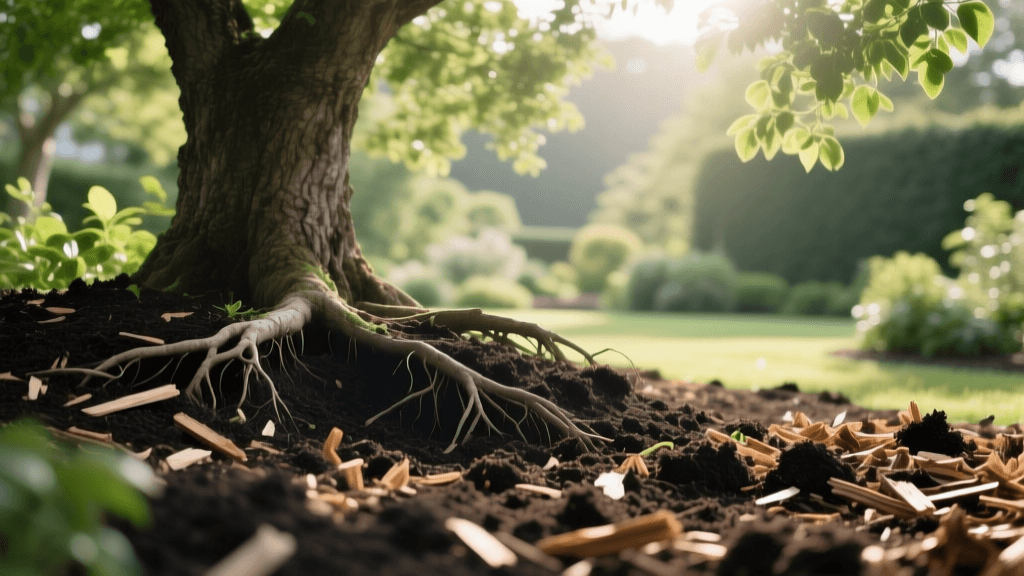
Improving Tree Soil Health With Compost and Organic Mulch
Trees in urban and suburban environments face immense stress compared to their forest-dwelling counterparts. In a natural forest, trees thrive on a continuous cycle of decaying organic matter, creating a rich, biologically active soil food web. However, in our yards and parks, leaves are raked away, turfgrass competes for nutrients, and heavy foot traffic compacts the earth. To restore vitality to struggling trees or give newly planted specimens the best start, homeowners must look beneath the surface. Improving tree soil health with compost and organic mulch is one of the most effective, science-backed methods for promoting vigorous root growth, enhancing drought tolerance, and preventing disease.
The Hidden World Beneath the Canopy
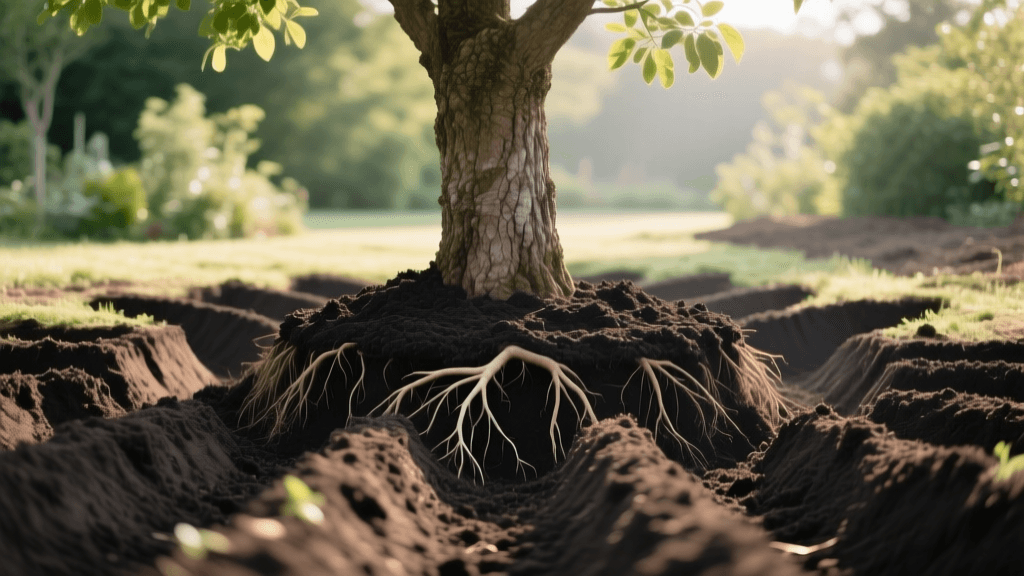
A tree's root system is remarkably shallow. Contrary to the popular image of deep taproots, the vast majority of a tree's fine, water-and-nutrient-absorbing roots are located in the top 12 to 18 inches of soil. This critical zone relies heavily on soil biology, particularly mycorrhizal fungi. These beneficial fungi form symbiotic relationships with tree roots, effectively extending the root system's reach and helping it absorb phosphorus, nitrogen, and water.
According to the Environmental Protection Agency (EPA), adding compost to the soil introduces billions of beneficial microorganisms that help suppress soil-borne diseases and break down organic nutrients into forms that tree roots can easily absorb. When soil is compacted or stripped of organic matter, this fungal network collapses, leaving the tree vulnerable to environmental stressors, pests, and pathogens.
Assessing Your Soil Before Amending
Before applying any amendments, it is crucial to understand your baseline soil conditions. Applying the wrong type of compost or altering the pH drastically can harm established trees. Start by conducting a comprehensive soil test through your local university cooperative extension office. A standard soil test will reveal your soil's pH, cation exchange capacity (CEC), and baseline nutrient levels. Most trees prefer a slightly acidic to neutral pH (between 6.0 and 7.0). If your soil is highly alkaline, applying certain types of compost or wood ash can lock up essential micronutrients like iron, leading to chlorosis (yellowing leaves).
Additionally, perform a simple percolation test to check for drainage issues. Dig a hole 12 inches deep and fill it with water. If it takes more than 24 hours to drain, you have heavy clay soil that will require specific aeration techniques alongside compost applications to prevent root rot.
Selecting the Ideal Compost for Tree Health
Not all compost is created equal. The source material and composting method dictate the nutrient profile, microbial diversity, and potential salt content of the final product. Below is a comparison chart to help you select the right compost for your specific tree care needs.
| Compost Type | Nutrient Profile | Best Application | Precautions |
|---|---|---|---|
| Leaf Mold | Low N-P-K, High Carbon | Forest trees, acid-loving species (Oaks, Pines) | Takes 1-2 years to fully break down; low immediate nutrient value |
| Mushroom Compost | Moderate N-P-K, High Calcium | Alkaline-tolerant trees, general landscaping | Can be high in soluble salts; test before heavy use |
| Vermicompost | High Micro-nutrients, Rich in Microbes | Tree injections, compost tea, young transplants | Expensive; best used as a targeted top-dressing amendment |
| Yard Waste Compost | Balanced N-P-K, High Organic Matter | General top-dressing, soil incorporation | Ensure it was hot-composted to kill weed seeds and pathogens |
Step-by-Step Guide to Compost Top-Dressing and Mulching
Applying compost to established trees requires a gentle touch to avoid damaging the shallow root system. Follow these actionable steps to properly amend the soil in the tree's critical root zone.
Step 1: Expose the Root Flare. The root flare (where the trunk widens at the base) must be visible. If your tree looks like a telephone pole planted in the ground, it is buried too deep. Carefully use an air spade or a hand trowel to remove soil and old mulch from the trunk flare. Burying the root flare leads to stem girdling roots and trunk rot.
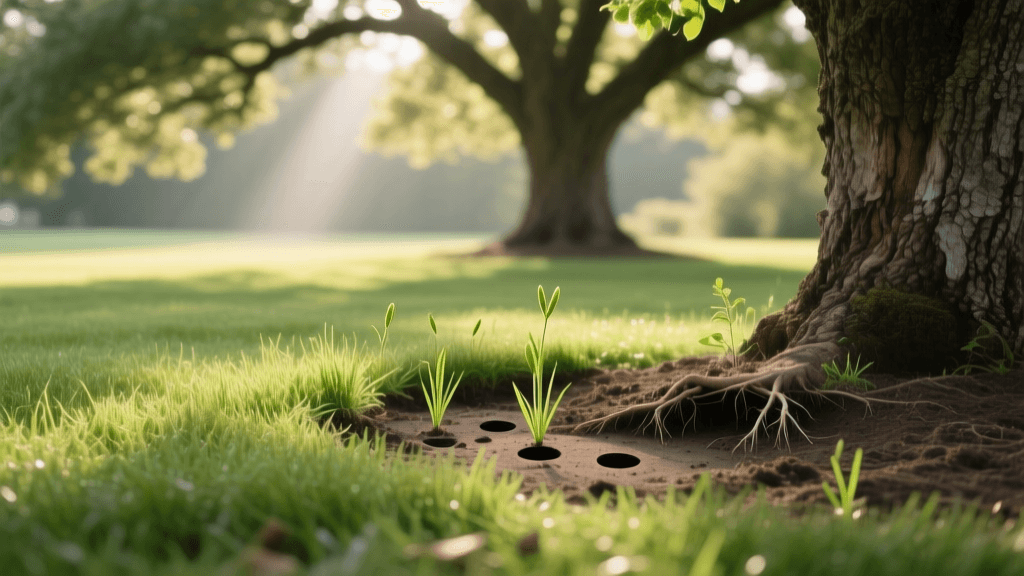
Step 2: Alleviate Soil Compaction. If the soil is heavily compacted, use a broadfork or a manual core aerator to create small holes in the soil under the tree's drip line. Avoid using heavy rototillers, which will sever vital fine roots.
Step 3: Apply the Compost. Spread a thin layer of high-quality, finished compost over the soil surface, starting a few inches away from the trunk and extending to the drip line (the outer edge of the canopy). A layer of 1/4 to 1/2 inch is sufficient. The compost will slowly work its way into the soil profile with the help of earthworms and rainfall.
Step 4: Mulch Over the Compost. The Arbor Day Foundation emphasizes that proper mulching is essential for moisture retention and temperature regulation. Apply 2 to 3 inches of coarse organic mulch, such as arborist wood chips or shredded bark, directly over the compost layer. Keep the mulch at least 3 inches away from the trunk itself to prevent rodent damage and fungal infections.
Timing Your Compost and Soil Amendments
The timing of your compost application can significantly impact how effectively the tree utilizes the added nutrients and biology. Early spring, just before the tree breaks dormancy and begins its first major flush of root growth, is an ideal time to apply compost and mulch. This ensures that the soil biology is active and ready to support the tree's demanding growth cycle.
Alternatively, late fall, after the tree has dropped its leaves and entered dormancy, is another excellent window. Fall applications allow the compost to integrate into the soil profile over the winter months, buffered by snow and rain, preparing the root zone for the following spring. Avoid heavy compost applications during the peak of summer droughts, as the added organic matter can sometimes compete with the tree for moisture if not watered in properly immediately after application.
Advanced Techniques: Vertical Mulching and Compost Tea
For severely stressed trees or those growing in heavily compacted urban soils, surface top-dressing may not be enough. In these cases, certified arborists often recommend vertical mulching. This involves drilling a grid of holes (typically 2 inches wide and 12 to 18 inches deep) throughout the root zone using a power auger. These holes are then backfilled with a mixture of coarse compost, expanded shale, and mycorrhizal inoculants. This technique bypasses compacted surface layers, delivering oxygen, organic matter, and beneficial microbes directly to the deeper root zones.
Another powerful tool is Actively Aerated Compost Tea (AACT). AACT is a liquid extract brewed from high-quality vermicompost, kelp, and humic acids, oxygenated with an air pump for 24 to 48 hours. This process multiplies beneficial bacteria and fungi exponentially. The tea can be sprayed directly onto the tree's foliage to combat fungal diseases or drenched into the soil to rapidly inoculate the root zone with beneficial biology.
Critical Mistakes to Avoid
When managing soil health, well-intentioned homeowners often make errors that can inadvertently harm their trees. Keep these common pitfalls in mind:
- Creating Mulch Volcanoes: Piling mulch and compost high against the tree trunk traps moisture against the bark, leading to decay and inviting boring insects. Always maintain a donut shape around the trunk.
- Using Unfinished or Hot Compost: Compost that has not fully cured will continue to break down, consuming soil nitrogen and generating excess heat that can literally cook shallow tree roots. Ensure your compost is dark, crumbly, and smells like rich forest earth before application.
- Over-Application of Nutrients: Trees do not require heavy fertilization like vegetable gardens. Excess nitrogen from heavy manure-based composts can cause rapid, weak, succulent growth that is highly susceptible to aphids and wind damage.
- Ignoring Soil pH: As noted by soil experts at Penn State Extension, altering the soil environment without testing can lead to nutrient lockout. Always base your compost and amendment choices on empirical soil test data.
Conclusion
Restoring and maintaining tree soil health is a long-term investment in your landscape. By understanding the biological needs of the root zone, selecting the appropriate compost, and applying it alongside proper organic mulch, you can dramatically extend the lifespan and vitality of your trees. Healthy soil creates resilient trees capable of withstanding drought, resisting pests, and providing shade and beauty for generations to come.