Lawn Care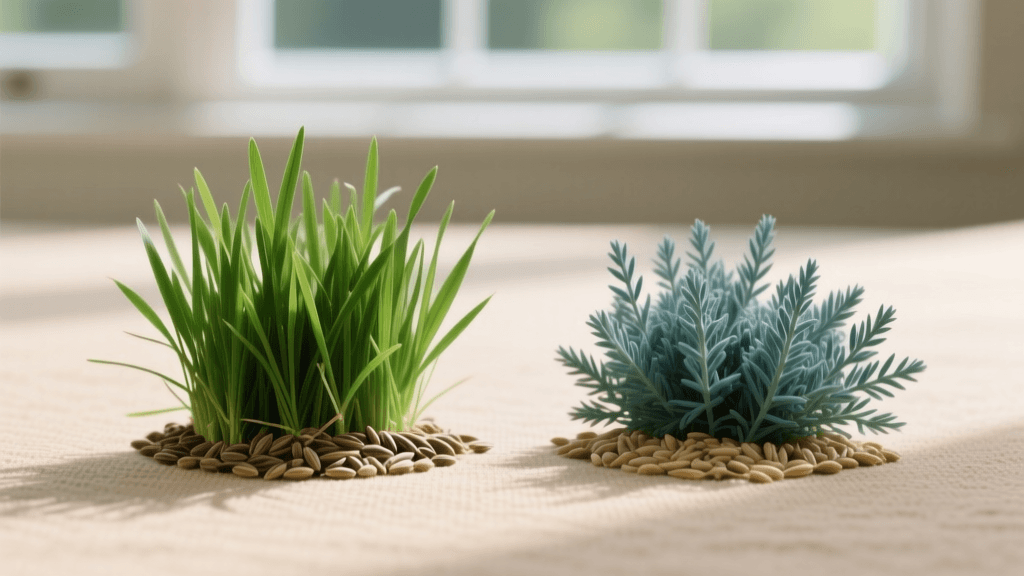
Kentucky Bluegrass vs Tall Fescue: Choosing The Best Seed
The Cool-Season Grass Dilemma
Selecting the correct turfgrass species is the single most important decision you will make when establishing or renovating a cool-season lawn. For homeowners in the northern United States and the transition zone, the choice almost always narrows down to two primary contenders: Kentucky Bluegrass (Poa pratensis) and Tall Fescue (Festuca arundinacea). While both grasses thrive in cooler climates and offer lush, green aesthetics, their underlying biology, maintenance requirements, and environmental tolerances are vastly different. According to the University of Minnesota Extension, understanding the microclimate of your specific yard is essential before purchasing seed. This comprehensive guide breaks down the genetic traits, establishment costs, and long-term care routines for both species to help you make an informed variety and species selection.
Profile: Kentucky Bluegrass (The Self-Repairing Carpet)
Kentucky Bluegrass (KBG) is widely considered the gold standard for premium, high-visibility lawns. Its defining biological feature is its rhizomatous growth habit. Rhizomes are horizontal underground stems that allow the grass to spread laterally, filling in bare spots and recovering from damage caused by foot traffic or pet activity. This creates a dense, sod-forming carpet that is highly prized for its dark green to blue-green color and fine-to-medium leaf texture.
Strengths and Weaknesses
- Strengths: Unmatched self-repair capabilities, excellent cold hardiness, superior aesthetic appeal, and high traffic tolerance once established.
- Weaknesses: Shallow root system (typically 2 to 6 inches deep), poor drought tolerance, high water and fertilizer requirements, and susceptibility to summer fungal diseases like summer patch and dollar spot.
Top Cultivar Selections
When shopping for KBG, avoid generic "contractor mix" bags. Instead, look for named, NTEP (National Turfgrass Evaluation Program) tested cultivars. Elite varieties such as 'Midnight', 'Award', 'NuGlide', and 'Mazama' offer improved disease resistance and deeper color retention during environmental stress.
Profile: Tall Fescue (The Drought-Tolerant Workhorse)
Tall Fescue has undergone a massive genetic transformation over the last two decades. Modern "turf-type" and "dwarf" tall fescues are a far cry from the coarse, clumpy forage grasses of the past. Unlike KBG, Tall Fescue is a bunch-type grass. It grows in individual clumps and spreads vertically via tillers rather than horizontally via rhizomes. Its most remarkable feature is its extensive root system, which can plunge 2 to 3 feet deep into the soil profile, granting it incredible access to subterranean moisture.
Strengths and Weaknesses
- Strengths: Exceptional drought and heat tolerance, deep root system, lower fertilizer requirements, and excellent adaptability to a wide range of soil types, including heavy clay.
- Weaknesses: Inability to self-repair (bare spots must be manually overseeded), coarser leaf texture compared to KBG, and high susceptibility to Brown Patch disease in hot, humid summer conditions.
Top Cultivar Selections
For the best results, select turf-type tall fescue (TTTF) blends. Highly rated varieties include 'Titan Ultra', 'Houndog 8', 'Mustang 4', and 'Firewall'. Blending three or four different cultivars ensures genetic diversity, protecting your lawn from total devastation if a specific disease strain targets one variety.
Head-to-Head Species Comparison
The following data table highlights the core differences between these two species to aid in your selection process. Data regarding environmental tolerances is supported by the NC State Extension Turffiles database.
| Trait | Kentucky Bluegrass (KBG) | Turf-Type Tall Fescue (TF) |
|---|---|---|
| Growth Habit | Rhizomatous (Spreads laterally) | Bunch-type (Grows in clumps) |
| Drought Tolerance | Poor to Fair (Goes dormant quickly) | Excellent (Deep root access) |
| Shade Tolerance | Poor (Requires full sun) | Fair to Good (Handles partial shade) |
| Traffic Tolerance | Excellent (Self-repairs damage) | Fair (Wears thin, needs overseeding) |
| Mowing Height | 2.0 to 3.0 inches | 3.0 to 4.0 inches |
| Annual Nitrogen Need | 2.0 to 4.0 lbs per 1,000 sq ft | 1.0 to 2.5 lbs per 1,000 sq ft |
| Seed Cost (Approx.) | $7.00 - $14.00 per pound | $4.00 - $8.00 per pound |
Evaluating Your Site Conditions
Before purchasing seed, conduct a thorough site assessment. The Purdue University Turf Program emphasizes that planting the right grass in the wrong environment is the leading cause of lawn failure.
Sunlight and Canopy Cover
Kentucky Bluegrass requires a minimum of 6 to 8 hours of direct, unfiltered sunlight daily. If your lawn is heavily shaded by mature trees or structures, KBG will thin out and eventually die. Tall Fescue is much more forgiving, thriving in areas that receive 4 to 6 hours of direct sun or dappled shade throughout the day.
Soil Composition and Drainage
Perform a simple percolation test. Dig a hole 12 inches deep and fill it with water. If it drains within a few hours, you have sandy or loamy soil, which KBG loves. If the water sits for 12 hours or more, you have heavy clay. Tall Fescue's aggressive root system can penetrate dense clay soils far better than the shallow roots of KBG.
Seeding Rates, Timing, and Costs
Proper seeding rates are critical. Over-seeding leads to overcrowding and fungal disease, while under-seeding leaves room for weed invasion.
Measurements and Application
- Kentucky Bluegrass: Because KBG seeds are incredibly small (roughly 1.5 million seeds per pound), the seeding rate is low. Apply 2 to 3 pounds per 1,000 square feet for new lawns, and 1 pound per 1,000 square feet for overseeding.
- Tall Fescue: TF seeds are much larger. Apply 6 to 8 pounds per 1,000 square feet for new lawns, and 3 to 5 pounds per 1,000 square feet for overseeding.
Timing and Financial Investment
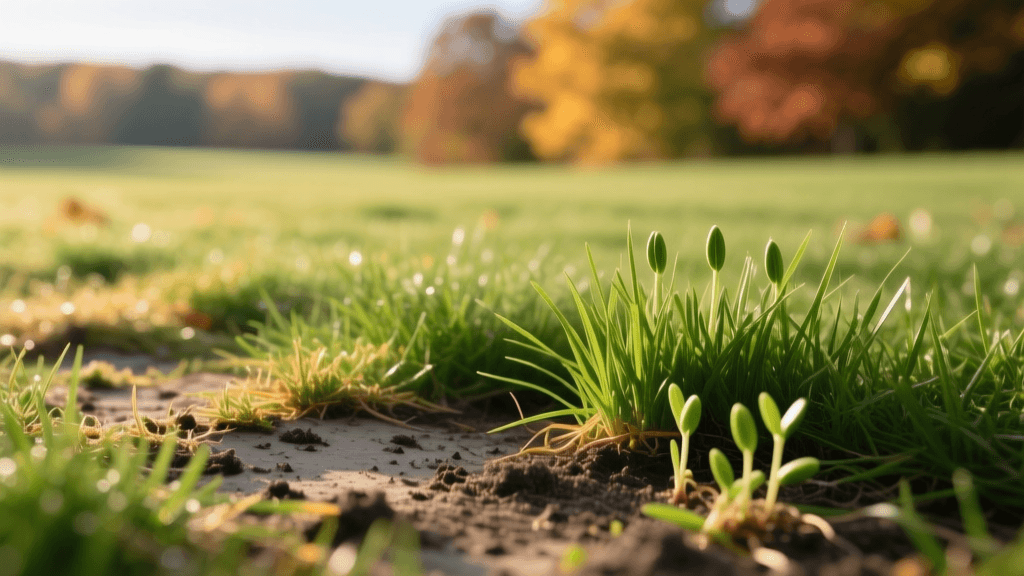
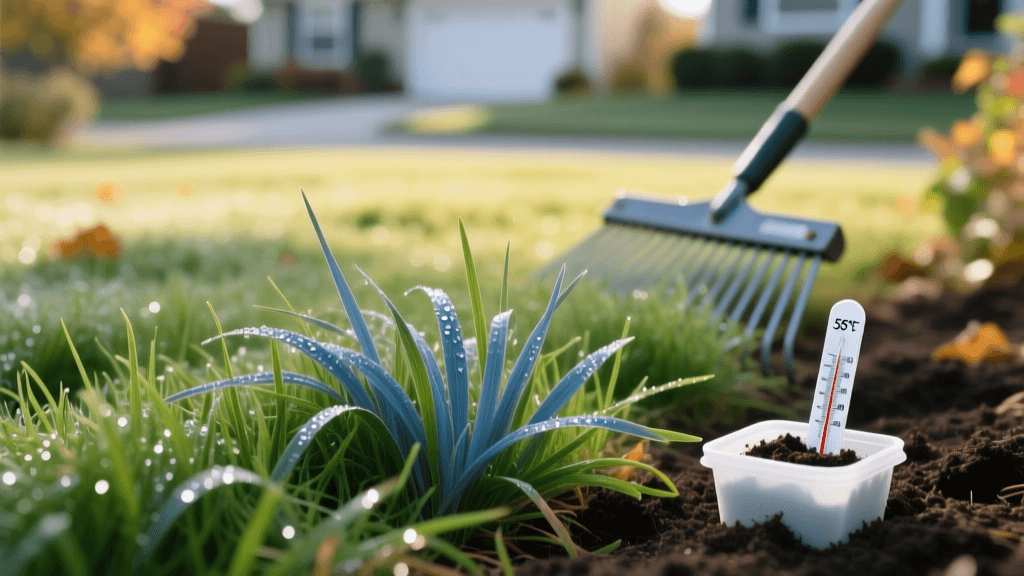
The optimal window for seeding both species is early fall (late August to mid-October), when soil temperatures are between 60°F and 70°F, and air temperatures are cooling. This allows roots to establish before winter dormancy.
Cost Example for a 5,000 Sq Ft Lawn:
For a new KBG lawn, you need roughly 12.5 lbs of seed. At an average of $10/lb, seed costs about $125.
For a new TF lawn, you need roughly 35 lbs of seed. At an average of $6/lb, seed costs about $210.
While KBG seed is more expensive by weight, the lower application rate balances the initial financial investment. However, KBG will cost significantly more in long-term water and fertilizer bills.
The 90/10 Mix: Best of Both Worlds?
Many turfgrass managers recommend a mixture of 90% Tall Fescue and 10% Kentucky Bluegrass. This specific ratio leverages the drought tolerance and wear resistance of the fescue while allowing the KBG rhizomes to slowly fill in minor gaps and divots over time.
Warning: Never mix these seeds at a 50/50 ratio. Because of their vastly different growth habits, germination speeds, and leaf textures, a 50/50 mix will result in a patchy, uneven lawn where the bunch-type fescue forms isolated clumps amidst the creeping bluegrass. Always purchase a professionally formulated 90/10 blend rather than attempting to mix the seeds yourself in a wheelbarrow.
Post-Seeding Care and Establishment
Regardless of the species you select, the first 30 days are critical. Keep the top inch of soil consistently moist by watering lightly 2 to 3 times a day. Once seedlings reach 2 inches tall, transition to deeper, less frequent watering to encourage root depth. Apply a high-phosphorus starter fertilizer (such as a 10-18-10 blend) at the time of seeding to promote rapid root development. Wait until the new grass reaches a height of 3.5 inches before executing the first mow, and ensure your mower blades are freshly sharpened to prevent tearing the delicate new tissue.
Final Verdict
If you demand a manicured, dark-green carpet, have full sun exposure, and are willing to invest time and money into irrigation and fertilization, Kentucky Bluegrass is your ideal species. If you prefer a low-maintenance, highly resilient lawn that can survive summer droughts, handle heavy clay soils, and tolerate the rough play of children and pets, Turf-Type Tall Fescue is the undisputed champion. Match the seed to your site, invest in premium named cultivars, and your lawn will thrive for decades.