
Landscaping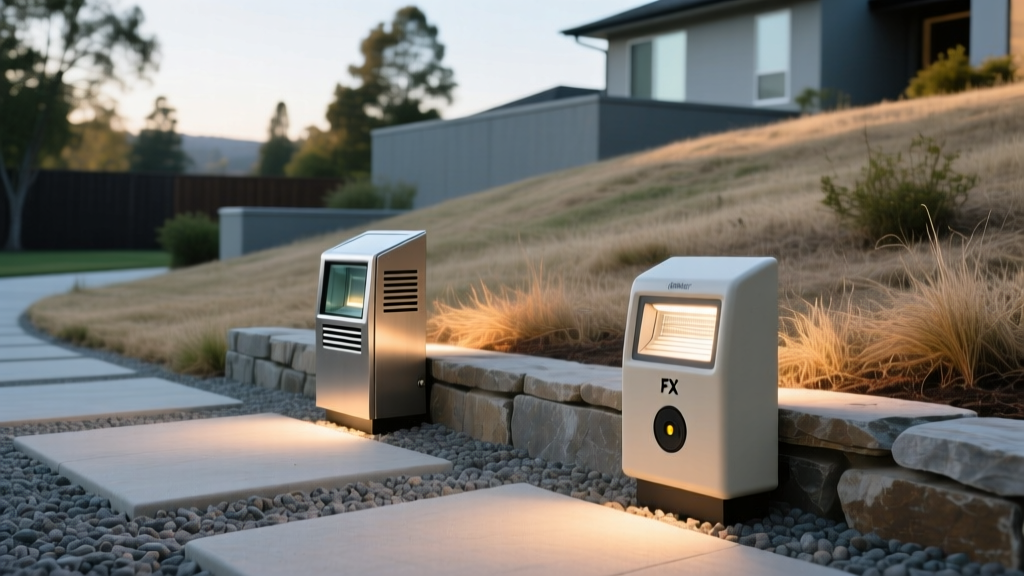
Kichler vs FX Luminaire LEDs: Fire-Resistant Guide 2026
Lisa ThompsonPublished
The Hidden Ignition Source in Fire-Resistant Landscaping
As wildfire seasons grow more unpredictable and intense in 2026, homeowners in the Wildland-Urban Interface (WUI) are rethinking every aspect of their outdoor spaces. While much of the focus in fire-resistant landscaping is placed on selecting fire-retardant plants, removing dead vegetation, and utilizing hardscaping, an often-overlooked ignition source remains hidden in plain sight: landscape lighting. Traditional halogen fixtures can reach surface temperatures exceeding 250°F, easily igniting dry pine needles, bark mulch, or dead leaves that blow into garden beds. Today, transitioning to LED is a baseline requirement for fire safety, but not all LEDs are created equal. In this guide, we compare two of the industry's premium brands—Kichler and FX Luminaire—specifically through the lens of fire-resistant landscaping and WUI compliance in 2026.
Understanding Defensible Space and Lighting Placement
Before comparing brands, it is crucial to understand where lighting fixtures are permitted and how they interact with defensible space zones. According to CAL FIRE, defensible space is divided into specific zones to slow the spread of wildfires. Zone 0 (the first 5 feet from the home) requires strict ember-resistant landscaping. Zone 1 extends to 30 feet, and Zone 2 extends to 100 feet. Placing a hot lighting fixture near combustible mulch in Zone 0 or Zone 1 violates the core principles of defensible space. Both Kichler and FX Luminaire offer low-heat LED solutions, but their fixture materials, thermal management, and smart-control capabilities dictate how safely they can be integrated into these high-risk zones.
Kichler LED Landscape Lighting: 2026 Fire-Safe Features
Kichler has long been a staple in residential landscape lighting, and their 2026 lineup continues to prioritize durability and safety. For fire-prone areas, Kichler’s solid brass and bronze fixtures are the recommended choices over their composite or aluminum options. Brass not only withstands the harsh UV and weather conditions of fire-prone regions but also acts as an excellent thermal conductor, pulling heat away from the LED diode and the surrounding environment.
Kichler’s proprietary heat-sink technology in their high-output path lights and well lights ensures that the exterior surface temperature of the fixture remains well below the ignition point of common landscape debris. Furthermore, Kichler’s Pro Connect smart system allows homeowners to integrate their lighting into broader home automation setups. In 2026, this means you can program your Kichler system to automatically shut off during local Red Flag Warnings, eliminating any electrical spark risk when high winds and low humidity create extreme fire danger.
FX Luminaire LED Landscape Lighting: 2026 Fire-Safe Features
FX Luminaire, a brand favored by high-end landscape architects, approaches fire safety through robust metallurgy and advanced zone control. Their copper and brass fixtures are exceptionally resilient. Copper, in particular, has superior thermal dissipation properties, meaning the fixture housing stays cooler to the touch compared to cheaper aluminum alternatives, reducing the risk of igniting adjacent dry foliage.
The standout feature for fire-resistant landscaping in the FX Luminaire ecosystem is the Luxor ZDC (Zone Dimming and Control) system. Luxor allows for granular control over individual fixtures or zones. From a fire safety perspective, this is invaluable. If a specific garden bed in Zone 1 becomes excessively dry or accumulates wind-blown debris that hasn't been cleared yet, you can dim or completely deactivate the lighting in that specific zone via the Luxor app without plunging your entire property into darkness. Additionally, FX Luminaire’s LED engines are potted in high-grade thermal epoxy, sealing the internal components from moisture and preventing internal arcing that could theoretically spark a fire in highly volatile environments.
Head-to-Head Comparison: Kichler vs. FX Luminaire for WUI Zones
| Feature | Kichler (Brass/Bronze Series) | FX Luminaire (Copper/Brass + Luxor) |
|---|---|---|
| Optimal Fixture Material | Solid Brass / Architectural Bronze | Solid Copper / Brass |
| Thermal Management | Integrated aluminum core heat sinks | Copper housing + potted thermal epoxy |
| Surface Temp (Relative) | Low (Safe for Zone 1 & 2) | Very Low (Safe for Zone 0 hardscape edges) |
| Smart System | Kichler Pro Connect | Luxor ZDC |
| Fire-Safe Auto Shutoff | Yes (via IFTTT / Smart Home integration) | Yes (via Luxor App & API integrations) |
| Warranty (2026) | Lifetime on brass fixtures; 5 years on LEDs | Lifetime on copper/brass; 5 years on LEDs |
| Estimated Cost per Fixture | $180 - $350 | $220 - $450 |
Smart Controls: Automating Red Flag Warning Shut-Offs
The National Fire Protection Association (NFPA) emphasizes that reducing electrical ignition sources during high-wind events is a critical component of modern wildfire preparedness. Both Kichler and FX Luminaire support smart home ecosystems that can automate this process. By linking your landscape lighting transformer to platforms like Home Assistant, SmartThings, or IFTTT, you can subscribe to local National Weather Service RSS feeds or API alerts. When a Red Flag Warning is issued for your county, the smart hub can instantly cut power to the outdoor lighting transformers. While Kichler’s Pro Connect is slightly more user-friendly for DIY smart-home enthusiasts, FX Luminaire’s Luxor system offers more robust local-network reliability, ensuring the shut-off command executes even if external internet routing experiences latency during emergency network congestion.
Best Practices for Installing Lights in Defensible Space
Even the safest, coolest-running LED fixture from Kichler or FX Luminaire can become a hazard if installed improperly. To maintain a fire-resistant landscape in 2026, follow these installation guidelines:
- Avoid Up-Lighting in Tree Canopies: In Zone 1 and Zone 2, avoid placing well lights at the base of trees to up-light the canopy. Dead leaves and pine needles collect in tree crotches and can be ignited by a stray spark or extreme heat buildup. Instead, use Kichler or FX Luminaire path lights to illuminate the ground.
- Maintain Clearance from Mulch: Keep a minimum 6-inch clearance between any lighting fixture and combustible mulch (like bark or wood chips). Use non-combustible mulch alternatives like decomposed granite or river rock immediately surrounding the fixture base.
- Protect the Wiring: Embers can travel miles ahead of a fire front. Ensure all low-voltage wiring is buried at least 6 inches deep or run through metal conduit. Exposed wires can melt during an ember shower, causing a short circuit that could ignite dry ground cover.
- Routine Lens Cleaning: Dust, pollen, and fine particulate matter can accumulate on LED lenses. While LEDs run cool, a thick layer of dry, combustible dust on a lens can theoretically smolder if the fixture experiences a voltage surge. Wipe lenses with a damp cloth seasonally.
Final Verdict: Which Brand is Best for Fire-Prone Landscapes?
When designing a fire-resistant landscape in 2026, both Kichler and FX Luminaire offer exceptional, safe alternatives to outdated halogen systems. If your primary goal is seamless smart-home integration to automate Red Flag Warning shut-offs on a moderate budget, Kichler’s brass lineup paired with the Pro Connect system is an outstanding choice. However, if you are designing a high-end property in a strict WUI zone where maximum thermal dissipation and granular, zone-by-zone control are paramount, FX Luminaire’s copper fixtures and Luxor ZDC system provide the ultimate peace of mind. Ultimately, the safest landscape lighting is one that combines premium, cool-running materials with intelligent, automated shut-off capabilities.

