Pest Control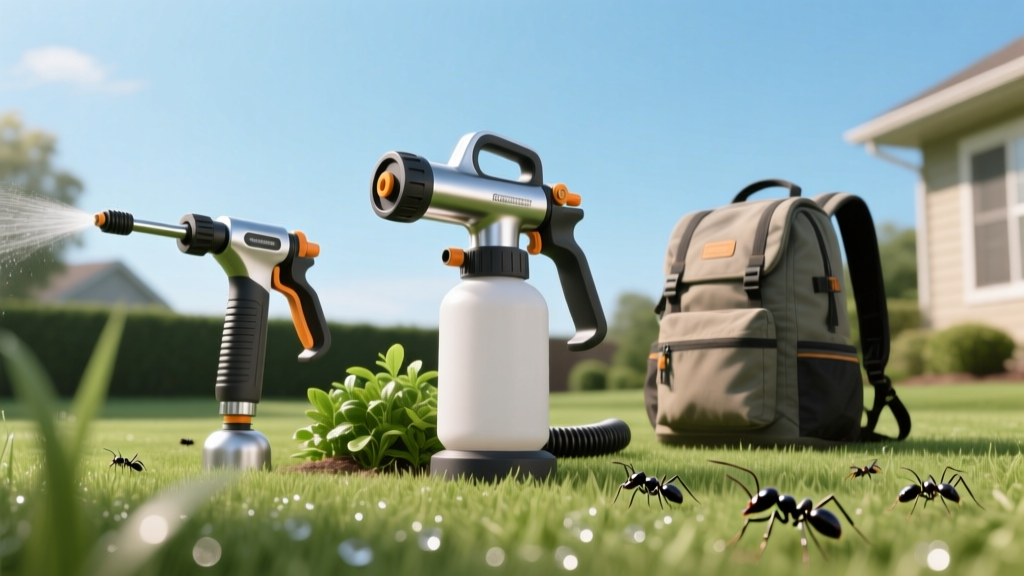
Lawn Pest Control Sprayers: The Ultimate Buying Guide
Emily WatsonPublished
Choosing the Right Sprayer for Lawn Pest Management
Effective pest control in your lawn and garden relies heavily on the precision and consistency of your application equipment. When practicing Integrated Pest Management (IPM), the goal is to apply treatments only where needed, in the correct concentrations, to minimize harm to beneficial insects, pets, and the surrounding environment. Using the wrong sprayer can lead to chemical runoff, uneven coverage, and wasted money. Whether you are targeting surface-dwelling chinch bugs, soil-borne grubs, or foliar-feeding aphids, selecting the right tool is your first line of defense.
In this comprehensive equipment guide, we will break down the three primary types of lawn sprayers used in residential pest control, compare their features, and provide actionable calibration and safety advice to ensure your treatments are both effective and environmentally responsible.
Types of Lawn Sprayers for Pest Control
1. Hose-End Sprayers
Hose-end sprayers attach directly to your garden hose and use water pressure to siphon and dilute a pesticide concentrate from an attached reservoir. They are best suited for broadcasting liquid insecticides over large areas, such as treating an entire lawn for fleas, ticks, or ants.
- Best For: Large lawns (5,000+ sq ft), granular-to-liquid conversions, and ready-to-spray concentrate bottles.
- Pros: No manual pumping required; covers large areas quickly; inexpensive.
- Cons: Highly dependent on household water pressure; difficult to calibrate precisely; prone to over-spraying and runoff.
- Cost: $15 to $25. (Top Pick: Ortho Dial N Spray)
2. Compression / Pump Sprayers
Compression sprayers, typically ranging from 1 to 2 gallons, require manual pumping to pressurize the tank. They are the go-to tool for spot treatments, perimeter barrier sprays, and targeting specific garden beds or foundation lines where pests like earwigs and centipedes enter the home.
- Best For: Spot treatments, perimeter sprays, and small garden beds (under 2,000 sq ft).
- Pros: Highly portable; excellent for precise spot treatments; easy to store.
- Cons: Requires frequent pumping to maintain pressure; not practical for large lawns.
- Cost: $15 to $40. (Top Pick: Chapin 1-Gallon Multi-Purpose Sprayer)
3. Backpack Sprayers
For serious lawn care enthusiasts and those managing properties over a quarter-acre, a 4-gallon backpack sprayer is the gold standard. According to the National Pesticide Information Center (NPIC), backpack sprayers offer superior ergonomics, consistent pressure delivery via internal piston or diaphragm pumps, and highly accurate calibration. They allow you to treat large expanses of turf for grubs or armyworms without the fatigue of carrying a handheld tank or the imprecision of a hose-end attachment.
- Best For: Large lawns, precise IPM applications, and frequent pesticide/fertilizer users.
- Pros: Consistent pressure; ergonomic weight distribution; highly accurate calibration; interchangeable nozzles.
- Cons: Higher initial cost; requires regular maintenance and cleaning.
- Cost: $60 to $150. (Top Pick: Solo 425 4-Gallon Backpack Sprayer)
Sprayer Comparison Chart
| Feature | Hose-End Sprayer | Pump Sprayer (1-2 Gal) | Backpack Sprayer (4 Gal) |
|---|---|---|---|
| Ideal Area Size | 5,000+ sq ft | Under 2,000 sq ft | 2,000 - 15,000 sq ft |
| Calibration Accuracy | Low | Medium | High |
| Pressure Consistency | Varies with water flow | Drops between pumps | Highly consistent |
| Average Cost | $15 - $25 | $15 - $40 | $60 - $150 |
| Best Pest Target | Fleas, Ticks, Broad Ants | Spiders, Earwigs, Wasps | Grubs, Armyworms, Chinch Bugs |
Nozzle Selection: Fan vs. Cone
The nozzle you choose dictates the droplet size and spray pattern, which directly impacts pest control efficacy.
- Flat Fan Nozzles: Produce a uniform, fan-shaped pattern. These are ideal for soil drenches and broadcasting liquid insecticides over turfgrass to target soil-dwelling pests like white grubs and mole crickets. The larger droplets resist wind drift, ensuring the chemical reaches the thatch and soil layer.
- Hollow Cone Nozzles: Produce a fine, circular mist. These are best for foliar applications where you need to coat the undersides of leaves to target sucking insects like aphids, spider mites, and whiteflies. However, fine mist is highly susceptible to wind drift, so only use cone nozzles on calm days.
Calibration: The Most Critical Step
Applying too little pesticide will fail to control the pest, while applying too much is illegal, harms the environment, and wastes money. The Environmental Protection Agency (EPA) mandates that you follow the exact mixing ratios on the product label, which are usually based on a specific volume of water per 1,000 square feet.
How to Calibrate Your Sprayer (The 1,000 Sq Ft Method)
- Measure a Test Area: Mark off an area of your lawn that is exactly 1,000 square feet (e.g., 20 ft x 50 ft).
- Spray with Water: Fill your sprayer with plain water. Spray the 1,000 sq ft area at your normal walking pace, using the pressure and nozzle you intend to use for the actual treatment.
- Measure the Output: Refill the sprayer to the exact same level it was before you started, using a measuring cup. The amount of water it takes to refill the tank is your output per 1,000 sq ft (usually between 1.0 and 2.0 gallons).
- Mix the Chemical: If your sprayer outputs 1.5 gallons per 1,000 sq ft, and the pesticide label requires 2 ounces of concentrate per 1,000 sq ft, you will mix 2 ounces of chemical into every 1.5 gallons of water in your tank.
Safety and Personal Protective Equipment (PPE)
Handling concentrated pesticides requires strict adherence to safety protocols. According to the NPIC guide on Personal Protective Equipment, you should never rely on everyday clothing to protect you from chemical absorption. At a minimum, your pest control toolkit should include:
- Chemical-Resistant Gloves: Unlined nitrile or neoprene gloves (never cotton or leather, which absorb and hold chemicals against your skin).
- Protective Eyewear: Splash-proof goggles to protect against accidental wand leaks or wind-blown mist.
- Long Sleeves and Pants: Dedicated clothing that is washed separately from your regular laundry.
- Respirator: Required only if the specific pesticide label dictates it, particularly when using wettable powders or spraying in enclosed spaces like crawlspaces.
Equipment Maintenance and Cleaning
Proper maintenance extends the life of your sprayer and prevents cross-contamination. Never use a sprayer that previously held a broadleaf herbicide to apply a liquid insecticide or fertilizer, as residual herbicide can severely damage your ornamental plants and garden vegetables.
The Triple-Rinse Method
- Empty any remaining pesticide solution according to local disposal regulations.
- Fill the tank one-quarter full with clean water and a few drops of dish soap. Shake vigorously and spray the soapy solution through the wand to clean the internal hoses and nozzle.
- Repeat this process twice more with plain, clean water.
- Remove the nozzle and filter screen, brushing them gently with a soft toothbrush to remove any clogged particulate matter. Never use a metal wire or pin to clear a nozzle, as this will alter the spray pattern and ruin your calibration.
Final Thoughts on IPM Equipment
Investing in a high-quality backpack or pump sprayer is a cornerstone of successful Integrated Pest Management. By pairing the right equipment with meticulous calibration and proper safety gear, you ensure that your lawn receives the precise care it needs to thrive while keeping environmental impact to an absolute minimum.