Tree Care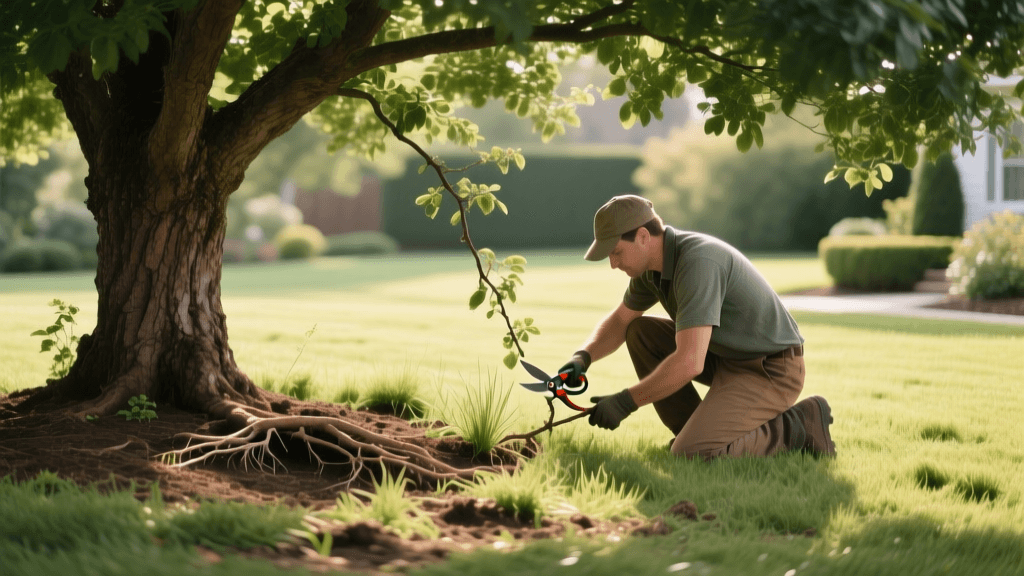
Reviving Lawns Under Trees: Root and Canopy Management
The Challenge of Lawn Renovation Under Mature Trees
Lawn renovation and recovery can be a highly rewarding process, transforming a patchy, weed-infested yard into a lush, green carpet. However, when your landscape features mature shade trees, the recovery process becomes significantly more complex. Trees and turfgrass are naturally competitive. They vie for the same essential resources: sunlight, water, and soil nutrients. When attempting to revive a struggling lawn beneath a sprawling oak, maple, or pine, homeowners often find that standard renovation techniques—like aggressive tilling, heavy fertilization, and frequent shallow watering—fail to produce results or, worse, fatally damage the tree.
Successful lawn recovery under shade trees requires a delicate balancing act. You must modify the tree's environment to allow grass to thrive without compromising the tree's structural integrity or health. This guide will walk you through the precise arboricultural and turf management strategies needed to renovate a shaded lawn, focusing on canopy management, safe root zone interventions, and specialized turf selection.
Assessing and Managing the Tree Canopy for Sunlight
The primary limiting factor for grass recovery under trees is a lack of photosynthetically active radiation (PAR). Most turfgrasses require at least four to six hours of direct or highly filtered sunlight to survive, and cool-season grasses often need more to recover from stress. Before you purchase a single bag of grass seed, you must address the canopy.
Crown Thinning and Raising
To increase light penetration to the soil surface, arborists recommend two specific pruning techniques: crown thinning and crown raising. Crown thinning involves the selective removal of smaller, interior branches (typically those less than 2 inches in diameter) throughout the canopy. This allows dappled sunlight to reach the lawn without removing the tree's primary energy-producing foliage. According to the University of Minnesota Extension, you should never remove more than 25% of a tree's live canopy in a single growing season, as this can trigger severe stress and unwanted water-sprouting.
Crown raising involves removing the lowest branches to elevate the canopy edge. For lawn recovery, raising the lowest branches to a height of 6 to 8 feet above the ground allows early morning and late afternoon sun to sweep under the tree, providing the crucial light angles needed for turf photosynthesis.
Timing Your Pruning
Timing is critical for tree health during a lawn renovation project. Prune deciduous trees during their dormant season, ideally in late winter (February to early March) before bud break. This minimizes the risk of transmitting diseases like oak wilt or Dutch elm disease, which are spread by insects active in the spring and summer. Evergreens can be lightly pruned in early spring or mid-summer, but avoid heavy canopy reduction.
Managing Surface Roots Without Harming the Tree
Surface roots are the bane of lawn renovation. They make mowing a hazardous chore, prevent proper seed-to-soil contact, and compete aggressively for water. Many homeowners make the fatal mistake of using a rototiller to level the ground or severing large roots to lay sod. This destroys the tree's vascular system and invites fatal fungal pathogens.
The Critical Root Zone (CRZ)
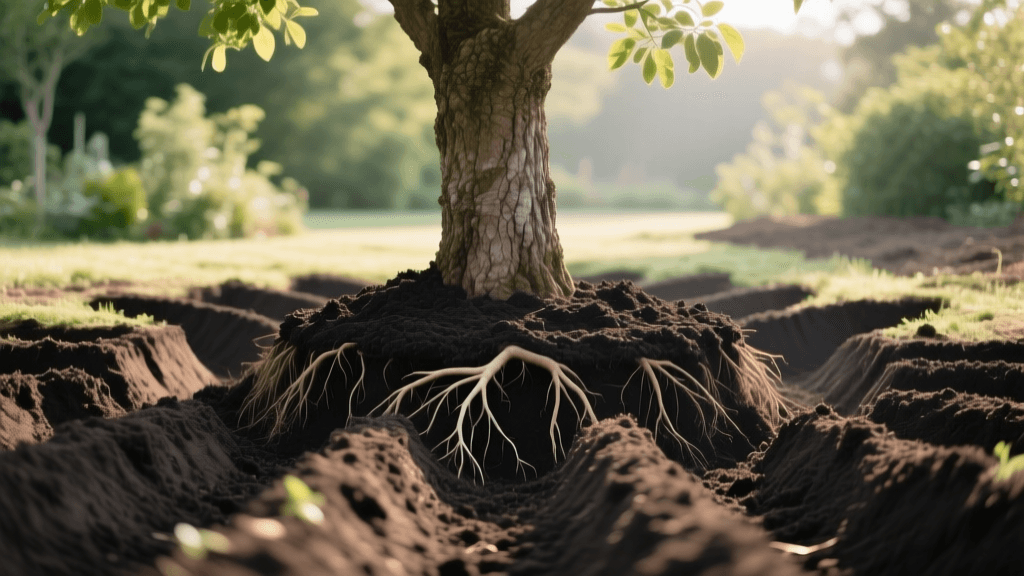
To safely renovate the soil around a tree, you must understand the Critical Root Zone. The CRZ is generally calculated as a 1-foot radius for every 1 inch of the tree's trunk diameter measured at breast height (DBH, 4.5 feet above the ground). For a tree with a 20-inch trunk, the CRZ extends 20 feet in all directions from the trunk. Within this zone, the vast majority of the tree's fine, water-absorbing feeder roots reside in the top 6 to 12 inches of soil.
Never add more than 1 to 2 inches of soil or compost over a tree's root zone. Smothering the roots cuts off oxygen exchange, leading to a slow, irreversible decline that may not show symptoms for several years.
Safe Root Pruning and Topdressing Rules
If a structural surface root (larger than 2 inches in diameter) is heaving and ruining the lawn grade, do not cut it. Instead, work around it. If you must sever smaller, non-structural feeder roots to install edging or perform light aeration, follow the guidelines established by The Morton Arboretum: never cut roots that are closer to the trunk than a distance equal to three times the trunk's diameter in inches (measured in feet). For example, for a 10-inch trunk, do not cut any roots within 30 feet of the trunk.
For lawn recovery over minor surface roots, use a light topdressing of high-quality, screened compost. Apply no more than 1/2 inch of compost to level minor undulations and provide a seedbed. This thickness allows oxygen to reach the roots while giving grass seed the moisture retention it needs to germinate.
Soil Preparation and Aeration Around Trees
Compacted soil is common under trees due to years of foot traffic and the natural settling of soil around expanding roots. However, traditional deep core aeration can severely damage the shallow feeder root mat.
- Liquid Aeration: For heavily shaded, root-dense areas, consider liquid aeration products containing ammonium lauryl sulfate. These surfactants break up soil surface tension and improve water infiltration without the physical tearing of roots caused by mechanical plug aerators.
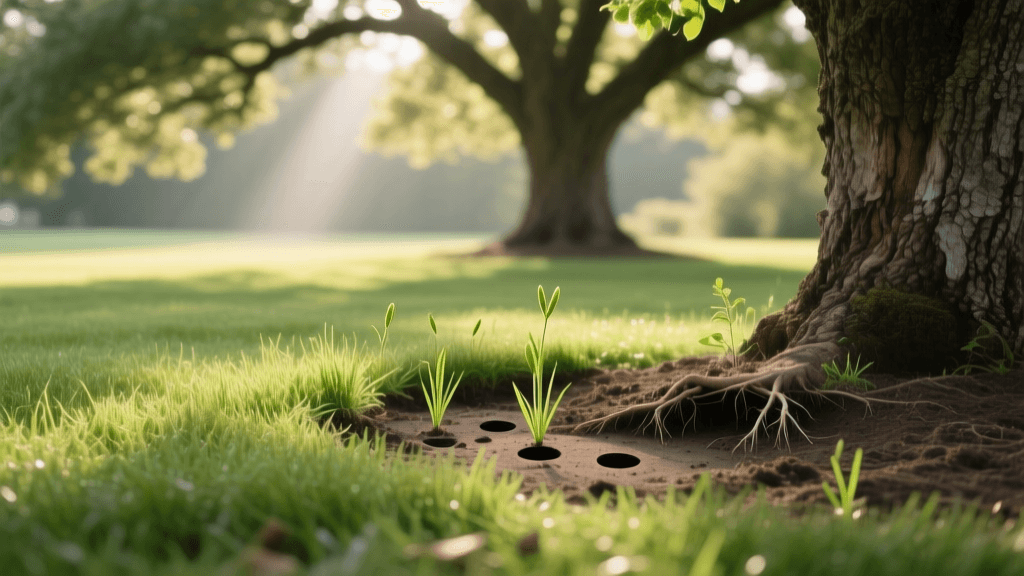
- Shallow Core Aeration: If you must use a mechanical core aerator, set the tines to a maximum depth of 2 inches. This is sufficient to break through the thatch layer and upper soil crust without devastating the tree's primary feeder roots.
- Air Spading: For severely compacted soils where high-value trees are declining alongside the lawn, hire a certified arborist to perform air spading. This uses compressed air to safely fracture compacted soil without cutting a single root, allowing for deep incorporation of compost and turf-friendly soil amendments.
Selecting the Right Grass Seed for Shaded Recovery
Standard sun-loving grass mixes will fail under a tree canopy, no matter how much you prune or fertilize. For lawn renovation in shaded environments, you must select shade-tolerant species that can survive on limited light and handle the allelopathic chemicals some trees (like black walnuts or certain pines) release into the soil.
| Grass Species | Shade Tolerance | Drought/Root Competition Tolerance | Best Use Case in Lawn Renovation |
|---|---|---|---|
| Fine Fescue (Creeping Red, Chewings) | Excellent | High | Deep shade, dry soils under mature maples and oaks. |
| Tall Fescue (Turf-type) | Moderate to Good | Very High | Transition zones, areas with dappled shade and heavy foot traffic. |
| Rough Bluegrass (Poa trivialis) | Excellent | Low | Damp, heavily shaded areas where other grasses rot. |
| Kentucky Bluegrass | Poor | Moderate | Avoid in tree zones; requires full sun for proper recovery. |
For the highest success rate in lawn recovery under trees, use a blend composed of at least 70% Fine Fescues mixed with 30% shade-adapted Tall Fescue. Seed at a rate of 5 to 6 pounds per 1,000 square feet in early fall (late August to mid-September), when soil temperatures are warm, but the sun angle is lower, reducing heat stress on emerging seedlings.
Watering and Fertilization Strategies for Coexistence
Trees and grass have vastly different water and nutrient requirements. Grass thrives on frequent, moderate moisture and high nitrogen. Trees prefer deep, infrequent soaking and can be damaged by excessive nitrogen, which promotes weak, sappy growth susceptible to borers and windthrow.
Hydration Protocols
During the initial 30-day lawn recovery and germination phase, you must water lightly 2 to 3 times a day to keep the top inch of soil moist. However, once the grass is established, transition immediately to deep, infrequent watering. Apply 1 to 1.5 inches of water per week in a single or split session. This forces the grass roots to grow deeper to compete with the tree roots, while providing the deep soil moisture the tree requires.
Fertilization Adjustments
According to Penn State Turfgrass Science, shaded lawns require roughly 50% less nitrogen than lawns in full sun. Excess nitrogen in the shade promotes rapid, weak cellular growth that is highly susceptible to fungal diseases like powdery mildew and brown patch. Use a slow-release, low-nitrogen fertilizer (such as a 20-0-10 or 15-0-15 formulation) applied only once in the late fall. The tree will absorb its necessary nutrients from the deeper soil profile, while the slow-release nitrogen provides a steady, non-burning feed for the recovering turf.
When to Abandon Grass: The Mulch Ring Alternative
Sometimes, the best lawn renovation strategy is to stop fighting nature. If a tree casts dense, year-round shade (such as a mature Norway spruce), or if the surface roots are too dense to safely topdress, attempting to grow grass will only result in bare dirt, mud, and frustration.
In these cases, expand the tree's mulch ring. Create a natural drip-line bed using a 2 to 3-inch layer of double-shredded hardwood mulch. Keep the mulch at least 3 inches away from the tree trunk to prevent 'mulch volcanoes' that cause bark rot and girdling roots. This not only eliminates the need for dangerous string-trimming near the trunk but also creates a unified, professional landscape design that mimics the tree's natural forest floor environment, ultimately promoting the health of both your property's soil and its most valuable assets: the trees.