Gardening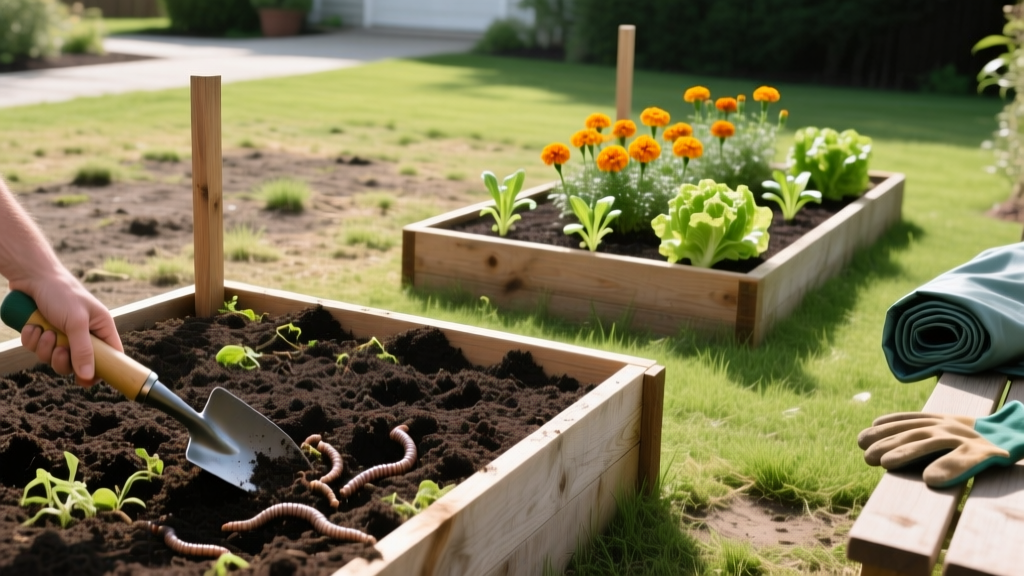
Lawn Renovation and Soil Recovery for Raised Garden Beds
Robert HayesPublished
Why Renovate a Damaged Lawn for Gardening?
Many homeowners face the dilemma of a patchy, compacted, and struggling lawn. While traditional lawn renovation focuses on overseeding, dethatching, and fertilizing to restore turf, an increasingly popular and rewarding alternative is recovering that damaged soil to transition the space into a highly productive vegetable and flower garden. By applying core lawn renovation techniques—such as aeration, deep composting, and sheet mulching—you can rescue compacted earth and create a thriving foundation for raised bed gardening. This approach not only saves water and reduces lawn maintenance but also turns a barren yard into a vibrant, edible landscape.
Assessing Lawn Damage and Soil Compaction
Before you can transition a dead lawn into a garden, you must understand why the turf failed. In most cases, the culprit is severe soil compaction caused by years of foot traffic, heavy mowing equipment, and poor initial grading. Compacted soil lacks the pore space necessary for water infiltration, oxygen exchange, and root penetration. According to the USDA Natural Resources Conservation Service (NRCS), healthy soil requires a balance of minerals, organic matter, water, and air; compaction destroys this delicate structure.
To assess your lawn's compaction, perform a simple percolation test. Dig a hole 12 inches deep and 12 inches wide in the damaged lawn area. Fill it with water and let it drain completely. Then, fill it a second time and measure how long it takes for the water level to drop one inch. If it takes longer than one hour, your soil is heavily compacted and will require aggressive mechanical aeration and organic amendment before any garden beds are installed.
The Lawn Recovery Process: Core Aeration and Deep Amendment
Core aeration is a staple of professional lawn renovation, but it is equally vital when preparing a site for a garden. Renting a walk-behind core aerator from a local hardware store typically costs between $70 and $100 per day. Run the aerator over the dead lawn area in two perpendicular directions to ensure maximum soil disruption. The machine will pull 2-to-3-inch plugs of soil and thatch to the surface, leaving holes that allow air, water, and nutrients to reach the subsoil.
Immediately after aerating, top-dress the area with a high-quality organic compost. Products like Espoma Organic Land & Grow or bulk municipal compost work exceptionally well. Apply a 1-inch layer of compost across the entire aerated zone. The compost will gradually wash down into the aeration holes, introducing vital soil microbes and organic matter that begin the process of breaking up heavy clay or binding loose sand. This biological recovery is the first step in transforming barren dirt into living soil.
Sheet Mulching: The Ultimate Turf-to-Garden Transition
Once the soil beneath the surface is aerated and amended, you must deal with the remaining dead grass and weeds. Tilling is generally discouraged as it brings dormant weed seeds to the surface and disrupts the newly established soil food web. Instead, utilize sheet mulching, often referred to as 'lasagna gardening.' The Environmental Protection Agency (EPA) highly recommends composting and mulching techniques to recycle organic matter and suppress weeds naturally without the use of harsh chemical herbicides.
Step-by-Step Sheet Mulching Guide
- Step 1: Mow Extremely Low. Set your mower to its lowest setting and scalp the remaining dead turf. Leave the clippings in place; they will decompose and add nitrogen to the soil.
- Step 2: Lay Down Cardboard. Cover the entire renovation area with overlapping sheets of plain, uncoated corrugated cardboard. Remove all tape and staples. Overlap the edges by at least 6 inches to prevent weeds from finding a gap.
- Step 3: Wet the Cardboard. Thoroughly soak the cardboard with a garden hose. This weights it down, speeds up decomposition, and makes it immediately attractive to earthworms.
- Step 4: Add a Compost Layer. Spread a 3-to-4-inch layer of rich organic compost directly over the wet cardboard.
- Step 5: Top with Mulch. Finish with a 2-inch layer of arborist wood chips or shredded leaf mulch to retain moisture and protect the compost from UV degradation.
Pro Tip: Timing is everything. Begin your sheet mulching process in the late fall. This allows the cardboard and grass to break down over the winter, resulting in a rich, worm-worked planting bed by early spring.
Building and Siting Raised Beds on Recovered Turf
With the soil recovered and the turf smothered, you are ready to site your raised beds. For optimal accessibility and plant health, construct beds that are 4 feet wide by 8 feet long, with a depth of 11 to 12 inches. This depth provides ample room for deep-rooted vegetables like tomatoes and carrots while ensuring proper drainage above the recovered lawn base.
Material selection is crucial for longevity and soil safety. Untreated red cedar or galvanized corrugated steel are excellent choices that resist rot and leach no harmful chemicals into your food supply. Expect to spend between $150 and $300 per bed for materials, depending on your local lumber prices. Place the beds directly over the sheet-mulched area. As the cardboard and grass decompose beneath the beds, they will create a nutrient-rich sponge that draws earthworms up into your garden soil.
Soil Mix Ratios for Raised Beds Over Former Lawns
Filling raised beds requires a specific soil structure that promotes drainage and aeration. Never use native topsoil or garden soil straight from the ground, as it will compact heavily inside a raised bed frame. Below is a comparison of two highly effective soil mix ratios for beds situated over renovated lawn spaces.
| Mix Type | Components & Ratios | Estimated Cost (per 4x8x11 bed) | Best Use Case |
|---|---|---|---|
| Standard Raised Bed Mix | 60% High-Quality Topsoil, 30% Organic Compost, 10% Coarse Sand or Perlite | $120 - $160 | Heavy feeders, root vegetables, and perennial flowers. |
| Mel's Mix (Square Foot Gardening) | 33% Blended Compost, 33% Coarse Vermiculite, 33% Peat Moss or Coconut Coir | $200 - $250 | Leafy greens, herbs, and gardeners seeking a lightweight, weed-free medium. |
When purchasing bagged soils, look for OMRI-listed (Organic Materials Review Institute) products to ensure they are free from synthetic pesticides and herbicide residues, which can linger in municipal compost and devastate sensitive garden crops like tomatoes and beans.
Post-Renovation Maintenance and Companion Planting
Even after the lawn is gone and the beds are built, soil recovery is an ongoing process. The Royal Horticultural Society (RHS) emphasizes that continuous organic matter addition is the key to sustaining soil structure and fertility over time. In your first season, consider planting a cover crop or deep-rooted companion plants to further condition the soil beneath your raised beds.
Daikon radishes, for example, act as 'biological tillers.' Their thick taproots will punch down through the bottom of your raised bed, penetrating the recovered lawn soil below. When the radishes die back in the winter, they leave behind deep channels that improve drainage and add organic matter to the subsoil. Companion planting with nitrogen-fixing legumes, such as bush beans or clover, will also help replenish the soil nutrients that were depleted by years of struggling turfgrass.
By viewing lawn renovation not as a chore to maintain a monoculture of grass, but as a foundational step for soil recovery, you can unlock the full potential of your yard. The transition from a compacted, dead lawn to a flourishing raised bed garden is one of the most impactful landscape upgrades a homeowner can undertake, yielding years of fresh produce, vibrant pollinator habitats, and vastly improved local soil ecology.
