Tree Care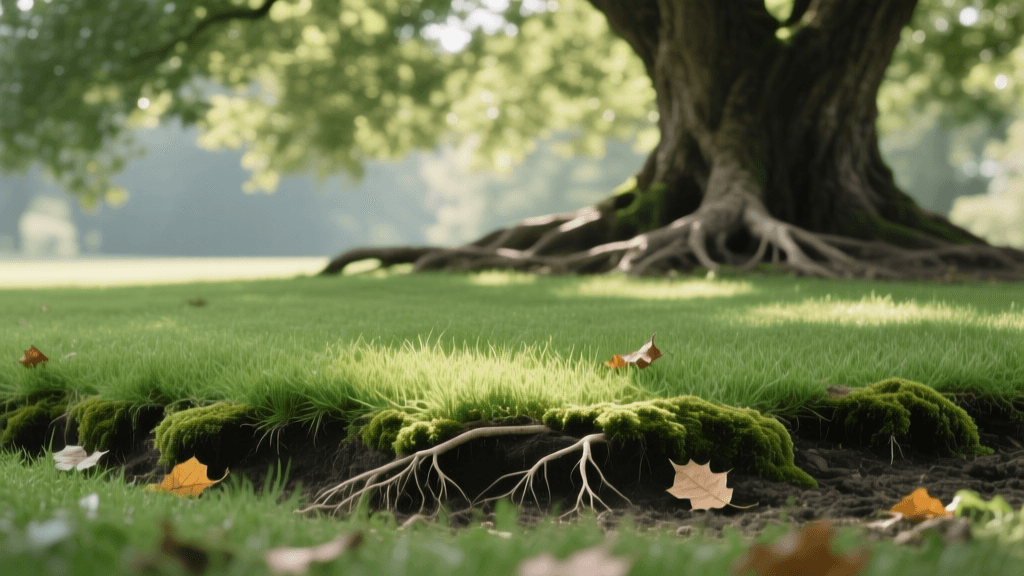
Lawn Renovation Under Trees: Managing Shade and Roots
The Challenge of Turfgrass in the Tree Zone
Lawn renovation projects often hit a major roadblock when they reach the drip line of mature trees. Homeowners invest significant time, money, and physical labor into core aeration, overseeding, and topdressing, only to watch the grass beneath their largest trees turn yellow, thin out, and eventually die. While open spaces respond beautifully to standard lawn recovery protocols, the zones beneath tree canopies require a completely different, highly specialized approach. Attempting to force turfgrass to grow in an environment dominated by a mature tree is an ecological mismatch. To achieve a lush, uniform landscape, you must understand the unique microclimate created by trees and adapt your renovation strategies accordingly. This guide will walk you through the precise steps required to recover and maintain a healthy lawn under mature trees, balancing the needs of the turf with the health and structural integrity of the tree.
The Ecological Battle: Turfgrass vs. Tree Roots
Trees and turfgrass are both aggressive competitors, and they are not natural companions in most ecosystems. In nature, trees dominate the landscape, and the forest floor is covered in shade-tolerant groundcovers, ferns, and decaying organic matter—not dense turfgrass. Tree roots occupy the top 6 to 24 inches of soil, which is exactly where turfgrass roots want to establish themselves. The tree will always win the battle for water and nutrients because its root system is vastly more established, extensive, and efficient.
Furthermore, the dense canopy intercepts up to 60 percent of rainfall, meaning the soil beneath the tree is often significantly drier than the surrounding lawn, even during heavy summer storms. Beyond simple competition for resources, some tree species engage in allelopathy, a biological phenomenon where they release chemical compounds into the soil to inhibit the growth of competing plants. The Black Walnut is the most famous example, secreting a toxin called juglone that will quickly kill Kentucky Bluegrass and many other turf species. Understanding these biological and physical barriers is the mandatory first step in any successful lawn recovery project.
Step 1: Canopy Management for Optimal Light Penetration
Grass requires a minimum of four to six hours of direct or dappled sunlight to maintain vigorous growth and recover from renovation stress. If your lawn is failing under a mature tree, the first intervention should be directed at the tree itself, not the soil. Selective pruning can dramatically alter the microclimate beneath the canopy. According to the Arbor Day Foundation, techniques such as crown thinning and crown raising are essential for allowing filtered light to reach the forest floor without compromising the structural integrity of the tree.
Crown raising involves removing the lower branches to a height of about eight to ten feet, which allows low-angle morning and evening sun to penetrate under the canopy. Crown thinning removes selective interior branches to create small gaps that let dappled sunlight filter through. Never top a tree or remove more than 25 percent of the live canopy in a single season, as this will trigger severe stress, disease susceptibility, and a flush of weak, watery sprouts that will actually increase shade density the following year.
Step 2: Soil Remediation and Root-Safe Aeration
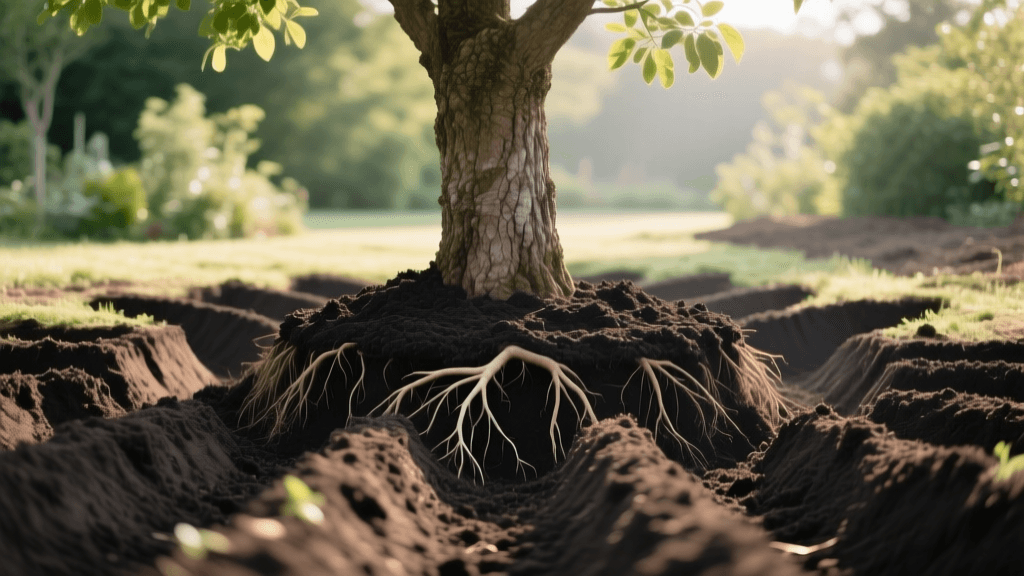
Standard lawn renovation protocols heavily rely on deep core aeration to relieve soil compaction. However, running a mechanical plug aerator over the critical root zone of a mature tree can sever vital feeder roots and invite devastating soil-borne pathogens like Armillaria root rot. To recover the lawn safely, you must adapt your soil preparation methods.
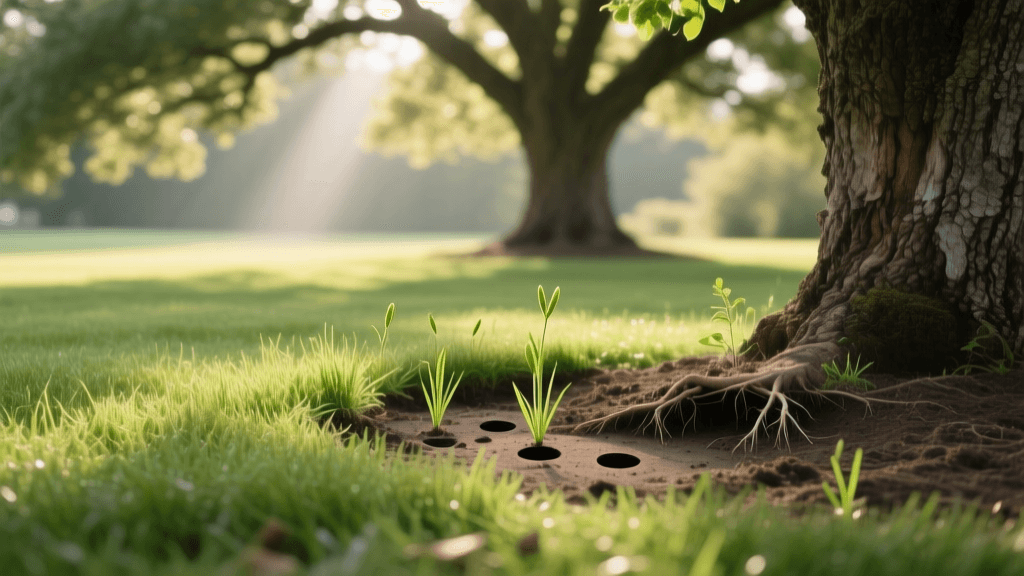
Instead of mechanical core aeration, utilize liquid aeration products containing humic acid and fulvic acid. These organic compounds help break apart compacted soil particles at a microscopic level, creating pore space for oxygen and water without physically slicing through tree roots. If physical aeration is absolutely necessary, use a shallow manual aerator or an AirSpade tool operated by a certified arborist to gently loosen the soil using compressed air.
Following aeration, apply a thin topdressing of high-quality, screened compost. Keep the topdressing layer to a maximum depth of one-quarter inch. Applying thick layers of soil or compost over the root zone will suffocate the tree roots by cutting off their oxygen supply, ultimately killing both the tree and your newly renovated lawn.
Step 3: Selecting the Right Shade-Tolerant Seed Blends
You cannot force a sun-loving Kentucky Bluegrass to thrive in deep shade. For successful lawn recovery under trees, you must transition to shade-tolerant cool-season grasses, specifically the fine fescue family. According to research published by Penn State Extension, fine fescues possess narrow leaf blades, require less nitrogen, and can survive in heavily shaded environments where other species fail.
| Grass Species | Shade Tolerance | Drought Resistance | Best Use Case Under Trees |
|---|---|---|---|
| Creeping Red Fescue | Excellent | Moderate | Spreads via rhizomes; great for filling in bare patches under mature oaks and maples. |
| Chewings Fescue | Very Good | High | Bunch-type growth; ideal for dry shade and areas with aggressive surface tree roots. |
| Hard Fescue | Good | Very High | Extremely low maintenance; perfect for neglected, shady slopes near tree drip lines. |
| Rough Bluegrass | Excellent | Low | Thrives in damp, heavy shade; avoid in dry zones as it requires constant moisture. |
When overseeding, apply the seed at a rate of 3 to 5 pounds per 1,000 square feet. Use a starter fertilizer high in phosphorus to encourage rapid root development before the tree roots can outcompete the new seedlings. Always conduct a soil test prior to seeding to ensure the pH is balanced, as decomposing tree leaves can sometimes make the soil overly acidic.
Step 4: Modified Irrigation and Fertilization Schedules
Watering a lawn under trees requires a delicate balancing act. Because the tree canopy intercepts rainfall, the soil beneath the tree is often deceptively dry. During the seed germination and establishment phase, you must water the shaded zones daily, applying about one-tenth of an inch of water to keep the top inch of soil consistently moist. Once established, transition to deep, infrequent watering.
However, be mindful that overwatering to satisfy the turf can lead to fungal diseases like powdery mildew and brown patch, which thrive in the stagnant, humid air beneath a tree canopy. Fertilization must also be adjusted. Shaded grasses grow slower and require roughly 50 percent less nitrogen than grass in full sun. Applying high-nitrogen fertilizers forces rapid, weak, and succulent top growth that is highly susceptible to disease and cannot be supported by the limited root system in compacted, root-heavy soil.
Knowing When to Surrender: The Mulch Ring Alternative
Sometimes, despite your best efforts at canopy pruning, soil remediation, and precise seed selection, the environment beneath a mature tree is simply too hostile for turfgrass. If the shade is deeper than four hours of filtered light, or if the tree species is highly allelopathic, it is time to abandon the grass and embrace a mulch ring.
Expanding the mulch ring out to the tree's drip line is often the most ecologically sound decision for lawn renovation. A 2 to 3-inch layer of organic wood chip mulch eliminates the need for mowing, prevents lawnmower blight (trunk damage from string trimmers), and mimics the tree's natural forest floor environment. The University of Minnesota Extension emphasizes that proper mulching conserves soil moisture, moderates soil temperature, and slowly adds organic matter to the soil as it decomposes.
Just ensure the mulch is kept at least three inches away from the tree trunk to prevent bark rot and rodent damage. By transitioning these high-stress zones from failing turf to healthy mulch beds, you improve the overall aesthetics of your landscape, protect the health of your most valuable trees, and redirect your lawn renovation budget to areas where grass can truly thrive.