Pest Control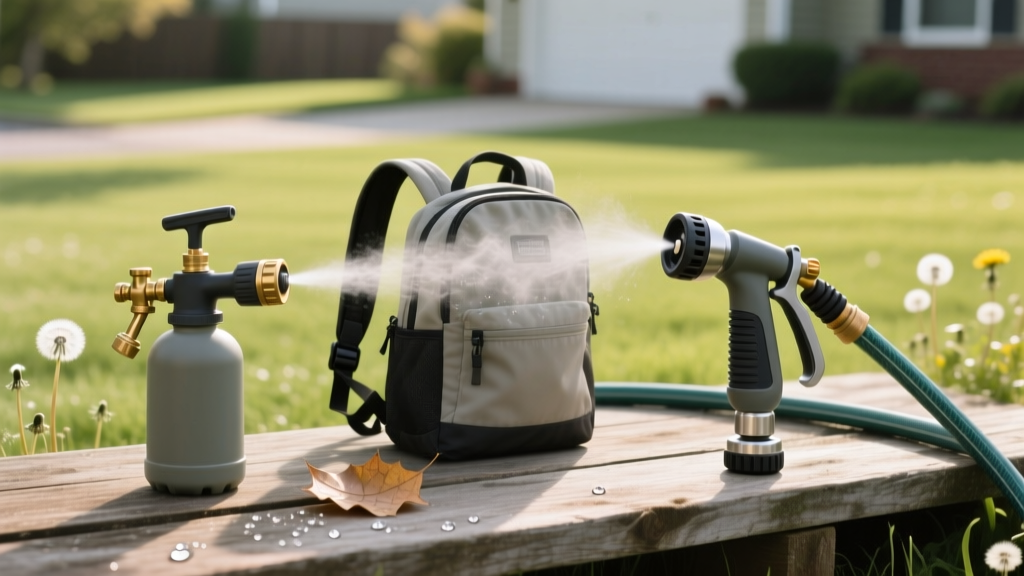
Top Lawn Sprayers for Pest Control: Equipment Guide
Lisa ThompsonPublished
The Role of Precision Equipment in Integrated Pest Management
When executing an Integrated Pest Management (IPM) strategy for your lawn and garden, the effectiveness of your chemical or organic treatments relies heavily on your application equipment. Whether you are applying a synthetic pyrethroid for chinch bugs, a systemic neonicotinoid for grub control, or an organic neem oil solution for aphids, precision is paramount. Over-application wastes money, damages turfgrass, and harms the local ecosystem, while under-application fails to control the target pest and can contribute to pesticide resistance.
Choosing the right sprayer involves understanding your lawn's square footage, the specific biology of the pest you are targeting, and the formulation of the product you are using. This comprehensive tools and equipment guide will break down the best lawn sprayers for pest control, helping you make an informed investment for a healthier, pest-free landscape.
Types of Lawn Sprayers for Pest Management
Different pest control scenarios require different delivery methods. Here is a detailed look at the three primary categories of lawn sprayers used by homeowners and turf professionals.
1. Hose-End Sprayers
Hose-end sprayers attach directly to your garden hose and use water pressure to siphon and dilute concentrated pesticide formulations. They are ideal for treating large areas quickly and are frequently used for soil drenches targeting subterranean pests like white grubs or mole crickets. Because they rely on municipal or well water pressure, they provide a high volume of liquid, which is necessary to wash surface-applied granular treatments or liquid concentrates down into the soil profile and thatch layer.
- Best For: Large lawns (over 5,000 sq ft), soil drenches, and systemic root treatments.
- Limitations: Lack of precise pressure control; prone to uneven application if water pressure fluctuates; not suitable for spot treatments.
- Top Brands: Ortho, Gilmour, Chapin.
2. Compression / Pump Tank Sprayers
Pump sprayers, typically ranging from 1 to 3 gallons in capacity, are the workhorses of residential perimeter pest control and garden bed treatments. You pressurize the tank manually using a hand pump. These are perfect for targeted IPM strategies, such as spot-treating localized ant mounds, applying horticultural oils to ornamental shrubs, or spraying a 3-foot barrier around your home's foundation to deter crawling insects like earwigs and centipedes.
- Best For: Spot treatments, garden beds, foundation perimeters, and small turf areas.
- Limitations: Manual pumping can be tiring; pressure drops as the tank empties, requiring frequent re-pumping to maintain a consistent spray pattern.
- Top Brands: Chapin (e.g., Chapin 20000), Solo, Roundup.
3. Backpack Sprayers
For serious lawn care enthusiasts and professionals, the backpack sprayer (usually 4 to 5 gallons) is the ultimate pest control tool. Worn on the back, these sprayers feature a separate hand-pump lever that allows you to maintain a constant, high PSI (pounds per square inch) while walking. The consistent pressure ensures uniform droplet size and even coverage, which is critical when applying contact insecticides for surface-feeding pests like armyworms or sod webworms.
- Best For: Full lawn coverage, tall grass, commercial applications, and precise calibration.
- Limitations: Higher initial cost; heavier to carry when fully loaded (a 4-gallon sprayer weighs over 35 lbs when full).
- Top Brands: Solo (e.g., Solo 425), Chapin, Field King.
Equipment Comparison Chart
| Sprayer Type | Capacity | Best Pest Target | Average Cost | Operating Pressure |
|---|---|---|---|---|
| Hose-End | N/A (Inline) | Soil-dwelling grubs, large area fungi | $15 - $35 | Water Line Pressure |
| Pump Tank | 1 - 3 Gallons | Ant mounds, perimeter crawlers, aphids | $20 - $50 | 15 - 45 PSI |
| Backpack | 4 - 5 Gallons | Armyworms, chinch bugs, mosquitoes | $80 - $250 | 40 - 60 PSI |
Matching the Nozzle to the Pest
The sprayer tank is only half the equation; the nozzle dictates how the pesticide interacts with the pest. According to turfgrass extension specialists, selecting the correct nozzle tip is vital for maximizing efficacy and minimizing chemical drift.
- Flat Fan Nozzles: Produce a uniform, overlapping spray pattern. Ideal for foliar contact insecticides targeting surface pests like chinch bugs, ticks, and fleas. The even coverage ensures pests resting on grass blades are directly exposed to the active ingredient.
- Flood / Turf Jet Nozzles: Deliver a high volume of liquid in a wide, coarse pattern with minimal atomization. This is the required choice for soil-applied treatments. The heavy droplets penetrate the thatch layer and carry systemic chemicals (like Imidacloprid) down to the root zone where grubs and billbugs feed.
- Cone / Mist Nozzles: Create a fine fog. Used primarily for adult mosquito control or treating dense, multi-layered ornamental shrubs where the pesticide must coat the undersides of leaves to target spider mites and whiteflies.
How to Calibrate Your Sprayer for Accurate Application
Pesticide labels are legally binding documents that specify exact application rates, usually measured in ounces of product per 1,000 square feet. Applying a product without calibrating your sprayer is a guessing game that can lead to turf burn or treatment failure. Proper calibration ensures you apply the exact amount of chemical required.
"Calibration is the process of determining the actual rate of application of a pesticide. It is one of the most important steps in pest management, ensuring that you are applying the correct amount of chemical to the target area." - Penn State Extension
Step-by-Step Backpack Sprayer Calibration:
- Mark a Test Area: Measure and mark a 1,000-square-foot area on your driveway or an inconspicuous part of the lawn (e.g., 20 ft x 50 ft).
- Fill with Water: Fill your sprayer with clean water only. Never calibrate using actual pesticides.
- Record Starting Volume: Note the exact water level in the tank.
- Spray the Area: Walk the test area at your normal, steady pace, maintaining your target pumping pressure. Use the exact nozzle and overlap technique you plan to use on the lawn.
- Measure the Output: Check how much water was used to cover the 1,000 square feet. If you used 2 gallons of water to cover the area, your application rate is 2 gallons per 1,000 sq ft.
- Mix the Chemical: If the pesticide label calls for 1.5 ounces of concentrate per 1,000 sq ft, you will mix 1.5 ounces of chemical into every 2 gallons of water in your tank.
Essential Safety Gear (PPE) for Sprayer Operation
Handling concentrated pesticides requires strict adherence to safety protocols. The Environmental Protection Agency (EPA) mandates that all pesticide handlers follow the Personal Protective Equipment (PPE) requirements listed on the product label. However, as a general rule for lawn care enthusiasts, a baseline level of protection is always recommended to prevent dermal absorption and inhalation of aerosolized droplets.
According to the National Pesticide Information Center (NPIC), proper PPE significantly reduces the risk of acute poisoning and long-term health issues associated with chemical exposure.
Standard PPE Checklist for Lawn Spraying:
- Chemical-Resistant Gloves: Use unlined, nitrile or neoprene gloves. Avoid latex or cloth gloves, which can absorb and hold chemicals against the skin.
- Eye Protection: Wrap-around safety goggles are essential to prevent splash-back or wind-blown mist from entering the eyes.
- Long Sleeves and Pants: Wear dedicated clothing that is washed separately from your regular laundry.
- Respiratory Protection: When using fine mist nozzles or spraying in enclosed areas (like greenhouses or under decks), an N95 mask or a half-face respirator with organic vapor cartridges is necessary.
Sprayer Maintenance and Winterization
Pest control equipment is an investment that will last for years if properly maintained. Pesticide residues, especially wettable powders and copper-based fungicides, can clog filters, degrade rubber seals, and corrode metal components.
- Triple Rinsing: After every use, fill the tank one-quarter full with clean water, add a few drops of mild dish soap, and shake vigorously. Spray the soapy water through the nozzle to clean the wand and filter. Repeat this process two more times with plain water.
- Filter Maintenance: Remove the inline mesh filters located at the tank opening and the nozzle tip. Clean them with a soft brush (never use wire or metal tools that can damage the mesh).
- Winter Storage: Before freezing temperatures arrive, ensure the sprayer is completely empty. Leave the cap off and the valve open to allow any residual moisture to evaporate. Store the sprayer in a dry, climate-controlled area away from direct sunlight, which can degrade plastic tanks and rubber O-rings over time.
Conclusion
Effective pest control is about more than just selecting the right chemical; it is about delivering that chemical to the target zone with precision and safety. By investing in a high-quality backpack or pump sprayer, understanding the mechanics of nozzle selection, and taking the time to calibrate your equipment, you elevate your lawn care regimen from guesswork to professional-grade IPM. Equip yourself properly, prioritize safety, and maintain your tools to ensure a lush, resilient, and pest-free landscape year after year.