Pest Control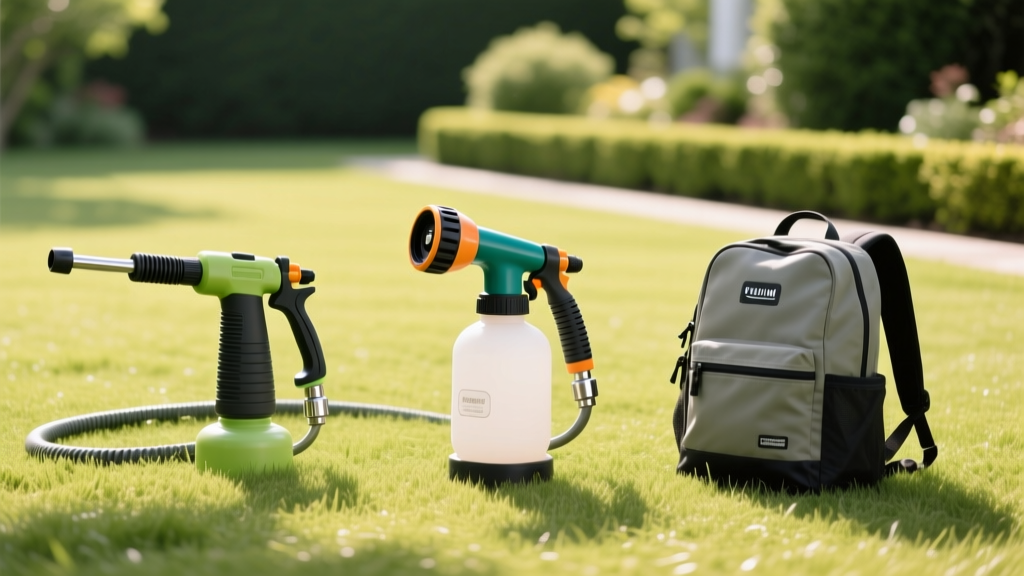
Best Lawn Sprayers for Pest Control: Equipment Guide
Lisa ThompsonPublished
The Ultimate Equipment Guide: Choosing the Right Lawn Sprayer for Pest Control
When it comes to integrated pest management (IPM) and applying lawn care treatments, the efficacy of your pesticide or organic control method is only as good as the equipment used to apply it. Whether you are battling a severe chinch bug infestation, applying beneficial nematodes to control grubs, or laying down a perimeter defense against ants and spiders, selecting the correct sprayer is paramount. Using the wrong equipment can lead to uneven application, which not only wastes expensive chemicals but also contributes to pesticide resistance and harmful environmental runoff.
In this comprehensive tools and equipment guide, we will break down the three primary types of lawn sprayers used in residential and commercial pest control. We will explore their specific use cases, provide a detailed comparison chart, and offer a step-by-step guide on how to calibrate your equipment for precise, professional-grade applications.
Types of Lawn Sprayers: Which is Right for You?
The market is flooded with spraying equipment, but for lawn and garden pest control, the options generally fall into three distinct categories. Understanding the mechanics and limitations of each will help you make an informed purchasing decision based on your property size and the specific pests you are targeting.
1. Hose-End Sprayers
Hose-end sprayers, such as the popular Ortho Dial N Spray, attach directly to your garden hose. They work by utilizing the water pressure from your hose to siphon a concentrated liquid pesticide from the attached reservoir, mixing it with the water stream as it exits the nozzle. These are incredibly convenient for applying products that require a high volume of water for proper soil infiltration, such as liquid grub killers or systemic fungicides.
However, hose-end sprayers have a significant drawback: they are entirely dependent on your home's water pressure. If your water pressure fluctuates, the mixing ratio will also fluctuate, leading to inconsistent application rates. Furthermore, they are not suitable for wettable powders or granular formulations, and dragging a heavy hose across a delicate garden bed can cause physical damage to your ornamental plants.
2. Compression (Pump) Sprayers
Compression sprayers, often referred to as pump sprayers, are the workhorses of spot treatment and small-yard pest control. A standard 1-gallon or 2-gallon poly sprayer, like those manufactured by Chapin or Solo, features a manual hand pump that pressurizes the tank. As you pull the trigger, the pressurized liquid is forced through a wand and an adjustable nozzle.
These sprayers are ideal for targeted weed control, such as spot-spraying dandelions with a selective herbicide, or treating localized pest hotspots like a fire ant mound. Because you manually control the pressure and the wand direction, you can achieve a highly precise, low-volume application that minimizes chemical drift. The primary limitation is tank capacity; pumping a 2-gallon tank to full pressure repeatedly can become physically exhausting when treating areas larger than 2,000 square feet.
3. Backpack Sprayers
For properties exceeding 5,000 square feet, or for homeowners who require frequent, blanket applications of pre-emergents or broad-spectrum insecticides like Bifen IT, a backpack sprayer is an essential investment. Models like the Solo 4-Gallon Backpack Sprayer feature a high-efficiency piston pump that allows you to build and maintain consistent pressure without removing the tank from your back.
Backpack sprayers offer superior ergonomics, featuring padded shoulder straps and waist belts that distribute the weight of the liquid evenly. They also come equipped with longer wands and professional-grade brass nozzles that allow for a uniform fan spray pattern. This consistency is critical when applying products that require an exact dosage per 1,000 square feet to be both effective and safe for your turfgrass.
Sprayer Comparison Chart
To help you visualize the differences, refer to the comparison table below. This chart breaks down the core specifications and ideal use cases for each sprayer category.
| Feature | Hose-End Sprayer | Compression (Pump) Sprayer | Backpack Sprayer |
|---|---|---|---|
| Capacity | Hose-fed (Reservoir: 16-32 oz) | 1 to 3 Gallons | 4 to 5 Gallons |
| Best For | High-volume soil drenches, nematodes | Spot treatments, small perimeter zones | Blanket applications, large lawns |
| Pressure Source | Municipal/Well water pressure | Manual hand pump (tank pressurized) | Manual hand pump (inline piston) |
| Application Precision | Low (Variable) | High (Targeted) | High (Uniform fan pattern) |
| Average Cost | $15 - $30 | $20 - $50 | $60 - $150+ |
How to Calibrate Your Sprayer for Accurate Application
Purchasing a high-end backpack sprayer is only half the battle; you must know how to calibrate it. Pesticide labels dictate application rates in ounces or pounds per 1,000 square feet or per acre. If your sprayer is not calibrated, you risk applying too little (rendering the pest control ineffective) or too much (causing turf burn and environmental contamination).
The most reliable method for calibrating a backpack or pump sprayer is the 1/128th acre method. Because there are 128 fluid ounces in a gallon, this method allows you to measure your output in ounces and directly translate that to gallons per acre.
- Step 1: Measure the Test Area. Mark off an area of exactly 340.3 square feet (which is 1/128th of an acre). A convenient way to do this is to measure a square area that is 18.5 feet by 18.5 feet.
- Step 2: Fill with Water. Fill your sprayer with plain water. Never use actual pesticides for calibration.
- Step 3: Spray the Area. Spray the marked 340.3 square foot area using your normal walking speed, typical pump pressure, and standard nozzle height (usually 18 to 24 inches above the ground).
- Step 4: Measure the Output. Catch the water sprayed over that exact area in a measuring cup. The number of fluid ounces you collect is exactly equal to the number of gallons your sprayer will apply per acre.
- Step 5: Adjust as Needed. If the pesticide label calls for 20 gallons per acre, but you collected 25 ounces, you need to walk faster, lower your pressure, or change to a smaller nozzle tip.
Top Recommended Sprayer Brands and Models
When investing in pest control equipment, durability and chemical resistance are key. Cheap plastics will quickly degrade when exposed to harsh solvents and concentrated insecticides. Here are the industry-standard recommendations:
- Best Backpack Sprayer: Solo 4-Gallon Backpack Sprayer (Model 425). It features a commercial-grade piston pump, Viton seals that resist chemical degradation, and a lockable trigger for continuous spraying.
- Best Pump Sprayer: Chapin 1-Gallon Poly Sprayer (Model 20000). It includes an anti-clog filter and a transparent tank for easy monitoring of liquid levels.
- Best Hose-End Sprayer: Ortho Dial N Spray. It offers 14 dilution settings and a built-in anti-siphon valve to prevent chemical backflow into your home's water supply.
Safety and Personal Protective Equipment (PPE)
Handling concentrated pest control products requires strict adherence to safety protocols. According to the Environmental Protection Agency (EPA), reading and following the pesticide label is a legal requirement and the first line of defense against chemical exposure. The label will explicitly state the required Personal Protective Equipment (PPE) for mixing and applying the product.
Furthermore, the National Institute for Occupational Safety and Health (NIOSH) emphasizes that dermal absorption is the most common route of pesticide exposure for applicators. To protect yourself, always wear chemical-resistant nitrile gloves (never cotton or leather, which absorb chemicals and hold them against your skin), splash-proof goggles, long sleeves, and closed-toe shoes. When mixing wettable powders or spraying in poorly ventilated areas, an N95 or half-face respirator with organic vapor cartridges may be necessary.
Equipment Maintenance and Winterizing
Proper maintenance ensures your sprayer lasts for years and prevents cross-contamination between different chemicals. After every use, perform a triple-rinse: fill the tank partially with clean water, shake it, and spray it out through the wand. Do this three times. Always remove the nozzle filter and clean it with a soft brush to prevent clogs.
Before winter arrives, it is crucial to winterize your pump and backpack sprayers to prevent the internal seals and O-rings from cracking due to freezing temperatures. Pump a small amount of RV antifreeze (which is non-toxic and safe for plumbing) through the system until it sprays out of the nozzle. Store the equipment in a climate-controlled garage or shed, out of direct sunlight, which can cause the polyethylene tanks to become brittle over time.
Conclusion
Mastering lawn pest control requires more than just selecting the right chemical or organic treatment; it demands the right tools for the job. By understanding the differences between hose-end, pump, and backpack sprayers, and by taking the time to properly calibrate your equipment, you can achieve professional-level results. Always prioritize safety by wearing the correct PPE and maintaining your gear meticulously. With the right equipment in hand, you can effectively protect your lawn and garden from destructive pests while minimizing your environmental footprint.