Lawn Care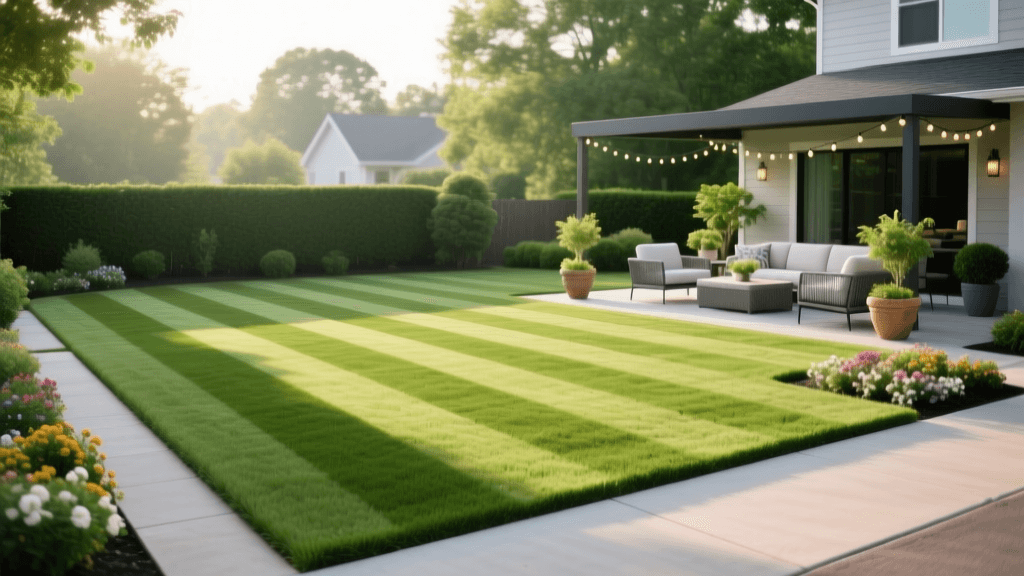
Lawn Striping and Edging Tips for Summer Curb Appeal
Transforming Your Lawn for Outdoor Entertaining
When you host a summer barbecue, a backyard wedding, or an evening garden party, the first thing your guests notice is the landscape. A meticulously manicured lawn acts as the foundation of your outdoor entertaining space, providing both a lush carpet for activities and a striking visual backdrop that dramatically boosts your home's curb appeal. While regular mowing, fertilization, and weed control are essential baseline practices, the true secret to achieving that professional, golf-course-quality aesthetic lies in two specific finishing techniques: lawn striping and precision edging. These practices elevate a standard yard into a breathtaking outdoor venue, signaling to neighbors and guests alike that you take pride in your landscape.
The Optical Illusion of Lawn Striping
Lawn striping is not achieved by cutting the grass at different heights or using different mower blades. Instead, it is a visual trick created by bending the grass blades in opposing directions. When you mow away from your viewpoint, the top of the grass blades reflects the sunlight, creating a light stripe. When you mow toward your viewpoint, the grass blades bend toward you, exposing the darker, shadowed underside of the leaf, which creates a dark stripe. According to turfgrass experts at the University of Minnesota Extension, proper mowing techniques and bending the grass canopy not only improves aesthetics but also encourages upright, healthy growth when alternated correctly. Cool-season grasses with broader blades, such as Kentucky Bluegrass and Tall Fescue, take to striping exceptionally well, while some fine-textured warm-season grasses require more weight to bend effectively.
Essential Equipment for the Perfect Stripe
To create crisp, defined stripes, you need to apply gentle pressure to the grass immediately after it has been cut by the mower deck. You can achieve this using a few different tools:
- Striping Kits: Many commercial and high-end residential mowers offer proprietary striping kits that attach directly to the rear of the mower deck. These usually consist of a weighted rubber flap or a small roller.
- Tow-Behind Lawn Rollers: For larger properties, a water-filled or sand-filled tow-behind roller can be attached to a riding mower or tractor. This is ideal for creating deep, dramatic stripes on expansive lawns.
- DIY Weighted Mats: For push mowers, you can attach a heavy rubber mat or a specialized fabric drag mat to the rear axle. This is a cost-effective way to start striping without investing in expensive attachments.
Step-by-Step Guide to Striping Patterns
Creating a professional pattern requires a methodical approach. Rushing the process will lead to wavy lines and a messy appearance that detracts from your curb appeal.
1. The Perimeter Pass
Always start by mowing a double-wide perimeter around the entire lawn. This creates a clean boundary and gives you a wide, unobstructed turning area so you do not scuff or tear the grass when making tight 180-degree turns at the end of each stripe.
2. Parallel Stripes
Choose a fixed focal point in the distance, such as a chimney, a prominent tree, or a fence post. Align your mower with this point and mow your first straight line down the length of the lawn. For the return pass, overlap the previous wheel track by about two inches. This overlapping technique ensures there are no uncut strips of grass between your light and dark bands.
3. The Checkerboard Effect
For a truly show-stopping backyard that will impress your entertaining guests, mow the entire lawn in parallel stripes in one direction, and then mow it a second time at a 90-degree angle. This cross-hatching creates a beautiful checkerboard pattern that adds depth and dimension to the landscape.
Precision Edging: The Frame of Your Landscape
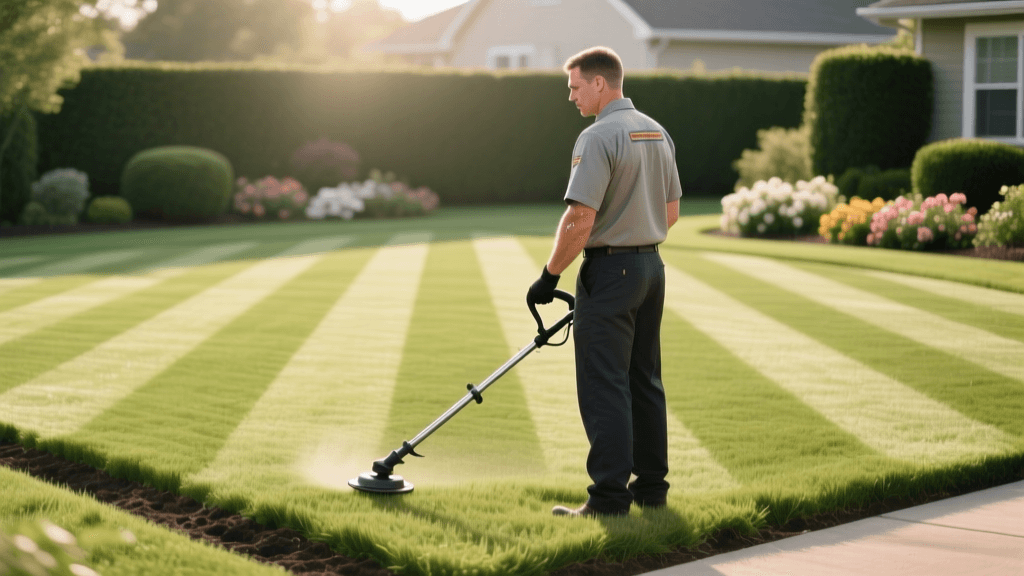
If striping is the artwork, edging is the frame. A perfectly striped lawn loses its impact if the borders are overgrown and sloppy. Edging creates a crisp, physical separation between your turfgrass and hardscapes like driveways, sidewalks, patios, and garden beds. This clean boundary prevents grass from creeping into your entertaining areas and makes weed whipping significantly easier.
Choosing the Right Edging Tool
For initial trenching or spring cleanups, a manual half-moon edger or a motorized stick edger is required to cut through thick roots and soil. For weekly maintenance, a dedicated lawn edger with a rotating blade or a string trimmer with an edging attachment will keep the lines sharp. When edging along a patio where you frequently host guests, ensure the trench is deep enough (about 2 to 3 inches) to catch grass clippings and prevent them from blowing onto your outdoor furniture.
Grass Type Comparison for Striping and Edging
Not all turfgrass reacts the same way to bending and trenching. Understanding your specific grass type is crucial for setting expectations and adjusting your mowing height. The following table outlines how common lawn grasses perform regarding striping visibility and edging crispness.
| Grass Type | Season | Striping Quality | Edging Crispness | Ideal Mowing Height |
|---|---|---|---|---|
| Kentucky Bluegrass | Cool | Excellent (Broad leaf reflects light well) | High (Dense rhizomes hold a wall) | 2.5 - 3.5 inches |
| Tall Fescue | Cool | Very Good (Thick blades bend easily) | Moderate (Bunch-type growth can fray) | 3.0 - 4.0 inches |
| Bermudagrass | Warm | Fair (Requires heavy roller, fine texture) | Very High (Aggressive stolons form tight edges) | 1.0 - 2.0 inches |
| Zoysia | Warm | Fair to Good (Stiff blades need weight) | High (Dense mat holds a sharp trench) | 1.5 - 2.5 inches |
Managing Foot Traffic and Soil Compaction
Outdoor entertaining inherently leads to increased foot traffic. Guests congregating near the grill, children playing games, and heavy patio furniture can quickly lead to soil compaction, which restricts water, oxygen, and nutrient flow to the grassroots. Compacted soil results in thinning turf, muddy patches, and an inability to hold crisp edges. To combat this, incorporate core aeration into your fall or spring maintenance routine. Core aeration pulls small plugs of soil from the ground, relieving compaction and allowing the root system to breathe and expand. Additionally, consider laying down decorative stepping stones or gravel pathways in high-traffic zones leading from the back door to the main entertaining area to protect the turf.
Irrigation and Fertilization for Rapid Recovery
A lawn used for frequent summer entertaining needs to recover quickly from the stress of mowing, bending, and foot traffic. Proper hydration is paramount. The EPA WaterSense program notes that efficient watering practices not only conserve a vital resource but also promote deeper, more drought-tolerant root systems that can withstand the rigors of summer parties. Water your lawn deeply and infrequently, aiming for about one inch of water per week, preferably in the early morning to reduce evaporation and fungal diseases.
Pair your watering schedule with a balanced, slow-release nitrogen fertilizer applied in the late spring and early fall. Nitrogen is the primary driver of vegetative growth and the rich, dark green color that makes your lawn stripes pop. Avoid heavy nitrogen applications during the peak heat of mid-summer, as this can stress cool-season grasses and make them more susceptible to disease and traffic damage. By combining precise striping, razor-sharp edging, and a robust recovery regimen, your lawn will remain the premier destination for outdoor entertaining all season long.