Lawn Care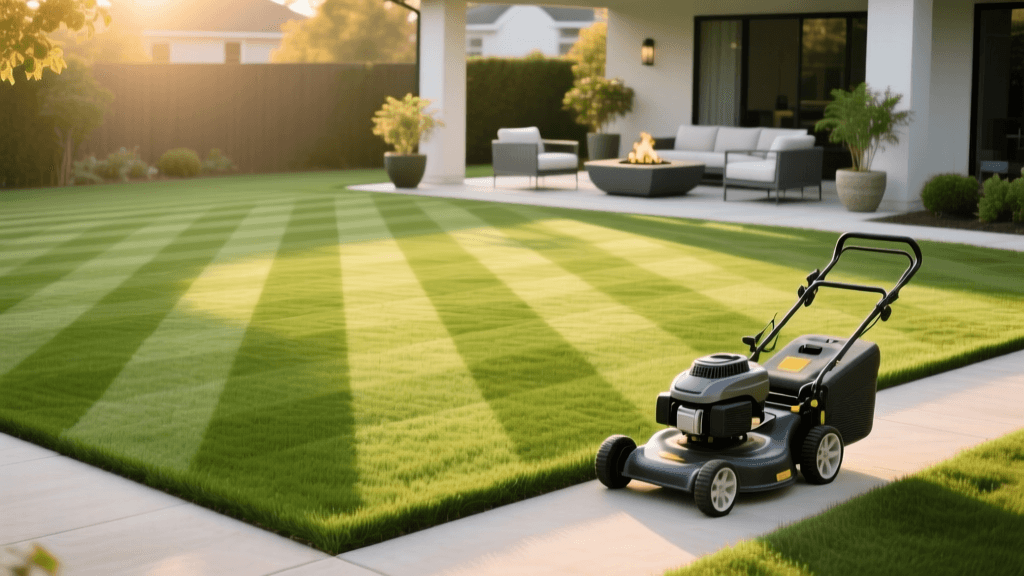
The Ultimate Guide to Lawn Striping for Curb Appeal
Transforming Your Lawn into an Entertaining Masterpiece
When you host a summer barbecue, an elegant outdoor evening gathering, or simply want to elevate your home's exterior, the first thing your guests and neighbors notice isn't the patio furniture or the grill—it is the lawn. A meticulously maintained, professionally striped lawn instantly communicates pride of ownership, boosts curb appeal, and creates a luxurious backdrop for outdoor entertaining. While professional sports stadiums and golf courses are famous for their intricate turf patterns, achieving that same high-end aesthetic in your backyard is entirely possible with the right techniques, equipment, and turfgrass knowledge. In this comprehensive guide, we will explore the science behind lawn striping, the best equipment to use, step-by-step mowing techniques, and how to pair your striped turf with perfect edging to create an unforgettable landscape for your next outdoor event.
The Science Behind Lawn Striping
Lawn striping is not an illusion, nor does it involve cutting the grass at different heights or using different grass species. The striking visual contrast of light and dark bands is entirely a result of light reflection. When you mow your lawn and press the grass blades down with a roller or striping kit, you are bending the blades in a specific direction. Grass blades have a glossy top side (the adaxial surface) and a matte underside (the abaxial surface). When the grass is bent away from you, you see the glossy top side reflecting the sun, which appears light. When the grass is bent toward you, you see the matte underside, which absorbs more light and appears dark. According to turfgrass scientists at the NC State TurfFiles program, the health and flexibility of the grass blade directly impact how well it holds this bend, making proper hydration and fertilization critical components of the striping process.
Essential Equipment for Perfect Stripes
You cannot achieve sharp, professional-grade stripes with a standard side-discharge mower that blows grass clippings haphazardly. You need a mower equipped with a rear roller or a specialized striping attachment that physically presses the grass into the soil. Below is a comparison of the most effective striping tools available for residential lawns.
| Equipment Type | Average Cost | Best For | Pros & Cons |
|---|---|---|---|
| Push Mower Striping Kit | $30 - $60 | Small to medium lawns (under 1/2 acre) | Pros: Affordable, easy to install, lightweight. Cons: Can drag on uneven terrain, less defined stripes. |
| Rear Roller Mower | $400 - $1,200 | Flat, formal English-style lawns | Pros: Superior stripe definition, elegant finish. Cons: Heavy, expensive, struggles on sloped terrain. |
| Tow-Behind Lawn Roller | $120 - $250 | Large properties (1+ acres) using riding mowers | Pros: Covers wide areas quickly, deep stripes. Cons: Requires a riding mower, heavy to store and fill. |
| Zero-Turn Striping Kit | $150 - $350 | Large, complex landscapes with obstacles | Pros: Fast mowing, commercial-grade stripes. Cons: Complex installation, requires specific mower deck. |
For most homeowners focused on curb appeal and weekend entertaining, a high-quality push mower striping kit or a mulching mower with a built-in rear roller offers the best balance of cost and performance.
Step-by-Step Guide to Striping Your Lawn
Achieving a flawless checkerboard or diamond pattern requires patience, precision, and a systematic approach. Follow these steps to ensure your lawn is ready for the spotlight.
1. Prepare the Canvas
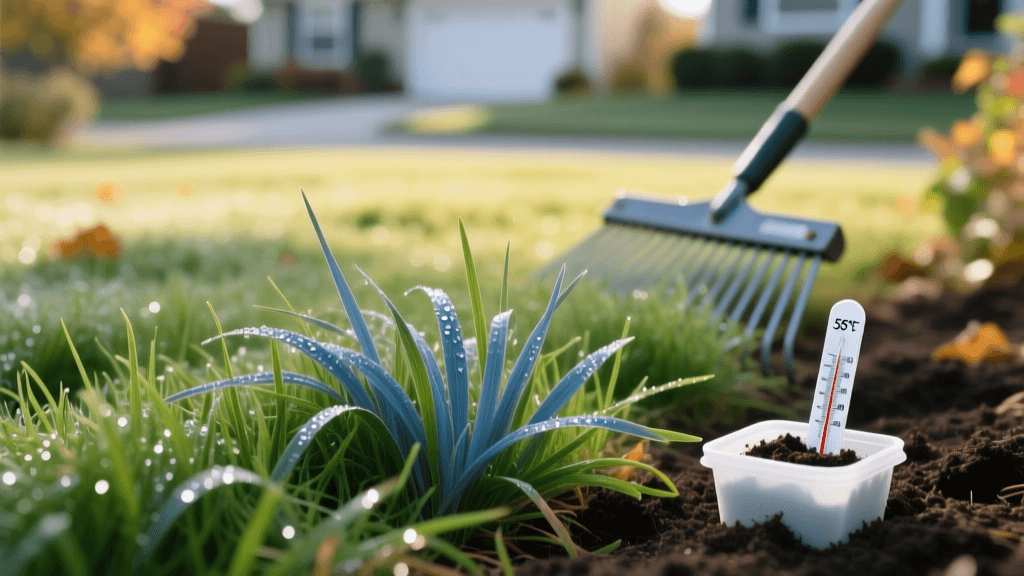
Before you begin, ensure your lawn is dry. Mowing wet grass causes clumping, which ruins the stripe definition and can spread fungal diseases. Furthermore, the University of Minnesota Extension recommends never removing more than one-third of the grass blade in a single mowing session. For optimal striping, maintain a mowing height between 2.5 and 3.5 inches, as taller grass blades bend more dramatically and hold the stripe pattern longer.
2. The Perimeter Pass
Start by mowing a continuous perimeter around the entire lawn. This creates a clean, uniform border and gives you a dedicated space to turn your mower around without damaging the straight lines you are about to create in the center of the yard.
3. The First Straight Lines
Pick a fixed focal point in the distance, such as a specific tree, a corner of your house, or a patio umbrella. Use this focal point to guide your first pass, ensuring your line is perfectly straight. When you reach the end of the lawn, lift the mower deck, turn carefully within the perimeter border, and align your next pass.
4. Overlapping for Consistency
To prevent uncut strips of grass between your passes, overlap each subsequent mowing line by about two to three inches. The wheels of your mower should run inside the tire tracks of the previous pass. This overlapping technique guarantees that every single blade of grass is rolled and pressed down, eliminating unsightly gaps in your pattern.
5. Creating the Checkerboard
Once the entire lawn is striped in one direction (e.g., north to south), mow the entire lawn again in the perpendicular direction (east to west). This double-pass technique bends the grass in two directions, creating the highly coveted, high-contrast checkerboard pattern that is guaranteed to impress your guests.
Choosing the Right Grass for Striping
Not all grasses stripe equally well. The ability of a turfgrass to hold a stripe depends heavily on its blade structure, growth habit, and seasonal flexibility.
- Cool-Season Grasses (Fescue, Kentucky Bluegrass, Ryegrass): These are the champions of lawn striping. Their broader, more flexible blades bend easily and hold their position for days. Kentucky Bluegrass, with its dense rhizomatous growth, provides a lush, carpet-like surface that reflects light beautifully.
- Warm-Season Grasses (Bermuda, Zoysia, St. Augustine): Striping warm-season grasses is more challenging due to their stiffer, narrower blades and lower growth habit. However, improved cultivars of Zoysia (like Zeon or Emerald) and finely textured Bermuda grasses can produce respectable stripes if mowed at a slightly higher height than usual and equipped with a heavy rear roller.
If you are overseeding to improve curb appeal before a major outdoor event, incorporating a high-quality Perennial Ryegrass blend can provide rapid germination, deep green color, and excellent striping characteristics within just a few weeks.
Edging: The Frame to Your Masterpiece
A beautifully striped lawn loses its impact if the borders are overgrown and sloppy. Edging provides the crisp, clean frame that separates your vibrant turf from garden beds, walkways, and driveways. For outdoor entertaining spaces, sharp edging defines the boundaries of the lawn, guiding foot traffic and preventing guests from accidentally trampling delicate flower beds.
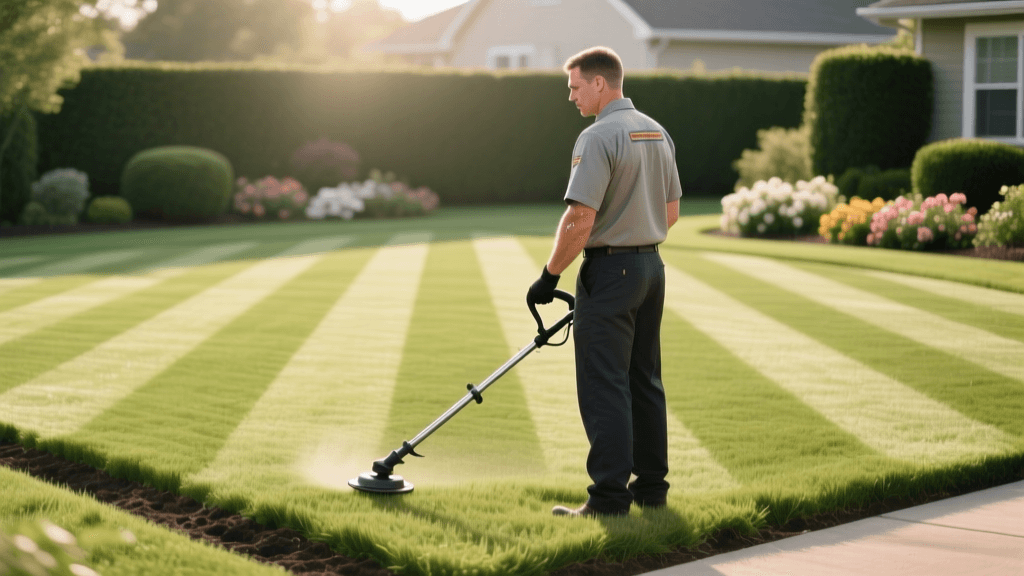
Use a dedicated steel lawn edger or a motorized stick edger to cut a precise 4-inch deep trench along all hardscapes and garden beds. Remove the excavated soil and debris immediately using a leaf blower or a stiff-bristled broom. According to turf management experts at Penn State Extension, maintaining a physical gap between the soil line and the turfgrass edge reduces moisture retention against hardscapes, preventing moss growth and protecting paved patios from root damage. Finish the edging process by running a string trimmer along the perimeter to ensure every stray blade is eliminated.
Maintaining Turf Health While Striping
While stripes look incredible, repeatedly mowing and rolling the grass in the exact same pattern can lead to soil compaction and turf wear. The constant pressure from heavy rollers and mower wheels in the same tracks restricts oxygen and water flow to the root zone. To protect the long-term health of your lawn, alternate your striping patterns every two to three mows. If you mow horizontally one week, mow diagonally or vertically the next. Additionally, incorporate core aeration into your fall or spring lawn care routine to alleviate any compaction caused by heavy striping equipment, ensuring your grass remains thick, resilient, and ready for your next backyard gathering.
Lighting and Landscaping Accents
To maximize the visual impact of your striped lawn during evening outdoor entertaining, integrate low-voltage landscape lighting. Uplighting specimen trees or casting a soft wash of light across the striped turf enhances the contrast between the light and dark bands even after the sun goes down. Pair your pristine lawn borders with well-defined mulch rings and vibrant, seasonal container plants placed strategically near your patio seating areas. This holistic approach to lawn care and landscape design ensures that your property not only boasts unmatched curb appeal during the day but also transforms into a breathtaking, resort-like venue for nighttime entertaining.