Lawn Care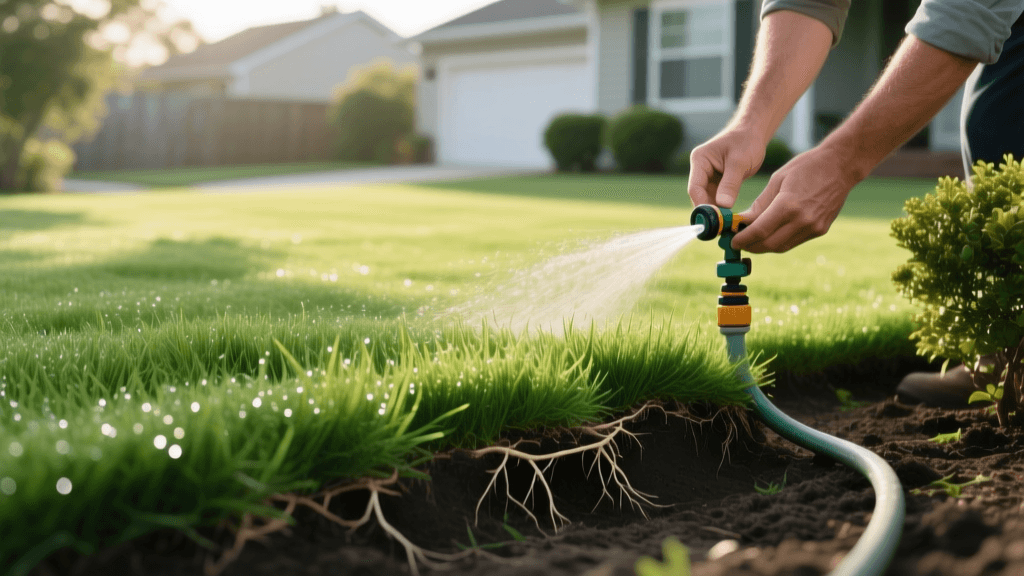
The Top 5 Lawn Watering Mistakes and How to Fix Them
The Hidden Dangers of Improper Lawn Irrigation
Watering your lawn seems like one of the most straightforward tasks in yard care. You turn on the sprinklers, the grass gets wet, and your job is done. However, improper irrigation is actually the leading cause of turf decline, weed invasion, and fungal diseases. According to the EPA WaterSense program, the average American family uses roughly 320 gallons of water per day, with about 30% devoted to outdoor uses. More than half of that outdoor water is wasted due to inefficient irrigation methods and common scheduling mistakes.
Whether you are managing a cool-season Kentucky Bluegrass lawn in the North or a warm-season Bermudagrass lawn in the South, understanding the nuances of soil moisture, evaporation rates, and root development is critical. Below, we break down the five most common lawn watering mistakes homeowners make and provide actionable, science-backed fixes to help you cultivate a deep-rooted, drought-resistant, and vibrant landscape.
Mistake 1: Watering Too Frequently and Shallowly
The most pervasive myth in lawn care is that grass needs a little bit of water every single day to stay green. Watering for 10 to 15 minutes daily keeps the top half-inch of soil moist, but it completely ignores the deeper root zone. This practice trains your grass to develop shallow, weak root systems that are highly susceptible to heat stress, drought, and grub damage.
The Fix: Deep and Infrequent Watering
Your lawn generally requires 1 to 1.5 inches of water per week, including rainfall. The goal is to apply this water in one or two deep watering sessions rather than spreading it out over seven days. Deep watering forces the roots to chase the moisture down into the soil profile, creating a robust root system that can survive summer heat waves.
- For Cool-Season Grasses (Fescue, Bluegrass, Ryegrass): Aim for 1.5 inches per week during peak summer months, split into two watering days (e.g., Tuesday and Saturday).
- For Warm-Season Grasses (Bermuda, Zoysia, St. Augustine): These grasses are more drought-tolerant and typically require 0.5 to 1 inch per week, which can often be applied in a single deep session.
Pro Tip: Perform the 'Tuna Can Test.' Place 3 to 5 empty tuna cans at varying distances from your sprinkler. Run your system for 15 minutes and measure the water depth in the cans with a ruler. This will tell you exactly how long you need to run your zones to hit the 0.75-inch per session mark.
Mistake 2: Watering at the Wrong Time of Day
Timing is everything when it comes to irrigation. Many homeowners set their sprinklers to run in the middle of the afternoon when the sun is blazing, or they water in the evening right before going to bed. Both of these strategies are detrimental to your turf.
Watering in the midday heat results in massive water loss due to evaporation and wind drift. You might be putting down half an inch of water, but only a fraction actually reaches the soil. Conversely, watering in the evening leaves the grass blades wet for 12 to 14 hours overnight. This prolonged leaf wetness is an open invitation for devastating fungal diseases like Brown Patch, Dollar Spot, and Pythium Blight.
The Fix: The Early Morning Window
The absolute best time to water your lawn is between 4:00 AM and 8:00 AM. During this window, the air is cool, the wind is generally calm, and the sun is not yet intense enough to cause rapid evaporation. Furthermore, watering early ensures that any excess water on the grass blades dries quickly once the sun rises, significantly reducing the risk of fungal pathogens taking hold. The University of Minnesota Extension strongly advocates for early morning watering to maximize soil absorption and minimize disease pressure.
Mistake 3: Ignoring Soil Type and Infiltration Rates
Not all soil is created equal. Applying the same watering schedule to sandy soil as you do to heavy clay soil is a recipe for either drought stress or massive water runoff. Soil texture dictates the infiltration rate—how fast water can move into the soil profile.
The Fix: Customize by Soil Type
You must adjust your irrigation strategy based on your soil's physical properties. Here is a breakdown of how to handle the three primary soil types:
| Soil Type | Infiltration Rate | Water Retention | Recommended Watering Strategy |
|---|---|---|---|
| Sandy Soil | High (Fast) | Low (Drains quickly) | Water more frequently (3x a week) for shorter durations to prevent water from leaching past the root zone. |
| Loam Soil | Moderate | Moderate (Ideal) | Standard deep watering (1-2x a week) until 1 to 1.5 inches are applied. |
| Clay Soil | Low (Very Slow) | High (Holds water) | Use the 'Cycle and Soak' method to prevent runoff. Water in short bursts with resting periods in between. |
Mastering the 'Cycle and Soak' Method for Clay
If you have heavy clay soil and run your sprinklers for 30 minutes straight, you will likely see water pooling on the surface and running off into the street. The clay simply cannot absorb the water that fast. To fix this, program your controller to water in cycles. For example, run the zone for 10 minutes, shut off for 2 hours to allow the water to percolate, and then run it for another 10 minutes. This ensures deep penetration without wasting water to runoff.
Mistake 4: Relying on 'Set It and Forget It' Timers
Traditional irrigation controllers are essentially just timers. If you set your system to run for 20 minutes every Tuesday and Saturday, it will do so whether it is 95 degrees and dry, or 60 degrees and pouring rain. Watering during or immediately after a rainstorm not only wastes municipal water but also oversaturates the soil, drowning grassroots by displacing vital oxygen pockets in the soil.
The Fix: Upgrade to Smart Irrigation Technology
According to the University of California Statewide IPM Program, utilizing weather-based irrigation controllers can reduce outdoor water use by up to 30%. Upgrading to a smart controller (such as the Rachio 3, Orbit B-hyve, or Hunter Hydrawise) allows your system to connect to local weather stations via Wi-Fi. These smart devices automatically skip watering cycles when rain is in the forecast, adjust run times based on seasonal evapotranspiration (ET) rates, and even account for soil type and slope. The initial cost of a smart controller (typically $150 to $250) pays for itself in water savings within a single season.
Mistake 5: Uneven Sprinkler Coverage and Misaligned Heads
Have you ever noticed dry, brown patches in your lawn that never seem to green up, no matter how much you water? Or perhaps you have areas where mushrooms are constantly growing. This is usually a symptom of poor sprinkler head alignment, clogged nozzles, or inadequate head-to-head coverage.
Sprinkler systems are designed with 'head-to-head' coverage in mind, meaning the spray from one sprinkler head should physically reach the adjacent head. If water pressure drops, or if heads are sunken into the soil over time, dry spots emerge. Conversely, heads that spray onto the driveway or sidewalk are wasting water and driving up your utility bill.
The Fix: Perform a Spring Sprinkler Audit
At the beginning of every growing season, conduct a manual audit of your irrigation system:
- Check for Sunken Heads: Soil and mulch often build up around sprinkler heads over the winter. Dig them out and raise them to grade level so the spray pattern is unobstructed.
- Inspect Nozzles: Look for clogged or damaged nozzles. Replace cheap plastic nozzles with high-efficiency rotary nozzles (like the Hunter MP Rotator), which apply water much slower and more evenly, drastically reducing runoff.
- Adjust Arc and Radius: Use a small flathead screwdriver to adjust the spray radius so it hits the grass, not the pavement. Ensure the arcs overlap properly to eliminate dry triangles between heads.
Signs Your Lawn is Crying for Help
Learning to read the visual cues your grass provides is essential for correcting watering mistakes on the fly. Keep an eye out for these symptoms:
- Footprinting: If you walk across your lawn and your footprints remain visible for several minutes, the grass blades have lost their turgor pressure and are desperate for water.
- Color Shift: A lawn that shifts from vibrant green to a dull, bluish-gray hue is entering the early stages of drought stress.
- Screwdriver Test: Push a 6-inch flathead screwdriver into the soil. If you cannot push it in easily to the handle, your soil is too dry. If it slides in with zero resistance and comes out covered in muck, you are overwatering.
Conclusion
A beautiful, resilient lawn is not the result of endless watering; it is the result of intelligent watering. By shifting from shallow, daily sprinkling to deep, early morning irrigation, you fundamentally change the biology of your turf. Coupling these techniques with smart technology and a solid understanding of your soil type will not only save you money on your water bill but also protect your lawn from the devastating effects of drought and disease. Take control of your irrigation schedule today, and your grass will reward you with deep roots and lasting greenery.