Lawn Care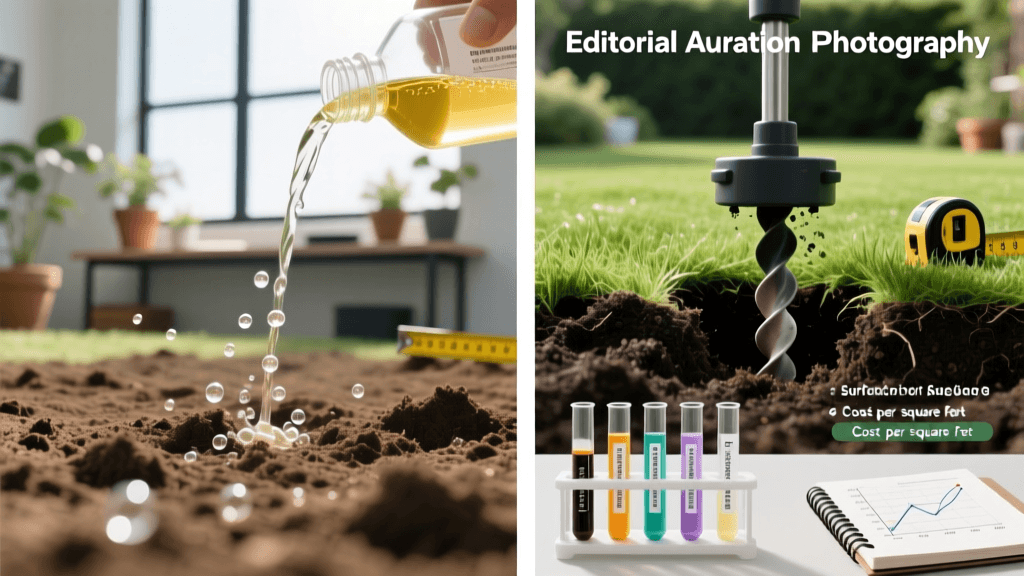
Liquid Aeration vs Core Aeration: The Viral TikTok Hack Tested
The Viral Liquid Aeration Trend Explained
If you have spent any time on LawnTok or Instagram gardening reels over the past year, you have likely encountered the viral 'liquid aeration' hack. Influencers and lawn care enthusiasts are increasingly ditching heavy, gas-powered core aerators in favor of spraying liquid surfactant solutions across their turf. The promise is incredibly enticing: break up compacted soil, improve water infiltration, and promote deep root growth without breaking a sweat or spending a hundred dollars on equipment rentals. But as with any viral internet trend, it is crucial to separate the scientific reality from the marketing hype. Does spraying a liquid truly replace the physical removal of soil cores? At lawnsGuide.com, we put the viral liquid aeration trend to the test, analyzing the chemistry, the costs, and the real-world results to help you decide if this hack deserves a spot in your seasonal lawn care routine.
The Science: Surfactants vs. Physical Soil Removal
To understand the debate, we must first look at the mechanics of soil compaction. Compacted soil lacks macropores—the large empty spaces between soil particles that allow oxygen, water, and nutrients to reach the root zone. According to NC State Extension, soil compaction severely restricts root development and creates a hostile environment for beneficial soil microbes, ultimately leading to thin, drought-prone turf.
Traditional core aeration addresses this by physically extracting two-to-three-inch plugs of soil from the ground. This immediately opens up macropores, relieves physical pressure, and brings beneficial microbes to the surface to break down thatch. Liquid aeration, on the other hand, relies on the chemistry of surfactants (wetting agents). Surfactant molecules possess a hydrophilic (water-loving) head and a hydrophobic (water-repelling) tail. When applied to the soil, they reduce the surface tension of water, allowing it to penetrate deeply into tight, hydrophobic clay soils rather than pooling on the surface or running off into the street.
While wetting agents are phenomenal tools for managing localized dry spots and improving water infiltration, they do not physically remove soil cores. For heavily compacted clay soils with severe thatch buildup, mechanical core aeration remains the undisputed champion for immediate physical relief.
What the University Extensions Say
The University of Minnesota Extension maintains that mechanical core aeration is the gold standard for heavily trafficked lawns with severe compaction. However, turfgrass scientists also acknowledge the vital role of wetting agents. The USGA Green Section has long utilized agricultural-grade surfactants on golf courses to manage hydrophobic soils and localized dry spots. The consensus among turf scientists is clear: liquid aeration is not a direct 1:1 replacement for core aeration in severely compacted soils, but it is an incredibly powerful, low-effort maintenance tool that can extend the time between mechanical aerations and vastly improve irrigation efficiency.
The Danger of the DIY Dish Soap Hack
Many viral videos recommend mixing Dawn dish soap with water as a cheap DIY liquid aerator. While dish soap is technically a surfactant, using it on your lawn is a massive mistake. Dish soaps are formulated with harsh degreasers and detergents designed to strip lipids and oils from cookware. When applied to your lawn, these chemicals strip the natural, beneficial waxy coatings off grass blades and destroy the lipid membranes of essential soil microbes. Furthermore, the high sodium content in many household soaps can lead to soil salinity issues, ultimately burning your turf and degrading soil structure over time. Always opt for agricultural-grade, nonionic surfactants specifically formulated for turfgrass.
Product Showdown: Top Liquid Aerators on the Market
If you want to try liquid aeration safely, you need products that combine high-quality surfactants with soil conditioners like humic and fulvic acids. Below is a comparison of the top products dominating the viral lawn care space.
| Product Name | Active Ingredients | Coverage Rate | Approx. Cost | Best For |
|---|---|---|---|---|
| N-Ext Air-8 | Surfactants, Humic Acid, Fulvic Acid, Sea Kelp | 3 oz per 1,000 sq ft | $45 (32 oz bottle) | Overall soil health and microbial stimulation |
| Simple Lawn Solutions Liquid Aerating Soil Loosener | Ethoxylated Alcohols, Sodium Lauryl Sulfate | 3 oz per 1,000 sq ft | $32 (32 oz bottle) | Breaking up hard clay and improving water penetration |
| Feature (by Yard Mastery) | Nonionic Surfactant, Ammonium Sulfate | 1 oz per 1,000 sq ft | $35 (16 oz bottle) | Professional-grade wetting and nutrient uptake |
Cost and Time Breakdown: Liquid vs. Core
One of the main reasons the liquid aeration trend has gone viral is the sheer convenience and cost-effectiveness compared to renting heavy machinery. Below is a breakdown of what it takes to aerate a standard 5,000 square foot lawn using both methods.
| Feature | Traditional Core Aeration | Liquid Aeration |
|---|---|---|
| Mechanism | Physical soil plug extraction | Chemical surface tension reduction |
| Cost per 5,000 sq ft | $85 - $120 (Machine rental + gas) | $15 - $22 (Product cost) |
| Labor Intensity | High (Heavy lifting, marking sprinklers) | Low (Hose-end sprayer application) |
| Time Required | 2 - 4 hours | 15 - 20 minutes |
| Best Soil Type | Heavy clay, severely compacted | Sandy loam, mild clay, maintenance |
| Frequency | Once per year (Fall or Spring) | Every 4-6 weeks during growing season |
Step-by-Step Guide to Applying Liquid Aeration
To get the most out of your liquid aeration treatment, timing and application methods are critical. Surfactants work best when soil temperatures are consistently above 55°F, as this is when root growth and microbial activity are actively pulling water and oxygen into the soil profile. Follow this proven routine for optimal results:
- Mow and Prep: Mow your lawn slightly lower than your usual height and bag the clippings. This ensures the liquid solution reaches the soil surface rather than getting trapped in the thatch layer or on the grass blades.
- Mix and Apply: Using a hose-end sprayer, mix your chosen liquid aerator at the recommended rate (usually 3 ounces per 1,000 square feet). Apply evenly across the lawn, walking at a steady pace to avoid overlapping and wasting product.
- Water Deeply: This is the most crucial step. Liquid aerators require water to activate and carry the surfactants down into the root zone. Immediately after application, run your irrigation system or sprinklers to deliver at least 1/4 to 1/2 inch of water. You want the soil to be moist, not flooded.
- Fertilize and Overseed (Optional): Because the soil profile is now primed for maximum absorption, this is the perfect time to apply a liquid fertilizer or a granular starter fertilizer if you are overseeding. The improved water infiltration will drive the nutrients directly to the root zone.
When Should You Still Use Core Aeration?
While liquid aeration is a fantastic maintenance tool, it is not a cure-all. You should still rely on traditional core aeration if your lawn suffers from extreme foot traffic (such as areas where children or dogs frequently play), if you have a thatch layer thicker than half an inch, or if your soil is composed of heavy, unamended builder's clay that repels water entirely. In these severe cases, the physical fracturing of the soil provided by a mechanical aerator is mandatory. Many elite lawn care professionals now use a hybrid approach: performing mechanical core aeration once every two to three years, and utilizing liquid aeration treatments monthly during the growing season to maintain soil softness and hydration.
Final Verdict: Hype or Holy Grail?
The viral liquid aeration hack is not a scam, provided you are using the right products and setting realistic expectations. Agricultural-grade surfactants and soil conditioners like N-Ext Air-8 or Simple Lawn Solutions are scientifically proven to improve water retention, reduce runoff, and enhance nutrient uptake. For the average homeowner looking to maintain a healthy, vibrant lawn without the back-breaking labor of renting and operating a heavy core aerator, liquid aeration is a game-changing addition to the seasonal toolbox. Just remember to skip the dish soap, invest in a quality turf-grade surfactant, and always water the product in deeply to unlock the full potential of your soil.