Tree Care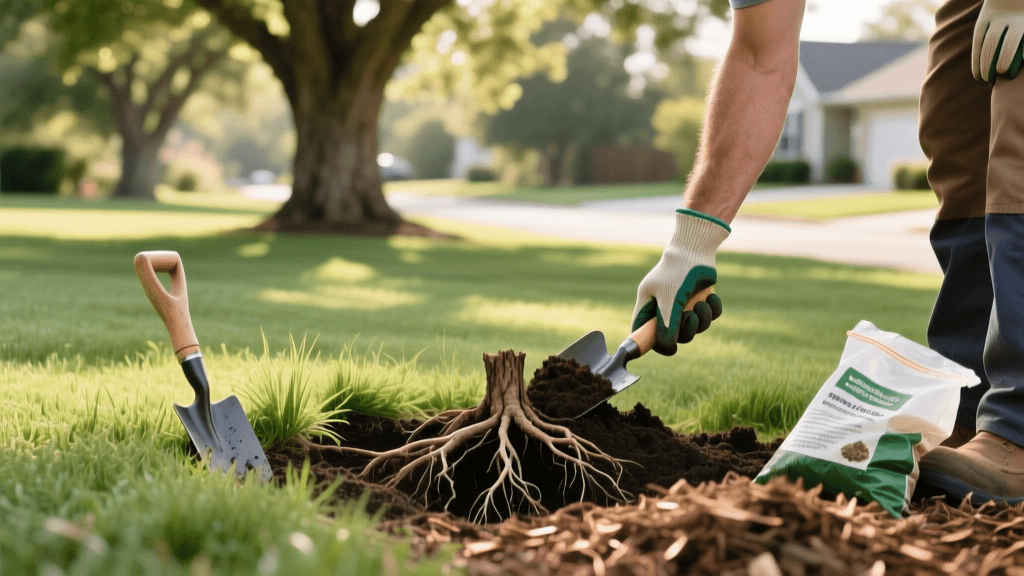
How to Manage Surface Tree Roots During Lawn Renovation
The Conflict Between Lawn Renovation and Mature Trees
Embarking on a lawn renovation project is an exciting way to breathe new life into your outdoor space. However, homeowners quickly discover that mature trees and turfgrass are often natural enemies. When attempting to overseed, lay sod, or improve soil quality beneath the canopy of an established tree, you will likely encounter a dense network of surface roots. These roots make tilling impossible, ruin mower blades, and aggressively compete with grass seedlings for water and essential nutrients.
Surface roots typically emerge for a few specific reasons. In many landscapes, heavy clay soils and chronic compaction force roots to grow upward in search of oxygen. Additionally, certain tree species, such as Silver Maples, River Birches, Willows, and American Elms, are genetically predisposed to shallow root systems. When renovating a lawn, the goal must shift from forcing grass to grow in impossible conditions to working harmoniously with the tree's biological needs. In this guide, we will explore actionable, safe, and cost-effective strategies for managing surface roots during your lawn recovery process.
Why You Should Never Cut or Till Surface Roots
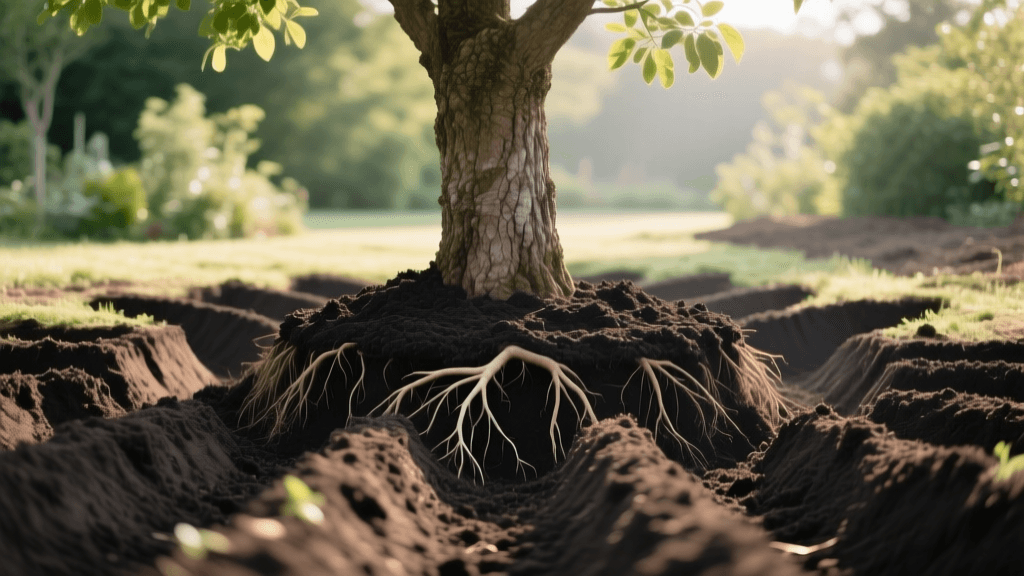
The most common mistake homeowners make during lawn renovation is using a rototiller to break up the soil beneath a tree's drip line, or using a pruning saw to sever exposed roots to create a flat surface for sod. Both of these practices are catastrophic for tree health and can ultimately lead to the tree's decline or death.
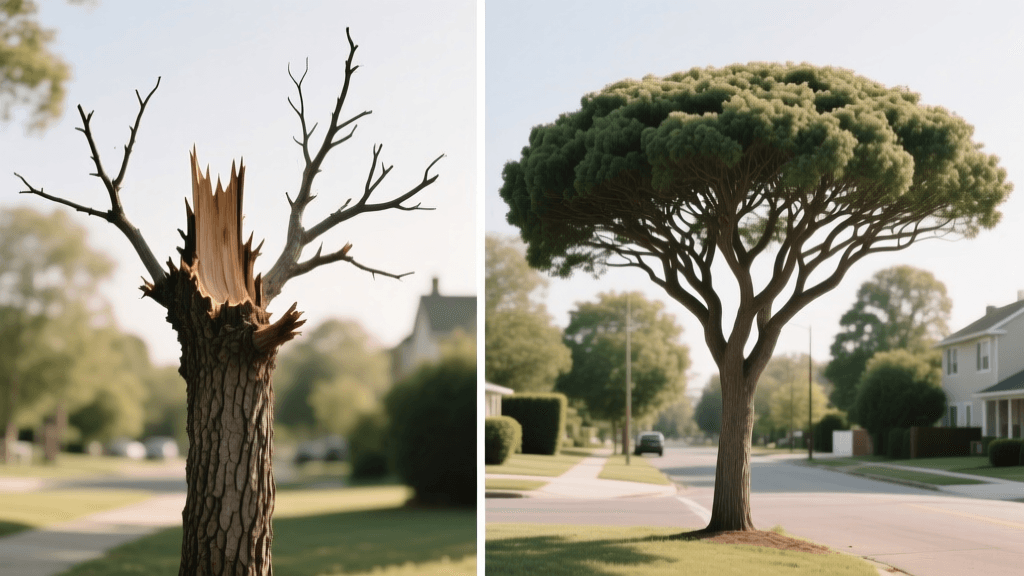
The majority of a tree's fine, water-absorbing feeder roots are located in the top 12 to 18 inches of soil, often extending well past the drip line. Tilling this area severs these vital roots, severely reducing the tree's ability to uptake water and nutrients. Furthermore, cutting large structural surface roots compromises the tree's anchoring system, creating a dangerous hazard tree that could topple during a storm. Large cuts on roots also provide direct entry points for soil-borne decay fungi, such as Armillaria (oak root fungus), which can hollow out the trunk from the inside over several years. To protect your landscape investment, lawn renovation under trees requires a gentle, non-invasive approach.
Step-by-Step Lawn Recovery Strategies Under Trees
Instead of fighting the tree's root system, successful lawn renovation involves adapting your landscape design and soil management techniques to accommodate the tree. Here are the three best strategies for recovering the area beneath mature canopies.
1. Transition to a Mulch Ring (The Safest Solution)
The absolute best way to manage surface roots and eliminate the frustration of mowing around them is to remove the turfgrass entirely and expand the tree's mulch ring. A properly installed mulch ring mimics the natural forest floor, retaining soil moisture, regulating temperature, and slowly adding organic matter to the soil without suffocating the roots.
- Define the Edge: Use a manual half-moon edger to cut a clean border around the desired mulch bed, ideally extending to the tree's drip line or at least a 3-foot radius from the trunk.
- Smother, Don't Spray: Avoid using heavy chemical herbicides like glyphosate near the tree's root zone, as the tree can absorb the chemical. Instead, lay down overlapping layers of plain cardboard over the existing grass and wet it thoroughly.
- Apply Mulch Correctly: Add 2 to 3 inches of organic hardwood or pine bark mulch over the cardboard. According to turf and tree experts at Penn State Extension, it is critical to keep the mulch at least 3 inches away from the actual trunk of the tree to prevent 'volcano mulching,' which can cause bark rot and encourage girdling roots.
Cost Estimate: Bulk hardwood mulch typically costs between $30 and $45 per cubic yard, making this a highly cost-effective renovation strategy compared to buying specialized shade-tolerant sod.
2. Overcoming Soil Compaction Without Tilling
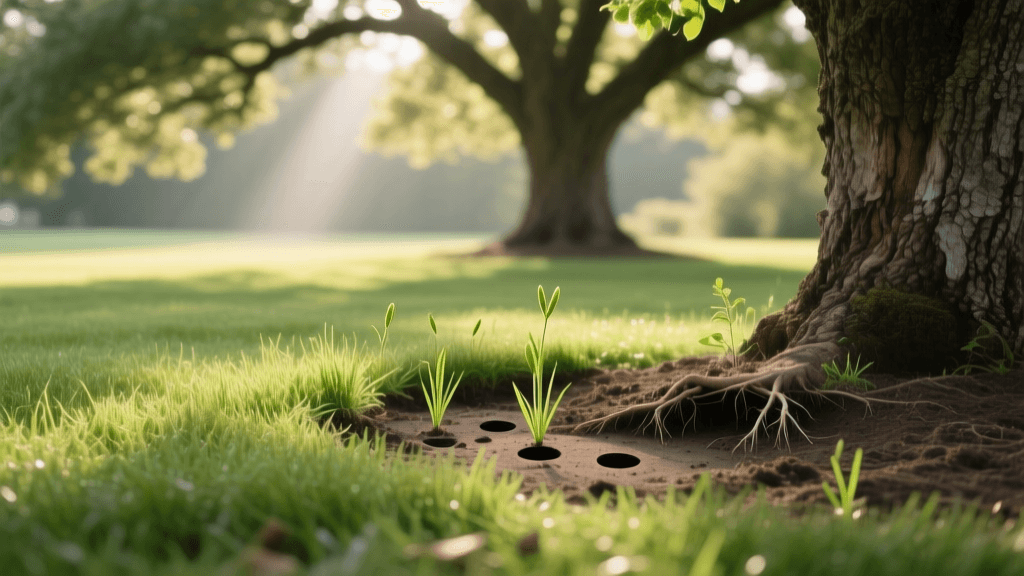
If you are renovating the lawn just outside the tree's immediate drip line and need to improve poor, compacted soil, you must avoid mechanical aeration or tilling. Instead, use a technique called vertical mulching or top-dressing with high-quality compost.
You can carefully top-dress the area with a very thin layer of organic compost to improve soil structure and provide a seedbed for grass. However, the University of Minnesota Extension explicitly warns against adding more than 1 inch of soil or compost over a tree's root zone. Adding thick layers of topsoil suffocates the roots by cutting off their oxygen supply, leading to a slow, irreversible decline. For severe compaction, consider hiring a certified arborist to perform 'air spading,' a process that uses compressed air to safely fracture compacted soil around roots without cutting them, which typically costs between $300 and $500 per tree.
3. Planting Shade-Tolerant Groundcovers
Where grass refuses to grow due to dense shade and root competition, lawn renovation should pivot to planting shade-tolerant groundcovers. These plants have shallow, non-invasive root systems that coexist peacefully with tree roots.
- Creeping Jenny (Lysimachia nummularia): Thrives in moist, shady areas and provides a bright green, cascading effect over surface roots.
- Sweet Woodruff (Galium odoratum): A low-growing, fragrant groundcover that produces delicate white flowers in spring and handles dry shade well.
- Hostas and Ferns: While not traditional groundcovers, mass planting these perennials creates a lush, woodland garden aesthetic that completely hides unsightly surface roots.
Comparison Chart: Turfgrass vs. Groundcover vs. Mulch
When planning your renovation, use this comparison chart to decide which surface root management strategy best fits your landscape goals, budget, and maintenance preferences.
| Strategy | Root Safety | Maintenance Level | Water Requirements | Best Use Case |
|---|---|---|---|---|
| Turfgrass (Fine Fescue) | Moderate (Requires careful hand-seeding) | High (Mowing, fertilizing, overseeding) | High (Competes with tree roots) | Edges of the drip line with dappled sunlight. |
| Groundcovers | High (Shallow, non-invasive roots) | Low (Weeding, annual pruning) | Moderate (Once established) | Shaded areas where grass continually thins out. |
| Organic Mulch Ring | Very High (Protects roots, retains moisture) | Very Low (Annual top-up of mulch) | Low (Reduces soil evaporation) | Directly under the canopy and over major surface roots. |
Selecting and Planting Grass If You Must Grow Turf
Sometimes, a homeowner's vision for a uniform, carpet-like lawn means they are determined to grow grass right up to the tree trunk. If you choose this route, you must select the right seed and use specialized planting techniques to avoid damaging the tree.
Standard Kentucky Bluegrass or Tall Fescue will fail in heavy shade and cannot compete with tree roots. Instead, purchase a premium 'Dense Shade' seed mix where the primary ingredient is Fine Fescue (including creeping red, chewings, or hard fescue). Fine fescues require less water, less fertilizer, and thrive in low-light environments.
Renovation Planting Steps:
- Hand Rake Only: Do not use a power dethatcher or core aerator under the drip line. Gently scratch the soil surface with a flexible leaf rake or a hand cultivator to create seed-to-soil contact.
- Sow the Seed: Apply the fine fescue seed at the rate recommended on the bag (usually 5 to 6 pounds per 1,000 square feet).
- Top-Dress Lightly: Cover the seed with a mere 1/8 inch of peat moss or fine compost to retain moisture without smothering the tree roots.
- Keep Moist: Water lightly twice a day until germination occurs (usually 14-21 days for fine fescues).
Watering and Fertilizing: Balancing Tree and Lawn Needs
One of the hidden challenges of lawn renovation near trees is the conflicting needs of the two plant types. Turfgrass generally prefers shallow, frequent watering (about 1 to 1.5 inches per week) and regular nitrogen-heavy fertilization. Mature trees, conversely, require deep, infrequent watering to encourage deep root growth, and they are highly sensitive to excess nitrogen, which can trigger weak, rapid foliage growth that attracts pests.
As noted by tree health experts at The Morton Arboretum, the majority of a tree's absorbing roots are in the top few inches of soil, meaning they will intercept any water and fertilizer intended for the lawn. To balance this during your lawn recovery:
- Use Slow-Release Fertilizers: Avoid quick-release synthetic lawn fertilizers under the canopy. Opt for organic, slow-release fertilizers like Milorganite or compost-based blends that will feed the grass without burning the tree's feeder roots.
- Deep Watering Sessions: Transition your renovated lawn to a deep-watering schedule. Watering deeply twice a week encourages both the grass and the tree to develop more resilient root systems, rather than keeping the surface constantly wet, which promotes shallow grass roots and fungal lawn diseases.
Conclusion
Lawn renovation in the presence of mature trees requires a shift in perspective. Rather than viewing surface roots as an obstacle to be destroyed or buried, successful landscape recovery involves working with the tree's natural biology. By expanding mulch rings, utilizing shade-tolerant groundcovers, carefully top-dressing with minimal compost, and selecting the appropriate fine fescue grass seeds, you can achieve a beautiful, healthy landscape. Protecting your tree's root system not only ensures the longevity and structural safety of the tree but also creates a more sustainable, lower-maintenance yard for years to come.