Tree Care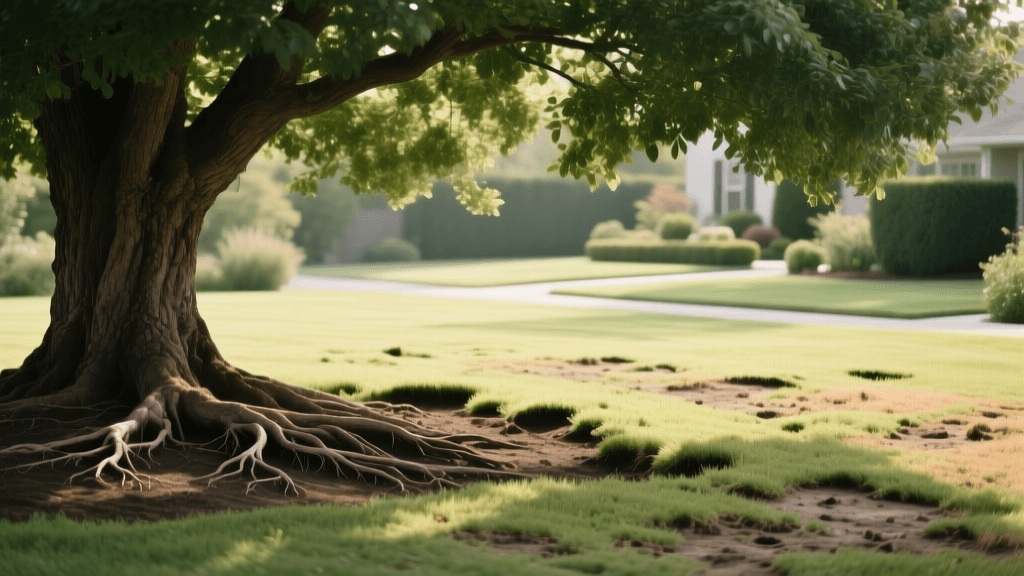
How to Manage Tree Roots and Shade During Lawn Renovation
The Conflict Between Trees and Turfgrass
Lawn renovation is a highly rewarding endeavor that can completely transform the aesthetic and functional value of your outdoor space. However, when your yard is anchored by mature trees, the renovation process becomes significantly more complex. Trees and turfgrass are naturally competitive organisms. Both demand vast amounts of water, essential soil nutrients, and sunlight to thrive. In a typical suburban landscape, the mature tree almost always wins this subterranean and atmospheric battle, leaving the turf beneath it thin, patchy, and highly susceptible to disease.
When approaching lawn recovery from a tree-care perspective, the goal is not to sacrifice the health of your valuable canopy to achieve a flawless golf-course lawn. Instead, the objective is to strike an ecological balance. According to turf and forestry experts at the University of Florida IFAS Extension, attempting to force dense turfgrass to grow in heavy shade and over aggressive surface roots often leads to chronic lawn failure and unintended damage to the tree's critical root zone. To successfully renovate a lawn in a tree-dominated yard, you must address canopy density, soil compaction, root preservation, and appropriate seed selection.
Assessing and Managing the Tree Canopy
Before you purchase a single bag of grass seed or rent a core aerator, you must evaluate the sunlight reaching your soil. Most traditional turfgrasses, including Kentucky Bluegrass and Perennial Ryegrass, require a minimum of four to six hours of direct, unfiltered sunlight daily to sustain healthy photosynthesis and recover from renovation stress. If your lawn is receiving less than this, no amount of fertilizer or watering will save it.
Crown Thinning and Raising
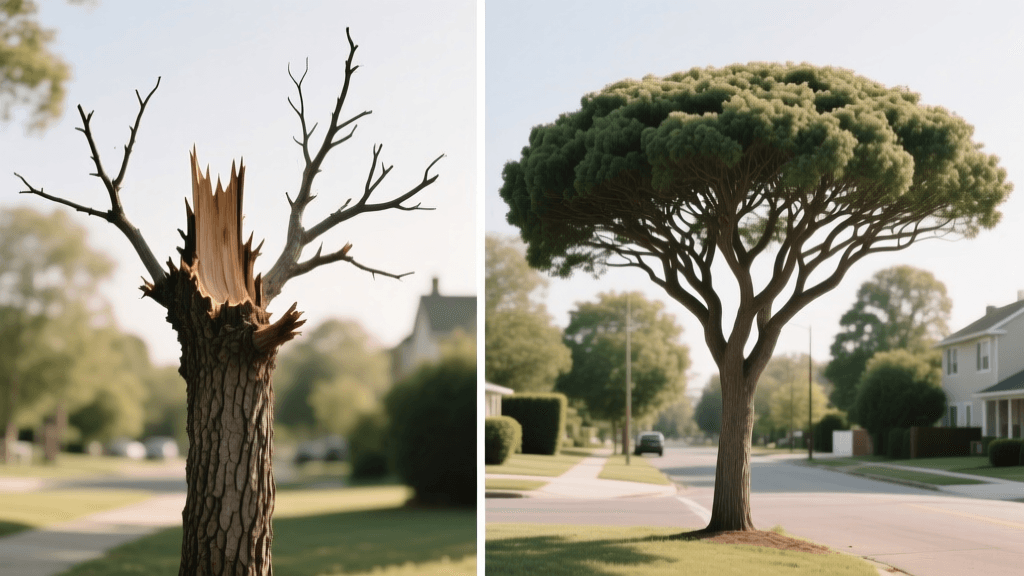
To increase light penetration without compromising the tree's structural integrity, consider professional crown thinning and canopy raising. Crown thinning involves the selective removal of smaller, weaker branches throughout the canopy to allow dappled sunlight to reach the ground. Raising the canopy involves removing the lowermost limbs to elevate the shade line.
- Timing: Deciduous trees are best pruned during their dormant season (late fall to late winter). However, oak trees must strictly be pruned in the dead of winter to prevent the spread of Oak Wilt disease.
- The 25% Rule: Never remove more than 25% of a tree's live foliage in a single season. Over-pruning, often called 'lion-tailing,' strips the tree of its ability to produce energy and stimulates weak, rapid water-sprout growth.
- Cost Expectation: Hiring an ISA Certified Arborist to perform structural pruning and canopy thinning typically costs between $300 and $800 per mature tree, depending on accessibility and species.
Dealing with Surface Tree Roots During Renovation
One of the most common mistakes homeowners make during lawn renovation is attempting to cover exposed surface roots with thick layers of topsoil to create a smooth grading for grass seed. This practice is incredibly dangerous to tree health. Tree roots require oxygen exchange at the soil line; smothering them with even two to three inches of heavy soil or thick sod will suffocate the root system, leading to gradual canopy dieback and eventual tree death over the next three to five years.
Root Pruning Guidelines
If surface roots are severely disrupting grading or hardscaping, you may be tempted to sever them. Root pruning must be done with extreme caution. The Critical Root Zone (CRZ) is generally calculated as one foot of radius for every one inch of trunk diameter at breast height (DBH). Severing major structural roots inside this zone invites catastrophic failure and decay pathogens.
| Trunk Diameter (DBH) | Minimum Safe Distance for Root Pruning | Renovation Action Required |
|---|---|---|
| Under 4 inches | 3 feet from trunk | Minor roots can be carefully severed during edging. |
| 4 to 8 inches | 6 feet from trunk | Avoid mechanical tilling; use hand tools near roots. |
| 8 to 12 inches | 8 to 10 feet from trunk | Do not sever roots; route irrigation lines around them. |
| Over 12 inches | Beyond the drip line | Consult an arborist. Do not cut surface roots. |
Soil Aeration and Amendment Near Trees
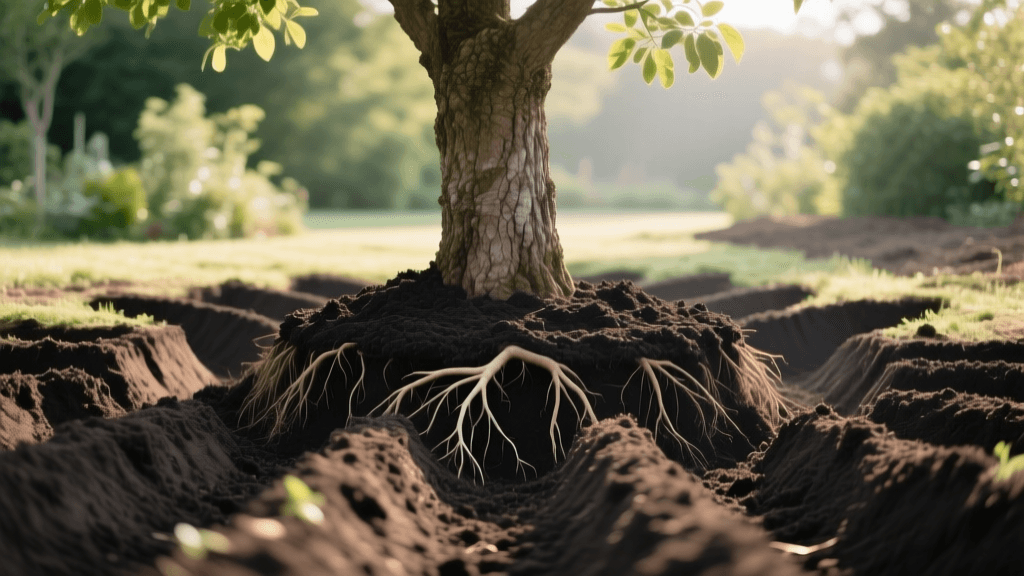
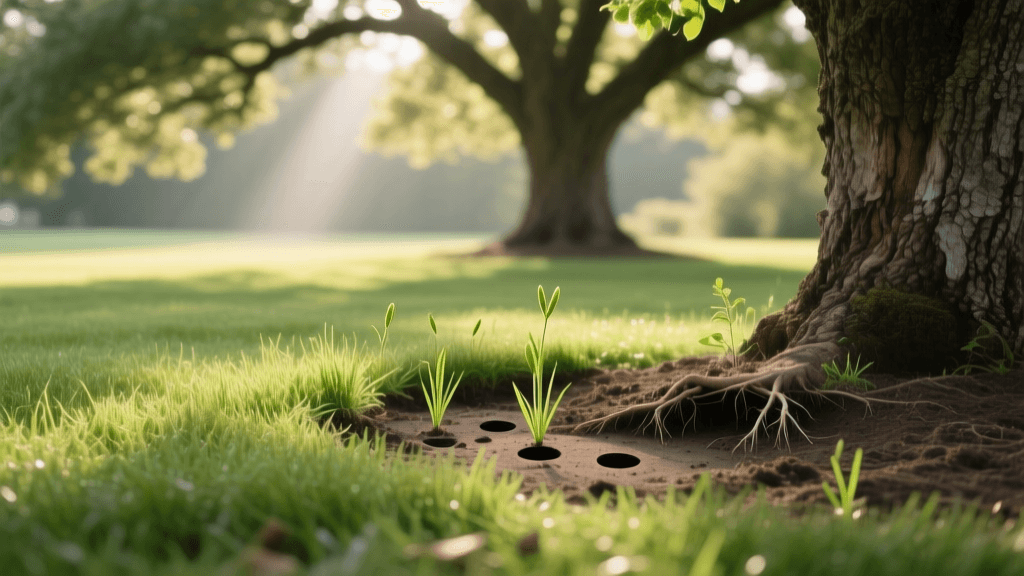
Compacted soil is a primary driver of poor turf recovery, but standard mechanical core aeration poses a significant threat to tree roots. The metal tines of a core aerator tear through the delicate, hair-like feeder roots that reside in the top two to four inches of soil, severely reducing the tree's ability to uptake water and nutrients.
Instead of mechanical core aeration under the tree's drip line, utilize liquid aeration products containing humic acids and surfactants. These products help break up soil surface tension and improve water infiltration without physically tearing the root mat. For severely compacted soils beneath mature trees, hire a professional tree care service to perform Air-Spade aeration. This process uses high-pressure compressed air to safely fracture compacted soil and expose roots without cutting or damaging them, allowing for the incorporation of organic compost. Air-spade services typically cost between $800 and $1,500 per day.
Choosing the Right Grass Seed for Shade
If you have thinned the canopy and are still left with areas that receive only three to four hours of filtered sunlight, you must abandon traditional full-sun grasses. As noted by turfgrass specialists at Penn State Extension, managing turf in the shade requires a shift in both seed selection and maintenance expectations.
Top Shade-Tolerant Grass Varieties
- Fine Fescues (Creeping Red, Chewings, Hard Fescue): These are the undisputed champions of shade tolerance. They require less water and fertilizer than bluegrass and can survive in heavily filtered light. Cost: ~$60-$80 per 10 lbs.
- Rough Bluegrass (Poa trivialis): Excellent for damp, heavily shaded areas where fine fescues might struggle with moisture-related fungal issues. It has a lighter green color and a softer texture.
- Tall Fescue (Shade-Adapted Cultivars): Modern turf-type tall fescues have decent shade tolerance and superior drought resistance due to their deep root systems, making them great for transitional zones at the edge of the tree canopy.
Maintenance Tip: Shade-grown grass should be mowed higher than sun-grown grass. Raise your mower deck to 3.5 or 4 inches. The extra leaf surface area is vital for capturing whatever limited sunlight is available.
The Mulch Alternative: Knowing When to Surrender
Sometimes, the most ecologically sound and visually appealing decision during a lawn renovation is to accept that grass will not grow beneath certain trees. Beneath shallow-rooted species like Norway Maples, Beeches, and large Spruces, the competition is simply too fierce. Forcing turf in these areas leads to a perpetual cycle of seeding, fertilizing, and ultimate failure.
Instead of fighting a losing battle, convert the area within the tree's drip line into a natural mulch bed. This mimics the tree's natural forest floor environment, retains soil moisture, regulates soil temperature, and eliminates the risk of trunk damage from string trimmers. According to best practices outlined by The Morton Arboretum, proper mulching is one of the most beneficial things you can do for tree health, provided it is applied correctly.
The 3-3-3 Rule for Tree Mulching
When installing mulch during your landscape renovation, adhere to the 3-3-3 rule to prevent root suffocation and trunk rot:
- 3 Inches Deep: Never pile mulch deeper than 3 to 4 inches. Excessive depth blocks oxygen from reaching the soil.
- 3 Feet Wide (Minimum): Create a ring that extends at least 3 feet from the trunk, though extending to the drip line is ideal for tree health and landscape design.
- 3 Inches Away from the Trunk: Never allow mulch to touch the bark of the tree. 'Volcano mulching' traps moisture against the trunk, inviting fungal pathogens, bark decay, and girdling roots. Keep a 3-inch gap of bare soil around the root flare.
Conclusion
Successful lawn renovation in a tree-heavy landscape requires a shift in perspective. By prioritizing the health of your mature trees through careful canopy management, protecting surface roots from soil suffocation, utilizing non-destructive aeration techniques, and selecting appropriate shade-tolerant seed mixes, you can achieve a lush, healthy landscape. Remember that a thriving tree and a patch of grass can coexist, provided you respect the biological boundaries of both.