
Tree Care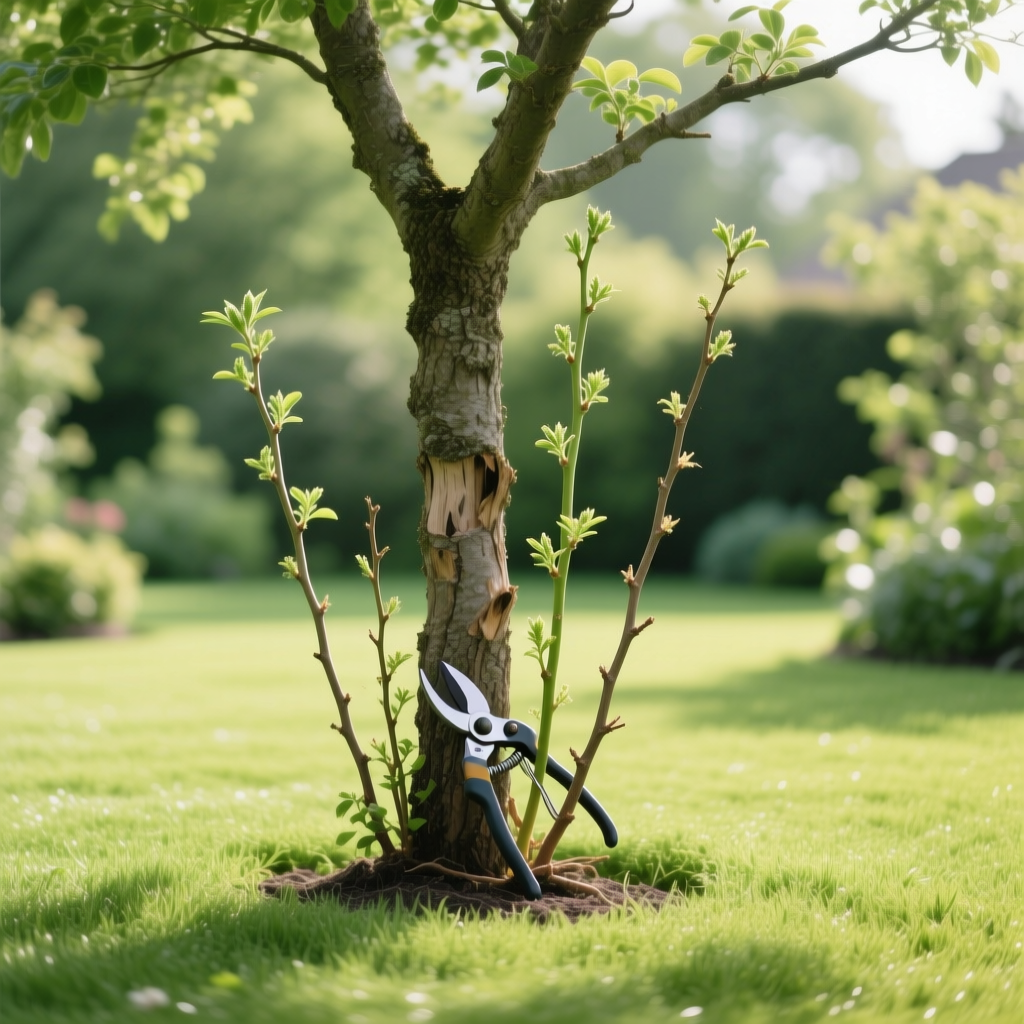
Managing Tree Suckers, Water Sprouts, and Vigorous Growth
Mike RodriguezPublished
Introduction to Tree Suckers and Water Sprouts
Trees are magnificent additions to any landscape, providing essential shade, beauty, & ecological benefits to your outdoor space. However, maintaining their health & structural integrity requires ongoing vigilance & a solid understanding of tree physiology. One of the most common frustrations for homeowners & landscapers alike is the sudden appearance of unruly, vigorous growth in the form of tree suckers & water sprouts. These fast-growing shoots can detract from the aesthetic appeal of your yard, compete with your turfgrass for vital nutrients, & ultimately compromise the long-term health of the tree if left unmanaged.
While it might be tempting to simply ignore these rogue branches or hack them away haphazardly, proper management requires a strategic approach. Understanding why your tree is producing these shoots is the first step toward reclaiming your landscape. In this comprehensive guide, we will explore the biological reasons behind vigorous growth, how to differentiate between suckers & sprouts, & the best pruning techniques to keep your trees healthy & your lawn pristine. For more general advice on maintaining your landscape, be sure to explore our extensive library of pruning basics & lawn maintenance guides.
Understanding the Difference: Tree Suckers vs. Water Sprouts
Before you can effectively manage vigorous growth, it is crucial to understand the anatomical differences between tree suckers & water sprouts. While both are types of epicormic shoots that emerge from dormant buds, they originate from different parts of the tree & often indicate different underlying issues.
Tree Suckers are vigorous shoots that grow from the base of the trunk, the root flare, or directly from the root system underground. They often emerge at the soil line & can spread outward, popping up in the middle of your carefully maintained lawn. Suckers are particularly common in grafted trees, where the shoot originates from the hardy rootstock rather than the desirable cultivar grafted on top. If left alone, root suckers can develop into secondary trunks, stealing vital energy from the main tree & creating a tangled, multi-stemmed thicket that competes heavily with surrounding grass & shrubs.
Water Sprouts, on the other hand, emerge from the branches, trunk, or canopy of the tree. They are characterized by their rapid, upright, & often unbranched growth pattern. Water sprouts typically shoot straight up toward the sky, crossing over other branches & cluttering the interior canopy. This dense growth blocks sunlight & restricts airflow, creating a humid microenvironment that is highly conducive to common tree diseases & fungal infections. Unlike suckers, water sprouts are usually a direct response to severe pruning, canopy damage, or environmental stress.
The Science Behind Vigorous Growth and Epicormic Shoots
To truly master tree care, it helps to understand the science driving this vigorous growth. Trees operate on a delicate hormonal balance, primarily governed by auxins & cytokinins. Auxins are produced in the terminal buds at the tips of the branches & flow downward, suppressing the growth of lateral & dormant buds—a phenomenon known as apical dominance. Cytokinins, produced in the roots, promote bud break & shoot growth.
When a tree experiences stress, damage, or improper pruning, this hormonal balance is disrupted. If the terminal buds are removed (such as during tree topping or storm damage), the downward flow of auxins is halted. The cytokinins from the roots then surge upward, triggering dormant buds along the trunk, branches, or roots to break open & grow rapidly in an attempt to restore the tree's leaf canopy & photosynthetic capacity. This survival mechanism is why a heavily pruned tree will often respond by exploding with water sprouts & suckers the following spring.
Furthermore, environmental stressors such as prolonged drought, soil compaction, poor drainage, or severe root damage can trigger the same response. The tree senses that its root-to-shoot ratio is imbalanced or that it is struggling to produce enough energy, prompting it to push out epicormic shoots as a last-ditch effort to survive. Recognizing these stress signals is vital for implementing long-term solutions rather than just treating the symptoms.
Common Causes of Suckering and Sprouting
Identifying the root cause of the vigorous growth will help you tailor your management strategy & prevent future outbreaks. Here are the most common culprits behind tree suckers & water sprouts:
- Improper Pruning Practices: Topping a tree, making flush cuts, or removing too much of the live canopy at once (a practice known as lion-tailing) shocks the tree. To compensate for the massive loss of photosynthetic tissue, the tree pushes out hundreds of water sprouts. Always follow proper pruning basics to avoid triggering this stress response.
- Root Damage & Soil Compaction: Construction projects, trenching for utilities, or even frequent heavy foot traffic can sever vital roots. When the root system is compromised, the tree may push out root suckers in an attempt to regenerate. Additionally, compacted soil restricts oxygen to the roots, causing immense physiological stress.
- Lawnmower & String Trimmer Injury: Repeatedly banging a lawnmower deck against the trunk or using a string trimmer too close to the base damages the bark & the cambium layer. This localized trauma frequently results in a cluster of suckers emerging directly from the wounded area.
- Graft Incompatibility & Rootstock Reversion: Many ornamental & fruit trees are grafted onto vigorous rootstocks. If the grafted scion is struggling, or if the rootstock simply decides to assert its dominance, suckers will emerge from below the graft union. These must be removed immediately, or they will eventually overtake & kill the desired cultivar.
- Pests & Disease: Insect infestations (like borers) or vascular diseases (like verticillium wilt) can block the flow of water & nutrients, causing dieback in the upper canopy. The tree responds to this dieback by sprouting water shoots lower down on the trunk to keep itself alive.
Step-by-Step Guide to Pruning and Removing Suckers
Removing suckers & water sprouts requires more than just a quick snip with a pair of shears. If you simply cut them flush with the bark, the dormant buds at the base of the cut will remain intact, often resulting in two or three new sprouts growing back in the exact same spot. To permanently remove them, follow these detailed steps:
1. Gather & Sterilize Your Tools: You will need a pair of sharp bypass hand pruners, loppers for thicker growth, & a sharp hori-hori knife or trowel for root suckers. Always sterilize your blades with rubbing alcohol or a bleach solution before moving from one tree to another to prevent the spread of common tree diseases.
2. The 'Tear & Pull' Method for Suckers: For young, pliable suckers emerging from the trunk or roots, do not cut them. Instead, grasp the sucker firmly near its base & pull it downward & outward in a quick, tearing motion. This technique rips the sucker off along with the cluster of dormant buds at its collar, significantly reducing the chance of regrowth. If the sucker is too thick to tear, use a sharp knife to carefully cut it off as close to the root or trunk as possible, ensuring you remove the swollen basal tissue.
3. The 'Flush Cut' Method for Water Sprouts: For water sprouts growing in the canopy, use bypass pruners or loppers to make a clean cut just outside the branch collar—the slightly swollen area where the sprout meets the main branch. Do not leave a stub, as stubs invite decay & pests. Conversely, do not make a flush cut that damages the main branch's bark, as this creates a large wound that the tree will struggle to compartmentalize.
4. Clean Up & Disposal: Collect all the pruned material & remove it from the site. Do not compost diseased wood or heavily seeded sprouts. For large trees with extensive water sprout issues, it may be necessary to remove the sprouts in stages over a few seasons to avoid shocking the tree with massive foliage loss all at once.
Preventing Future Outbreaks Through Proper Tree and Lawn Care
While physical removal is necessary, prevention is the ultimate goal. By cultivating a stress-free environment, you can minimize the tree's need to produce epicormic shoots. Integrating your tree care routine with your overall landscape management is key to a thriving yard.
Optimize Watering Practices: Trees & turfgrass have different watering needs. Shallow, frequent watering encourages weak surface roots & stresses the tree during dry spells. Implement deep, infrequent watering routines using proper irrigation systems to ensure moisture reaches the deep root zone. This promotes a robust root system that is less prone to stress-induced suckering.
Apply Mulch Correctly: A proper mulch ring protects the trunk from lawnmower damage, retains soil moisture, & regulates soil temperature. Review our guide on mulching techniques to ensure you are applying a 2-to-4-inch layer of organic mulch in a wide donut shape around the tree. Never pile mulch against the trunk (volcano mulching), as this traps moisture, promotes rot, & encourages adventitious root suckers to form above the soil line.
Protect the Root Flare: Ensure the root flare (the area where the trunk expands at the base) is visible & not buried under soil or mulch. Planting trees too deeply is a massive stressor that frequently leads to chronic suckering & poor root health. If your tree is planted too deep, carefully excavate the soil around the base to expose the flare.
Consider Chemical Growth Regulators: In severe cases where manual removal is impossible (such as with certain species of poplars, aspens, or ornamental pears), you can apply a plant growth regulator containing naphthaleneacetic acid (NAA) or ethephon. These products, often sold as 'Sucker-Stopper,' are applied directly to the fresh pruning cuts to inhibit cell division & prevent the dormant buds from pushing new growth. Always read the label carefully & ensure the product is safe for use near your specific turfgrass & garden beds.
Seasonal Tree Care Tips for Managing Sprouts
Managing vigorous growth is a year-round endeavor. Aligning your maintenance tasks with the natural seasonal cycles of the tree will yield the best results & minimize stress.
Spring Inspection & Early Removal: As the tree breaks dormancy & sap begins to flow, suckers & water sprouts will emerge rapidly. Inspect your trees in early spring. Remove soft, young suckers by hand or with pruners while they are still tender. This is also the ideal time to assess the tree for any winter storm damage that might trigger future sprouting.
Summer Stress Mitigation: Summer heat & drought are primary triggers for stress-induced suckering. Focus on deep watering & monitoring for pest infestations. Avoid heavy pruning during the peak of summer, as removing foliage reduces the tree's ability to photosynthesize & cool itself, which can trigger a panic response of water sprouts.
Fall Preparation: As growth slows down, take the time to evaluate the tree's structure. Remove any dead, diseased, or crossing branches using proper pruning cuts. Ensure your lawn care routine, such as fertilizing your lawn, does not involve excessive nitrogen applications late in the season, which can force tender, vulnerable new growth on the tree before winter.
Winter Dormant Pruning: The best time for major structural pruning is late winter, while the tree is fully dormant. With the leaves gone, the branch architecture is clearly visible, making it easier to identify & remove water sprouts, crossing branches, & poorly angled limbs. Pruning during dormancy also minimizes the risk of transmitting diseases & reduces the vigorous flush of water sprouts that typically follows spring pruning.
Frequently Asked Questions
Will tree suckers eventually kill my tree?
Tree suckers themselves will not directly kill a mature, healthy tree, but they are a significant drain on the tree's energy reserves. Over time, a massive proliferation of root suckers can steal water & nutrients from the main trunk, leading to a decline in the upper canopy's health. Furthermore, if the suckers originate from a grafted rootstock, they can eventually overgrow & choke out the desirable grafted cultivar, effectively 'killing' the ornamental value of the tree. Prompt removal is always recommended to maintain the tree's vitality & structural integrity.
Can I dig up a tree sucker and plant it as a new tree?
While it is physically possible to dig up a root sucker & transplant it, the results are rarely satisfactory. First, if the parent tree is a grafted cultivar, the sucker is growing from the rootstock, meaning the new tree will not possess the same ornamental traits, flower color, or fruit quality as the parent. Second, suckers often lack a well-developed, independent root system & suffer from severe transplant shock when severed from the parent tree. For a reliable new tree, it is always better to purchase a nursery-grown specimen or propagate via controlled cuttings or seeds.
How often should I inspect my trees for water sprouts?
You should visually inspect your trees for water sprouts & suckers at least twice a year: once in early spring as the leaves emerge, & once in late winter during your dormant pruning routine. However, if your tree has recently suffered storm damage, undergone heavy pruning, or experienced severe drought stress, you should check for vigorous growth every few weeks during the active growing season. Catching water sprouts while they are young & green makes removal much easier & less damaging to the tree's bark.
Are water sprouts a definitive sign of disease?
Water sprouts are not a definitive sign of disease, but rather a symptom of physiological stress or physical damage. While certain vascular diseases or severe pest infestations can cause canopy dieback that triggers water sprouting, they are just as commonly caused by improper pruning (like tree topping), lightning strikes, or root damage from construction. If you notice a sudden, massive outbreak of water sprouts accompanied by wilting leaves, oozing bark, or fungal conks, you should consult a certified arborist to rule out common tree diseases.
Will removing too many water sprouts at once harm the tree?
Yes, removing a massive amount of water sprouts all at once can shock the tree. While water sprouts are generally undesirable, they are still producing leaves & generating photosynthetic energy for the tree. If a neglected tree is completely covered in water sprouts, removing them all in a single session is equivalent to severe defoliation. This sudden loss of energy production can trigger the tree to push out even more sprouts in a desperate survival response, or it can lead to severe branch dieback. It is best to thin out the water sprouts gradually over two to three seasons, allowing the tree time to adjust & redirect its energy into healthy, structural branches.

