Home & Garden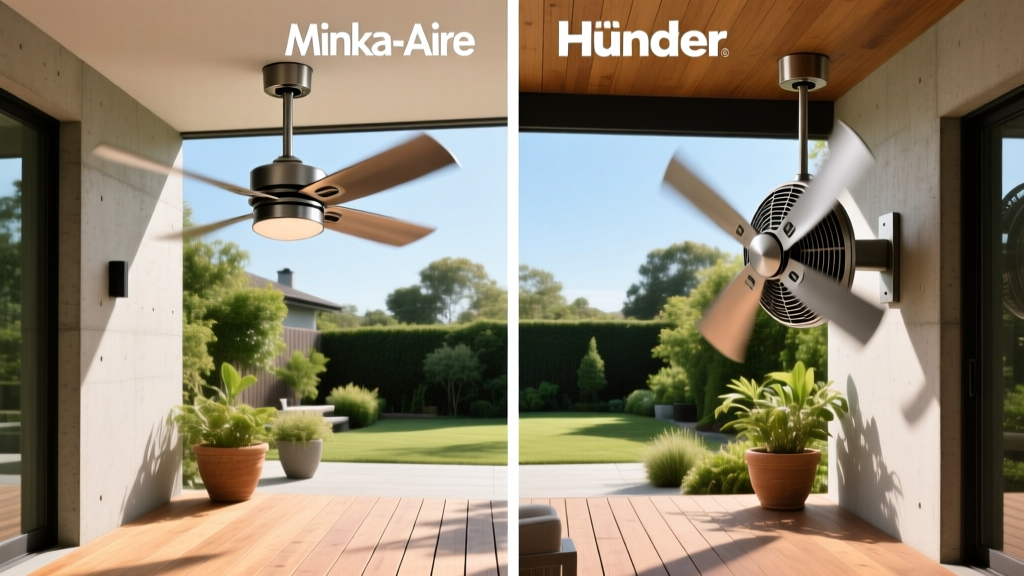
Minka-Aire vs Hunter Damp-Rated Fans: 2026 Aeration Guide
Mike RodriguezPublished
The Core Aeration of Outdoor Living: Relieving Air Compaction
As a lawn care expert, you already know the profound impact of core aeration on a turf ecosystem. When soil becomes compacted, oxygen, water, and nutrients are blocked from reaching the grassroots. By pulling physical plugs of soil, a core aerator relieves this pressure, allowing the lawn to breathe, grow, and thrive. But what happens when the 'soil' is the heavy, stagnant, humid air trapped under your covered patio or pergola? In the realm of outdoor living, we face a similar phenomenon: air compaction.
During the peak of summer, covered outdoor spaces suffer from a microclimate of stagnant, superheated air that refuses to circulate. This 'compacted' air makes your outdoor living area unusable, much like a compacted lawn turns brown and brittle. To relieve this atmospheric pressure and introduce a cooling, breathable flow, you need the mechanical equivalent of a core aerator: a high-CFM (Cubic Feet per Minute) damp-rated outdoor ceiling fan. By aggressively pulling stale air upward and pushing a cooling breeze downward, these fans 'aerate' your patio, bridging the gap between indoor comfort and outdoor landscaping.
For 2026, the market is dominated by advanced DC-motor technology and smart-home integration. But which brand provides the best 'aeration' for your specific outdoor ecosystem? In this comprehensive guide, we put two industry titans head-to-head: Minka-Aire and Hunter. We will compare their 2026 damp-rated outdoor ceiling fan lineups to help you choose the perfect airflow solution for your home and garden.
Understanding Damp-Rated 'Aeration' Tools
Before dissecting the brands, it is crucial to understand the environment these fans are engineered to survive. A damp-rated fan is designed for covered outdoor areas—such as screened-in porches, covered patios, and pergolas with solid roofs—where the fan will not be directly exposed to rain or snow, but will face high humidity, ambient moisture, and shifting temperatures. According to the U.S. Department of Energy, utilizing ceiling fans in these transitional spaces allows homeowners to raise their indoor thermostat settings by up to 4 degrees without sacrificing comfort, provided the outdoor 'aeration' strategy effectively cools the adjacent patio zones.
Both Minka-Aire and Hunter utilize specialized coatings, rust-resistant hardware, and sealed motor housings in their 2026 damp-rated models to prevent moisture intrusion, ensuring the 'aeration' process remains uninterrupted for years.
Minka-Aire: Aerodynamic Engineering and High-Velocity Flow
Minka-Aire has long been celebrated for treating ceiling fans as kinetic sculptures, but their 2026 damp-rated lineup is equally focused on raw aerodynamic performance. When we talk about 'aerating' a large, open-concept patio, we need massive air displacement. Minka-Aire excels here through aggressive blade pitches and high-torque DC motors.
Key 2026 Minka-Aire Damp-Rated Features:
- DC Motor Efficiency: Minka-Aire's 2026 damp-rated models (such as the updated Java and Xtreme H2O series) utilize advanced DC motors that consume up to 70% less energy than traditional AC motors while generating significantly higher torque. This translates to a more powerful 'pull' on stagnant air.
- Aerodynamic Blade Profiles: Borrowing from aviation, Minka-Aire designs its ABS plastic and treated-wood blades with a slight airfoil curve. This reduces drag and turbulence, allowing the fan to move a higher volume of air (CFM) with less audible wind noise.
- Smart Home Ecosystems: Fully embracing the 2026 smart home landscape, Minka-Aire fans integrate seamlessly with the Matter protocol, allowing your fan to communicate directly with your smart irrigation and outdoor lighting systems to create a unified, energy-efficient exterior environment.
Hunter: Whisper-Quiet Circulation and Heritage Durability
If Minka-Aire is the heavy-duty commercial aerator, Hunter is the precision turf groomer. Hunter's 2026 damp-rated fans prioritize whisper-quiet operation, heritage aesthetics, and reliable, consistent circulation. For smaller covered patios, sunrooms, or intimate garden seating areas where a gentle, continuous breeze is preferred over a gale-force wind, Hunter's engineering shines.
Key 2026 Hunter Damp-Rated Features:
- WhisperWind Motor Technology: Hunter's proprietary motor design is engineered to eliminate the low-frequency hum common in outdoor fans. This ensures that the 'aeration' of your patio doesn't drown out the natural sounds of your garden or your conversation with guests.
- Reversible Damp-Treated Blades: Hunter offers versatile blade finishes that are treated to resist warping and drooping in high humidity. The 2026 lineup features advanced UV-resistant coatings that prevent the blades from fading under the indirect glare of the afternoon sun.
- SureSpeed Guarantee: Hunter's optimized blade-to-motor calibration ensures that the fan reaches its maximum cooling velocity within seconds of being turned on, providing immediate relief from compacted, heavy air.
2026 Head-to-Head Comparison Chart
To help you visualize how these two brands stack up in the context of outdoor patio aeration, we have compiled a comparison of their flagship damp-rated specifications for 2026.
| Feature | Minka-Aire (2026 Damp Lineup) | Hunter (2026 Damp Lineup) |
|---|---|---|
| Primary Motor Type | High-Torque DC Motor | WhisperWind DC / AC Hybrid |
| Airflow Efficiency (CFM/Watt) | Exceptional (Up to 180 CFM/W) | Very Good (Up to 140 CFM/W) |
| Blade Material | Molded ABS & Treated Teak | UV-Coated Composite & Plywood |
| Smart Integration | Matter, Bond, HomeKit | WiFi, Alexa, Google Home |
| Best 'Aeration' Scenario | Large, open pergolas & high ceilings | Covered porches & low-profile patios |
| 2026 Avg. Price Range | $350 - $850 | $250 - $600 |
Strategic Placement: Maximizing Your Patio's Airflow
Just as core aeration requires a specific grid pattern to be effective across a lawn, installing an outdoor ceiling fan requires strategic placement to eliminate dead zones of stagnant air. A fan placed too high will lose its cooling velocity before it reaches the seating area; a fan placed too low will create a chaotic, localized vortex rather than a sweeping, aerating breeze.
The 2026 Installation Guidelines for Optimal Aeration:
- The 8-to-9 Foot Rule: For optimal air displacement, the bottom of the fan blades should be exactly 8 to 9 feet above the patio floor. This provides enough clearance for safety while ensuring the downdraft effectively penetrates the seating zone.
- Blade Clearance: Maintain a minimum of 18 inches of clearance from the blade tips to any adjacent walls, pillars, or pergola beams. Obstructions too close to the blades will disrupt the intake vacuum, drastically reducing the fan's CFM output and causing it to 'choke' on its own airflow.
- Multiple Fan Synergy: For long, rectangular covered patios, a single massive fan is often less effective than two medium-sized fans spaced evenly. This dual-fan setup creates a continuous 'river' of air, effectively flushing out the compacted, humid air from the entire space.
Energy Efficiency and the Smart Garden Ecosystem
In 2026, the concept of the 'smart garden' extends far beyond automated irrigation and robotic mowers. It encompasses the entire energy footprint of your outdoor living space. The ENERGY STAR program continues to set rigorous efficiency standards for ceiling fans, and both Minka-Aire and Hunter have adapted their 2026 damp-rated models to exceed these requirements.
By integrating your damp-rated fan into a smart home hub, you can program the fan to act as an atmospheric sensor response system. For example, when your smart weather station detects that outdoor humidity has dropped and the ambient temperature is comfortable, the system can automatically turn off your patio fan and trigger your garden's ambient lighting. This level of automated 'aeration' ensures that you are never wasting electricity on a breeze you don't need, perfectly aligning your outdoor comfort with modern energy conservation principles.
The Final Verdict: Which Brand Best 'Aerates' Your Space?
Choosing between Minka-Aire and Hunter for your 2026 outdoor living upgrade ultimately depends on the specific 'compaction' issues your patio faces. If you are dealing with a large, open-air pergola with high ceilings where heavy, superheated air pools near the roofline, Minka-Aire is your heavy-duty core aerator. Its high-torque DC motors and aggressive blade pitches will aggressively pull that stagnant air down and push a cooling breeze across your entire lounge area.
Conversely, if your outdoor space is a cozy, covered porch with a lower ceiling where you want a gentle, whisper-quiet circulation that doesn't disturb the peaceful ambiance of your garden, Hunter is the precision tool for the job. Its WhisperWind technology and refined aesthetics provide a sophisticated, continuous aeration that enhances the space without dominating it.
By treating your patio's airflow with the same scientific care that you apply to your lawn's soil health, you can transform a stifling, unusable outdoor room into a breathable, vibrant extension of your home. Invest in the right damp-rated fan this season, and let your outdoor living space finally breathe.
