
Landscaping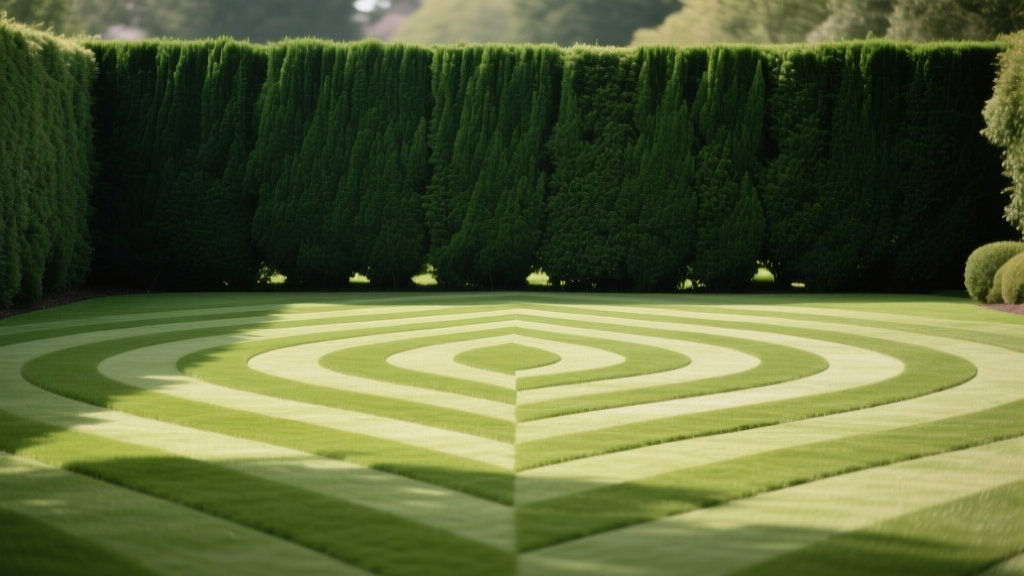
2026 Mowing Patterns For Green Giant Arborvitae Screens
Lisa ThompsonPublished
Introduction to the Green Giant Privacy Screen
As we navigate the landscaping trends of 2026, the Green Giant arborvitae (Thuja standishii x plicata) remains the undisputed champion of backyard privacy screens. Capable of growing three to five feet per year, this robust evergreen provides a dense, year-round visual barrier that blocks noise, wind, and prying eyes. However, installing a massive linear hedge is only half the battle. The turfgrass that borders this living wall requires specialized mowing techniques and patterns to both complement the hedge aesthetically and protect the tree's vulnerable root system.
Mowing around a mature privacy screen is not as simple as pushing a deck over open grass. The intersection of your lawn and your Green Giant hedge creates a unique microclimate and structural challenge. In this comprehensive 2026 guide, we will explore the best mowing patterns to enhance your linear privacy screen, the latest equipment designed to navigate tight hedge boundaries, and the vital soil preservation techniques required to keep your arborvitae thriving.
The Critical Root Zone: Why Mowing Techniques Matter
Before discussing aesthetic mowing patterns, we must address the biological realities of the Green Giant arborvitae. Unlike deep-rooted oaks or pines, arborvitae possess shallow, fibrous, and highly sensitive root systems. The vast majority of their water and nutrient-absorbing root hairs are located within the top six inches of soil, extending well past the drip line of the tree.
According to the University of Minnesota Extension, soil compaction is one of the leading causes of decline in landscape evergreens. Repeatedly driving heavy mowing equipment over the root zone crushes soil pores, suffocating the roots and preventing water infiltration. When planning your mowing patterns for 2026, the primary rule is to minimize repetitive traffic over the hedge's critical root zone. This means varying your mowing direction weekly and utilizing lightweight or specialized equipment near the privacy screen boundary.
2026 Mowing Patterns to Complement Linear Hedges
A Green Giant privacy screen is inherently linear, architectural, and imposing. Your mowing patterns should either echo this linearity to create a formal estate look, or contrast it to add dynamic visual interest to your backyard. Here are the top three mowing patterns for 2026 that work beautifully alongside arborvitae hedging.
1. The Parallel Estate Stripe
The most classic approach is to mow in straight lines perfectly parallel to the privacy screen. This technique draws the eye down the length of the yard, making narrow spaces feel longer and emphasizing the sheer scale of the Green Giant hedge. To achieve the high-contrast 2026 stadium-quality stripes, use a mower equipped with a rear grooming roller. The roller bends the grass blades away from you (creating a dark stripe) or toward you (creating a light stripe). Mow the first pass as close to the hedge boundary as safely possible without crossing the drip line, then use the edge of your tire track as a guide for the next parallel pass.
2. The Perpendicular Checkerboard
If your backyard is wide and the Green Giant screen serves as a backdrop, a checkerboard pattern mowed perpendicular to the hedge creates a stunning optical illusion. By mowing lines that run directly away from the privacy screen, you create a visual pathway that pulls the viewer's gaze from the patio directly into the lush green wall. This pattern requires a wide-open lawn area and is best achieved with a zero-turn mower that can execute clean 180-degree turns at the far end of the yard without tearing the turf near the trees.
3. The Diagonal Chevron
For a modern, contemporary landscape design, mowing on a 45-degree angle relative to the privacy screen introduces dynamic energy. Diagonal patterns make the yard feel wider and disguise minor imperfections in the lawn's grading. When mowing diagonals near a Green Giant hedge, always approach the tree line at the same angle to prevent scalping the turf where the ground often slopes slightly toward the trunk.
Equipment Selection: Navigating the 2026 Mower Market
The equipment you use to maintain the turf near your privacy screen has evolved significantly. In 2026, the shift toward robotic mowers and advanced suspension decks has changed how we approach hedge-line maintenance. Below is a comparison of the best mower types for properties featuring Green Giant arborvitae screens.
| Mower Type | 2026 Technology | Hedge-Line Precision | Root Zone Safety |
|---|---|---|---|
| RTK GPS Robotic Mower | Wire-free satellite navigation | Excellent (within 1 inch) | Maximum (ultra-lightweight) |
| Stand-On Commercial Mower | Suspended operator platform | Good (requires skill) | Moderate (high PSI footprint) |
| Walk-Behind Hydrostatic | Variable speed control | Excellent (manual control) | High (low weight distribution) |
| Zero-Turn Riding Mower | Wide deck, high torque | Poor (wide turning radius) | Low (heavy, causes compaction) |
For homeowners in 2026, RTK GPS robotic mowers are the ultimate solution for privacy screen boundaries. Because they do not require buried boundary wires—which can easily sever shallow arborvitae roots during installation—these mowers use satellite positioning to glide right up to the edge of your mulch bed without causing soil compaction or requiring manual string trimming.
Edging and Trimming: Avoiding the Weed Whacker Scar
One of the most common mistakes homeowners make when maintaining a lawn near a Green Giant privacy screen is using a nylon string trimmer to cut grass right up against the trunk. The thin, fibrous bark of the arborvitae is highly susceptible to mechanical damage. Repeated strikes from a string trimmer will girdle the tree, cutting off the phloem and eventually killing the plant.
To maintain a crisp boundary in 2026, install a physical hardscape edge. Flexible composite landscape edging or poured concrete curbing creates a physical barrier that mower wheels can ride against, eliminating the need for string trimming entirely. If you must trim manually, use a steel-bladed manual edger or a specialized hedge-base trimmer with a protective guard wheel to ensure the cutting string never makes contact with the bark.
Managing the Microclimate: Shade and Moisture
A towering Green Giant privacy screen drastically alters the microclimate of the adjacent lawn. The hedge blocks morning or afternoon sun, creating deep shade, and its massive root system acts as a sponge, competing aggressively with turfgrass for moisture. The Morton Arboretum emphasizes that trees and turf are constantly competing for limited soil resources.
To maintain a healthy lawn near the hedge, you must adjust your mowing height. Turfgrass growing in the shadow of a privacy screen should be mowed a full half-inch to one inch higher than the rest of the yard. This increased leaf surface area allows the grass to photosynthesize more efficiently in low-light conditions. Furthermore, avoid mowing this shaded zone during the heat of the day, as the stressed grass will struggle to recover from the cutting shock.
Seasonal Maintenance Calendar for the Hedge-Lawn Boundary
- Early Spring (March-April): Rake the boundary line to remove winter debris and dropped arborvitae foliage. Apply a pre-emergent herbicide carefully, ensuring it does not leach into the hedge root zone.
- Peak Summer (June-August): Raise the mowing deck to 4 inches near the privacy screen to shade the soil and retain moisture. Water the boundary deeply but infrequently to encourage deep turf roots without waterlogging the arborvitae.
- Autumn (September-October): Core aerate the lawn, but keep the aerator tines at least three feet away from the base of the Green Giants to prevent root severing. Overseed with a shade-tolerant fescue blend.
- Winter (November-February): Keep heavy equipment and snowplows away from the hedge line to prevent catastrophic soil compaction and salt damage to the evergreen foliage.
Conclusion
A backyard privacy screen composed of Green Giant arborvitae is a significant investment in your property's value and your personal sanctuary. By adopting specialized mowing patterns that highlight the architectural beauty of the hedge, utilizing 2026 mower technology to prevent soil compaction, and respecting the biological needs of the root zone, you can achieve a landscape that looks like it was designed by a professional estate manager. Treat the boundary between your turf and your trees not as a chore, but as a canvas for precision landscaping.

