
Landscaping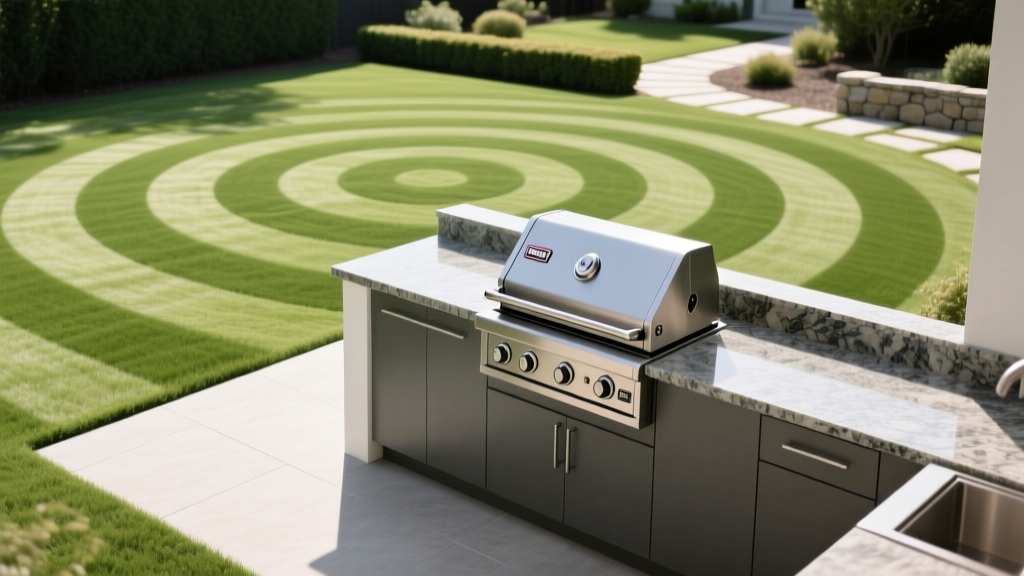
2026 Mowing Patterns to Frame Your Weber Summit Kitchen
Robert HayesPublished
The Intersection of Premium Turf and High-End Hardscaping in 2026
In the modern landscape design era of 2026, the outdoor living space has evolved from a simple patio into a fully equipped, luxury culinary environment. At the center of this evolution is the outdoor kitchen, often anchored by a high-end appliance like the Weber Summit grill and topped with custom-cut granite countertops. However, even the most exquisite hardscaping can look visually disconnected if the surrounding lawn is treated as an afterthought. The turf serves as the visual carpet to your outdoor kitchen's furniture, and how you mow it dramatically impacts the overall aesthetic and functional longevity of your investment.
Mowing techniques and striping patterns are no longer just for sports stadiums or pristine front yards; they are essential landscaping tools used to direct the eye, create spatial harmony, and frame architectural features. When dealing with heavy, permanent structures like a granite-topped island and a stainless steel Weber Summit, your mowing strategy must accomplish two critical goals: enhancing the visual appeal through deliberate turf patterns, and aggressively protecting your expensive surfaces from the hidden dangers of mower debris, acidic grass sap, and tire scuffs.
Strategic Mowing Patterns to Highlight Your Weber Summit
The way light reflects off bent grass blades creates the contrast we recognize as lawn stripes. By manipulating these patterns, you can create optical illusions that make your yard look larger, more organized, and intentionally designed around your outdoor kitchen. According to turf management experts and guidelines supported by the National Association of Landscape Professionals, integrating hardscape edges with deliberate turf patterns is a hallmark of premium landscape maintenance.
1. The Directional Runway (Arrow Pattern)
If your Weber Summit outdoor kitchen is positioned against a fence line or at the far end of your property, the Directional Runway is the ultimate pattern to draw the eye. By mowing alternating straight lines that converge or point directly toward the grill island, you create a visual runway. To achieve this in 2026, use a mower equipped with a polyurethane striping roller. Mow the perimeter first, then mow parallel lines toward the kitchen. On the return pass, offset your wheels by exactly one deck width. This creates a high-contrast arrow effect that subconsciously guides guests from the back door directly to the entertaining hub.
2. The Luxury Picture Frame
For central or L-shaped granite outdoor kitchens, the Picture Frame pattern provides a clean, manicured border that separates the 'active' cooking zone from the 'recreational' lawn zone. Begin by mowing a wide, double-pass perimeter band around the entire lawn area in a clockwise direction. Then, mow the interior in a classic checkerboard or diagonal diamond pattern. The thick, solid-colored perimeter band acts as a visual mat, much like a picture frame, elevating the granite island as the centerpiece of the yard. This technique is particularly effective with dark, polished granite, as the sharp line between the light and dark grass stripes mirrors the sharp, manufactured edges of your countertops.
3. Concentric Halos for Island Kitchens
If your Weber Summit is built into a freestanding island surrounded by turf on all sides, sharp geometric lines can sometimes clash with the natural flow of the yard. Instead, use a string trimmer and a flexible hose to mark out concentric circles or soft ovals radiating outward from the granite base. Mow these rings in alternating directions. This softens the harsh, rectangular lines of the masonry and stainless steel, blending the high-tech grill into the organic landscape while maintaining a highly manicured, golf-course aesthetic.
Protecting Granite Countertops and Grill Vents from Mower Debris
While aesthetics are paramount, the physical protection of your outdoor kitchen is where precise mowing techniques become a necessity. When investing in premium appliances, such as those featured in the Weber Outdoor Kitchens lineup, protecting the investment from yard maintenance debris is paramount. The Weber Summit series features intricate side burners, rotisserie motors, and specialized ventilation systems that are highly susceptible to clogging and damage from flying debris.
Managing the Discharge Chute
The most common mistake homeowners make is mowing past the outdoor kitchen without regard for the mower's discharge chute. A standard rotary mower deck acts as a centrifugal fan, ejecting grass clippings, dust, and small pebbles at speeds exceeding 150 miles per hour. If your discharge chute is facing the granite island, you are essentially sandblasting your countertop edges and forcing acidic grass sap into the Weber Summit's side burner vents.
- The Deflection Technique: Always plan your mowing route so that the discharge chute faces away from the hardscape. If you must mow a strip of grass directly adjacent to the granite base, use a specialized mulching plug to close the chute entirely, or install a deflector shield that angles the clippings downward onto the turf rather than outward.
- Edge Trimming Sequences: Never use a high-RPM string trimmer near the Weber Summit. The monofilament line will throw micro-debris that can scratch polished granite and lodge inside the grill's electronic ignition housings. Instead, use a manual edger or a low-RPM, fine-toothed edging blade when working within five feet of the kitchen.
Granite Porosity and Grass Sap
Even sealed granite is micro-porous. Freshly cut grass clippings contain high levels of moisture and organic acids. If clippings are blown onto the granite countertop and left to bake in the summer sun, they can leave permanent yellow-green stains that penetrate the sealant. After every mowing session, use a dedicated landscaping blower with a narrow nozzle to gently remove any stray clippings from the granite surface and the grill grates, followed by a wipe-down with a pH-neutral stone cleaner.
Managing Zero-Turn Mower Scuffs Near Hardscape Edges
The advent of advanced zero-turn mowers has revolutionized lawn care, but their aggressive turning capabilities pose a severe threat to the structural integrity of your outdoor kitchen's base. When a zero-turn mower executes a pivot turn near the granite island, the inside drive tire spins backward while the outside tire spins forward. This creates immense lateral shear force on the turf, often resulting in torn grass roots, bare dirt patches, and severe tire scuffs on the masonry or granite base of the kitchen.
To prevent this, implement the 'Three-Point Turn' rule within a ten-foot radius of the outdoor kitchen. Instead of pivoting sharply at the end of a mowing row near the Weber Summit, slow down, pull forward, and execute a wide, sweeping Y-turn. This eliminates lateral tire scrub, preserving both the health of the turf and the pristine finish of your hardscape materials. Additionally, ensure that the turf is completely dry before mowing near the kitchen; wet grass drastically increases tire slip and scuffing on both the lawn and any adjacent paved surfaces.
2026 Equipment and Deck Size Comparison for Kitchen Proximity
Choosing the right equipment is just as important as the pattern you mow. In 2026, manufacturers have introduced specialized decks and edge-guarding technologies designed specifically for landscapes with heavy hardscaping. Below is a comparison of mower types and their suitability for maintaining lawns immediately surrounding a Weber Summit outdoor kitchen.
| Mower Type | Ideal Deck Size | Proximity to Granite Kitchen | Striping Capability | Scuff Risk |
|---|---|---|---|---|
| Zero-Turn (Standard) | 50 - 60 inches | Poor (High scuff risk, wide turning radius) | Excellent | High |
| Zero-Turn (Compact) | 34 - 42 inches | Good (Better maneuverability around islands) | Very Good | Medium |
| Stand-On Commercial | 32 - 48 inches | Excellent (Superior visibility, gentle on turf) | Good (Requires add-on kit) | Low |
| Walk-Behind (Hydro) | 21 - 36 inches | Perfect (Ultimate control near delicate edges) | Fair (Depends on roller weight) | Very Low |
For properties where the outdoor kitchen is the central focal point, transitioning to a 36-inch commercial walk-behind or a compact stand-on mower for the perimeter work is highly recommended. These machines allow the operator to feather the edges right up to the granite base without risking the catastrophic tire scuffs associated with larger residential zero-turn models.
The Weekly Maintenance Routine
To maintain the perfect balance between a stunning lawn and a pristine outdoor kitchen, adhere to this weekly 2026 maintenance protocol:
- Edge First: Use a mechanical edger to redefine the trench between the turf and the granite base. A clean, 2-inch deep trench prevents grass from creeping onto the hardscape and gives your striping patterns a razor-sharp border.
- Mow the Perimeter: Complete two full laps around the yard with the discharge chute facing inward, away from the Weber Summit and granite counters.
- Execute the Pattern: Mow the interior using your chosen pattern (Runway, Picture Frame, or Halo), ensuring wide turns near the kitchen island.
- Blow and Clean: Use a backpack blower to clear all clippings from the granite countertops, the Weber Summit's side burner vents, and the surrounding patio furniture.
- Inspect the Sealant: Once a month, perform a water-drop test on the granite near the mowing zones to ensure the stone sealant has not been degraded by flying debris or acidic sap.
Conclusion
Integrating a luxury outdoor kitchen featuring a Weber Summit grill and granite countertops into your landscape is a significant financial and aesthetic investment. By treating your lawn not just as ground cover, but as a dynamic, patterned canvas, you elevate the entire property. The strategic use of directional striping, careful management of mower discharge, and the selection of appropriate low-scuff equipment ensures that your turf enhances your outdoor living space rather than degrading it. Master these 2026 mowing techniques, and your outdoor kitchen will remain the pristine, breathtaking centerpiece of your home for decades to come.

