
Landscaping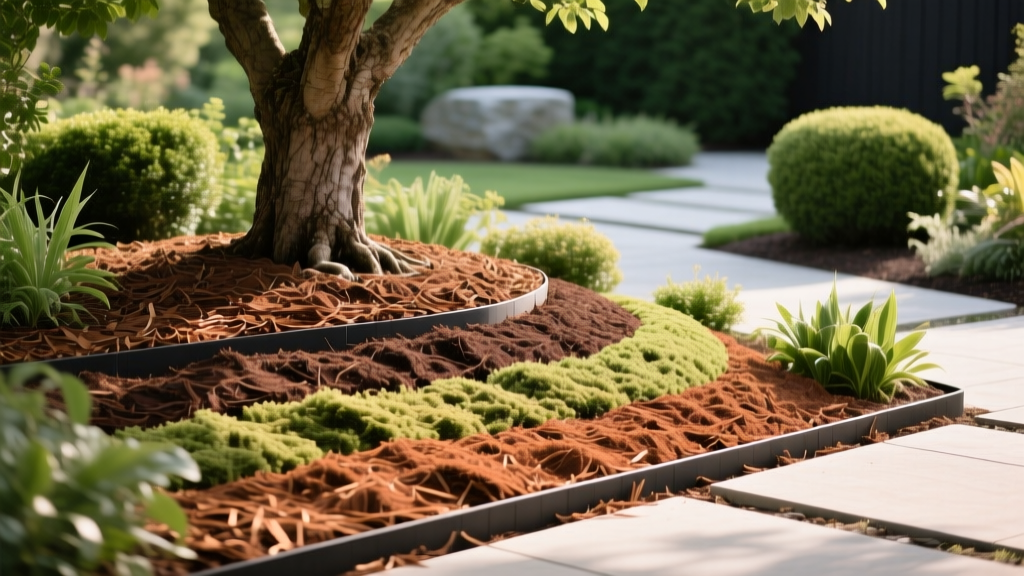
Mulch Depth Guide For Landscape Beds And Trees
Optimal Mulch Depth for Landscape Beds
Mulch depth is a critical yet frequently misapplied element in landscape design. Too shallow, and it fails to suppress weeds or retain moisture; too deep, and it suffocates roots, invites fungal pathogens, and disrupts soil gas exchange. The American Society of Landscape Architects (ASLA) emphasizes that mulch application must align with site-specific hydrology, plant physiology, and long-term soil health—not just aesthetic uniformity. For perennial and shrub-dominated landscape beds, the ideal depth ranges from 2 to 3 inches when freshly applied. This range balances moisture conservation with oxygen diffusion, particularly important for shallow-rooted species like Lavandula angustifolia (English lavender) and Heuchera sanguinea (coral bells), both of which exhibit root rot when mulch exceeds 4 inches.
Soil Interface Considerations
Before applying mulch, always clear existing debris and ensure the soil surface is level and free of compaction. Tilling mulch into soil violates ASLA’s 2021 Best Management Practices, which explicitly prohibit incorporation due to disruption of soil structure and microbial communities. Instead, maintain a clean 2–3 inch gap between mulch and plant stems—especially vital for Hydrangea macrophylla, whose basal buds are prone to crown rot if buried.
Tree-Specific Mulching Protocols
Tree mulching requires distinct methodology compared to beds. Mature Acer rubrum (red maple) and young Quercus alba (white oak) respond differently to mulch depth due to divergent root architecture and mycorrhizal dependencies. Research conducted at the University of Minnesota Extension (2020) confirms that 3–4 inches of organic mulch over the root zone—extending to the drip line—reduces soil temperature fluctuations by up to 12°F and increases fine root density by 27% over unmulched controls. However, exceeding 4 inches consistently correlates with reduced radial growth in Quercus alba specimens monitored across 18 urban sites in Chicago’s Forest Preserves.
The “Mulch Volcano” Fallacy
Contrary to outdated practice, piling mulch against tree trunks creates anaerobic conditions that degrade bark tissue and invite pests such as Phytophthora cinnamomi. The ASLA’s Landscape Architecture Technical Manual (2022) mandates a 3–6 inch mulch-free collar around all trunk bases, regardless of species age or diameter. At the Brooklyn Botanic Garden, staff measured a 41% reduction in trunk cankers on Prunus serrulata (Japanese cherry) after enforcing this standard across 215 specimen trees over three growing seasons.
Material Selection and Cost Implications
Cost varies significantly by material type, delivery distance, and labor. Hardwood mulch averages $28–$42 per cubic yard delivered within 25 miles of Boston’s Arnold Arboretum; pine bark fines cost $35–$48 per yard but offer superior longevity in acidic soils preferred by Rhododendron catawbiense. A standard 3-inch depth covers approximately 100 square feet per cubic yard. Therefore, a 12 ft × 15 ft landscape bed (180 sq ft) requires 1.8 cubic yards—or roughly $50–$75 for hardwood mulch, assuming mid-range pricing and no installation labor.
- 1 cubic yard = 27 cubic feet
- At 3 inches (0.25 ft), coverage = 27 ÷ 0.25 = 108 sq ft per yard
- For a 200 sq ft bed: 200 ÷ 108 ≈ 1.85 cubic yards needed
- White oak (Quercus alba) root zones extend 2–3 times canopy diameter
- ASLA recommends minimum 10 ft radius mulch zone for newly planted street trees
Seasonal Timing and Reapplication Frequency
Apply mulch in early spring after soil temperatures exceed 40°F and before weed seed germination peaks—typically late March in USDA Zone 6. Reapplication frequency depends on decomposition rate: shredded hardwood degrades fastest (every 12–18 months), while aged cedar chips persist 24–36 months. At Longwood Gardens in Kennett Square, PA, staff track mulch depth quarterly using calibrated rulers; they replenish only when depth falls below 2 inches in beds and 3 inches in tree rings. This data-driven approach reduced annual mulch procurement by 19% without compromising plant health metrics.
Plant-Specific Depth Adjustments
Some species demand micro-adjustments. Salvia nemorosa tolerates up to 3.5 inches in hot, dry climates where evaporation rates exceed 0.2 inches/day—but only if mulch is coarse-textured to prevent surface crusting. Conversely, Ferns (Polystichum acrostichoides) require strict adherence to 1.5–2 inches to avoid rhizome desiccation in shaded woodland settings. Soil pH also matters: alkaline-tolerant Yucca filamentosa performs best with 2-inch layers of composted granite mulch, whereas acid-loving Kalmia latifolia thrives under 2.5 inches of oak leaf compost.
Integration With Hardscaping and Drainage Design
Mulch depth must coordinate with adjacent hardscape elements. Where mulch abuts permeable pavers or concrete curbs, maintain a ½-inch vertical drop from paver edge to mulch surface to prevent washout during 10-year storm events (per ASLA Stormwater Guidelines, 2023). In sloped beds exceeding 5% grade, use erosion-control netting beneath mulch and limit initial depth to 2 inches until vegetation establishes root cohesion. At the High Line in New York City, designers layered 2 inches of composted hardwood over geotextile fabric above structural soil cells—ensuring consistent depth while accommodating intense foot traffic and variable irrigation schedules.
| Plant Species | Optimal Mulch Depth (in) | Max Safe Depth (in) | Replenishment Interval (mo) |
|---|---|---|---|
| Hydrangea macrophylla | 2.5 | 3.0 | 18 |
| Quercus alba (young) | 3.5 | 4.0 | 24 |
| Lavandula angustifolia | 2.0 | 2.5 | 12 |
Depth consistency directly affects irrigation efficiency. A study published by the University of California Cooperative Extension (2019) found that beds mulched uniformly at 2.5 inches required 22% less supplemental water than those with uneven 1–4 inch layers—even when total volume applied was identical. This underscores how precision in depth supports broader sustainability goals embedded in modern landscape architecture: reducing resource inputs while enhancing ecological function.
When calculating project scope, always measure beds and tree rings separately. For example, a residential property with 450 sq ft of mixed shrub beds and three mature Acer rubrum trees (each requiring a 12-ft radius mulch ring ≈ 452 sq ft per tree) totals 1,806 sq ft of mulch area. At 3 inches depth, that equals 16.7 cubic yards—well within the capacity of a standard 16-yard dump truck, minimizing split deliveries and associated labor costs.
Designers at the Lady Bird Johnson Wildflower Center in Austin routinely specify native mulches—such as finely ground post-oak wood chips—for Echinacea purpurea and Asclepias tuberosa plantings. Their field trials demonstrated that 2.75-inch applications increased pollinator visitation by 33% over bare-soil controls, linking mulch depth not only to plant vigor but also to functional habitat outcomes.
Remember: mulch is not inert filler—it’s an active interface between built and living systems. Its depth mediates temperature, moisture, gas exchange, and biological activity. Treat it with the same rigor applied to grading, planting, or irrigation design. When aligned with ASLA-recommended thresholds and species-specific physiology, appropriate mulch depth becomes a quiet but indispensable lever for resilient, ecologically grounded landscapes.
“The most overlooked detail in residential landscape maintenance is not fertilizer or pruning—it’s whether mulch depth has drifted beyond functional thresholds. Consistency here predicts long-term success more reliably than any single input.” — Dr. Elena Torres, Senior Horticulturist, Missouri Botanical Garden, 2021
Monitoring depth annually with a simple ruler remains the most effective quality control measure. Combine this with visual inspection for signs of compaction, mold, or exposed roots—and adjust proactively. At the Chicago Botanic Garden, staff use color-coded stakes marked at 2”, 3”, and 4” to train seasonal crews; this simple tool reduced depth-related correction requests by 68% over two seasons.
Finally, consider sourcing. Locally processed arborist wood chips—often available free or at low cost from municipal tree-care programs—offer high nitrogen content beneficial for young Prunus serrulata but require aging for 6–8 weeks before application near Rhododendron catawbiense to avoid phytotoxicity. Always verify material origin and processing history, especially near sensitive habitats like those managed by the Arnold Arboretum.
Depth isn’t arbitrary—it’s calibrated biology. Apply it thoughtfully, measure it regularly, and let plant response guide refinement. That discipline separates functional planting beds from merely decorative ones.

