Lawn Care
Organic Crabgrass Control: Natural Pre-Emergent Strategies
The Challenge of Crabgrass in Organic Lawns
Crabgrass (Digitaria) is an opportunistic, warm-season annual weed that plagues homeowners across the country. Unlike perennial weeds that persist year after year from established root systems, crabgrass completes its entire lifecycle in a single growing season. It germinates in the spring, thrives in the sweltering heat of summer, drops thousands of seeds, and then dies off in the autumn, leaving behind unsightly brown patches and a massive seed bank in your soil. According to the University of California Statewide Integrated Pest Management Program, a single healthy crabgrass plant can produce up to 150,000 seeds, making it one of the most aggressive and difficult weeds to manage in residential turf.
For homeowners committed to chemical-free and organic lawn care, the traditional approach of applying synthetic pre-emergent herbicides like prodiamine or dithiopyr is off the table. These synthetic chemicals can harm soil biology, contaminate local watersheds, and pose risks to pets and children. Fortunately, transitioning to an organic lawn care regimen does not mean surrendering your yard to crabgrass. By combining natural pre-emergent barriers with rigorous cultural practices, you can build a resilient, thick turf that naturally suppresses weed germination.
Corn Gluten Meal: The Organic Pre-Emergent Powerhouse
The cornerstone of organic crabgrass prevention is Corn Gluten Meal (CGM). Originally discovered as a natural herbicide by Dr. Nick Christians at Iowa State University, CGM is a byproduct of the corn milling process. It is completely non-toxic, safe for children and pets, and doubles as a slow-release organic nitrogen fertilizer (typically analyzing around 9-10% nitrogen by weight).
CGM does not kill existing weeds, nor does it prevent weed seeds from germinating. Instead, it works by inhibiting the formation of the initial rootlet (radicle) of the germinating seed. When a crabgrass seed sprouts, the CGM dries out the tiny feeder root before it can establish in the soil, effectively killing the seedling before it ever breaks the surface. Because it relies on this root-inhibition mechanism, timing and application rates are absolutely critical for success.
Application Rates and Costs
To achieve effective crabgrass suppression, you must apply CGM at a heavy rate. The standard recommendation is 20 pounds per 1,000 square feet. Applying less than this will yield disappointing results, as the concentration of the inhibiting proteins will be too low to affect the germinating seeds. At this rate, you are also applying roughly 2 pounds of nitrogen per 1,000 square feet, which provides a fantastic, gentle spring green-up for your existing turf. Expect to spend between $40 and $60 per 40-pound bag, making it a moderate investment that pays dividends in soil health and weed reduction over time.
Timing Your Organic Pre-Emergent Application
Applying CGM at the wrong time is the most common reason organic gardeners abandon it. If applied too early, the inhibiting properties may break down before the main crabgrass germination flush. If applied too late, the crabgrass will have already established its root system, rendering the CGM useless as a pre-emergent (though it will still act as a fertilizer).
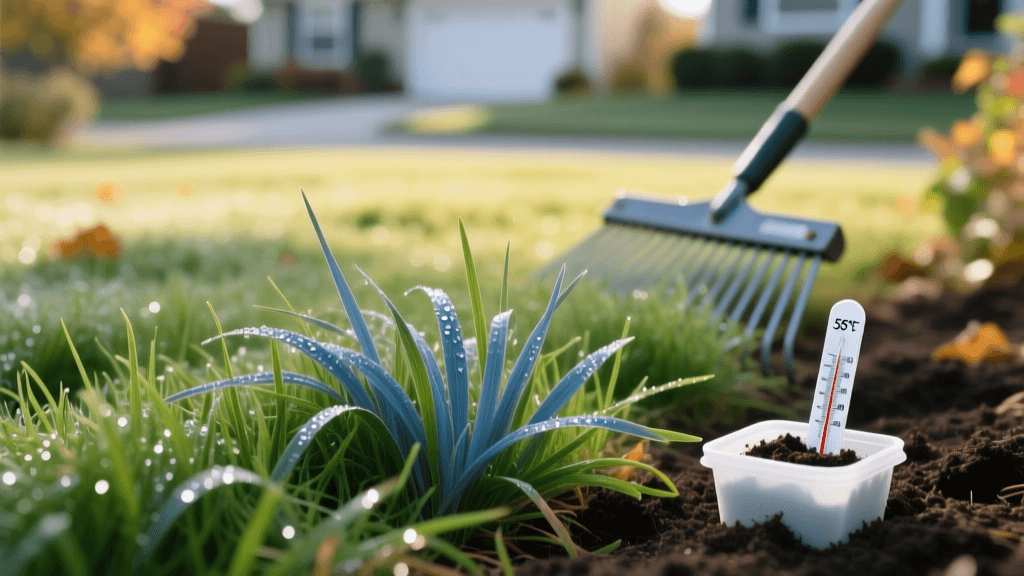
The golden rule for crabgrass pre-emergents is to apply when soil temperatures at a 2-inch depth reach 55°F for three to five consecutive days. You can track this using a simple soil thermometer or by monitoring local university extension soil temperature maps. For those who prefer nature's calendar (phenology), the blooming of Forsythia bushes and the falling of their yellow petals is a reliable, time-tested indicator that soil temperatures are entering the crabgrass germination zone.
Pro Tip: After applying CGM, you must water it in lightly (about 1/4 inch) to activate the proteins, followed by a brief drying period. If heavy rains wash it away before it dries, its efficacy will be severely reduced.
Cultural Practices: The Best Defense Against Crabgrass
According to the University of Minnesota Extension, the most effective organic weed control strategy is maintaining a dense, vigorous turf that outcompetes weeds for sunlight, water, and nutrients. Crabgrass is a heliophile—it requires direct sunlight hitting the soil surface to trigger germination. If your lawn is thick and tall, crabgrass seeds will remain dormant or die off.
Mowing High and Often
Adjusting your mower deck is the single easiest and most impactful organic weed control tactic. Never scalp your lawn. For cool-season grasses like Kentucky Bluegrass, Tall Fescue, and Perennial Ryegrass, maintain a mowing height of 3.5 to 4 inches throughout the spring and summer. For warm-season grasses like Bermuda or Zoysia, keep it at the highest recommended setting for your specific cultivar (usually 2 to 2.5 inches). Tall grass blades shade the soil surface, drastically lowering soil temperatures and blocking the UV light that crabgrass seeds need to sprout.
Deep, Infrequent Watering
Crabgrass has a shallow root system and thrives in lawns that are watered frequently but lightly. To favor your desirable turfgrass over weeds, practice deep and infrequent watering. Aim for 1 to 1.5 inches of water per week, applied in one or two deep sessions. This forces your desirable grass roots to grow deep into the soil profile to chase moisture, while the shallow-rooted crabgrass seedlings dry out and die on the hot surface.
Overseeding and Compost Topdressing
Bare patches are an open invitation for crabgrass. In early fall, core aerate your lawn and overseed with a high-quality, region-appropriate grass seed blend. Follow this with a thin layer (1/4 inch) of finely screened organic compost. Compost topdressing introduces beneficial mycorrhizal fungi and bacteria to the soil food web, improving soil structure, increasing water retention, and providing a slow drip of micronutrients that synthetic fertilizers completely lack.
Organic Post-Emergent Control
If a few crabgrass plants manage to break through your CGM barrier and cultural defenses, do not panic. For small infestations, manual removal using a stand-up weed puller tool is highly effective and ensures the entire root is removed. For larger patches or weeds growing in driveway cracks, you can use 20% horticultural vinegar (acetic acid) as a contact burner. Spray the vinegar directly on the crabgrass foliage on a hot, sunny day. The acid will rapidly desiccate the leaves. Be warned: horticultural vinegar is non-selective and will burn any desirable grass it touches, so use a cardboard shield to protect your turf. Never use standard 5% kitchen vinegar, as it is too weak to kill mature weeds and will only temporarily stunt them.
Comparison Chart: Organic vs. Synthetic Crabgrass Control
| Control Method | Estimated Cost (per 1,000 sq ft) | Pre-Emergent Efficacy | Soil Health Impact | Application Difficulty |
|---|---|---|---|---|
| Corn Gluten Meal (CGM) | $12 - $18 | Moderate to High (if timed perfectly) | Positive (adds organic nitrogen) | Moderate (heavy bags, timing is key) |
| Synthetic Pre-Emergent (Prodiamine) | $3 - $5 | Very High | Negative (harms soil microbiology) | Easy (lightweight, wide application window) |
| Cultural Controls (Mowing/Watering) | $0 - $2 (water costs) | High (as a suppressant) | Highly Positive | Requires consistent discipline |
| Horticultural Vinegar (Post-Emergent) | $4 - $6 | N/A (Post-emergent only) | Neutral to Negative (can lower soil pH) | Easy (spot treatment only) |
Conclusion
Transitioning to an organic lawn care program requires a shift in mindset. You are no longer treating the symptom with a chemical band-aid; you are treating the underlying ecosystem. As noted by Penn State Extension, crabgrass is primarily a symptom of thin, weak turf and compacted soil. By utilizing Corn Gluten Meal as a natural pre-emergent barrier, mowing at the highest possible setting, watering deeply, and feeding your soil with organic compost, you will create an environment where desirable turfgrass thrives and crabgrass simply cannot gain a foothold. It may take one to two full seasons to deplete the existing weed seed bank and build optimal soil biology, but the result is a lush, safe, and vibrant lawn that you can enjoy without the use of harsh synthetic chemicals.