Pest Control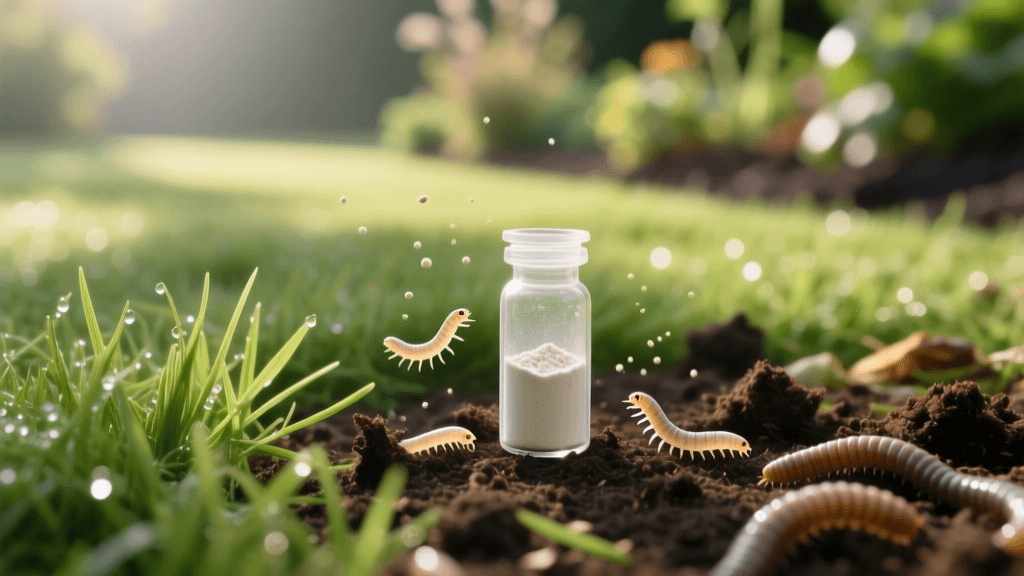
Organic Grub Control: Using Milky Spore and Nematodes
The Hidden Threat of Lawn Grubs
Beneath the surface of a lush, green lawn lies a hidden battleground. White grubs—the larval stage of various scarab beetles, including Japanese beetles, June bugs, European chafers, and Asiatic garden beetles—are among the most destructive turfgrass pests in North America. These C-shaped, creamy-white larvae with distinct brown heads feed voraciously on grassroots, severing the plant's ability to absorb water and nutrients. According to Penn State Extension, heavy grub infestations can destroy an entire lawn in a matter of weeks, leaving behind spongy, detached turf that rolls back like a loose carpet.
The damage is often compounded by secondary pests. Skunks, raccoons, crows, and moles will actively tear up your lawn to feast on the protein-rich grubs hiding just below the soil surface. For decades, the default response to grub damage has been the application of synthetic chemical pesticides. However, a growing movement of homeowners and lawn care professionals are turning away from these harsh treatments in favor of integrated pest management (IPM) and organic solutions.
Why Choose Chemical-Free Grub Control?
Traditional grub control often relies on systemic insecticides like imidacloprid or clothianidin (neonicotinoids), as well as broad-spectrum contact killers. While effective at eliminating grubs, these synthetic chemicals come with severe environmental costs. Neonicotinoids are highly toxic to essential pollinators, ground-nesting bees, and beneficial soil organisms like earthworms. Furthermore, chemical run-off can contaminate local watersheds, posing risks to aquatic ecosystems.
Organic grub control focuses on biological warfare—using naturally occurring pathogens and predators to target grubs without harming the broader ecosystem. By utilizing chemical-free approaches, you not only protect your local environment but also foster a healthier, more resilient soil microbiome. A biologically active soil naturally suppresses pest populations and improves turf vigor, making your lawn inherently more resistant to future outbreaks.
Identifying a Grub Problem: The Scouting Phase
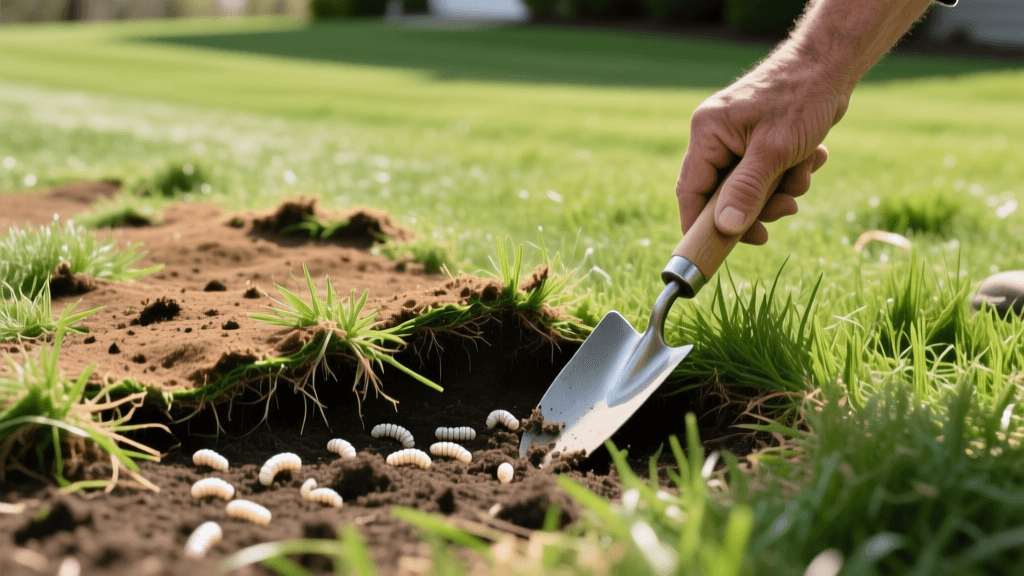
Before deploying any treatment, you must confirm that grubs are the actual culprit. Brown patches can also be caused by drought stress, fungal diseases, or dog urine. To scout for grubs, use the "tug test" and the "square-foot peel."
- The Tug Test: Grasp the brown turf and pull gently. If it lifts easily with no root resistance, grubs have likely severed the roots.
- Square-Foot Peel: Using a spade, cut three sides of a 1-foot by 1-foot square of turf, about 3 inches deep. Peel it back like a hinge and count the grubs in the soil and on the underside of the sod. According to University of Kentucky Entomology, finding more than 5 to 10 grubs per square foot indicates a damaging infestation that warrants treatment.
Method 1: Milky Spore Disease (Paenibacillus popilliae)
Milky spore is a naturally occurring, host-specific bacterium that targets Japanese beetle grubs. Discovered in the 1930s, it remains one of the most popular long-term organic grub controls available. When a Japanese beetle grub ingests milky spore spores while feeding on roots, the bacteria multiply rapidly inside the grub's hemolymph (blood). The grub's internal fluids turn a characteristic milky white, leading to death within 7 to 21 days.
Upon death, the grub's body decomposes and releases 1 to 2 billion new spores into the surrounding soil, effectively turning the dead pest into a biological factory that inoculates your lawn for the future.
Milky Spore Application Guide
Timing: Milky spore can be applied any time the ground is not frozen and grubs are actively feeding. Late summer to early fall is ideal, as grubs are near the surface.
Cost: Approximately $55 to $65 for a 10-ounce box (treats 2,500 square feet) or $200 for a 40-ounce box (treats 1 acre).
Application Steps:
- The Grid Method: For small to medium lawns, apply 1 teaspoon of milky spore powder every 4 feet in a grid pattern across your lawn.
- Watering In: Gently water the lawn for 15 minutes immediately after application to wash the spores off the grass blades and into the soil zone where grubs feed.
- Do Not Disturb: Avoid heavy aeration or deep tilling for a few weeks after application, as this can disrupt the spore network.
Note: Milky spore is highly specific to Japanese beetle grubs. If your lawn is being destroyed by European chafers or June bugs, milky spore will not be effective. Furthermore, it takes 1 to 3 years for the spores to build up to a lethal threshold in the soil, meaning it is a long-term prevention strategy rather than a quick-fix rescue treatment.
Method 2: Beneficial Nematodes (Heterorhabditis bacteriophora)
For a fast-acting, broad-spectrum organic rescue treatment, beneficial nematodes are unmatched. Specifically, the species Heterorhabditis bacteriophora (often abbreviated as Hb) is a microscopic, unsegmented roundworm that actively hunts down white grubs in the soil.
Unlike milky spore, Hb nematodes carry a symbiotic, bioluminescent bacteria called Photorhabdus luminescens in their gut. The nematode enters the grub through natural openings (spiracles, mouth, or anus) and releases the bacteria. The bacteria cause rapid septicemia, killing the grub within 48 hours. The nematodes then reproduce inside the dead grub, feeding on the bacteria and host tissues, before bursting out to hunt for new prey.
Beneficial Nematode Application Guide
Timing: Timing is critical. Nematodes must be applied when grubs are small and actively feeding near the surface—typically late July through August, or early September depending on your hardiness zone. Soil temperatures must be between 55°F and 90°F.
Cost: Approximately $35 to $50 for a sponge containing 50 million nematodes (treats up to 5,000 square feet).
Application Steps:
- Storage: Nematodes are living organisms. They must be kept refrigerated (35°F to 40°F) upon arrival and used before their expiration date.
- Preparation: Soak the nematode-infused sponge in a bucket of cool, distilled, or dechlorinated water for 10 minutes. Squeeze the sponge repeatedly to release the nematodes into the water.
- Application: Apply using a hose-end sprayer or a watering can. Never apply in direct sunlight, as UV rays will kill the nematodes instantly. Apply at dusk or on a heavily overcast day.
- Moisture is Key: Water the lawn lightly before application to prepare the soil pores. After application, water the lawn again with about 1/4 inch of water to wash the nematodes off the grass blades and into the root zone. Keep the soil consistently moist (but not waterlogged) for the next 10 to 14 days to allow the nematodes to hunt effectively.
Comparison Chart: Milky Spore vs. Beneficial Nematodes
Choosing between these two organic powerhouses depends on your specific pest pressure, budget, and timeline. The table below outlines the core differences to help you decide.
| Feature | Milky Spore (Paenibacillus popilliae) | Beneficial Nematodes (Hb) |
|---|---|---|
| Target Pests | Japanese Beetle Grubs ONLY | Most White Grubs (European Chafers, June Bugs, Asiatic Beetles, Japanese Beetles) |
| Speed of Control | Slow (1-3 years to establish full soil immunity) | Fast (Kills grubs within 48 hours of application) |
| Longevity | 10 to 15 years (Self-sustaining) | 1 season (May require annual reapplication) |
| Soil Temp Required | Any unfrozen soil; best when grubs are feeding | 55°F to 90°F (Strict requirement) |
| Cost per 5,000 sq ft | ~$110 - $130 | ~$35 - $50 |
| Application Difficulty | Easy (Drop on soil, water in) | Moderate (Requires UV avoidance, strict moisture management, and refrigeration) |
Cultural Practices for Long-Term Prevention
Biological controls are most effective when paired with sound cultural practices that make your lawn an inhospitable environment for egg-laying adult beetles. As noted by turfgrass researchers at Rutgers University Extension, modifying the lawn environment is a cornerstone of organic pest management.
- Mow High: Set your mower deck to 3.5 or 4 inches. Tall grass shades the soil, keeping it cooler and more humid, which deters adult female beetles that prefer to lay their eggs in hot, bare, or closely cropped soil.
- Deep, Infrequent Watering: Water your lawn deeply (1 inch per week) but infrequently. This encourages deep root growth that can better withstand minor grub feeding. Conversely, frequent, shallow watering keeps the topsoil moist and perfect for grub egg survival.
- The July Dry-Out: Grub eggs require consistent moisture to hatch. If your lawn can tolerate a brief dormancy, allow the top inch of soil to dry out completely during the peak egg-laying period in mid-to-late July. This natural desiccation can kill a massive percentage of eggs before they ever hatch.
- Encourage Natural Predators: Avoid using broad-spectrum pesticides that kill beneficial insects. Ground beetles, ants, and parasitic wasps are natural predators of grub eggs and small larvae. Furthermore, encouraging insectivorous birds like starlings, robins, and crows will help keep the overall beetle population in check.
Conclusion
Transitioning to an organic, chemical-free lawn care regimen does not mean surrendering your turf to destructive pests. By understanding the life cycle of the white grub and strategically deploying biological controls like milky spore and beneficial nematodes, you can achieve a pristine, resilient lawn. While organic methods require a bit more patience, precise timing, and a willingness to work with nature rather than against it, the long-term rewards—a safe yard for children and pets, a thriving local ecosystem, and a naturally disease-resistant lawn—are well worth the effort.