Lawn Care
Organic Lawn Weed Control: Natural Strategies That Work
Introduction to Chemical-Free Weed Management
Transitioning to a chemical-free lawn care routine is one of the most rewarding decisions a homeowner can make. For decades, the industry standard relied heavily on synthetic herbicides to achieve a pristine, weed-free yard. However, growing awareness regarding environmental runoff, soil microbiome degradation, and the health risks posed to pets and children has sparked a massive shift toward organic lawn management. According to the University of Minnesota Extension, organic lawn care focuses on building a resilient ecosystem rather than merely treating symptoms. When you eliminate chemical crutches, you force your lawn to develop deep, robust root systems that naturally outcompete weeds. This guide will walk you through the most effective, science-backed organic weed control strategies, from pre-emergent natural barriers to post-emergent manual removal and long-term soil conditioning.
The Foundation: Cultural Practices for Weed Prevention
Weeds are nature's opportunists. They thrive in compacted soil, bare patches, and nutrient-deficient environments. The single most effective organic weed control method is growing grass so thick and healthy that weed seeds simply cannot find the sunlight or soil contact required to germinate.
Mowing High and Often
One of the most common mistakes homeowners make is scalping their lawn. Cutting your grass too short removes the leaf blade surface area needed for photosynthesis and exposes the soil to direct sunlight, triggering weed seed germination. For cool-season grasses like Kentucky bluegrass and tall fescue, maintain a mowing height of 3 to 4 inches. For warm-season grasses like Bermuda or Zoysia, 2 to 2.5 inches is ideal. Always follow the 'one-third rule,' never removing more than one-third of the grass blade in a single mowing session. This reduces plant stress and encourages lateral growth, which chokes out broadleaf weeds and crabgrass.
Deep, Infrequent Irrigation
Shallow, daily watering encourages shallow grass roots and creates the perfect moist surface environment for weed seeds like chickweed and annual bluegrass. Instead, water your lawn deeply and infrequently. Aim for 1 to 1.5 inches of water per week, delivered in one or two sessions. This forces grass roots to grow deep into the soil profile in search of moisture, making your turf drought-tolerant and highly competitive against shallow-rooted weeds.
Organic Pre-Emergent Weed Control: Corn Gluten Meal
If you are looking for a natural alternative to synthetic pre-emergent herbicides like pendimethalin, Corn Gluten Meal (CGM) is your best option. Discovered by researchers at Iowa State University, CGM is a byproduct of the corn milling process that contains about 10% nitrogen by weight and acts as a natural root inhibitor for germinating seeds.
How Corn Gluten Meal Works
CGM does not kill existing weeds. Instead, it prevents the formation of roots in newly germinated seeds. When a weed seed sprouts, it absorbs the proteins from the CGM, which dries out the seedling's initial root, killing it before it can establish. Because it is non-selective, it will also prevent grass seeds from germinating, meaning you must not overseed your lawn within 60 days of a CGM application.
Application Rates and Timing
To be effective, CGM must be applied at a heavy rate—typically 20 pounds per 1,000 square feet. It must be watered in lightly to activate the proteins, followed by a dry period to kill the sprouted seeds.
| Season | Target Weeds | Application Timing | Rate per 1,000 sq ft |
|---|---|---|---|
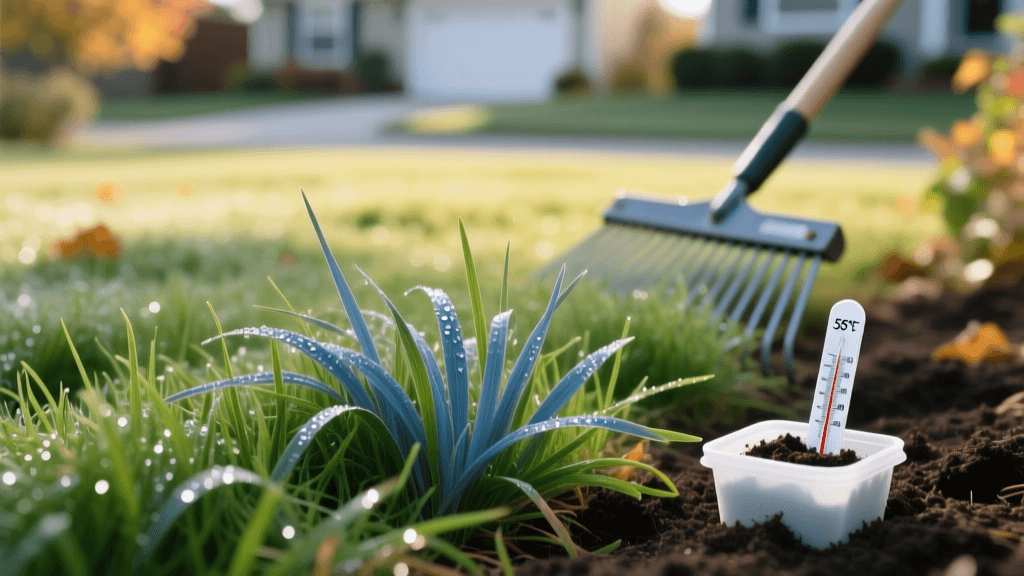
| Early Spring | Crabgrass, Dandelions | When soil temps reach 55°F (Forsythia blooming) | 20 lbs |
| Late Summer | Annual Bluegrass, Chickweed | Late August to early September | 20 lbs |
According to Penn State Extension, while CGM provides some pre-emergent control, its high nitrogen content also serves as an excellent organic fertilizer, promoting thick turf growth that further suppresses weeds over time.
Organic Post-Emergent Weed Control
Once weeds have established roots, pre-emergents and cultural practices will not eliminate them. You must turn to post-emergent organic methods to manage the existing weed population.
Manual Extraction
Hand-pulling is the most reliable organic method for deep-rooted perennial weeds like dandelions, plantain, and dock. The key is to remove the entire taproot. Invest in a high-quality stand-up weeder with a forked tip, such as the Fiskars Uproot Weed and Root Remover. These tools leverage the soil to pop the entire root out without requiring you to bend over. For best results, pull weeds after a heavy rain or deep irrigation when the soil is soft and yields easily.
Horticultural Vinegar (20% Acetic Acid)
Household vinegar (5% acetic acid) is generally ineffective against mature weeds. Horticultural vinegar, which contains 20% to 30% acetic acid, is a potent, non-selective contact herbicide that burns the foliage of broadleaf weeds upon contact. The National Pesticide Information Center notes that acetic acid acts as a rapid desiccant, destroying plant cell membranes on contact.
Warning: 20% acetic acid is highly corrosive. Always wear chemical-resistant gloves, long sleeves, and eye protection when mixing and applying. It will lower soil pH temporarily and can harm grass if oversprayed.
To use, spray horticultural vinegar directly onto the weed foliage on a hot, sunny day. The sun accelerates the desiccation process. Note that this is a 'burn-down' method; it may not kill the deep taproots of mature perennials, requiring multiple applications. For isolated weeds in driveway cracks or patio pavers, pouring boiling water directly onto the crown is a free, highly effective, and completely chemical-free alternative.
Soil Health: The Secret to a Weed-Free Organic Lawn
Weeds are excellent indicators of underlying soil deficiencies. For example, an abundance of clover often indicates low soil nitrogen, while compacted soil invites plantain and knotweed. Maintaining a healthy, biologically active soil food web is critical for long-term pest and weed suppression.
Compost Topdressing
Applying a quarter-inch layer of screened organic compost over your lawn in the fall introduces millions of beneficial microbes to the soil. These microbes break down thatch, improve soil structure, and make nutrients bioavailable to your grass. Over time, this builds a spongy soil matrix that retains moisture and supports aggressive turfgrass roots.
Soil Testing and Amendment
Conduct a soil test every two to three years. Most turfgrasses thrive at a pH of 6.0 to 7.0. If your soil is too acidic, apply pelletized lime. If it is too alkaline, use elemental sulfur. Balancing your soil pH ensures your grass can access the nutrients it needs to outcompete weeds naturally.
Comparison Chart: Organic vs. Synthetic Weed Control
Understanding the trade-offs between organic and synthetic methods helps set realistic expectations for your lawn care journey.
| Feature | Organic Weed Control | Synthetic Herbicides |
|---|---|---|
| Speed of Results | Slow (Focuses on long-term ecosystem) | Fast (Visible results in 24-48 hours) |
| Soil Health Impact | Builds microbial life and organic matter | Can harm soil biology over time |
| Environmental Safety | High (No toxic runoff) | Low (Risk of waterway contamination) |
| Cost | Higher initial material costs (CGM, compost) | Lower immediate cost per application |
| Selectivity | Mostly non-selective post-emergents | Highly selective options available |
Conclusion
Achieving a weed-free lawn without synthetic chemicals is not an overnight process; it is a multi-year commitment to soil stewardship. By combining the pre-emergent power of corn gluten meal, the precision of manual extraction, and the foundational strength of proper mowing and compost topdressing, you can cultivate a vibrant, resilient turf. Embracing organic lawn care means accepting a few dandelions as part of a living, breathing ecosystem, knowing that your yard is safe for your family, your pets, and the local environment.