Lawn Care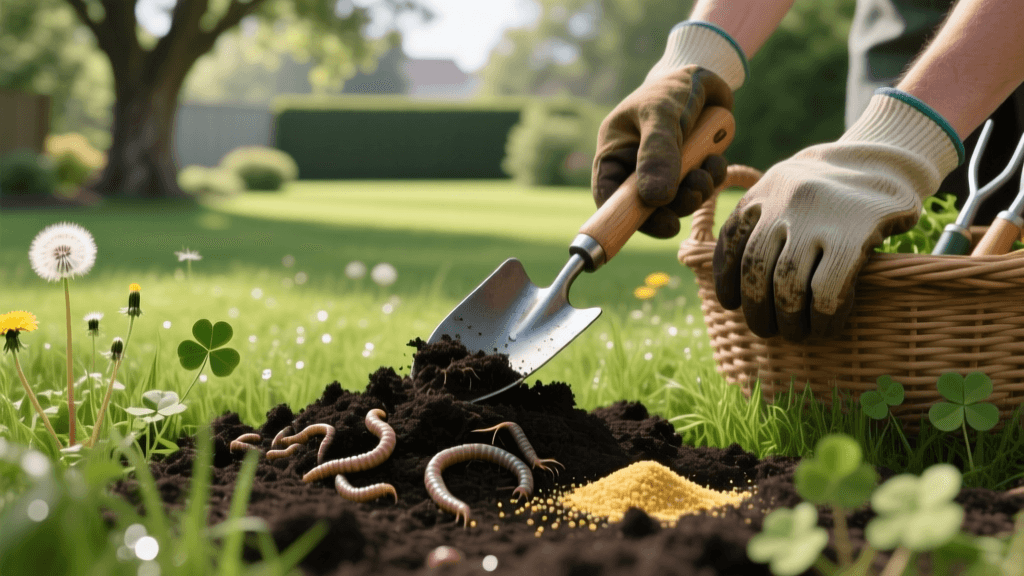
Organic Lawn Care: Natural Weed Control and Soil Health
Transitioning from a chemically dependent lawn to a thriving, organic ecosystem is one of the most rewarding projects a homeowner can undertake. For decades, the standard approach to lawn care relied heavily on synthetic fertilizers and harsh herbicides. While these products offer quick, visible results, they often degrade soil biology over time, leading to a cycle of dependency where the lawn cannot survive without chemical inputs. By adopting chemical-free and organic approaches, you shift the focus from merely feeding the grass blades to nurturing the complex soil food web beneath them. According to the University of Minnesota Extension, organic lawn care prioritizes long-term soil health, which naturally increases drought tolerance, disease resistance, and weed suppression. This comprehensive guide will walk you through the exact steps, products, and timelines required to build a resilient, organic lawn.
The Foundation: Soil Testing and Compost Topdressing
Before applying any organic amendments, you must understand your soil's baseline chemistry and biology. Synthetic fertilizers can mask soil deficiencies, but organic systems rely on the soil's natural pH and microbial activity to unlock nutrients.
Conducting a Comprehensive Soil Test
Invest in a high-quality soil test from a university extension or a reputable private lab like Logan Labs. You are looking for three primary metrics: pH, organic matter percentage, and cation exchange capacity (CEC). For most turfgrasses, the ideal pH is between 6.2 and 6.8. If your pH is too low (acidic), you will need to apply calcitic or dolomitic lime. If it is too high (alkaline), elemental sulfur is the organic remedy.
The Power of Compost Topdressing
Compost is the cornerstone of organic lawn care. It introduces beneficial microbes, improves soil structure, and increases water retention.
- Measurement: Apply a thin layer of finely screened compost, about 1/4 to 1/2 inch thick, across your lawn.
- Timing: Early fall or spring, ideally immediately after core aeration.
- Application: Use a leveling rake or a push broom to work the compost down into the turf canopy and aeration holes.
- Cost: Bulk compost typically costs $30 to $50 per cubic yard, which covers approximately 650 square feet at a 1/2-inch depth.
By adding organic matter annually, you create a hospitable environment for earthworms and beneficial fungi, which naturally break down thatch and improve drainage.
Natural Pre-Emergent Weed Control: Corn Gluten Meal
One of the greatest challenges in chemical-free lawn care is managing annual weeds like crabgrass without synthetic pre-emergent herbicides. The most effective organic alternative is Corn Gluten Meal (CGM), a byproduct of corn milling discovered by researchers at Iowa State University to have natural pre-emergent properties.
How Corn Gluten Meal Works
CGM contains hydrolyzed proteins that inhibit root formation in germinating seeds. When a weed seed sprouts, the CGM prevents the initial root from establishing, causing the seedling to die before it can anchor into the soil. It is crucial to note that CGM only affects germinating seeds; it will not kill existing weeds or mature plants.
Application Rates and Timing
- Rate: Apply 20 pounds of CGM per 1,000 square feet. This rate provides approximately 2 pounds of slow-release organic nitrogen per 1,000 square feet, effectively feeding your lawn while suppressing weeds.
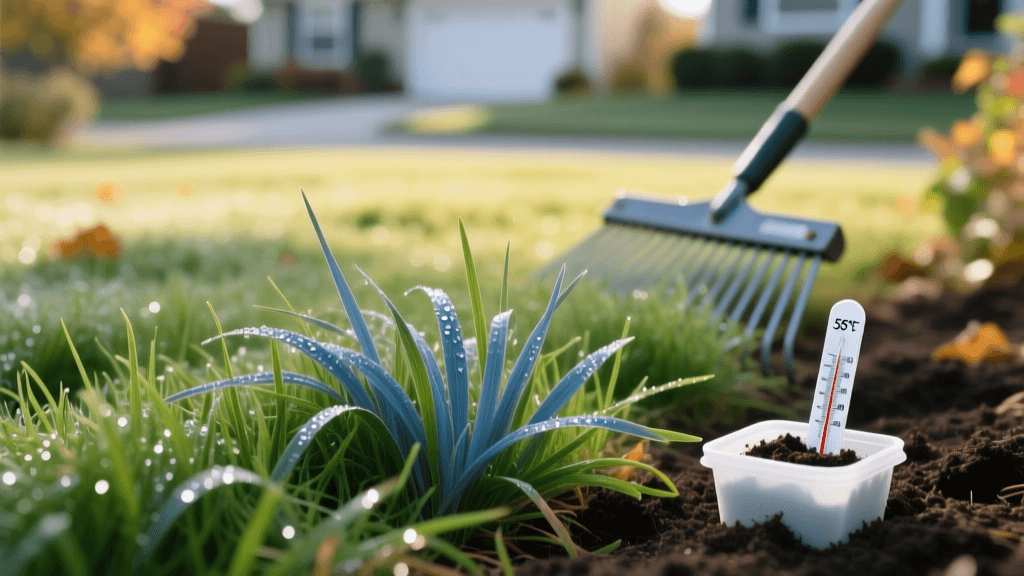
- Timing: Timing is critical. Apply when soil temperatures consistently reach 50°F to 55°F, which often coincides with the blooming of forsythia bushes in early spring.
- Watering: Water the lawn lightly after application to activate the proteins, followed by a dry period of 48 hours to prevent weed seeds from establishing roots.
Warning: Because CGM inhibits all seed germination, do not use it if you plan to overseed your lawn in the same season. Wait until the fall to overseed, and use CGM strictly in the spring for crabgrass prevention.
Feeding the Soil: Organic Fertilizers
Synthetic fertilizers are essentially salts that force-feed the grass plant, often at the expense of soil microbes. Organic fertilizers, on the other hand, are derived from plant and animal byproducts (such as alfalfa meal, feather meal, bone meal, and kelp) and must be broken down by soil microbes before the grass can absorb them. This slow-release process prevents nutrient runoff into local waterways, a major concern highlighted by the Environmental Protection Agency (EPA).
When selecting an organic fertilizer, look for products that are OMRI (Organic Materials Review Institute) listed. Brands like Espoma Organic Lawn Food or Jonathan Green Organic Lawn Fertilizer offer balanced N-P-K (Nitrogen-Phosphorus-Potassium) ratios derived entirely from natural sources. Apply these meals in the late spring and early fall, using a broadcast spreader calibrated to the manufacturer's recommended settings. Expect to pay a premium—often 30% to 50% more than synthetic alternatives—but the long-term reduction in water usage and disease pressure offsets the initial cost.
Cultural Practices: Your Best Defense Against Weeds
In an organic system, your mowing and watering habits are your primary herbicides. A thick, vigorous lawn canopy will naturally shade out weed seeds, preventing them from receiving the sunlight needed to germinate.
Mowing High and Often
Set your mower deck to a minimum of 3 to 4 inches. Taller grass blades develop deeper root systems, which access subterranean moisture and outcompete shallow-rooted weeds. Furthermore, never remove more than one-third of the grass blade in a single mowing session to avoid stressing the plant. Leave the clippings on the lawn; they decompose rapidly and return valuable nitrogen and organic matter to the soil.
Deep, Infrequent Irrigation
Watering lightly every day encourages shallow roots and promotes fungal diseases. Instead, aim for 1 to 1.5 inches of water per week, applied in one or two deep sessions. This forces the grass roots to grow deep into the soil profile in search of moisture, creating a highly drought-tolerant lawn.
Comparison Chart: Organic vs. Synthetic Lawn Care
Understanding the differences between these two paradigms helps set realistic expectations for your lawn's transition.
| Feature | Organic Lawn Care | Synthetic Lawn Care |
|---|---|---|
| Primary Focus | Feeding the soil biology and food web | Force-feeding the grass plant directly |
| Nutrient Release | Slow, temperature-dependent microbial breakdown | Fast, immediate water-soluble uptake |
| Weed Control | Cultural practices, CGM, manual removal | Selective and non-selective chemical herbicides |
| Soil Health Impact | Builds organic matter, increases microbial life | Can degrade soil structure, harm earthworms |
| Cost (Short-Term) | Higher initial material costs | Lower initial material costs |
| Cost (Long-Term) | Lower (reduced water, fewer pest issues) | Higher (continuous chemical dependency) |
Embracing the Transition Period
If you are transitioning a lawn that has been chemically treated for years, be prepared for a withdrawal period. The soil biology has likely been diminished by years of salt-based fertilizers and broad-spectrum pesticides. During the first one to two years of organic management, you may experience a flush of weeds as the soil ecosystem rebalances and the grass roots rebuild. The United States Department of Agriculture (USDA) emphasizes that organic systems require a holistic, patient approach rather than quick-fix chemical interventions. Stay consistent with your compost topdressing, maintain your high mowing height, and trust the biological processes at work. Within three seasons, your lawn will transform into a deeply rooted, vibrant, and self-sustaining ecosystem that requires fewer inputs and stands resilient against environmental stressors.